While planning a trip to Karelia, many people include places such as Kizhi, Valaam and Ruskeala Mountain Park on their bucket list. So here I am telling you about some more locations and life hacks that can make your trip to Karelia even more interesting.

Usually a trip to Karelia starts here — in the capital of the Republic of Karelia. All of the main transportation hubs are here: the airport, the train and the bus stations. Tour buses and guided tours also depart from here. One day is quite enough to check out all the sights in the city itself. But a second day is definitely worthwhile to gain historical knowledge in the local museums. For example, to find out that Petrozavodsk is named in honour of Peter the Great, and not in honour of the Apostle Peter; or to learn that the weapons produced at the Alexander Factory here in Petrozavodsk helped Russia to win 10 wars. You can do a lot of other amazing things in Petrozavodsk! For example, cook little Karelian pies “kalitki” with a famous local chef; take a walk through the oldest park in Russia and walk around Alexandro-Nevsky Cathedral; look closely at bots (single-mast sailboats) in the “Polar Odyssey” Maritime Museum… But most of all you will like the embankment of Petrozavodsk! The 1.5-km-long promenade along Lake Onega is an incredible and eclectic exhibition of gifts received from its sister cities.


So there you can see a plastic wishing tree with an ear, to which you may whisper your wish (I hope it will come true in the best way) and a statue called “Wallet” that you need to rub until it shines, as well as wooden totem poles. There are also metal poles from Tübingen symbolizing friendship and a steel sheet with holes symbolizing the sky. But the most beautiful monument was presented by sculptors from the American city of Duluth, Minnesota. By the way, all the monuments have cool nicknames: for example, locals call a statue of fishermen “dystrophic persons with a spider web”. What kind of sculptures are hiding under the nickname “the teeth of the mayor”? You’ll find out upon arrival.


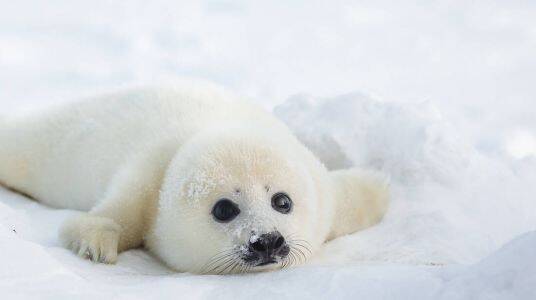
This is the kind of place you imagine when you think about Karelia: a quiet lake with an island, boats near the shore, a huge meadow where horses are grazing and dogs are running around. Log houses with a Russian stove inside. However, just 49 km from Kostomuksha there is a tourist village (a kind of tourist camp) Khutor Kormilo, where you can find much more than you imagined before the trip. There you can see a quite rare breed of horse, the Tinker. There is a herd of goats in the village and even a herd of alpacas! There is a pair of Samoyed (Bjelkier) dogs; every so often they have wonderful offspring. I was lucky — during my visit they had five puppies; those cute snow-white fluffy lumps were running around the meadow.


The guest houses have all the facilities, including kitchenettes. However, Olga, the hostess of the Khutor Kormilo, cooks very well — you can have a meal in the common dining room of the main house. You may ask the owner, Victor, to give you a tour of his own private samovar museum. All the exhibits are really impressive; they were bought in different countries and at flea markets. You will not regret it and will definitely have a good rest if you stay at the Khutor Kormilo for at least a couple of nights.


Kinerma has been included on the list of the most beautiful Russian villages for many years in a row. Probably, the old Karelian settlements could compete quite well, but the best one gets all the attention — every year there are more and more visitors. Kinerma is a village with only a couple of streets: 17 old wooden houses with platbands, some of them two hundred years old; seven wooden Russian baths; branchy apple trees, the chapel of Virgin Mary of Smolensk. The village is located 100 km from Petrozavodsk in the Pryazhinsky District. Karelians lived there for five centuries, preserving their traditions and culture. You can hardly meet any locals on the streets though. But if you are lucky (or vice versa) you can meet a dozen cameramen and sound engineers in Kinerma, which is very popular for filming. I happened to be there during the location shoot for the movie “Flame” by the famous Russian director Nikita Mikhalkov. So I didn’t have an opportunity to walk through the village, because some scenes were being shot. And I made a joke: “This is how it works — you travel a thousand miles from Moscow to visit Kinerma but there is Konstantin Khabensky coming out of the bushes!” Well, it turned out that he was actually starring in that movie.


The best time to visit Voknavolok is during one of the festivals, when locals wear traditional costumes and sing old rune songs. They say local people even speak the old dialect of the Karelian language during the festivals, but who can check it? In everyday life, Voknavolok is a typical Karelian village of 200 houses, a place where it’s so nice to have a rest and enjoy the fresh air. People go about their daily routine, work in vegetable gardens, fish on Lake Upper Kuyto. An hour is enough to take a walk through the village. You will enjoy natural rural aromas, wet your feet in grassy dew and see huge milk churns. A curious dog will accompany you to the very end of the village. And you will definitely see old houses and barns, which are the main reason for people to travel here.


Looking at the petroglyphs right under my feet, I had a funny thought. Why do most of the petroglyphs depict hunting scenes? And where, for example, are the scenes of jealousy or love? Anyway, I saw dozens of hunters, with bows and arrows; I saw fishermen in boats, deer and elk. There was one amazing thing though — a Homo sapiens on skis!


There are several accumulations of petroglyphs in Karelia — at the mouth of the Vyg River, near the village of Vygostrov and the village of Zolotets. I went to Old and New Zalavruga, which are 9 km from Belomorsk. A 1.5-km path through a forest full of mosquitoes leads to the petroglyphs. So you’d better stock up on repellent before the walk. Over an area of about 200 metres, ancient people carved more than 2,000 petroglyphs in 3000–2000 BC; the White Sea cluster includes 3,411 figures in 11 groups. Some of them are amazingly well preserved under a layer of soil. But local souvenir sellers share a secret: once every few years, restorers fix the petroglyphs for better preservation. Since 2021, the Petroglyphs of Lake Onega and the White Sea have been a UNESCO World Heritage property.


Waterfalls, which seem to be given to us from heaven as meditative places, also become powerful places of energy. Everyone has fun near the waterfall and takes thousands of pictures. It is always crowded at the Kivach observation decks; many people want to admire the second-largest lowland waterfall in Europe after the Rhine Falls. The name of the waterfall comes from the Finnish “kivi”, meaning “stone”, or from the Karelian kiwas, meaning “snow mountain”, but in fact, Kivach, which is located on the Suna River, is rather slow and does not feel a boisterous spirit. The height of the waterfall is about 10 meters. You can take a walk along the arboretum near the waterfalls or walk along eco-paths: “Sopokhsky Bor” or “1500 steps into nature”. The routes were created by the staff of the Kivach Nature Reserve.


You can get to Petrozavodsk from Moscow by train, by plane or by car. For the best options, visit the website of Russian Railways and Russian airlines. But the best way to travel around Karelia is by car. If you go to Karelia by car, it is 1,021 km from Moscow to Petrozavodsk and 429 km from St. Petersburg.
Summer. The weather is quite warm and nice, sometimes even hot. This is the time of white nights. Very romantic for walks, but a bit bright for sleeping, so you might need sleeping masks or curtains. Boat routes to Valaam and Kizhi operate only in the warm season.

“The Four Seasons of Russia” project is supported by the Russian Geographical Society www.rgo.ru
A trip to Karelia is recommended by the Russian Geographical Society.

More about Karelia:
Mountain park "Ruskeala": "Quarry stairs"
Valaam "Holy Island"
Kizhi "One Day in the the Last Century»
Translation: Irina Romanova


 Travel reportage
Leave a comment