We arrived at the “City of Magicians” in pitch darkness, having spent long hours crossing the lifeless expanses of the desert. Our suitcases were supposed to be delivered to the yurts by a donkey, as promised on the website. But at such a late hour he was surely fast asleep in his stall, so our luggage was picked up by an ordinary-looking young man — not a magician. Half an hour later, I too was fast asleep.
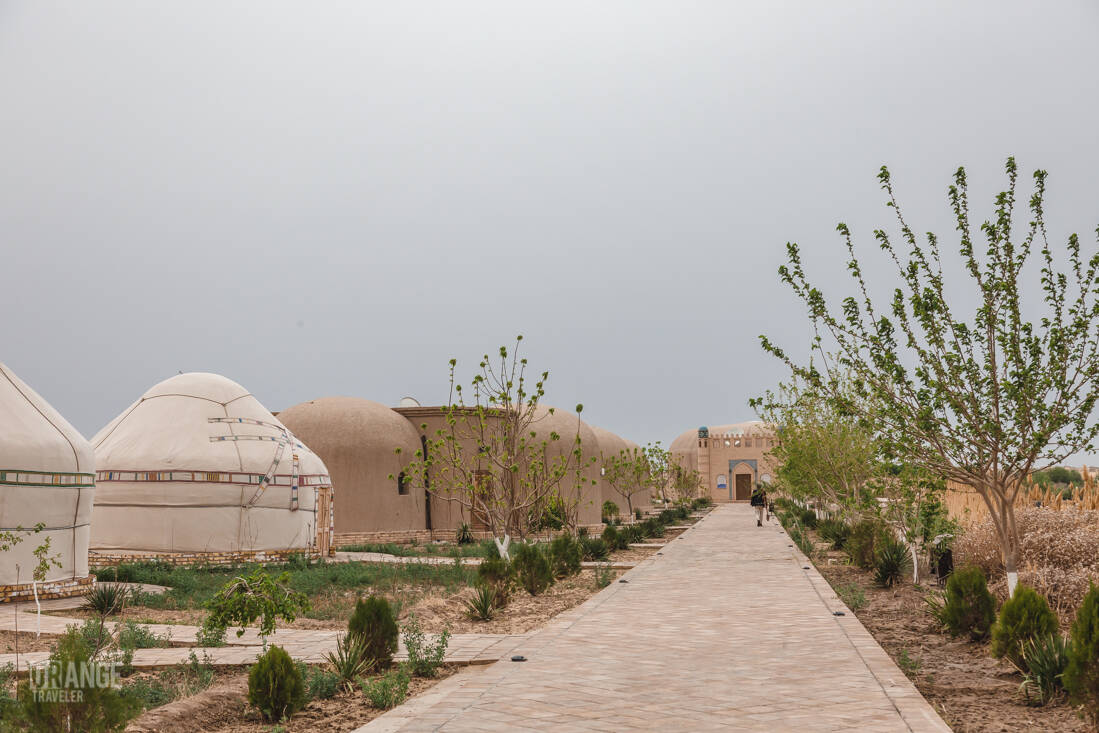
“Let’s get acquainted,” said the friendly man waiting for me at the gate, holding out his hand. “I’m Madamin.”
A warm handshake, a few harmless morning jokes, a few words about the dreadful weather that had suddenly arrived — Khiva had turned cold and rainy — a discussion of the tentative plan for the day. And then came my first burst of journalistic excitement. It turned out that Madamin Madaminov was not simply a guide. He was a historian and a scholar who worked on deciphering symbols. Lucky me!
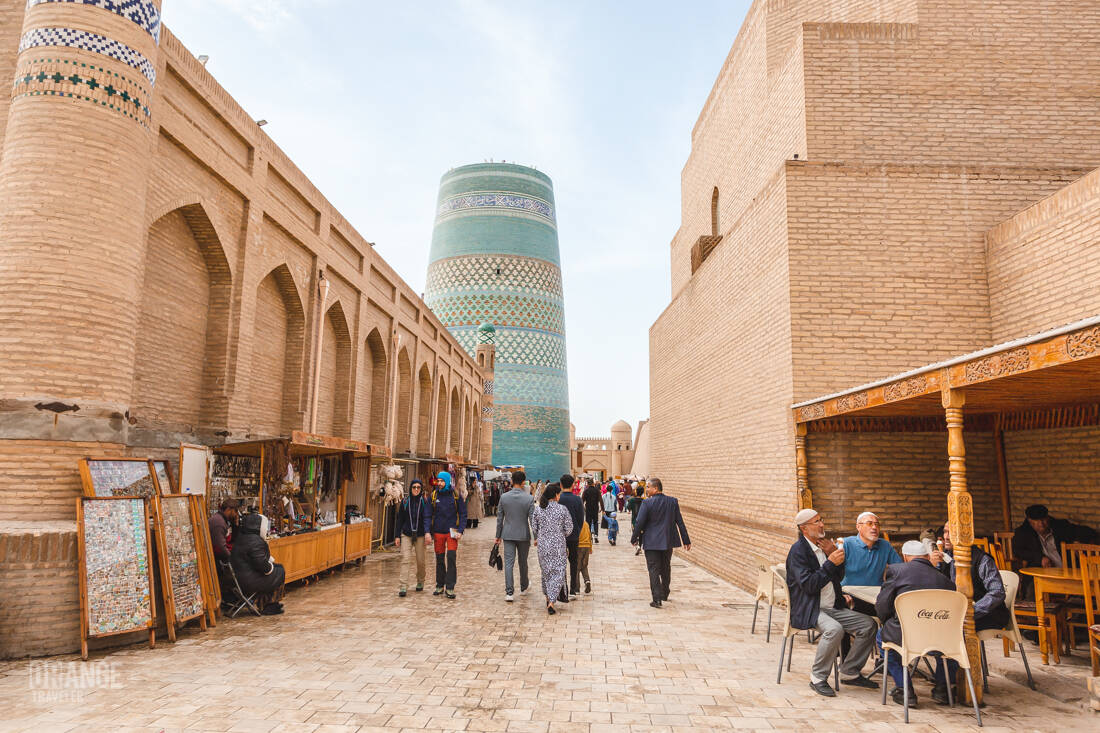
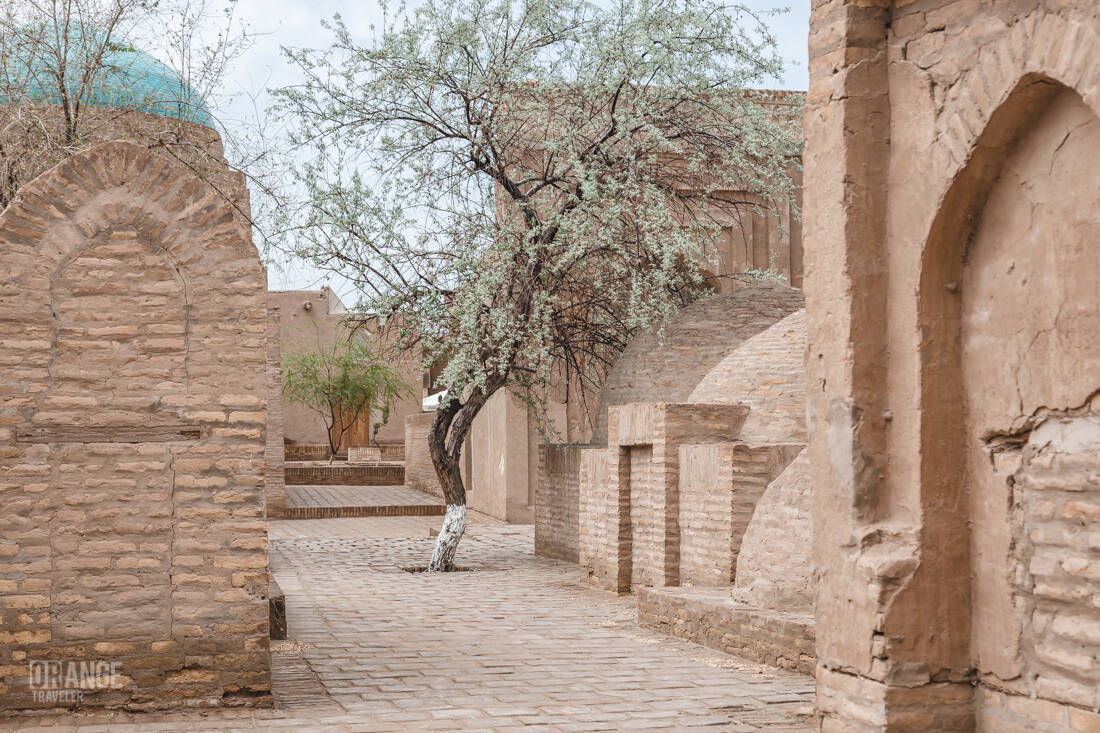
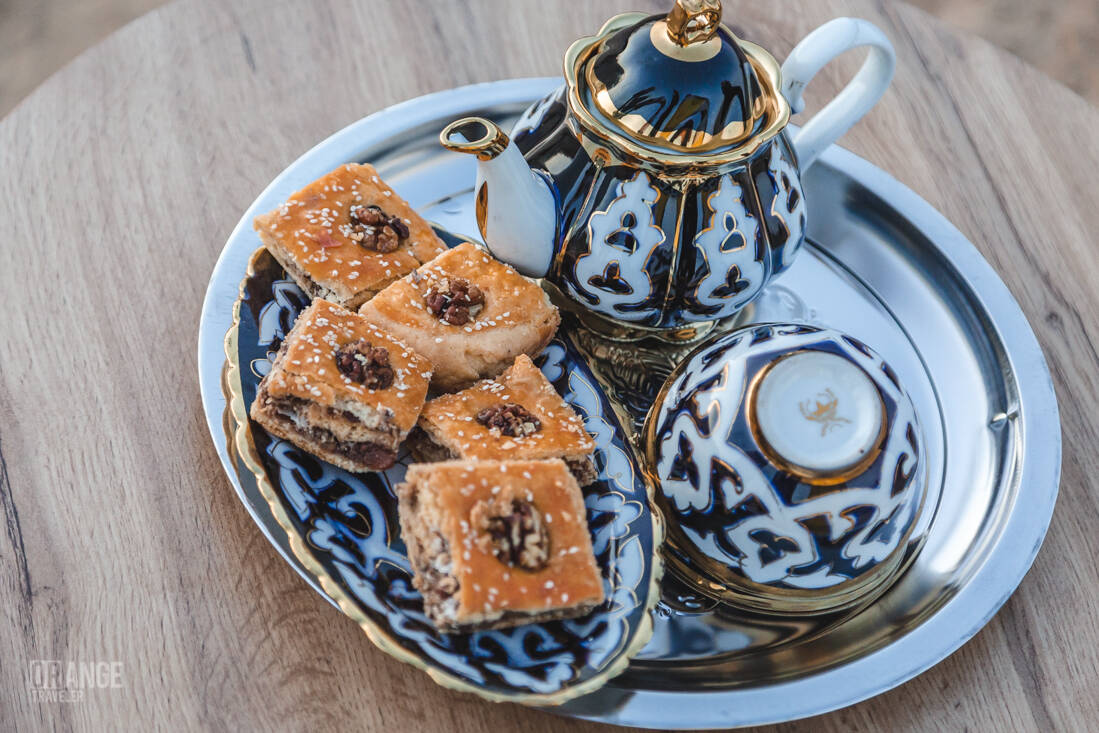
In Ichan-Kala, at the heart of Khiva’s old town, there were plenty of people despite the pouring rain. It is always like this, whatever the season, although during the fiercest summer heat everyone hides from the sun. The ancient city was in no hurry to reveal its beauty. We settled into a restaurant, ordered tea and baklava, and Madamin began his story of Khiva. From the beginning of time, naturally.
Orange Fact
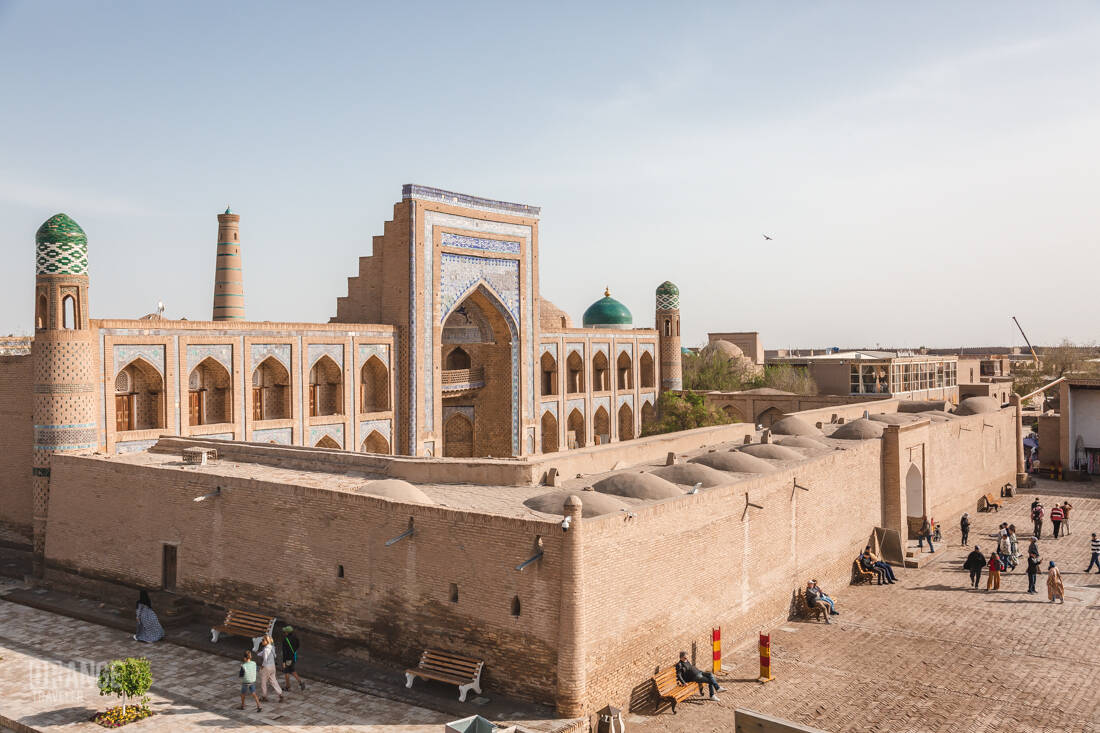
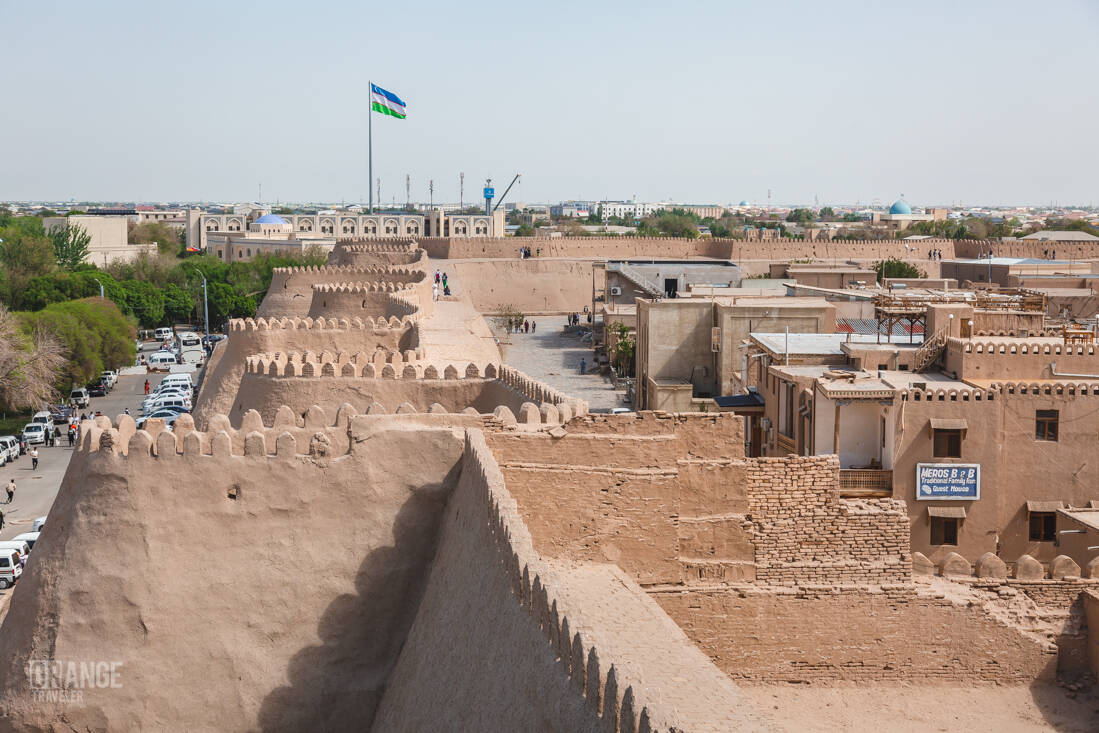
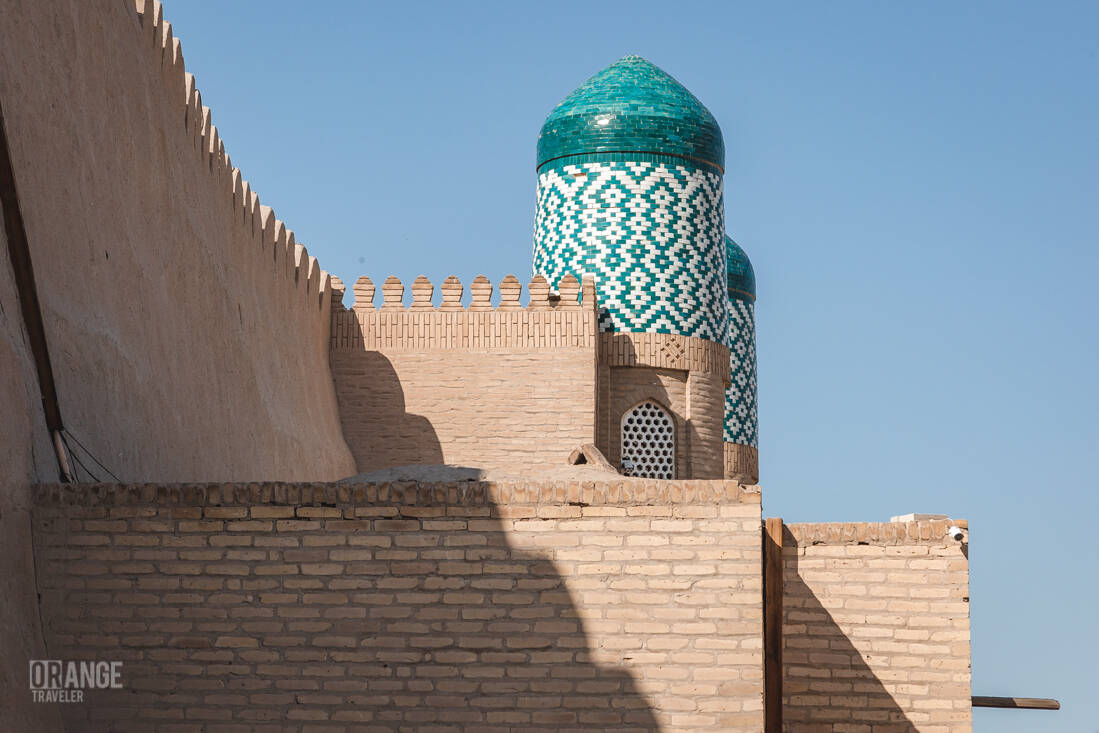
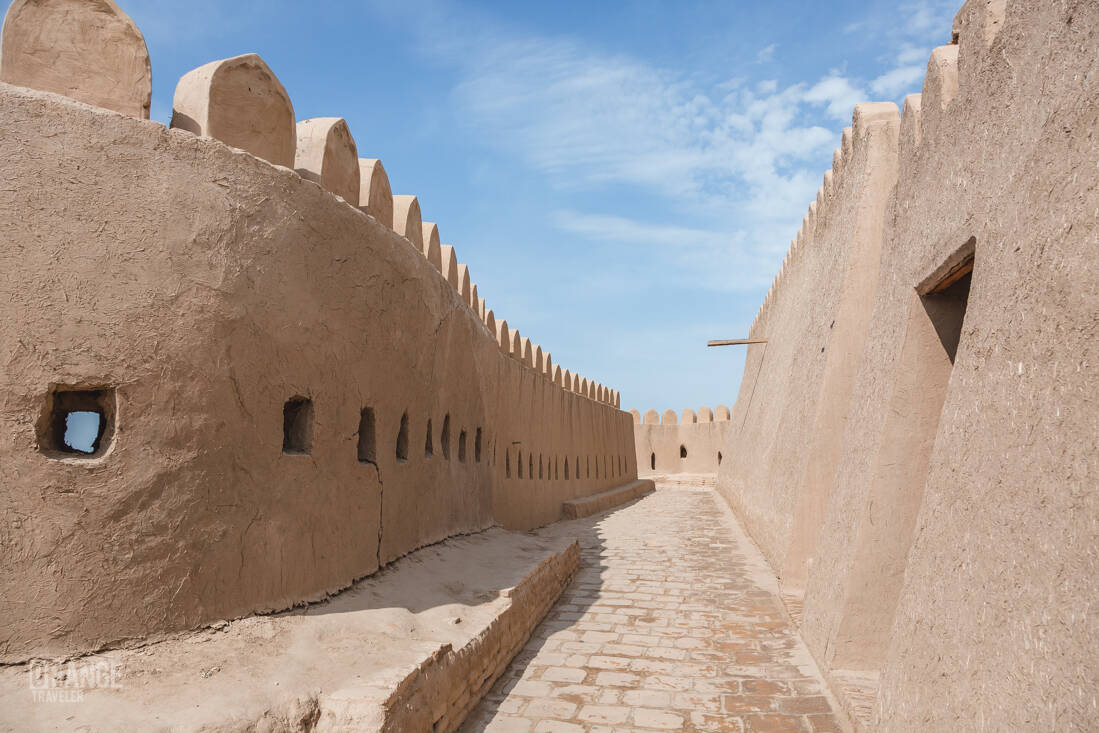
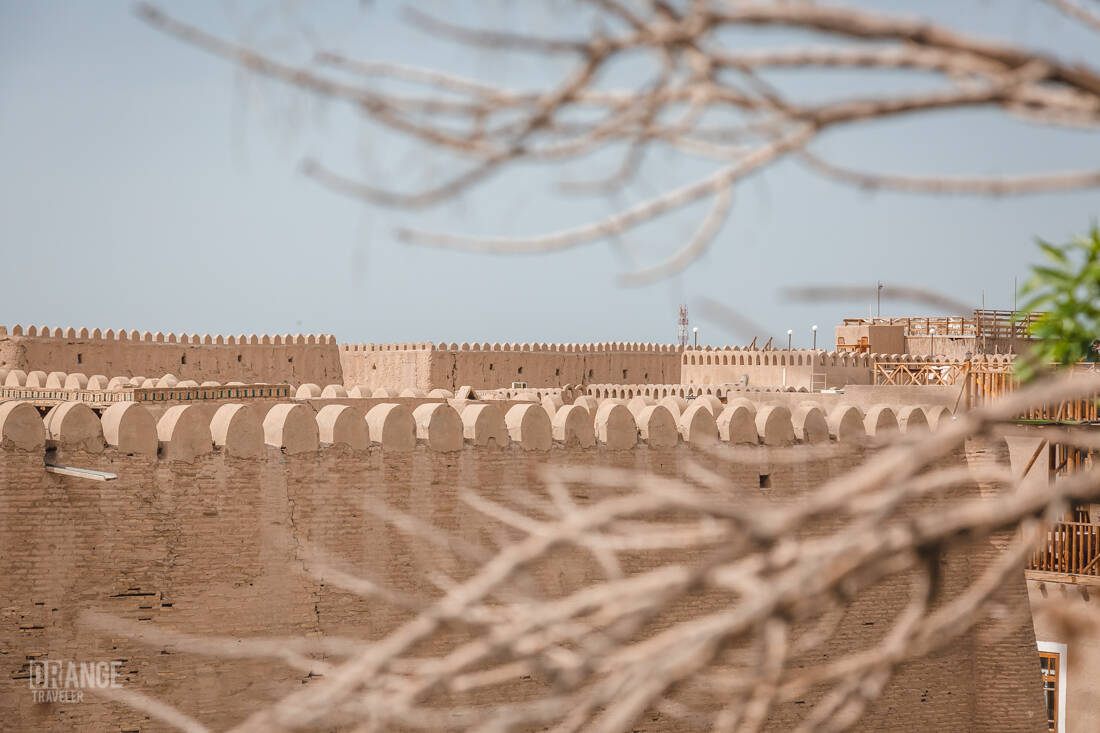
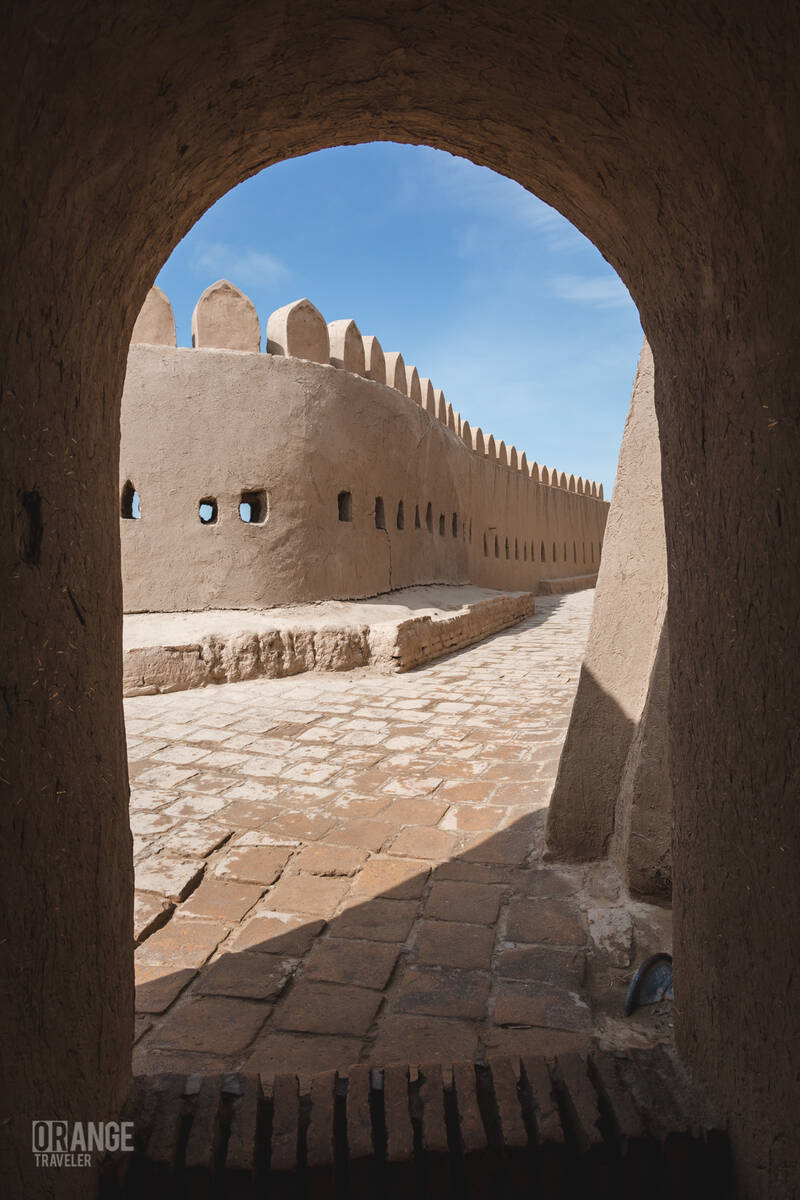
Ichan-Kala is the inner city, surrounded by a 10-metre fortress wall, and included on the UNESCO World Heritage List. Khiva’s rulers, clergy, high-ranking officials and wealthy merchants once lived here. It covers an area of 26 hectares. Today, it is a vast museum with more than 50 historical monuments and museums.
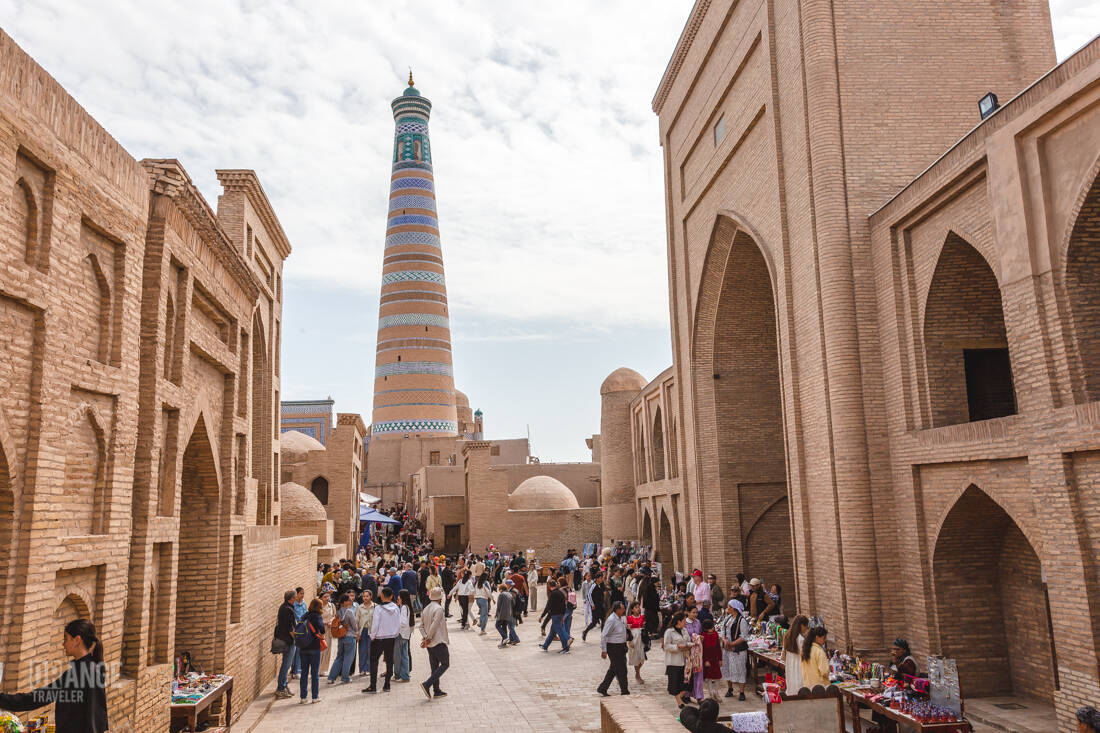
By midday, I had untangled the ethnogenesis of the Khorezm people. We travelled from the first settlers — hunters from the north, who came to these lands 15,000 years ago because of climate change — through the Egyptians, who brought liman irrigation 5,000 years ago, the Indo-Iranians and ethnic Iranians, who appeared here 3,700 and 2,800 years ago respectively, to the Turks, who migrated here between the fifth and seventh centuries, and finally to the Arabs, who brought Islam, science, architecture and aspirations of conquest to Khorezm in the first quarter of the 13th century.
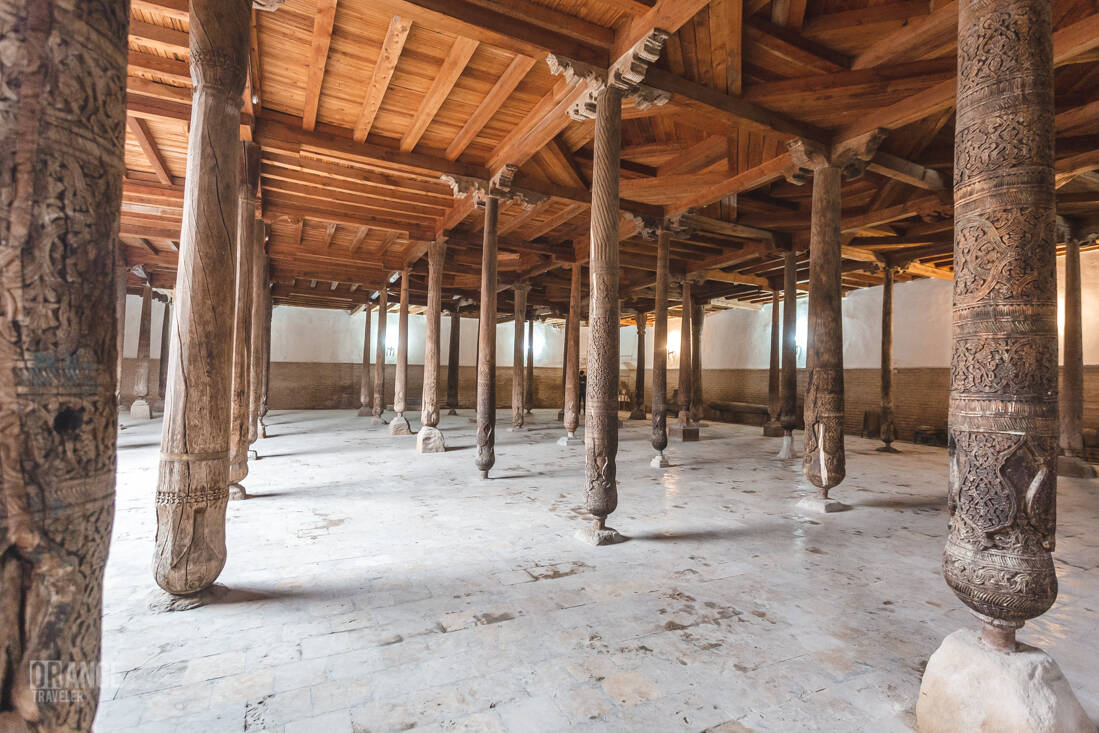
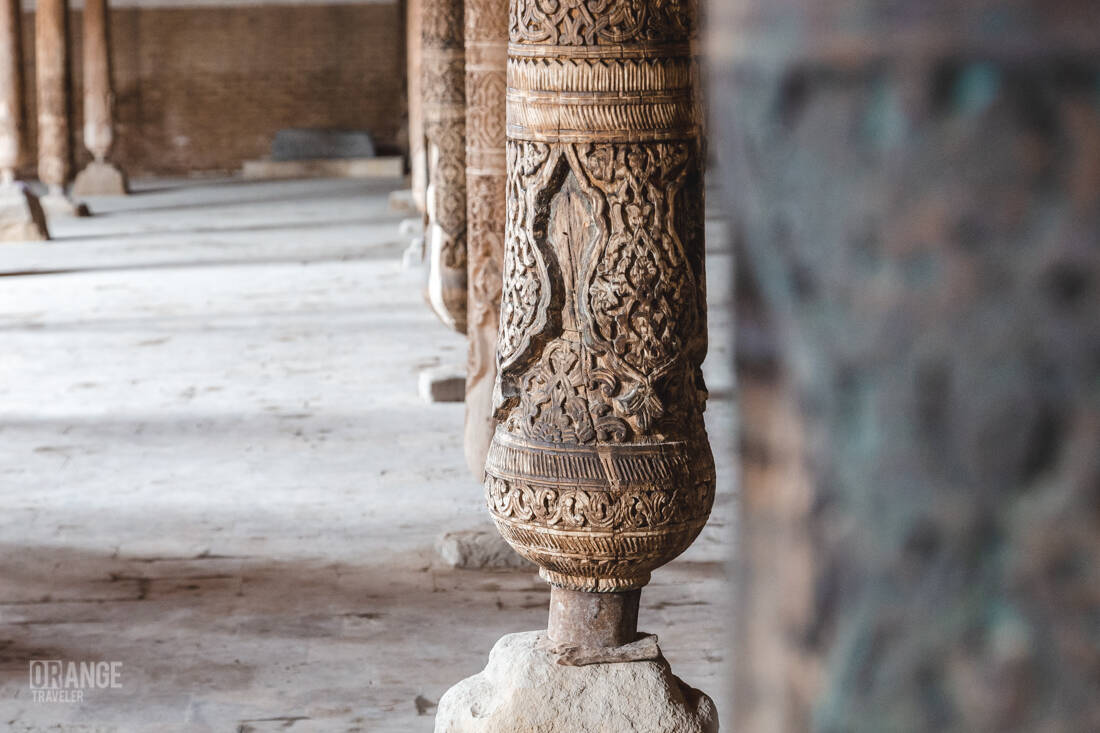
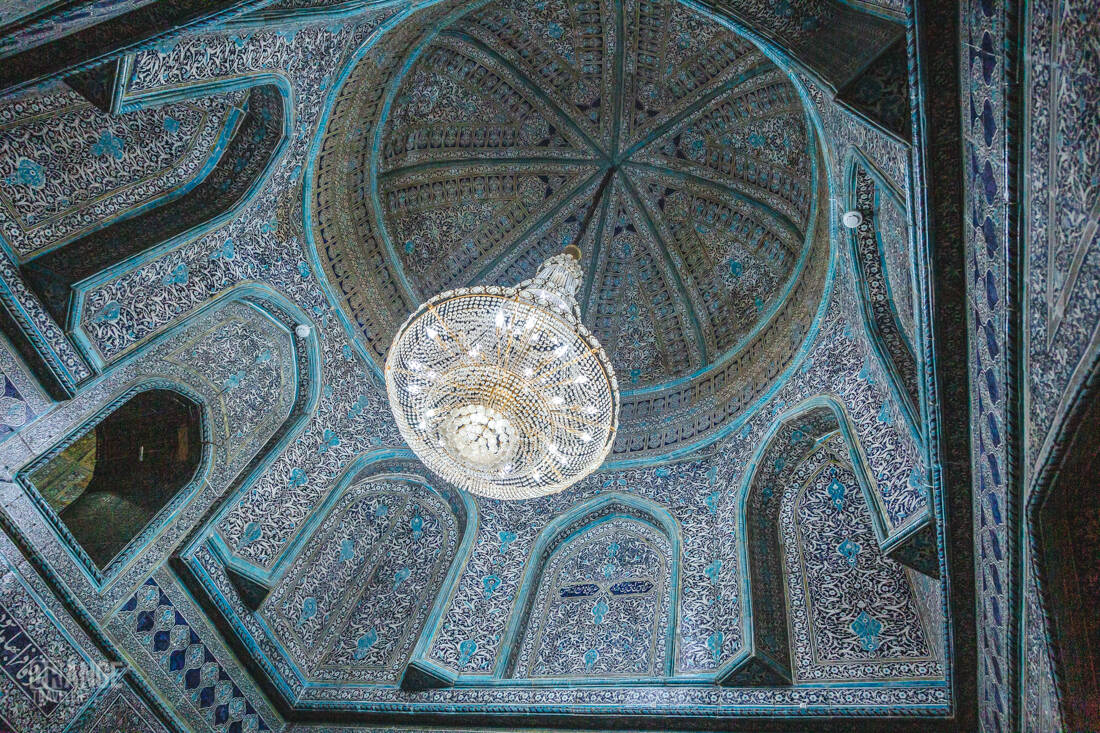
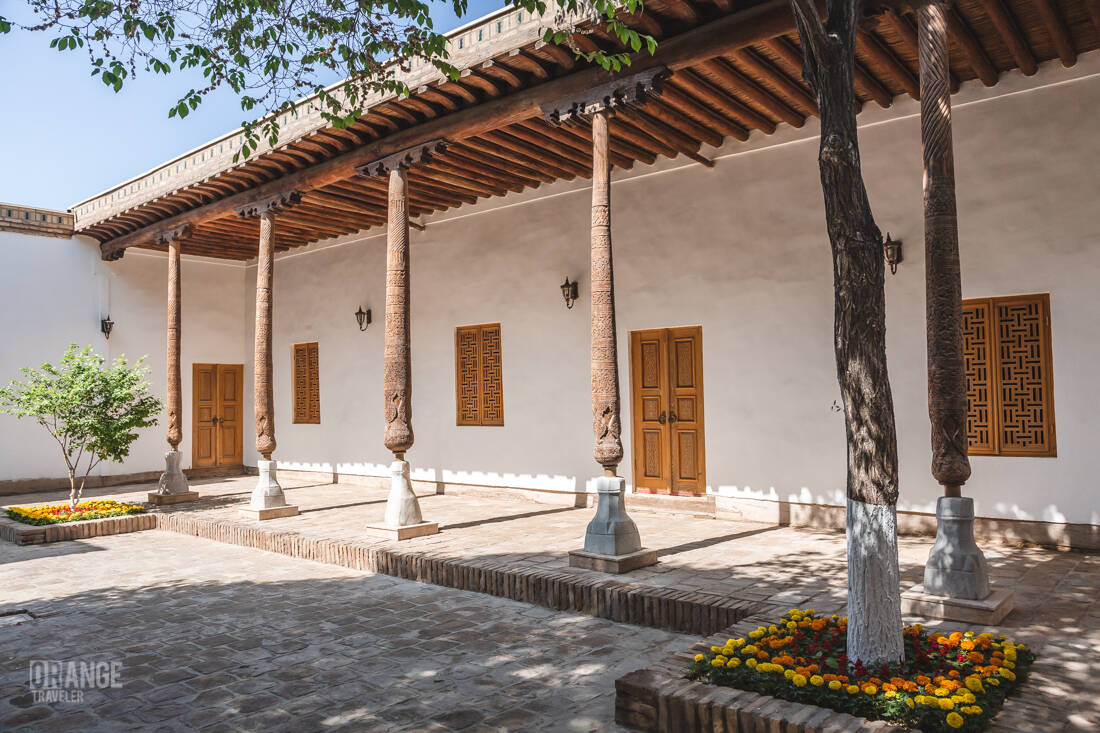
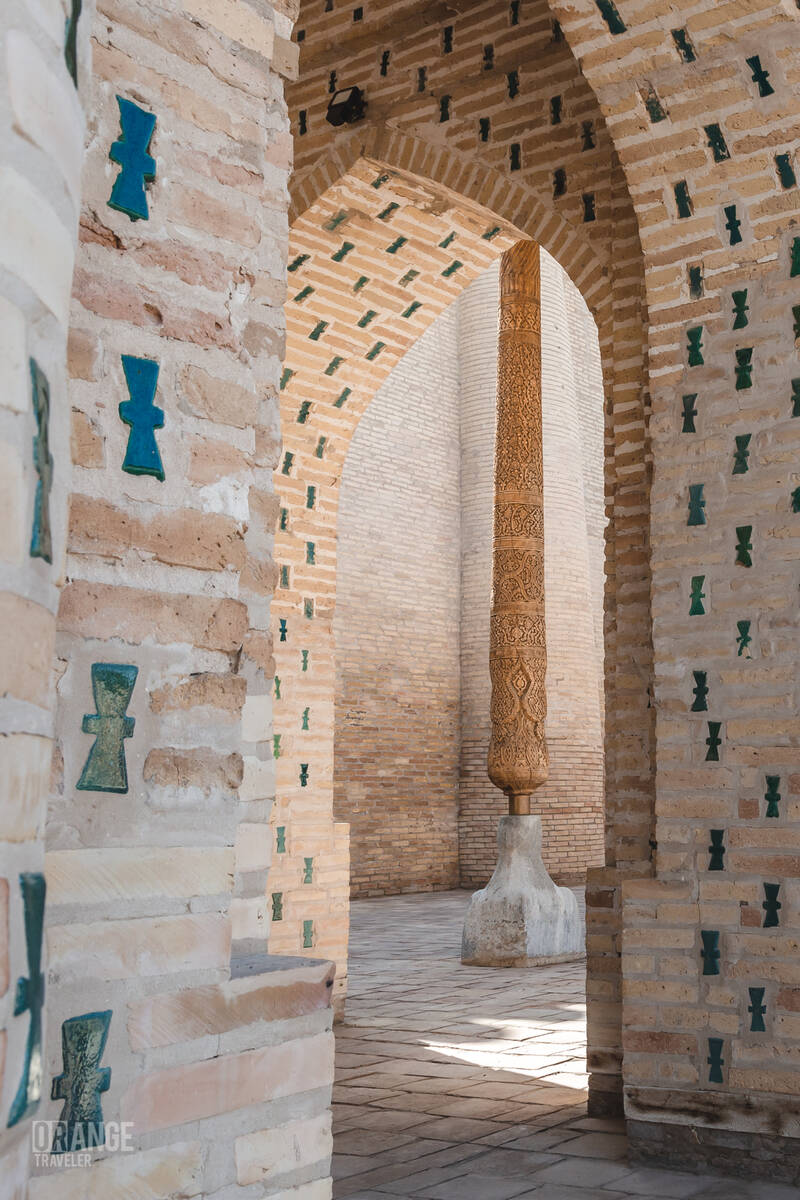
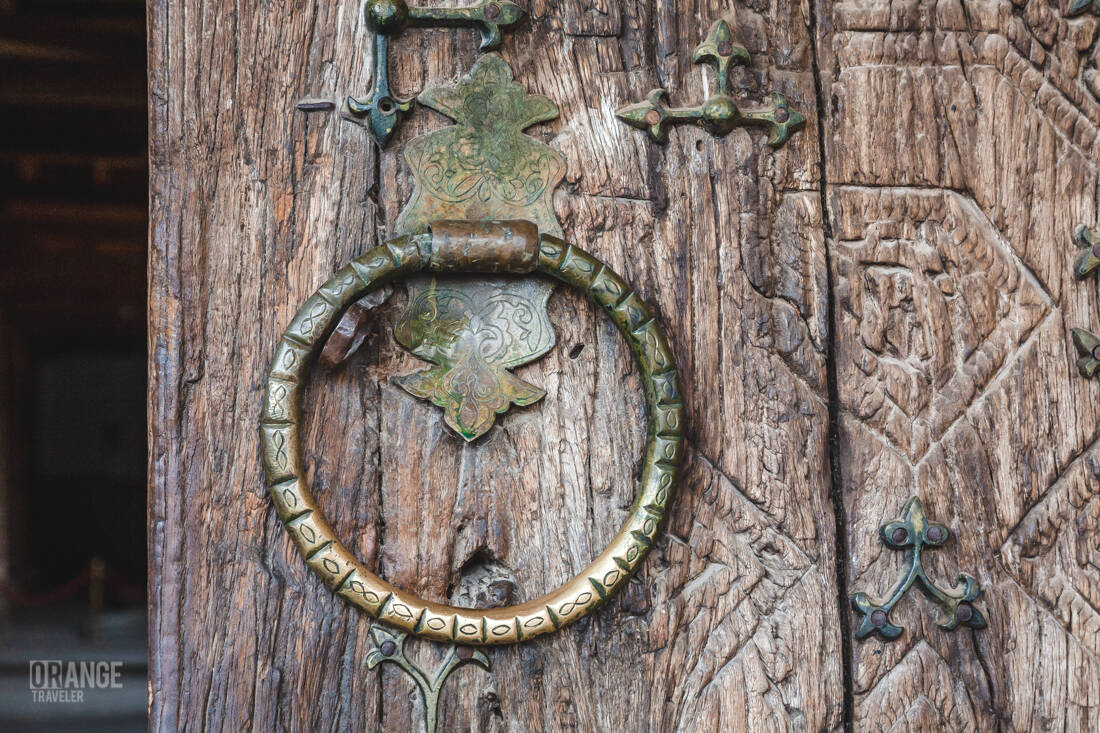
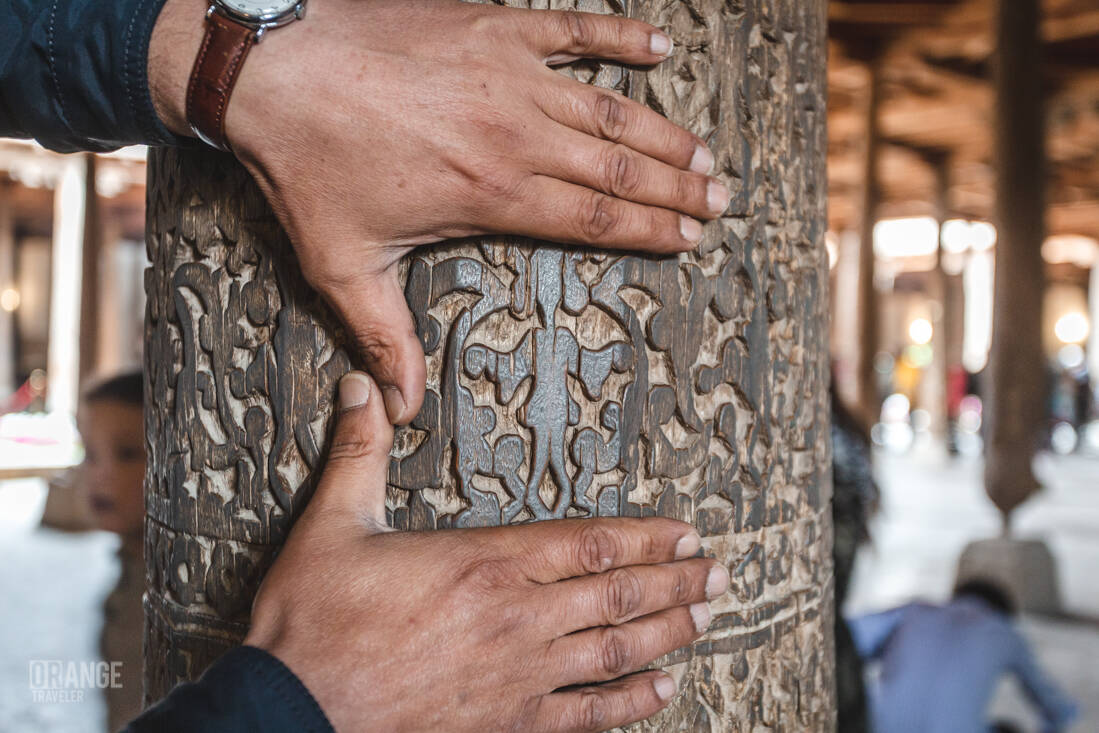
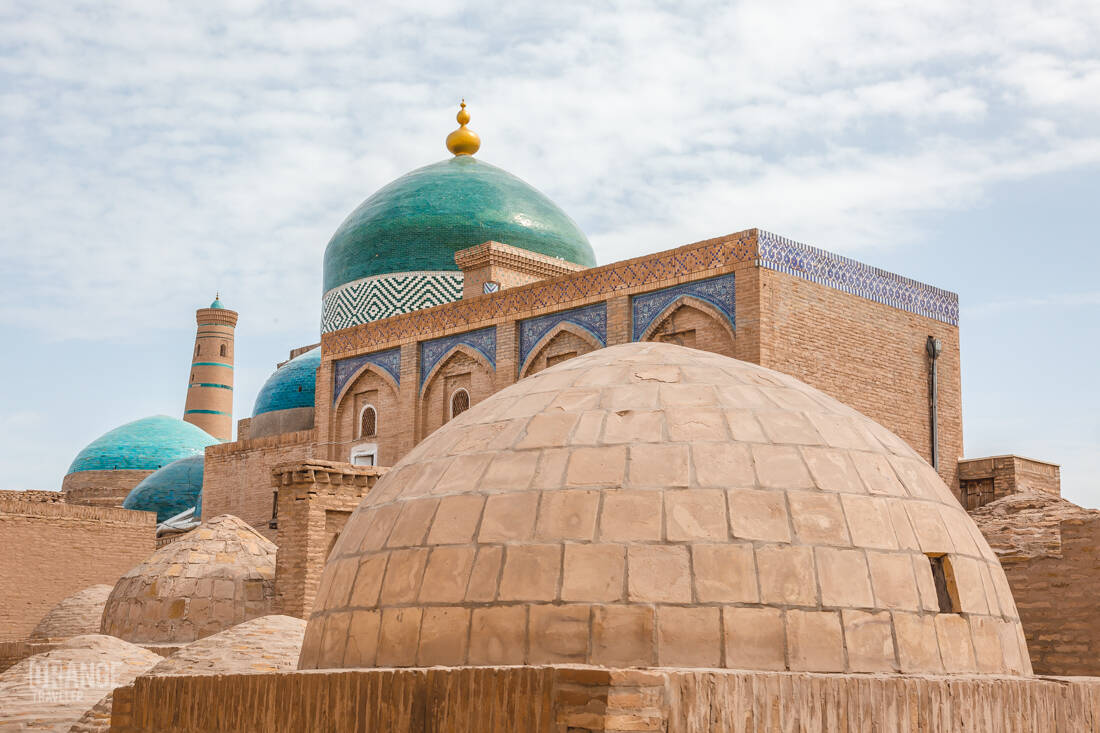
By the time we reached the Arabs, the rain had finally stopped, and we hurried into the heart of old Khiva. I stood in the Friday Juma Mosque, dating from the 10th century, peering intently at its ornaments. Madamin, with one arm around a wooden column as though it were the figure of the woman he loved, carefully ran his fingers over the carved patterns. Not without pride, he told me that he had managed to “decipher” 11 columns in the mosque. There are 213 in total, brought here from entirely different places and buildings.
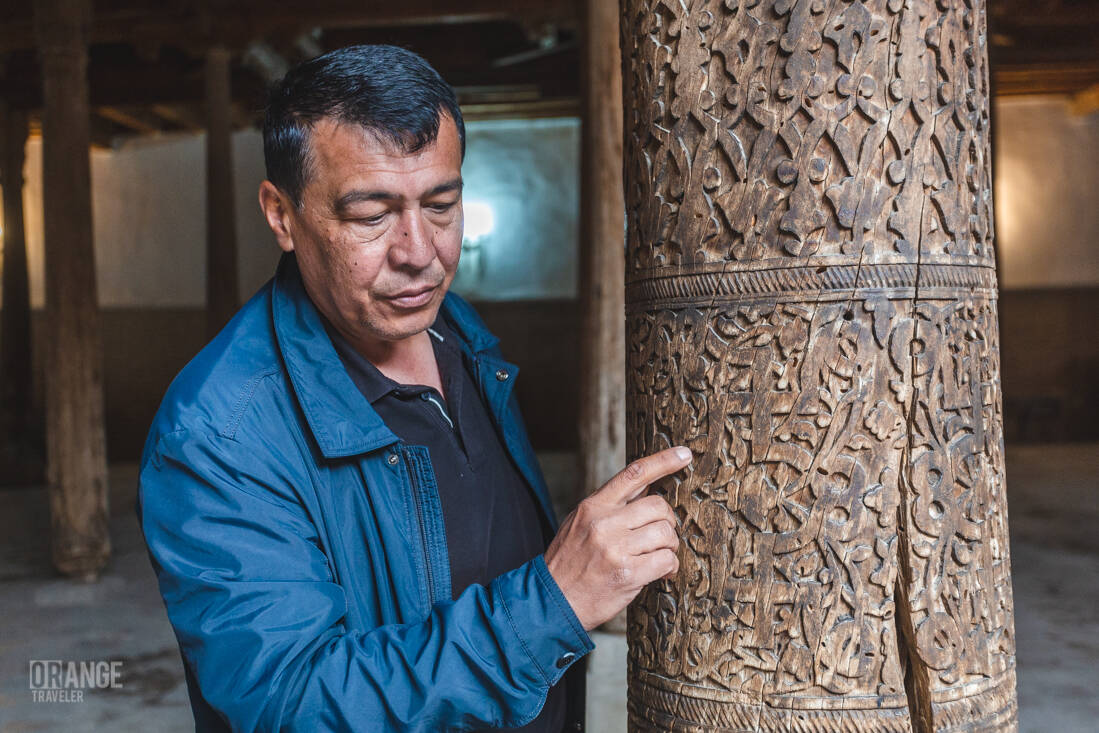
“I will erect an eternal place, illuminate it from every side, make you count your time, place angels above you, fasten your bowls to the trunk of the tree of life. The right bowl will fall, and your spirits will lead you to tailed birds. The left bowl will fall, and then a winged dog will drag cotton wool across a fiery river with a parallel bridge, crawling with snakes and pus.”
The verse Madamin had written about another 18th-century column sounded like an ancient riddle. I was overcome by the feeling that I had landed inside a new Dan Brown novel, with Professor Madaminov — the prototype of a Khorezmian Robert Langdon — and we were deciphering secret signs. It was extraordinarily exciting. From that moment on, I looked for signs and symbols everywhere. At one of the columns in a madrasa, Madamin pointed out a turtle.
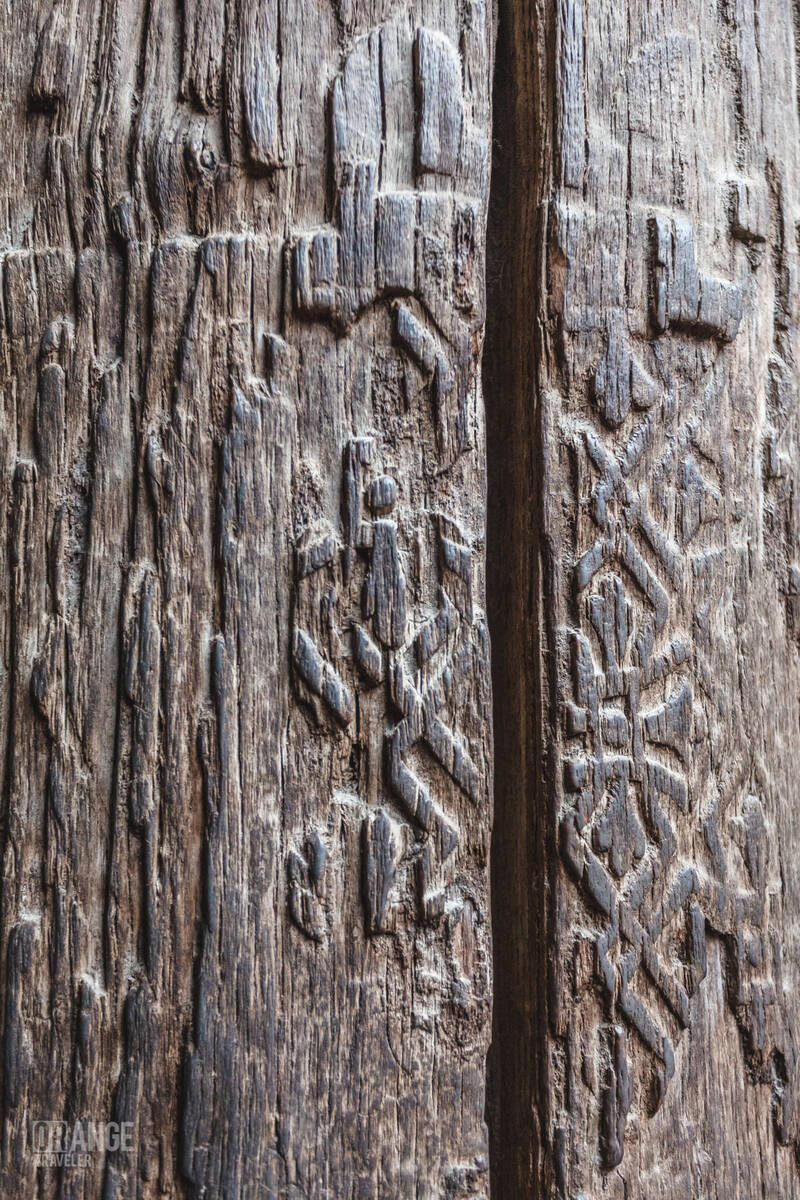
I was genuinely surprised. “But why a tortoise? Similar patterns on another column symbolised a horse.” “Oh, come on, what horse, Olya? It is a turtle, plain as day.” “No, look, there is the horse’s muzzle. Its leg. Its hindquarters. Here are two more legs, here is the rider, and there are even hooves in the stirrups.” “Then find me a horseshoe,” Madamin suggested, slightly irritated. I examined the column closely, decided that one line could pass for a horseshoe, and found a whip as well.
“Olya, it is a turtle, a symbol of the universe, standing on three elephants. And what you are pointing at is the unopened bud of a cotton tree! Why are your horseshoes above the hooves?” Madamin said convincingly.
Deciding not to argue with a scholar, and not asking where the three elephants were, I stepped away from the column of contention. Although, honestly, there had been a horse.
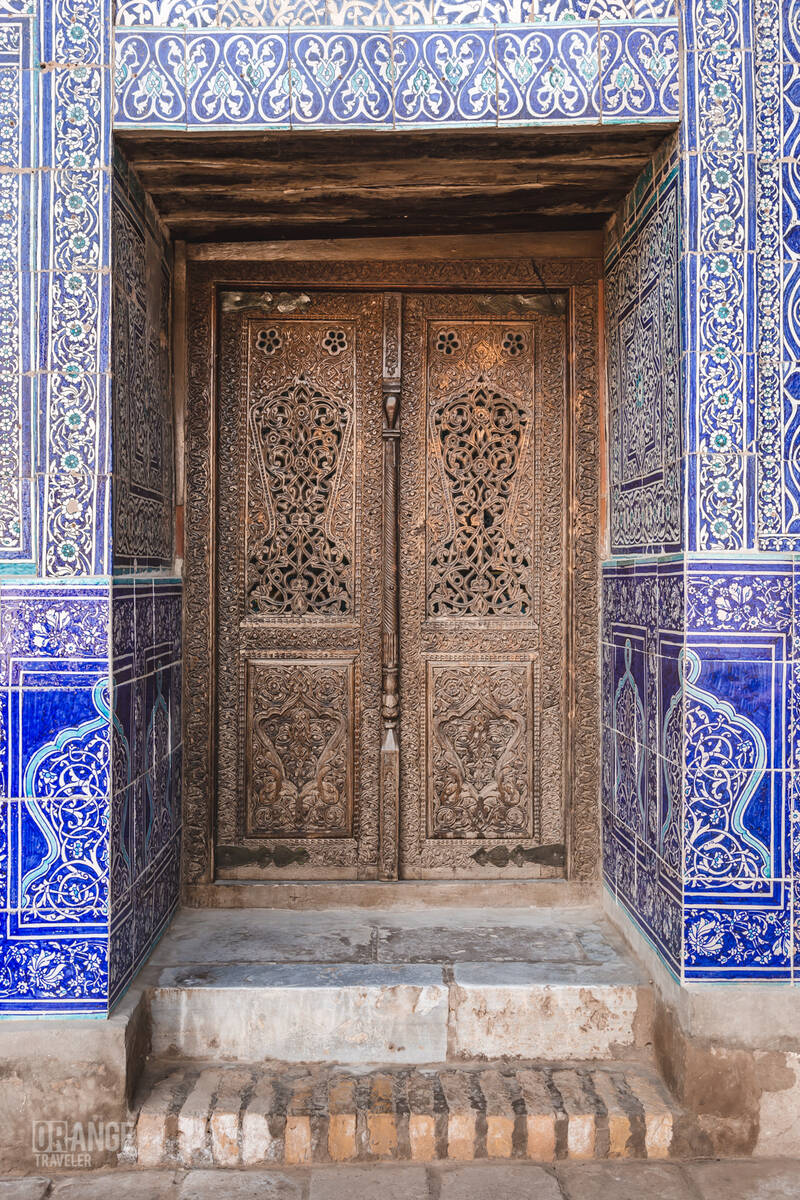
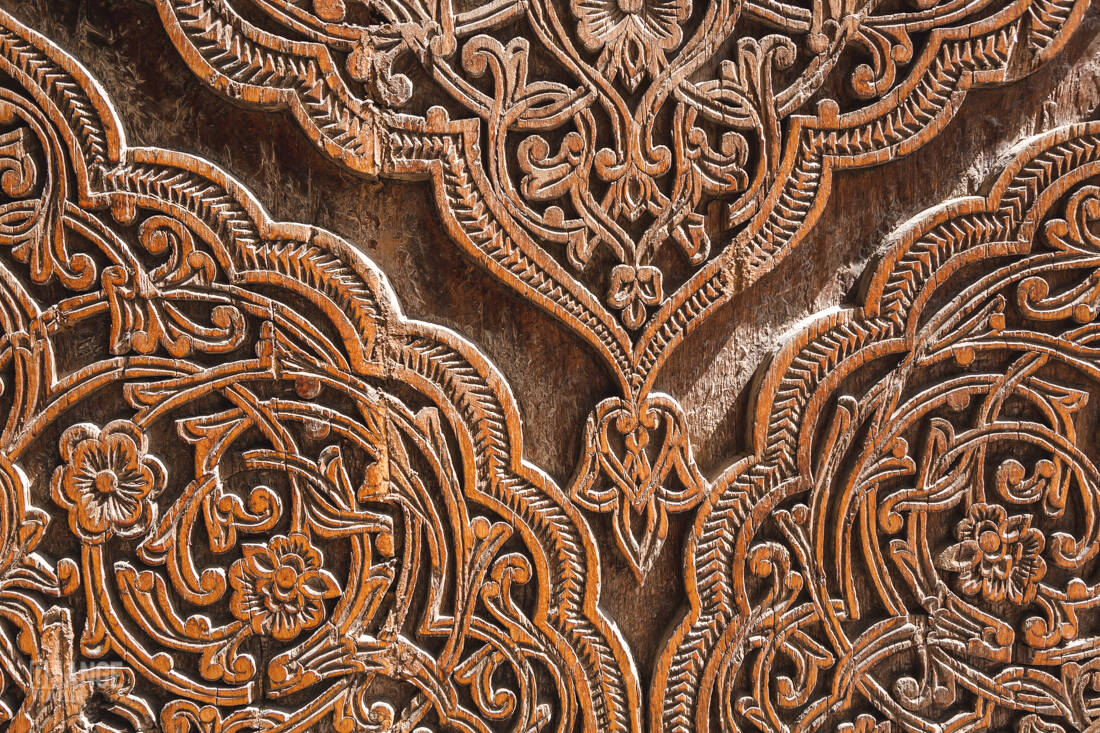
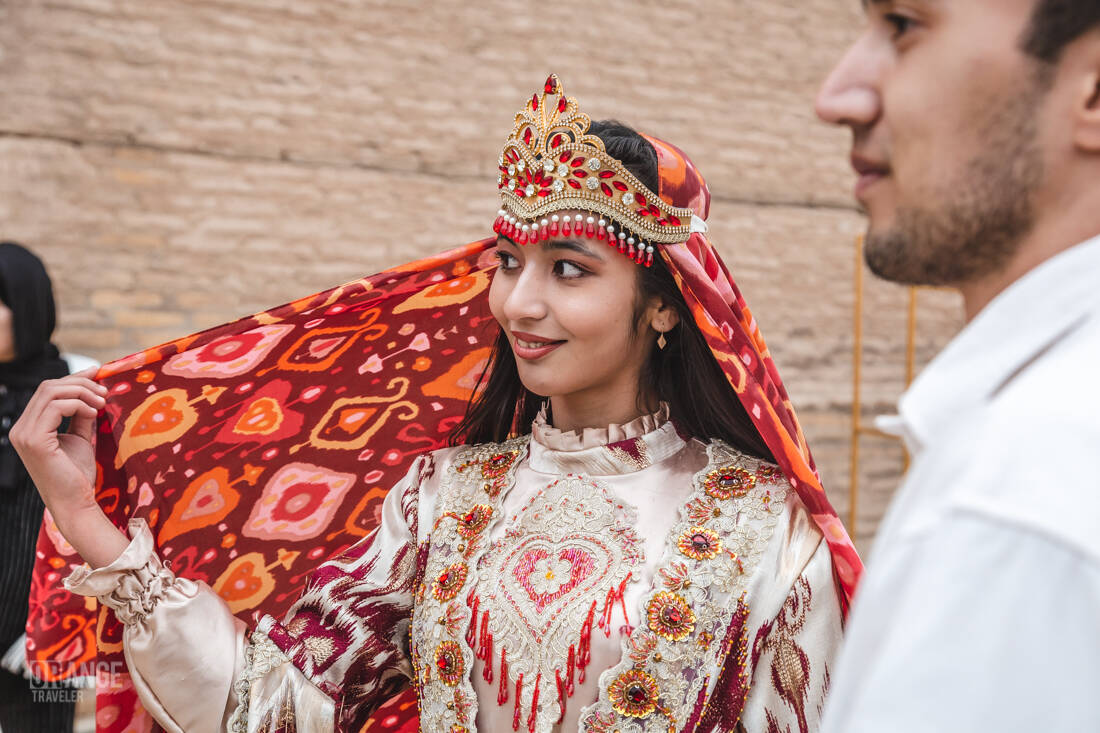
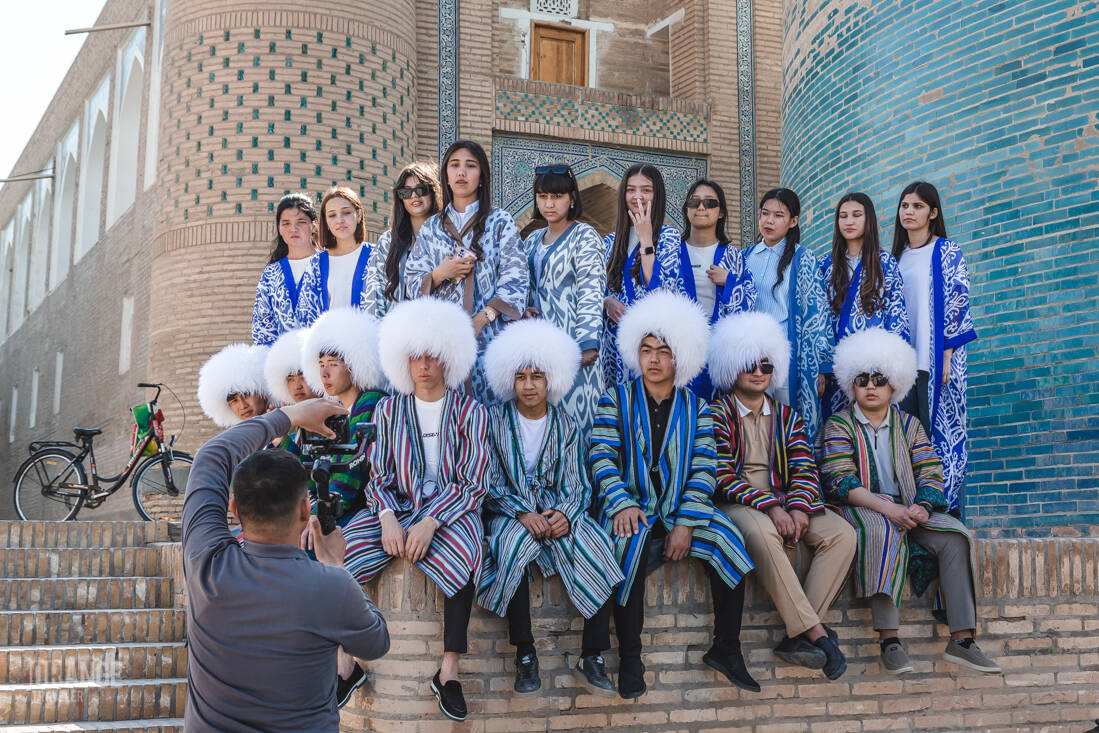
Signs followed us everywhere through Ichan-Kala: symbols of infinity, swastikas, solar circles and spirals. Having paid a girlish compliment to a completely unknown girl — or rather, to the patterns on her robe — I once again heard an interpretation. The woman turned out to be a guide.
“Birds and horns are protective charms. This is my fertility, this is my family happiness. No attacks from evil spirits will touch me, I do not fear the evil eye, and I am getting richer too,” she boasted a little, before leading her group on.
“Madamin, I think I need exactly the same robe with an Indo-Iranian ornament, for good luck,” I said.
“We will find one,” he replied at once.
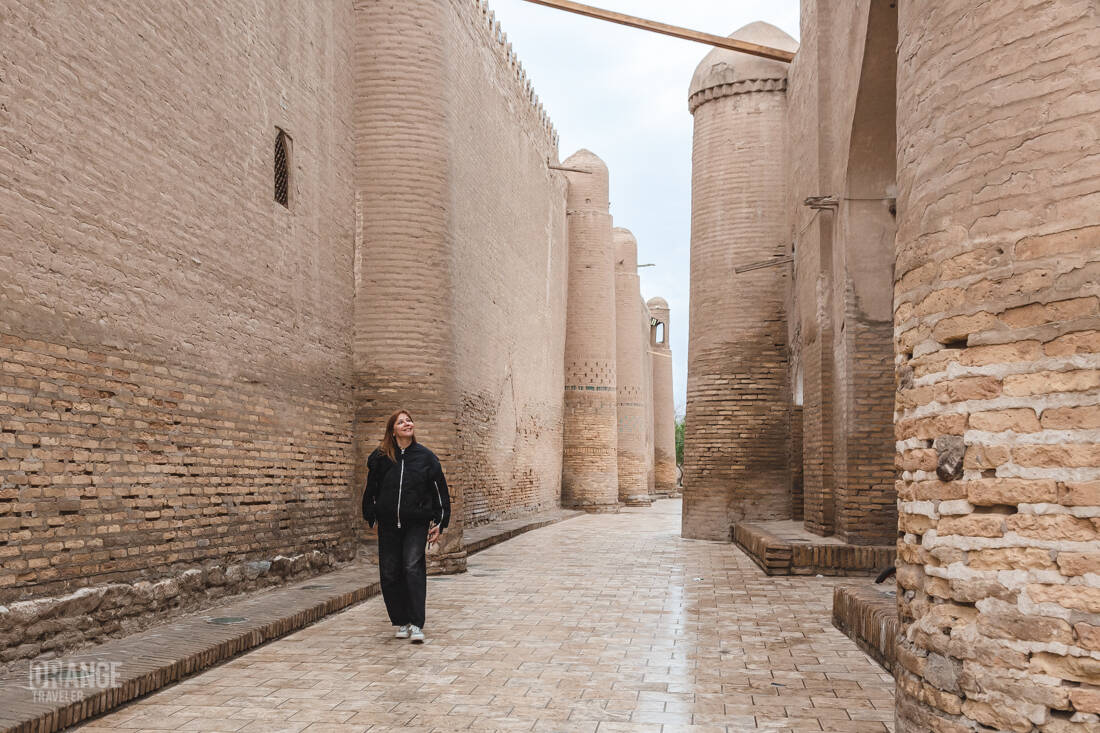
Khiva is one of Uzbekistan’s most ancient cities. It is believed to be 2,500 years old. In the labyrinth of Ichan-Kala’s old streets — Khiva’s main tourist attraction — you move from one era into another, into museums that tell of Avicenna, of the native son Muhammad Musa al-Khwarizmi, the founder of algebra, of the Zoroastrian priests who built the first fortress, of studies in Khorezm madrasas, and even of the first tomatoes brought to Khorezm by Mennonites.
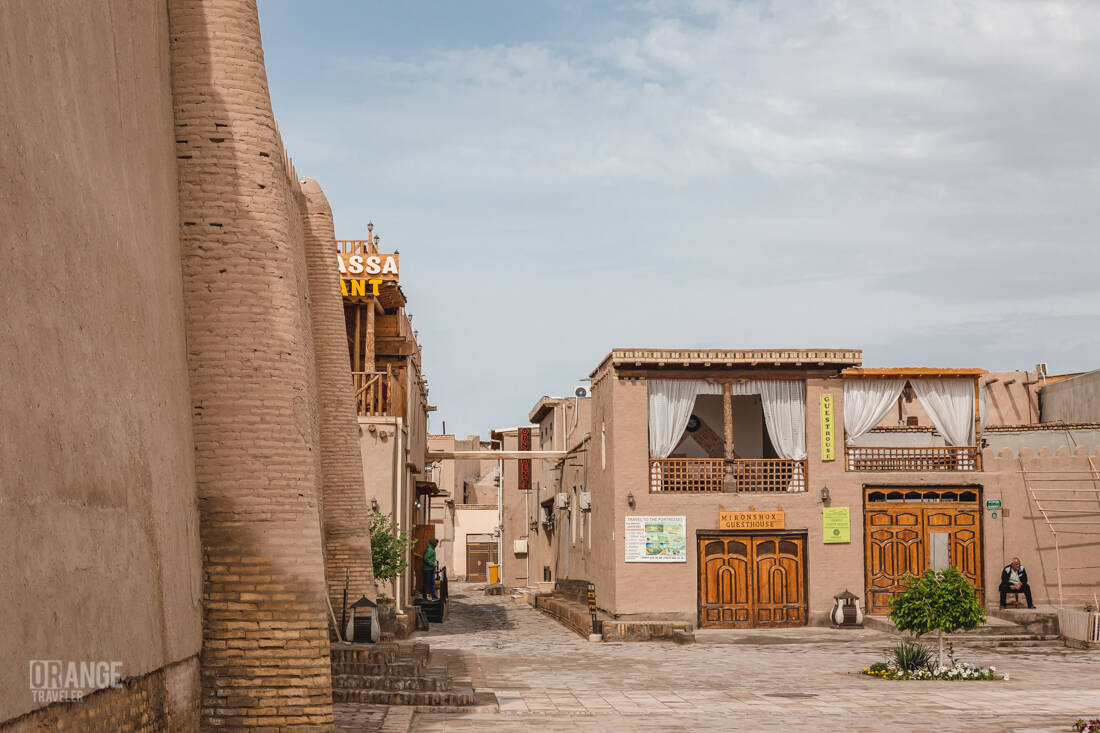
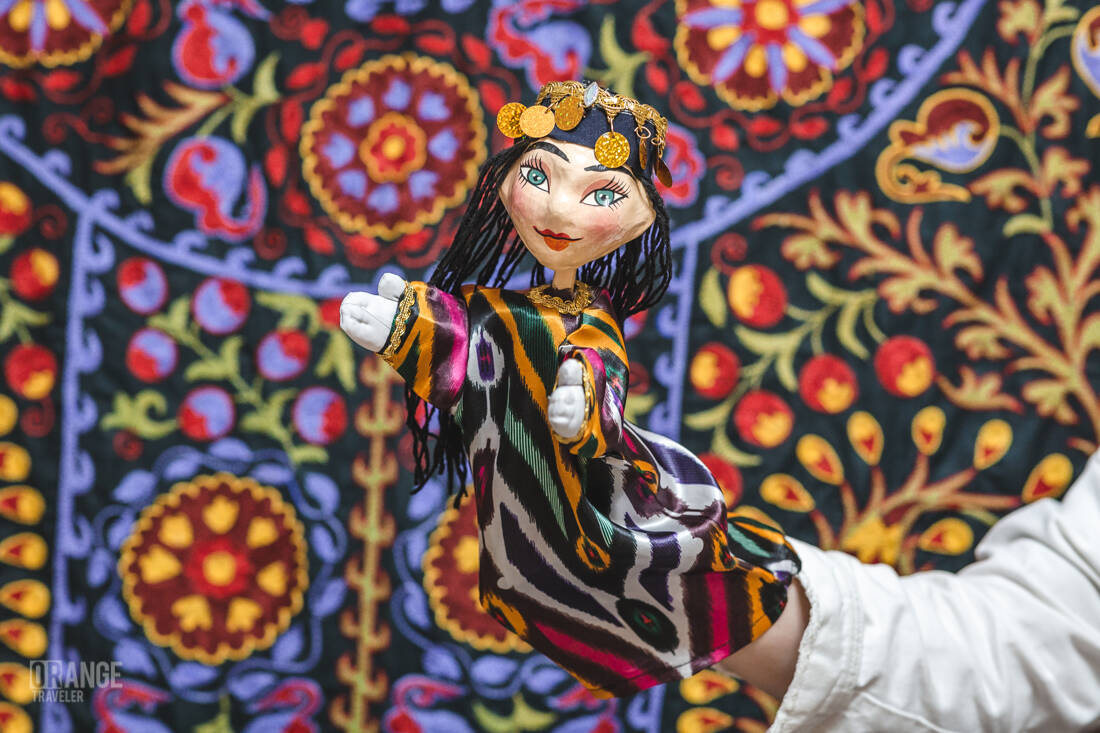
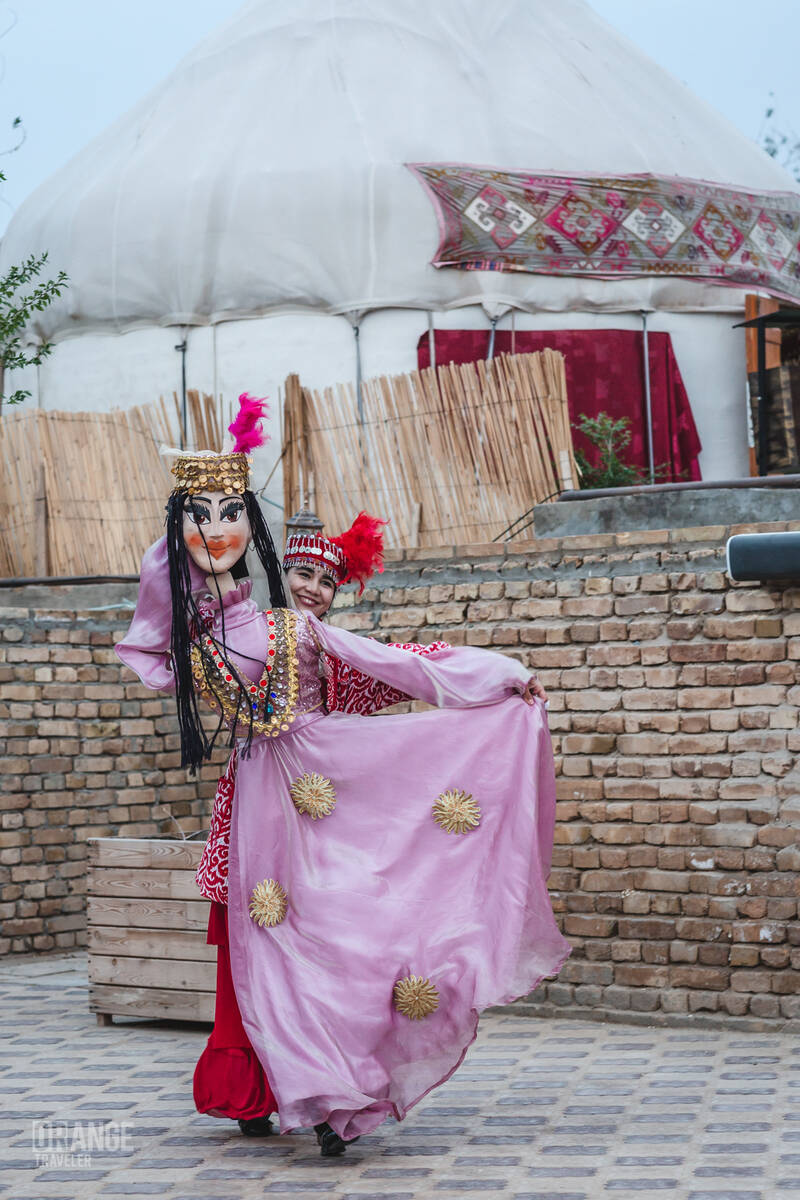
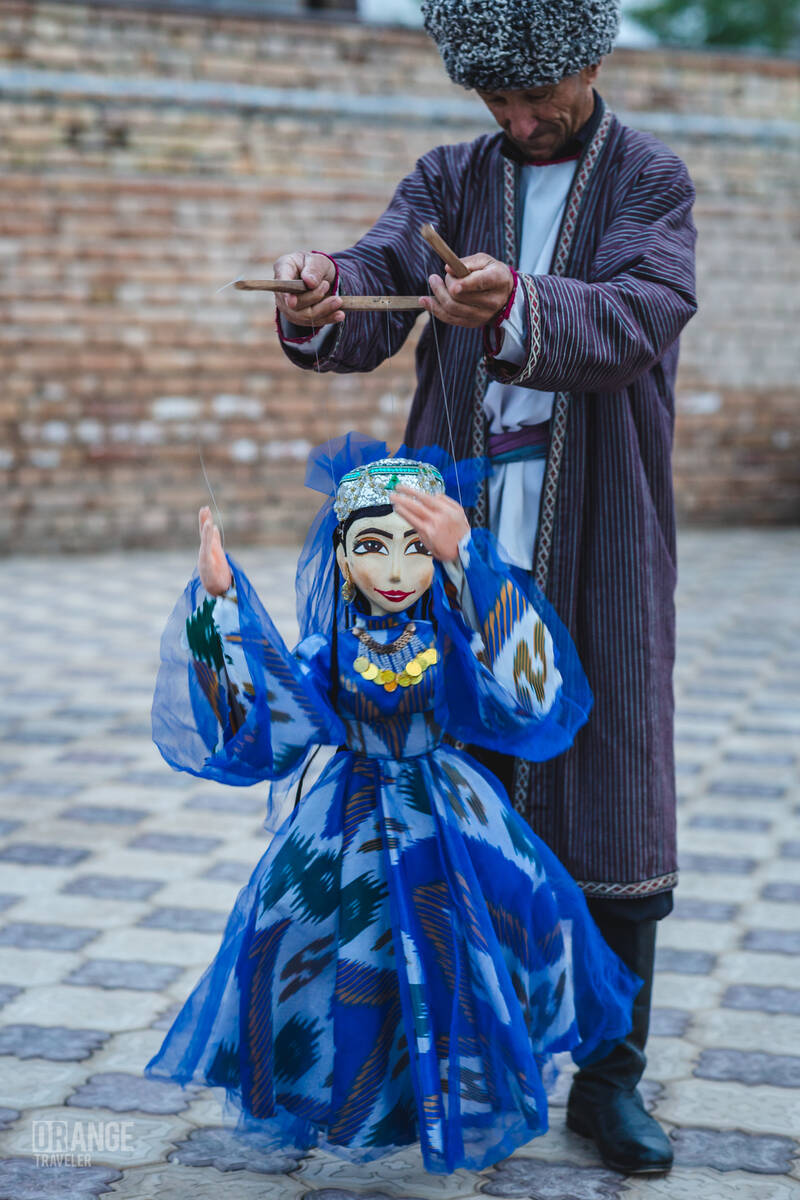
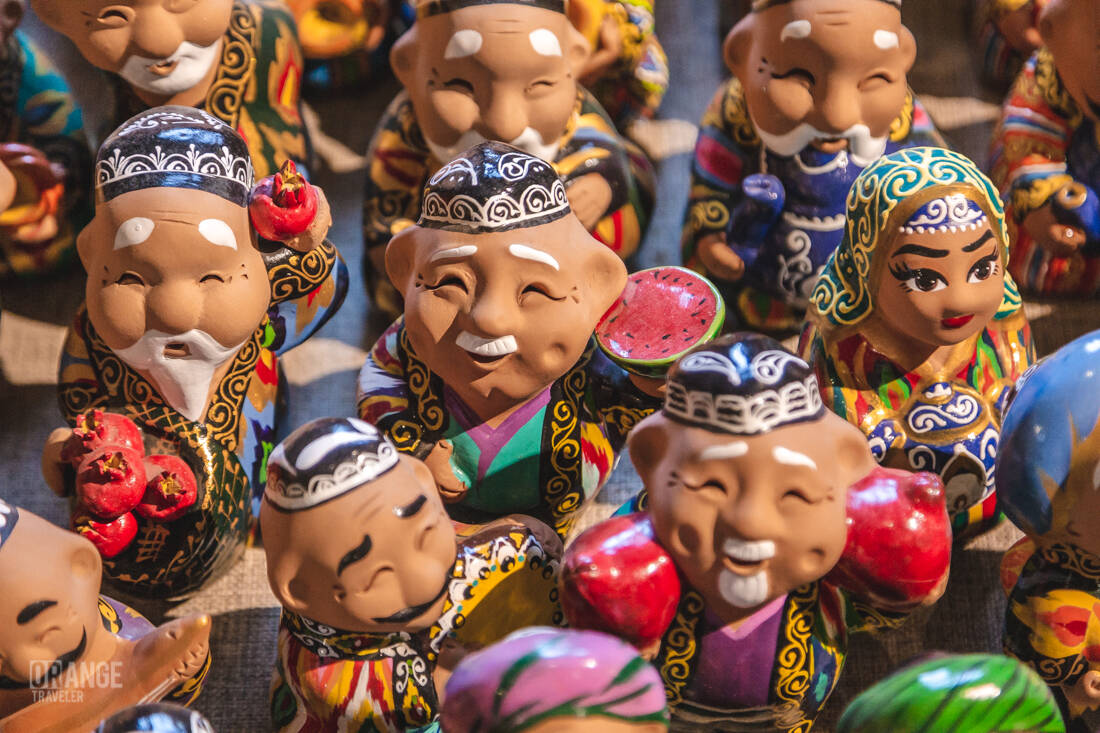
Turning into yet another alleyway, we found ourselves in front of Khiva’s caravanserai, where chapans and carpets are still sold. The old town has been rebuilt dozens of times and survived Soviet restorations, yet it still looks authentic. Townspeople still live here, while craftspeople run workshops where you can look in and exchange a few words with the person hammering out a kazan in a copper shop, or making papier-mâché glove puppets, like Rustam Kuyazov.
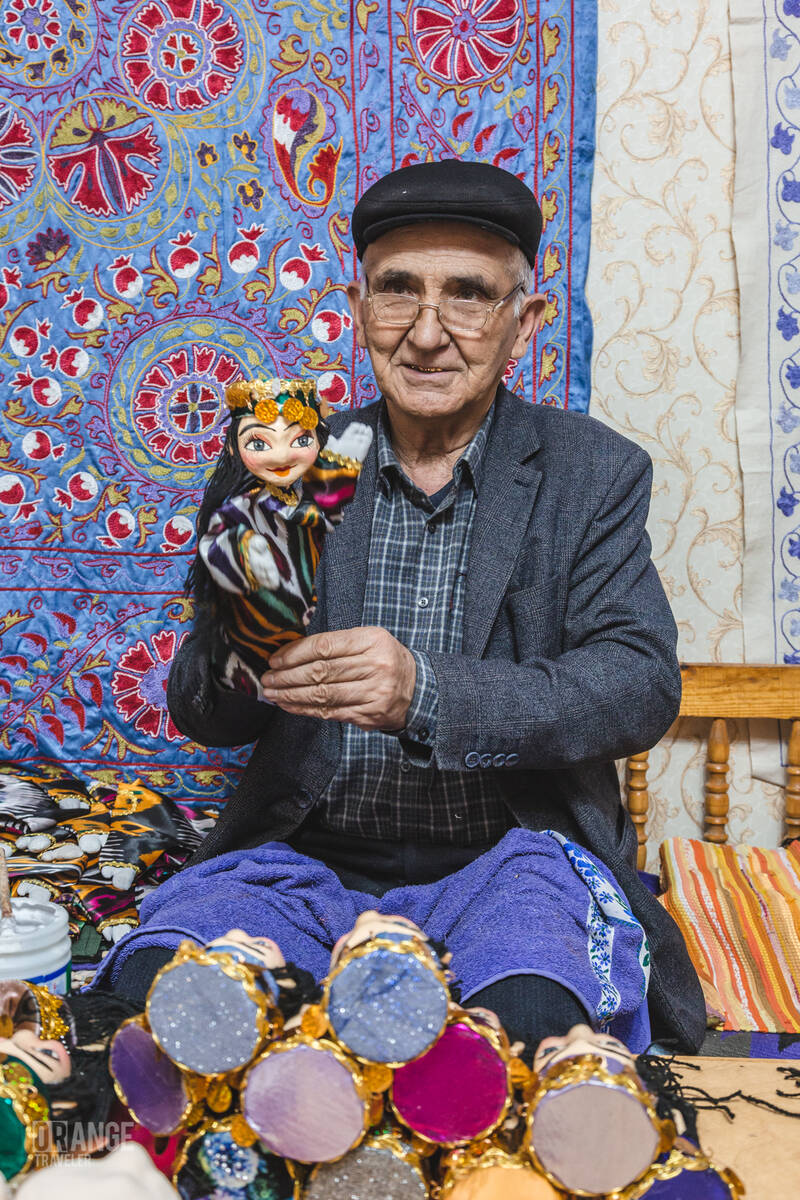
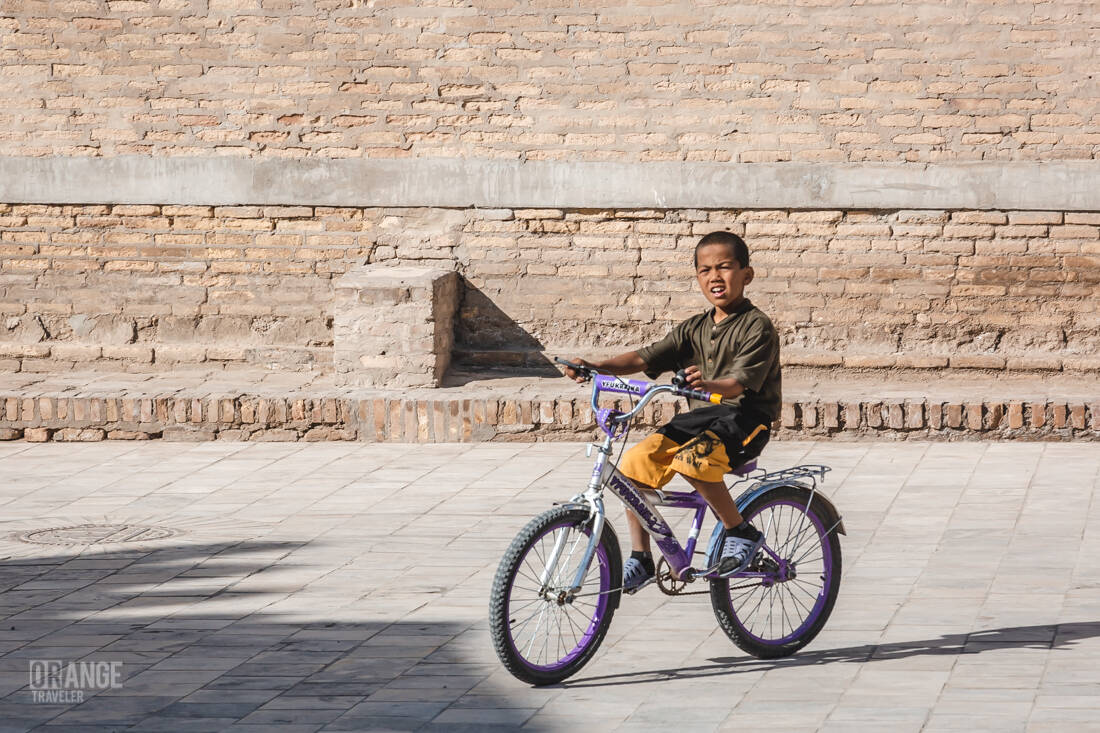
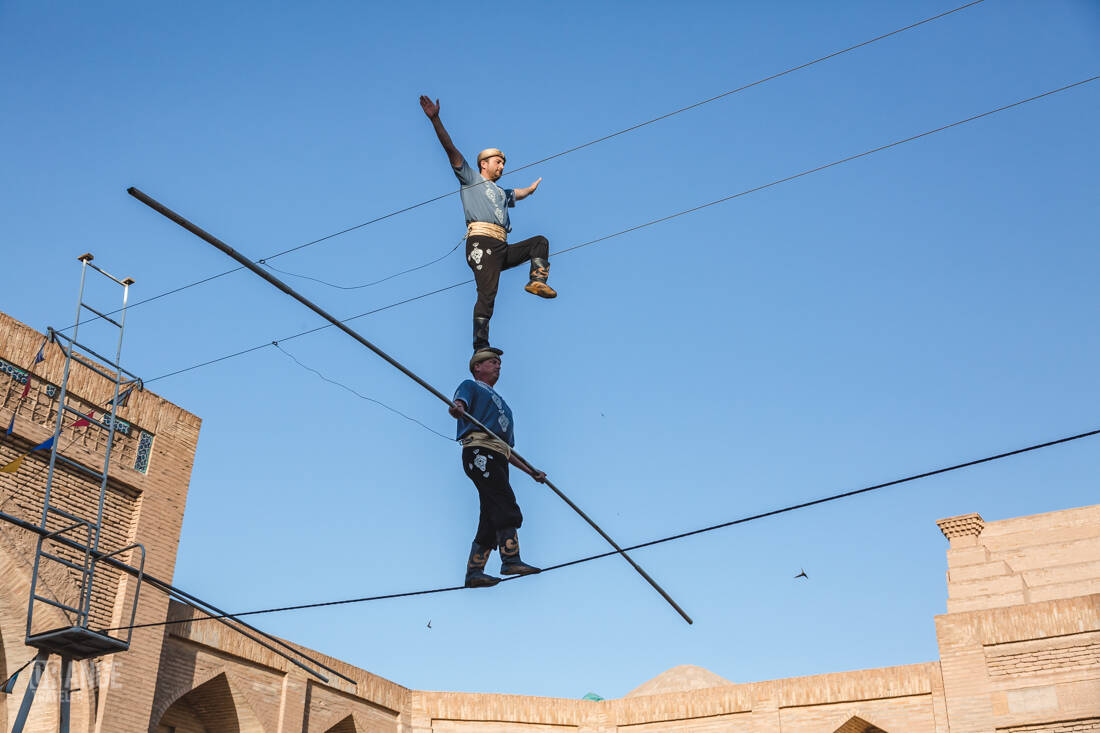
Madamin’s stories of the different periods of Khorezm did not quite tally with the chaotic picture of everyday life in Ichan-Kala. In a small square, someone was shearing a camel. Schoolchildren, dressed in robes and large hats, were having a class photograph taken. A woman deftly pulled fresh flatbreads from a tandoor. Tightrope walkers flexed their muscles as they prepared to perform. And I liked this all-encompassing Khorezmian chaos very much.
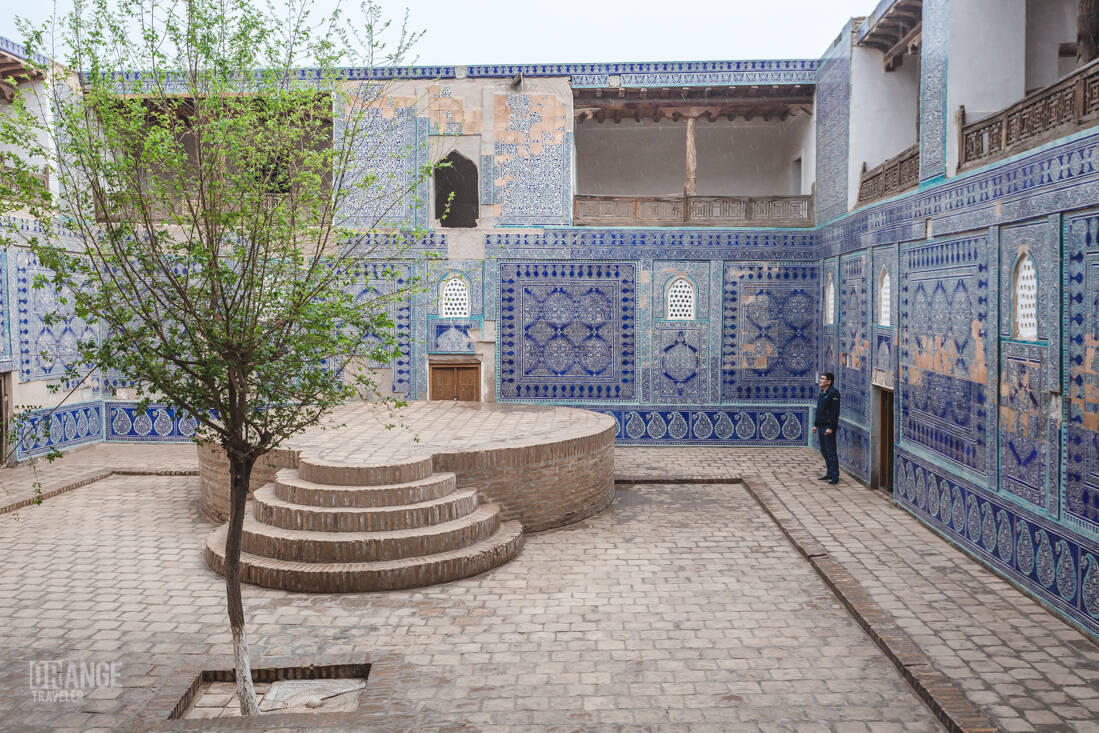
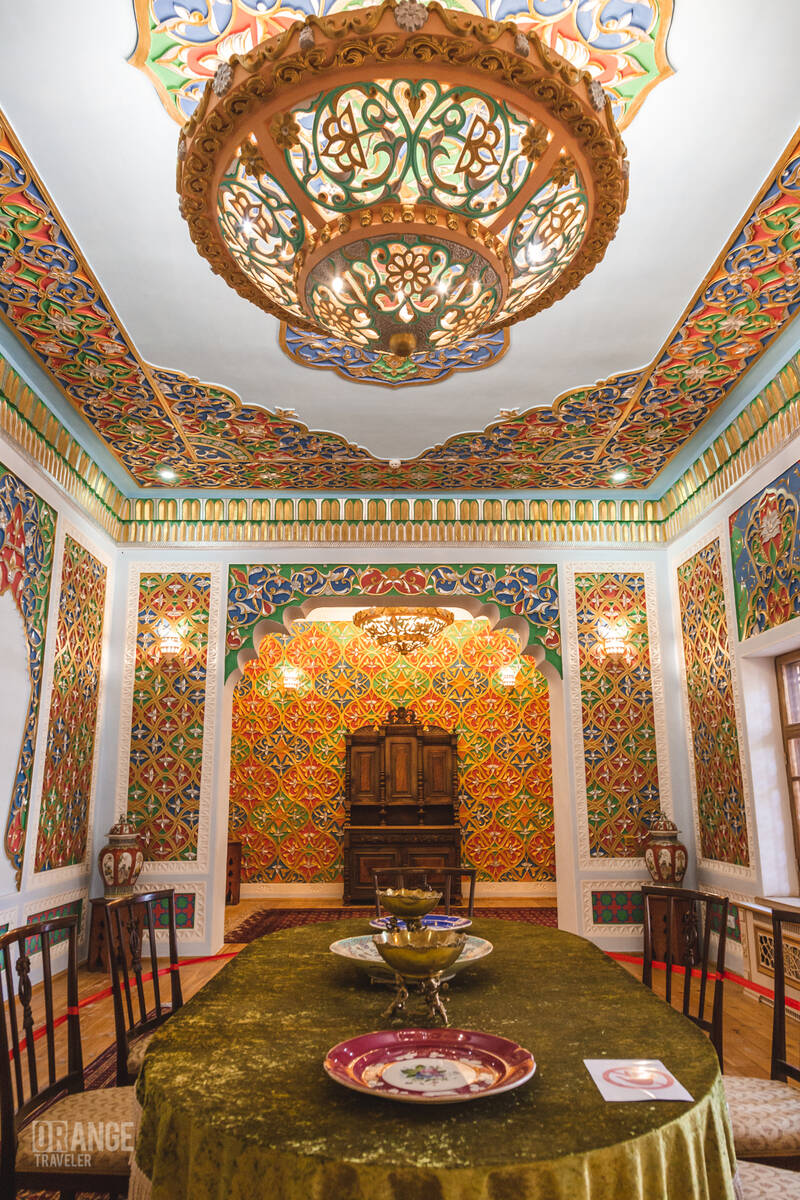
It was quiet in Tash-Hauli, the palace where seven khans had lived. It was built like a labyrinth, so that reaching the ruler was no easy matter. Most of its 85 rooms are closed, and those that can be visited are now largely empty. They say that the khan’s reception hall was once decorated with exquisite carvings. Its walls and ceiling were covered in gold leaf, while the doors were inlaid with precious stones and ivory.
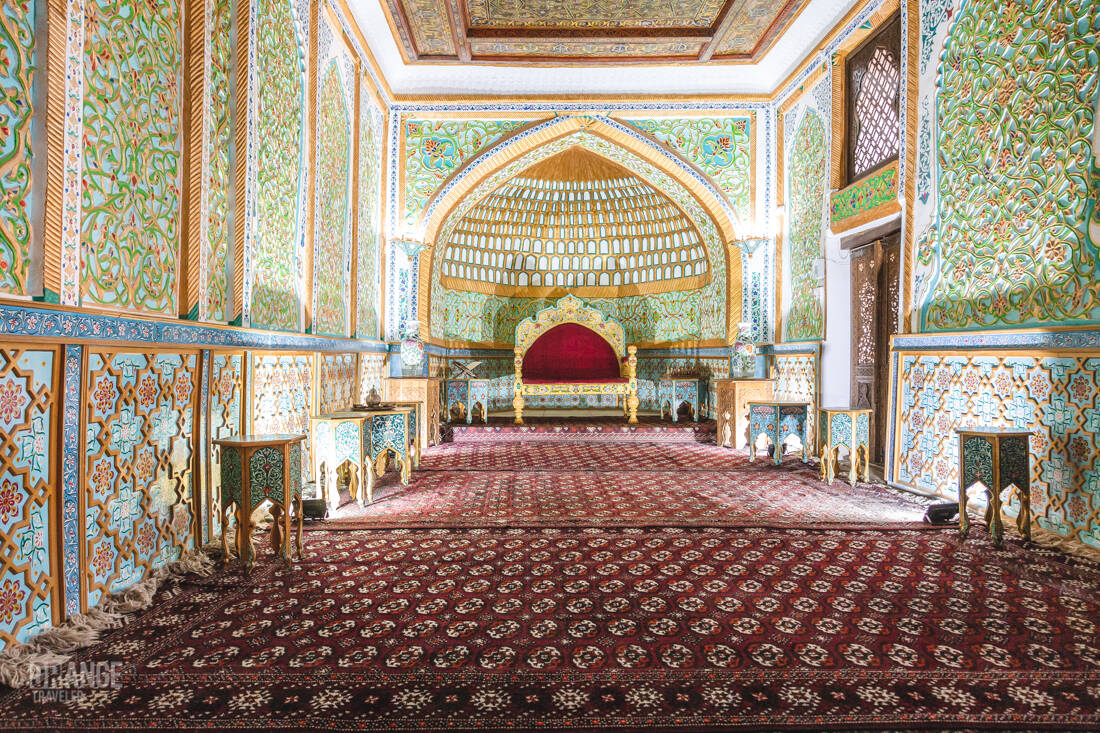
The throne was adorned with rubies, diamonds, ivory, turquoise, silver plates and gilding. Since 1875, it has been kept in the Armoury Chamber in Moscow. In the wives’ quarters stood elegant carved furniture and chests. The walls and ceilings of the concubines’ rooms were painted. Everyone lived together in the forbidden part of the palace, where only the khan and eunuchs among men were allowed to enter. Not exactly harmoniously. Clashes sometimes broke out because of jealousy over the khan’s attention.
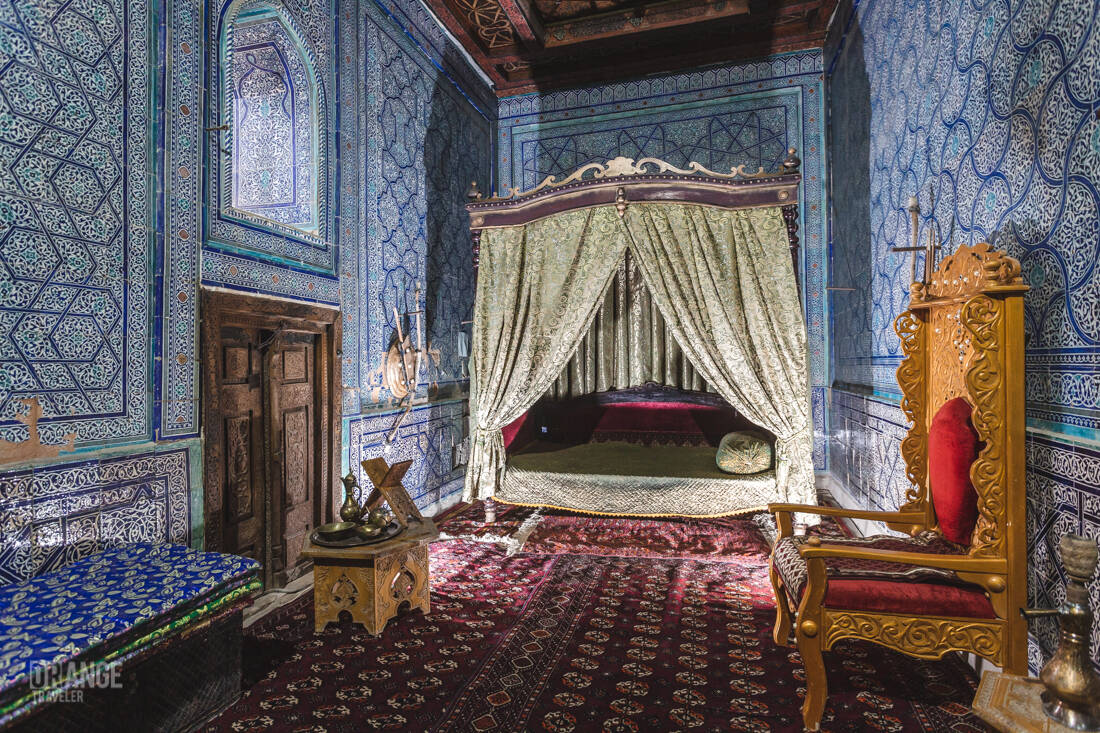
“Here, in the khan’s chambers, gifts for the women who had spent the night with him lay in a niche in the wall. Only in the morning did it become clear what each woman would receive. The choice was wide: anything from precious stones and a deed to land to a packet of tea leaves. There could be something unusual too — an innovation of the time, for instance a gramophone,” said Madamin, and he was not joking.
Orange Fact
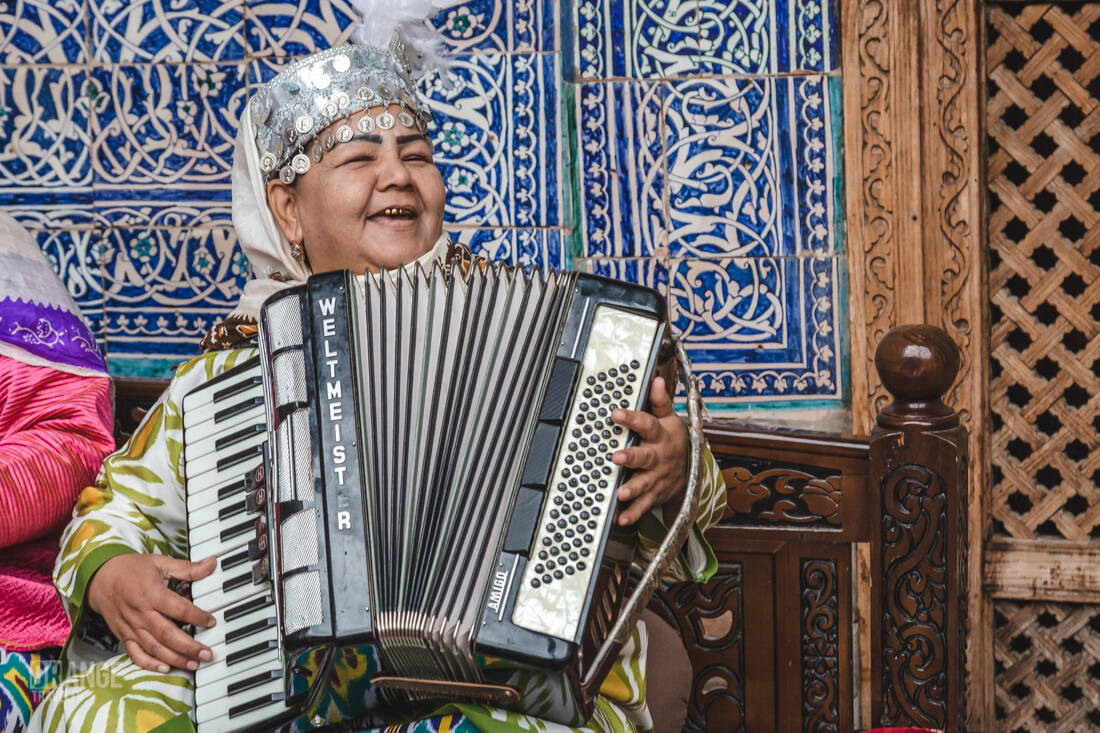
When looking at ornaments in Khiva, it is easy to recognise the Khorezm style. Its bright feature is floral patterns, with characteristic flowing transitions between lines, rounded forms and hidden images of birds. These ornaments can also be found in Khorezm ceramics, carpets and textiles.
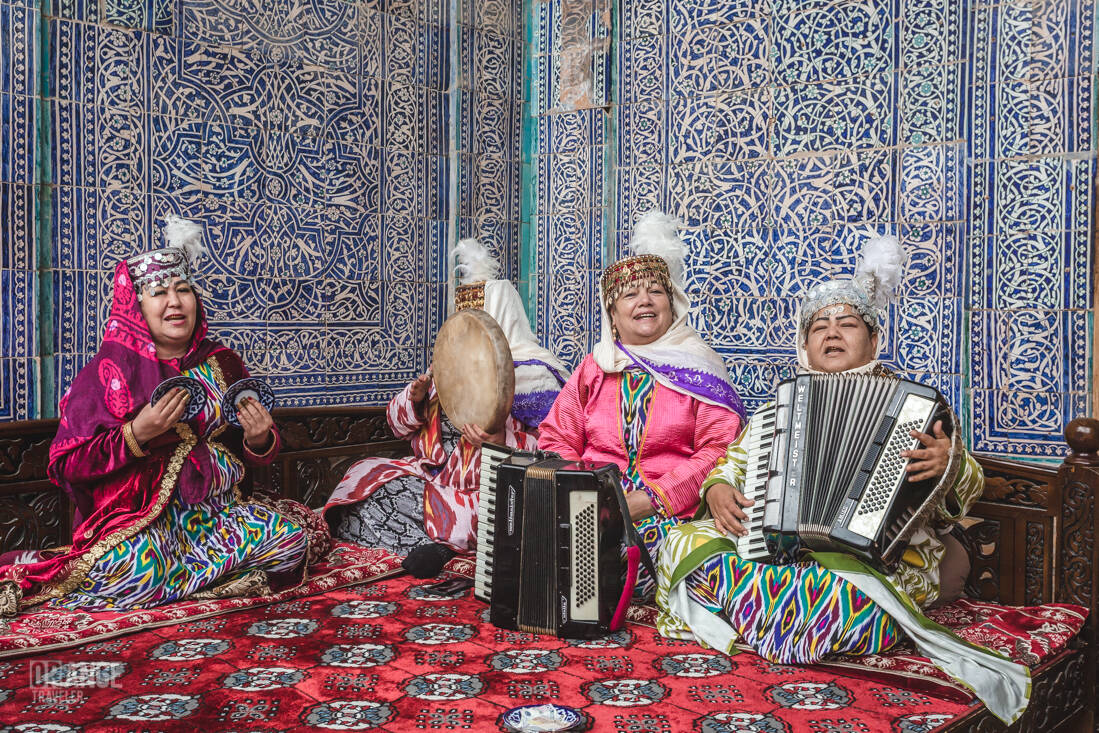
“It is very important,” Madamin said in complete seriousness, “not to regard the harem as a place of entertainment. The harem is the khan’s home, where he comes from the palace, and where outsiders are strictly forbidden. This is where he spends time with his children, where he sleeps. Women have no access to the palace rooms because other men are there. Only in the harem section are there no other men: only the khan and the eunuch.”
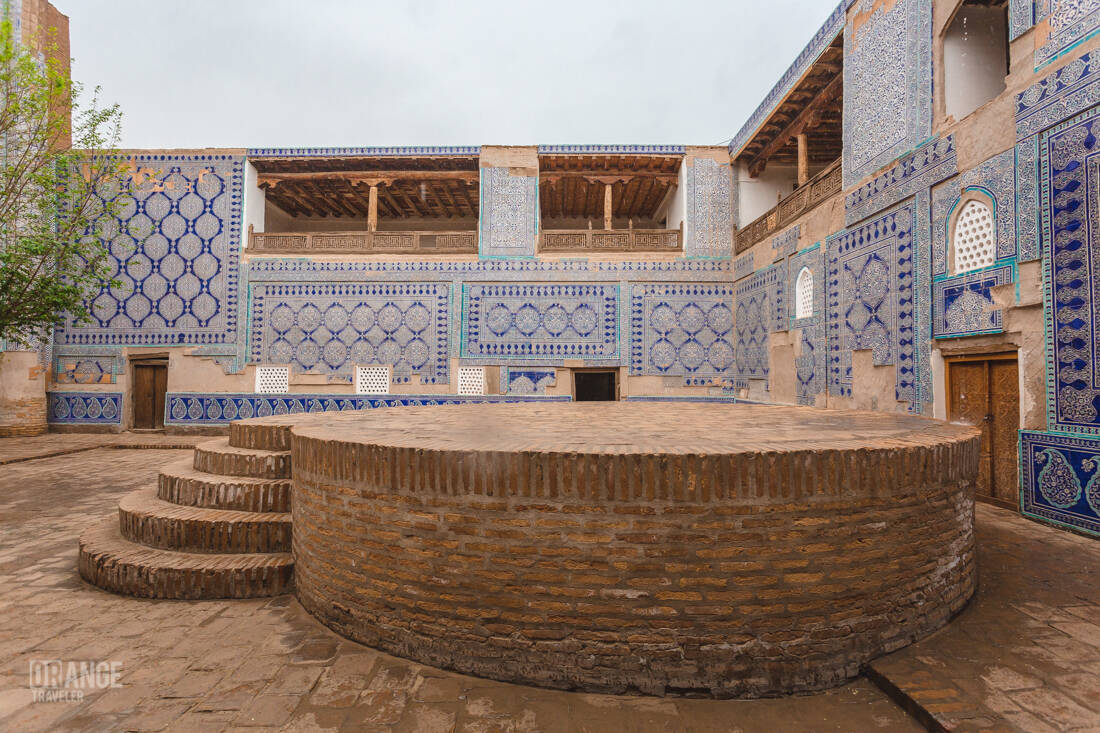
We stopped in one of the palace’s inner courtyards — the ruler’s reception area — and I finally summoned the courage to ask for a primer on rulers, so that I could understand once and for all the difference between a shah and a khan, a bay and a bek. Madamin, exactly like a patient history teacher, explained everything quickly.
“A khan is a ruler belonging to the Chinggisid line, a descendant of Genghis Khan. This is a later form of rule in Khorezm, brought by the nomads. A military man took power into his own hands and became a shah.
“New shahs came from his dynasty. Shah is an Iranian term, literally translated as ‘horn’. It is a person whose power has been granted from above, by God. For example, when Alexander the Great was elevated to the status of the son of God in Egypt — equivalent to being made a shah — he was declared Zu al-Qarnayn, the great two-horned king. In other words, he was literally called Alexander Two-Horned. A padishah was a great shah. There is also the Shah-in-Shah, a supremely important Shah of Shahs. The king of kings.”
“So, an emperor,” Madamin lectured, and I nodded in understanding.
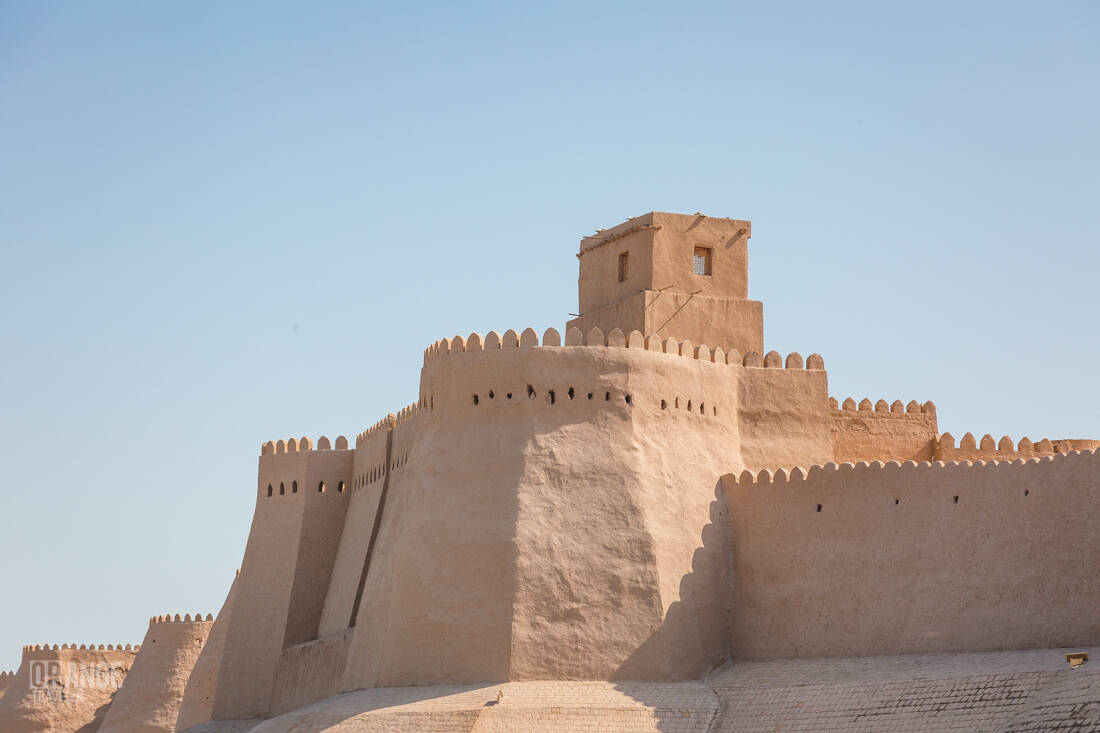
I remembered this too: an emir is somebody appointed by someone else’s will, an administrator, a senior manager, if you like. The priests who built the first fortress on the territory of Khiva were representatives of a religious movement. This is, conditionally speaking, the chief financial officer and investor of an organisation. Madamin had moved to comparisons that were easier to understand.
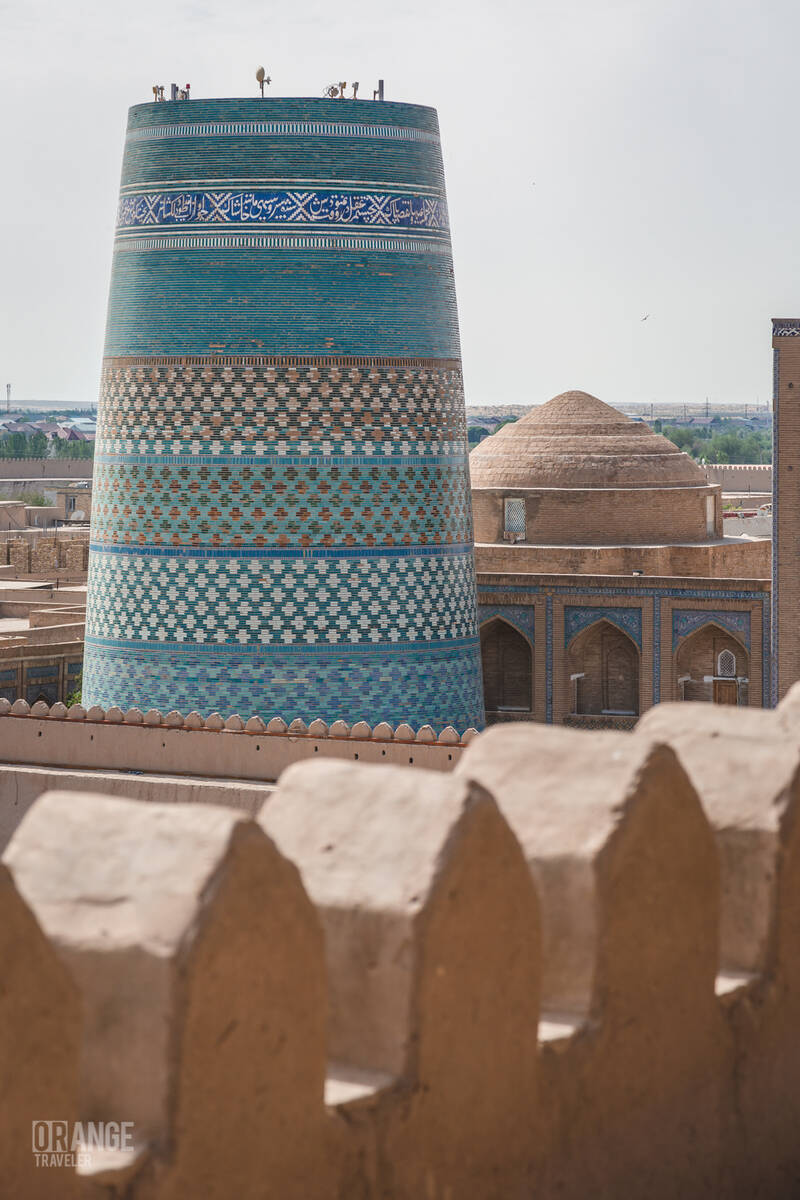
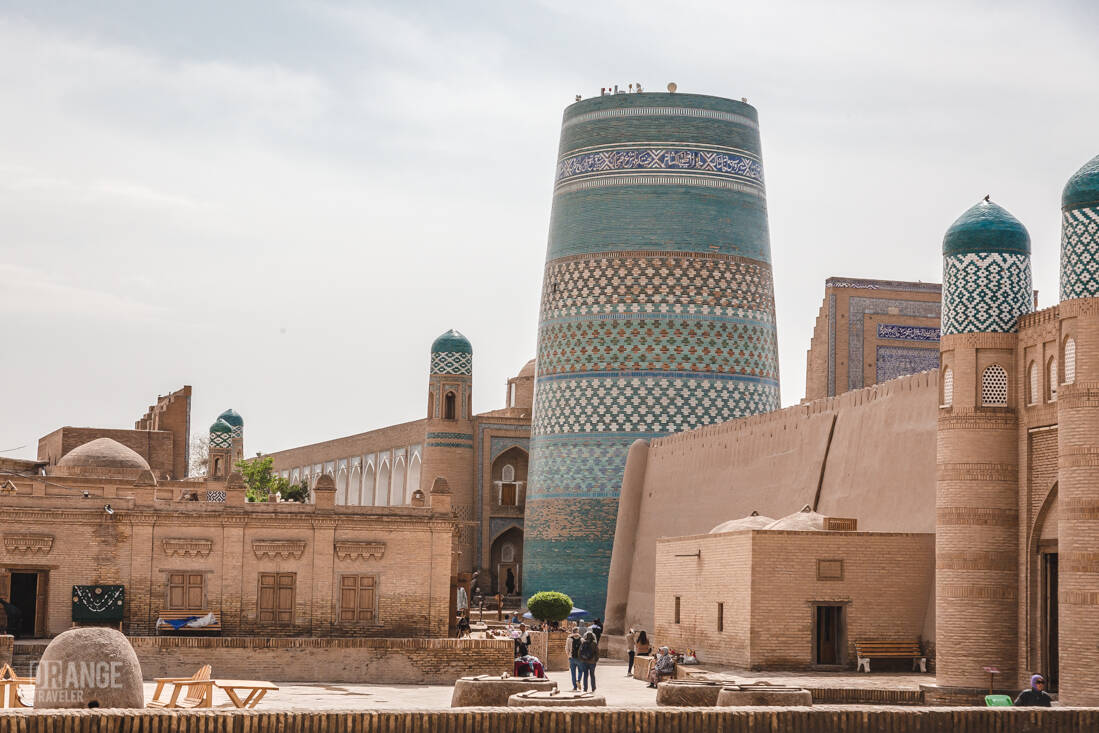
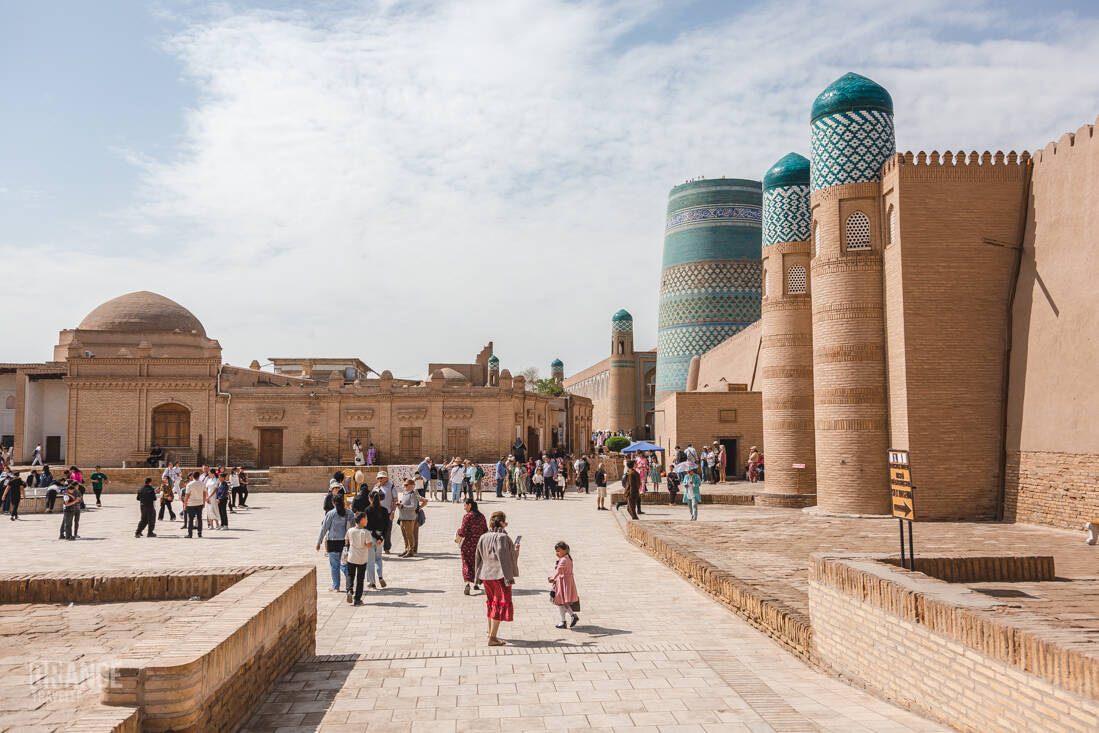
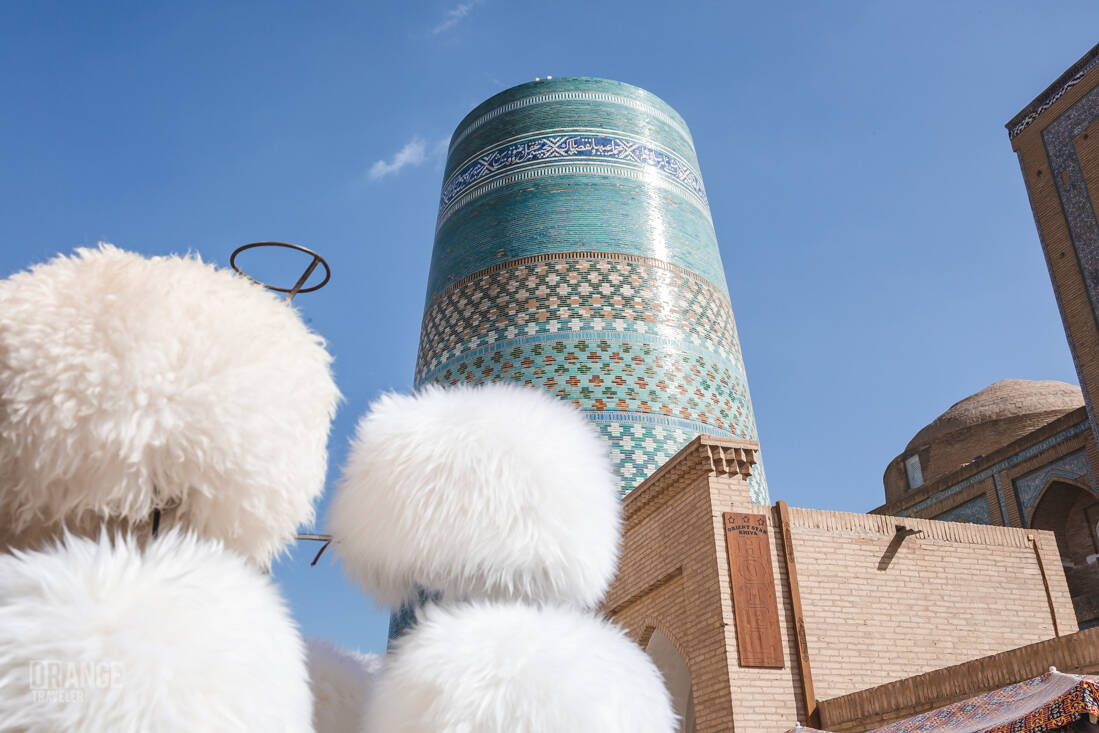
We found ourselves again beside the squat Kalta Minor minaret, the symbol of Khiva and Ichan-Kala. I came out with the basic story, saying that I had read that the khan had thrown the architect from the unfinished minaret, which once again unsettled Madamin.
“Olya, nobody was thrown from anywhere here.”
In 1852, the first stone was laid under the ruler of Khiva, Muhammad Amin Khan. He ordered the minaret beside the madrasa to be the most beautiful in the Muslim world that any master had ever built. It was intended to be roughly 78 metres high.
But three years later, the patron died in a war during a skirmish with the Turkmens, and construction simply stopped, along with the funding. Yet, remarkably, this unfinished structure became one of the symbols of Ichan-Kala. You circle it constantly: you emerge from one alleyway, turn from another, admire it from the viewing platforms on the fortress wall or from a café terrace.

As we enjoyed the sunset over Ichan-Kala and sipped delicious tea on the terrace of one of the cafés, I peppered the historian with questions.
“How often, generally, did a favourite concubine go to the khan?”
“It depended on the khan.”
“Could he fall in love with one concubine and spend every night with her?”
“Of course. He was a man.”
“And how did the concubines and wives treat one another?”
“Very respectfully, on the surface. In reality, they fought for the khan’s attention and even killed in fits of jealousy. Death was the punishment for death.”
But the ruling triumvirate of antagonists had been devised long ago in Mesopotamia: the ruler’s mother, the ruler’s wife and the eunuch.
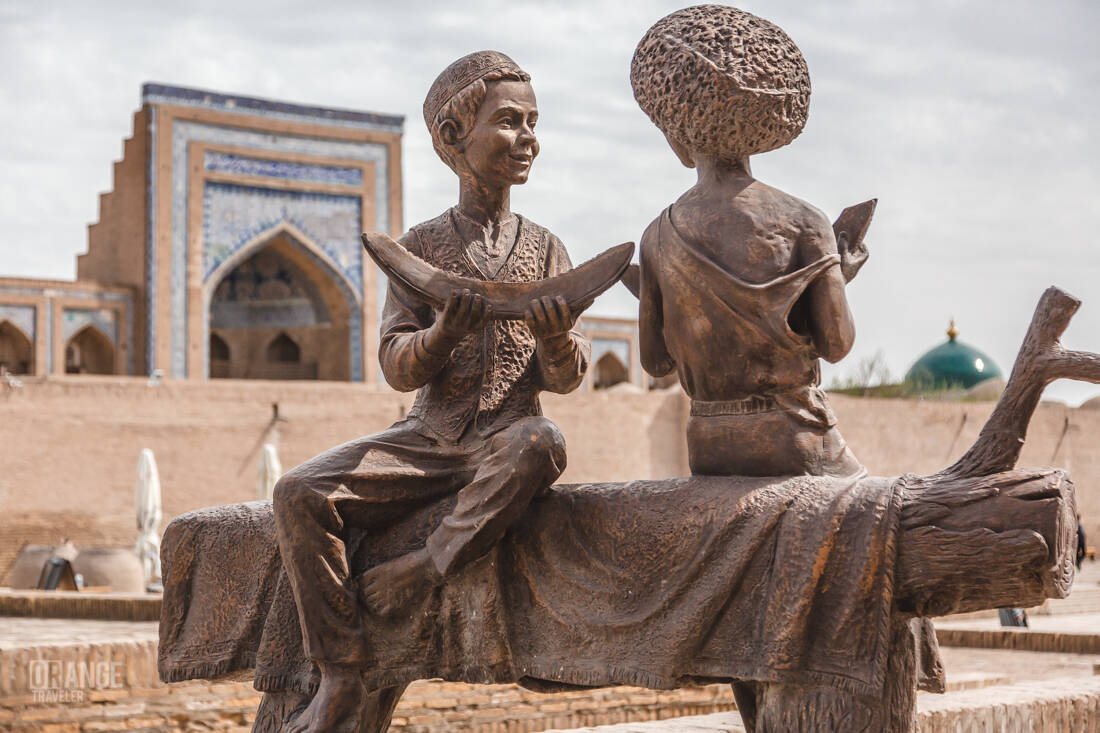
How was a eunuch chosen? There are treatises on the subject written in the 10th century. He had to be tall, have clear skin without eruptions, no pockmarks, even teeth, narrow shoulders and broad hips. More often than not, eunuchs were children from impoverished families or the families of slaves. Rarely, they came from noble families, if a boy had been kidnapped.
“I do not understand. Was it a prestigious job or not?”
“It was not prestigious, but it was influential. He was deliberately castrated while still a boy. They were selected in childhood.”
“And what if he broke out in spots during puberty?”
“If he had had smallpox, his career was over.”
“And what did the khan wear?”
“The khan wore a robe made from cotton and silk threads, but very highly polished. In cold weather, he wore a shuka — sheepskin or wolfskin.”
“Sorry, and what was underneath the robe?”
Madamin rolled his eyes but continued.
“Under the robe there was a white shirt, quilted trousers, and mazhe — shoes made of thick leather — on the feet, with fitted boots worn over them. On the head was a chugurma, a furry cap made from karakul or sheepskin.”
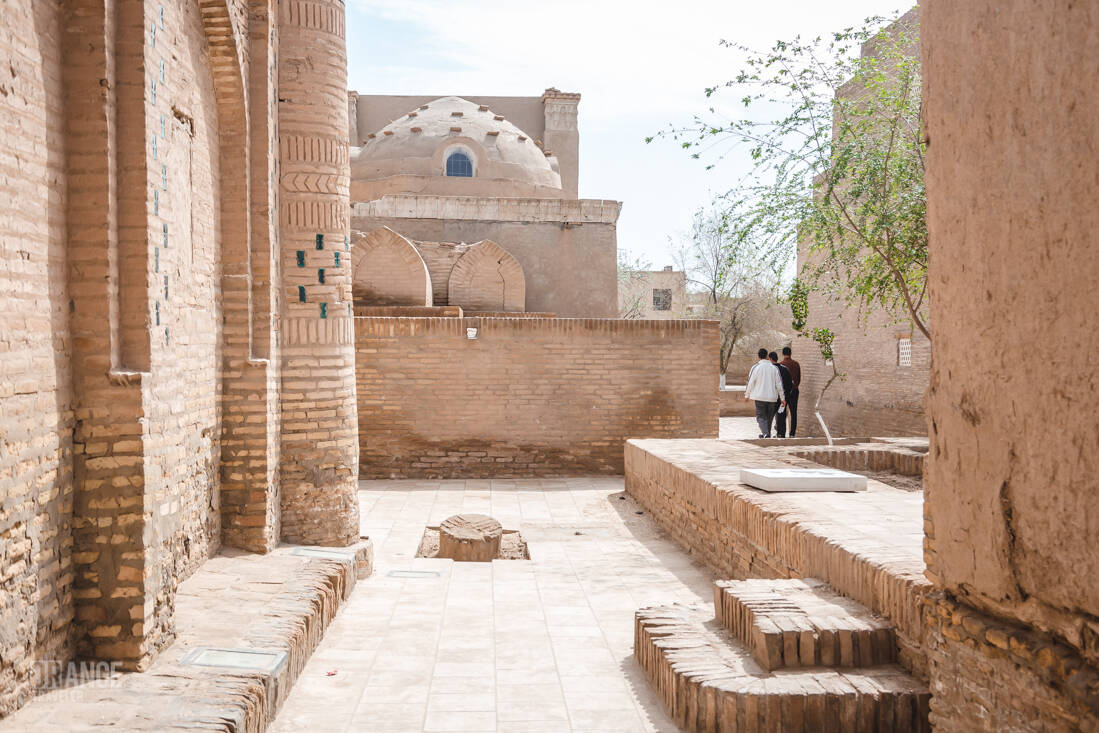
And so it continued for two days in a row. We returned to Ichan-Kala, went into madrasas and mosques.
I learned about the strongman Pahlavan Mahmud in his mausoleum, which is also in Ichan-Kala; about the horrific murder of the young heir Asfandiyar Khan, who was poisoned with crushed glass; about the end of the Khanate of Khiva and the difficult fate of Khudaybergen Devanov, the first reportage photographer, whose gallery is also located in the outer town of Dishan-Kala; about education in madrasas and students’ everyday lives; about the duties of a vizier; about chebureks and Khorezm plov. About medicine and once-popular spa procedures: sand baths.
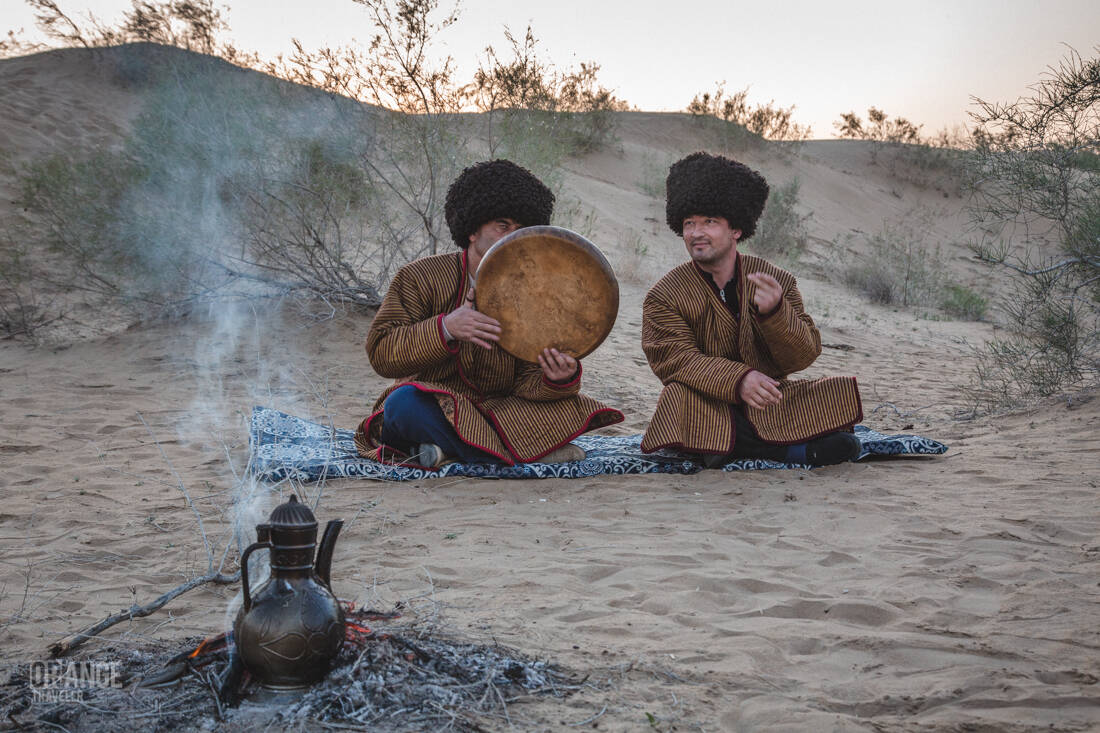
On my final evening in Khorezm, I caught the sun by the tail as it dropped below the horizon in the Karakum Desert. I danced lazgi with followers of Zoroastrianism and drank tea from a small bowl once again.
I travelled by car from Bukhara. The journey took about six hours. The high-speed Jaloliddin Manguberdi train runs from Tashkent to Khiva, taking around seven and a half hours. It stops in Samarkand, Bukhara and Urgench, so it is also possible to reach Khiva from Bukhara by train. Check the current departure days and ticket availability on the Uzbekistan Railways website before travelling.
Spring and autumn. The high season is September and the first half of October. Khiva has a desert climate and remains dry for most of the year. Summers can be quite hot, with the thermometer often climbing above 40°C, while winter temperatures can fall to –15°C.
Entry to Ichan-Kala is paid. In addition, separate tickets are required for the museums. They are sold at the ticket office by the Western Gate. Technically, the gates never close because people live in the Old Town. However, Ichan-Kala’s main sights are open from 8 am to 8 pm in summer and from 9 am to 6 pm in winter.
I would like to thank Timur Way and Yuliana Bozhko personally for organising an unforgettable journey through Uzbekistan. The company’s website offers engaging tours led by professional licensed guides.

Read more about Uzbekistan:
Uzbekistan: Questions and Answers
Samarkand: In the Name of Amir Timur
Bukhara: 20 Cubits of Pearl Adras
The Livestock Market in Urgench
Ceramics from Gijduvan
Samarkand Carpets





 Travel reportage
Leave a comment