Autumn, winter, spring and Friday — that is what they say about the fleeting summer on the Taimyr Peninsula. Where winds and blizzards blow for 280 days a year, you have to know how to live in the moment. I managed it.
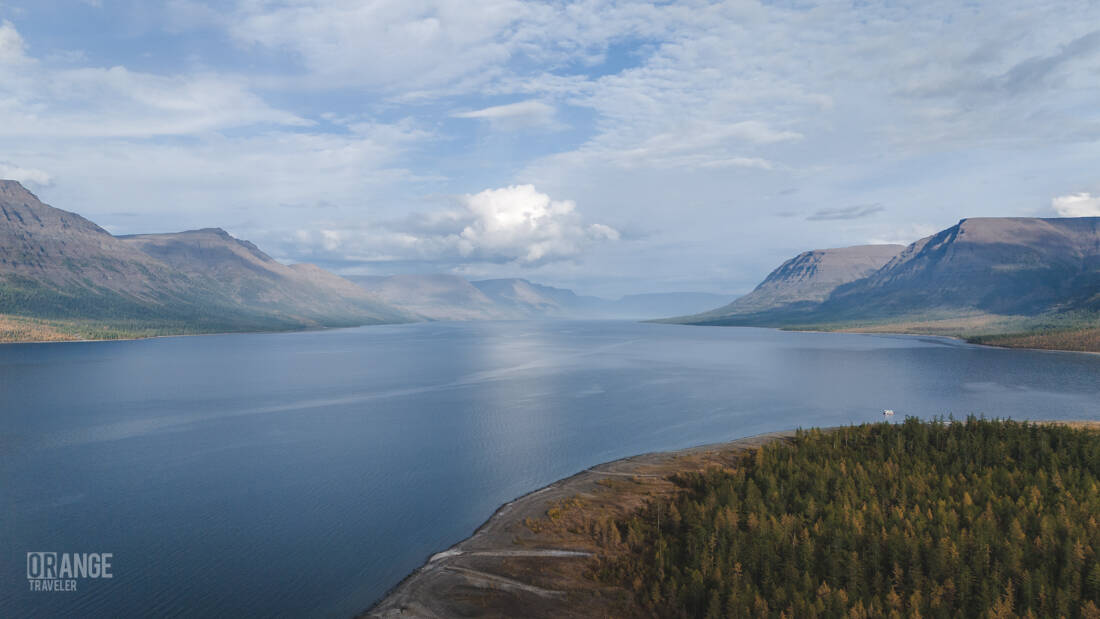
The contrasts at the beginning of the journey were almost too effective. Behind us, Norilsk dissolved into the haze, a city where human beings have been carrying out vigorous industrial activity for 90 years. And just three hours away by water, somewhere in the distance, lay the vast expanse of the Putorana Plateau, across most of which no human foot has ever stepped, only the feet of reindeer during their long migration.
Leaving the hydroport with the chummy name of Valyok, we raced by hovercraft along narrow rivers and shallow lakes, and these strange mountains gradually rose before us. Their tectonics calmed me. I tried hard to imagine what had been happening here 252 million years ago. My imagination kept insistently throwing up images of a pyramid-shaped mountain with a smoking crater, but in reality there had been nothing of the kind here.
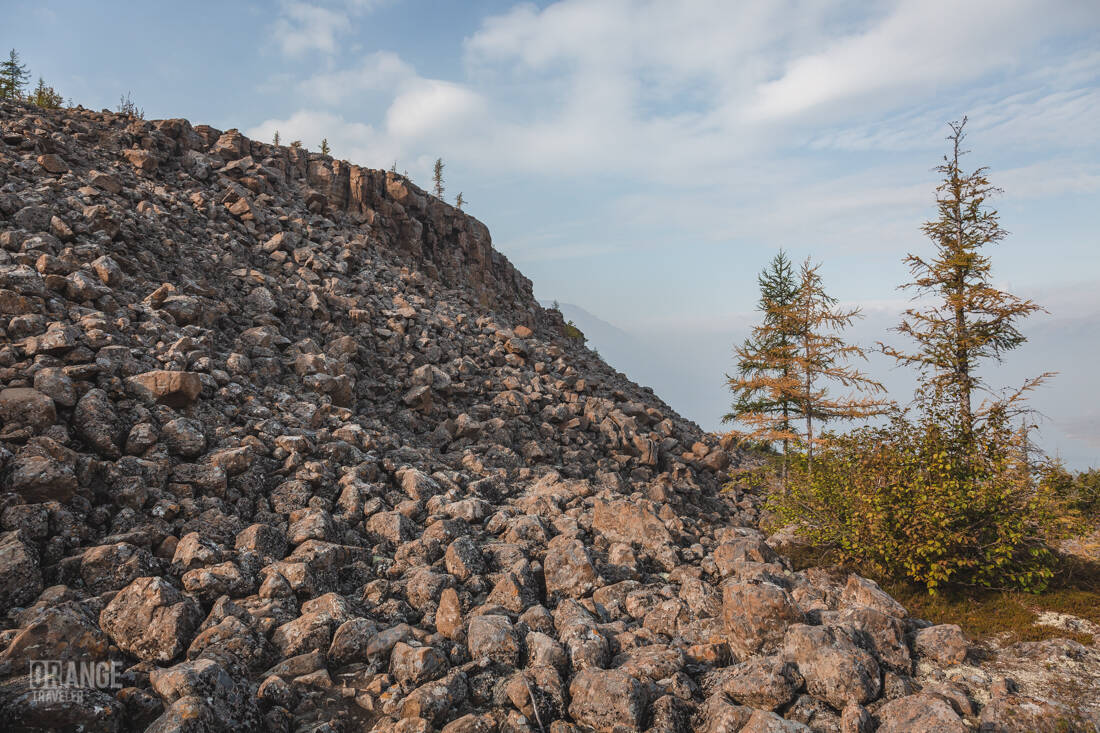
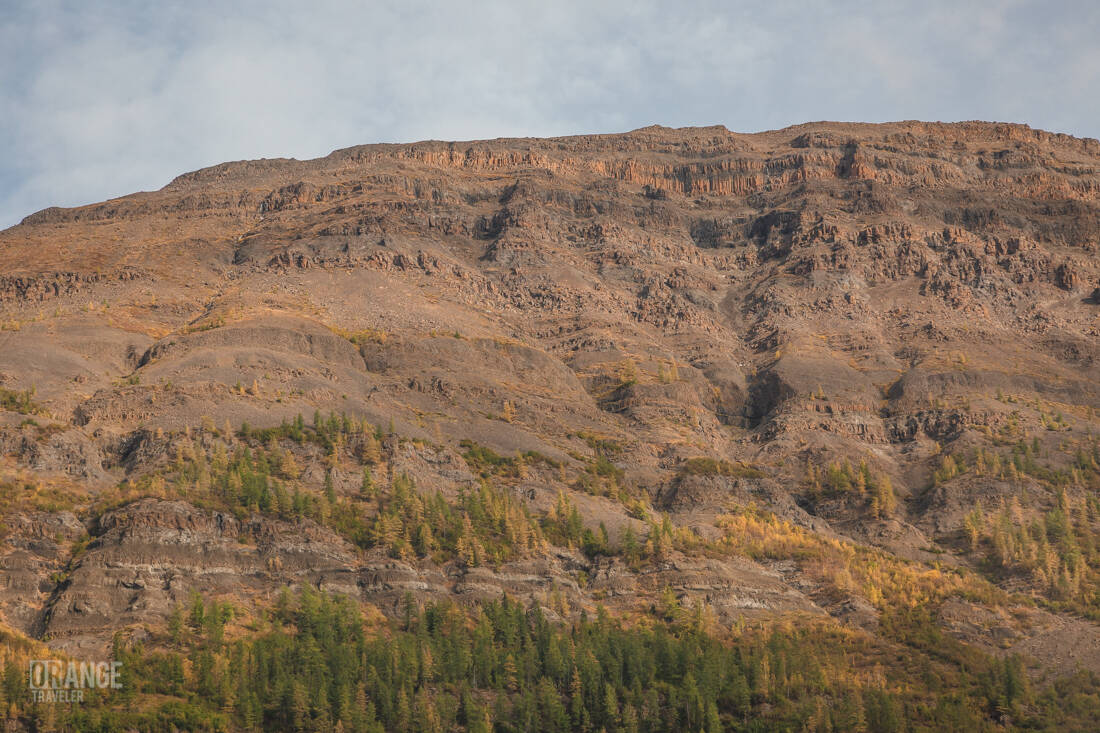
At the height of the most extensive mass extinction in history — the Permian extinction, which marked the end of the Palaeozoic era — the earth dried out and lava poured from its cracks, covering enormous territories with basalt layers. Scientists call this eruption of fiery, viscous, incandescent mass a supervolcano, and its activity by the amusing phrase “mantle plume”. Some even believe that this process led to a sharp change in the Earth’s climate, which in turn triggered the extinction.
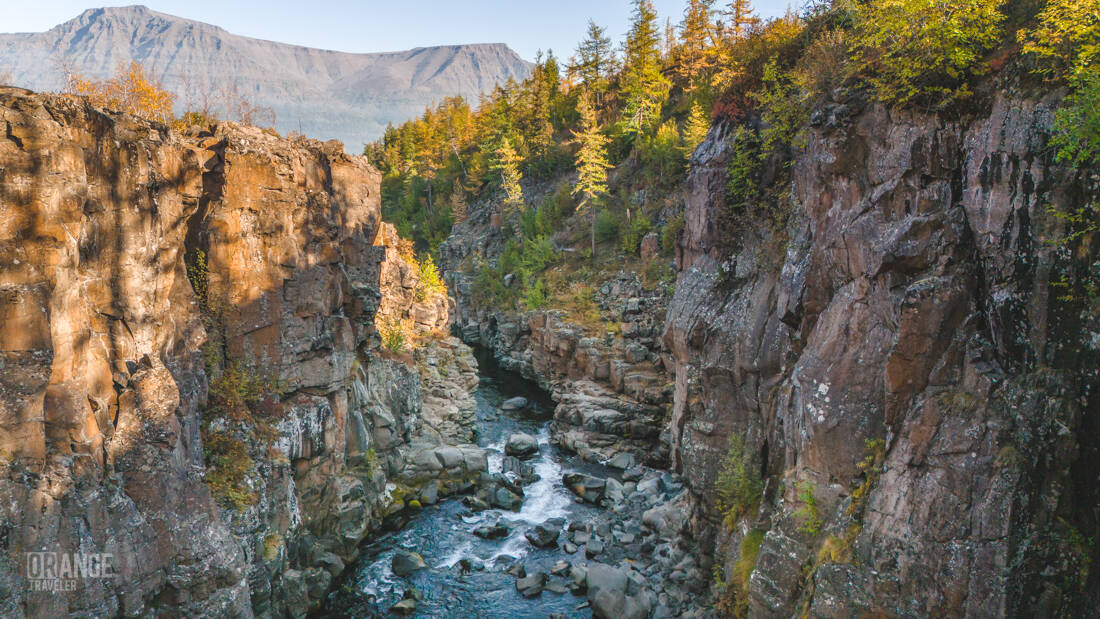
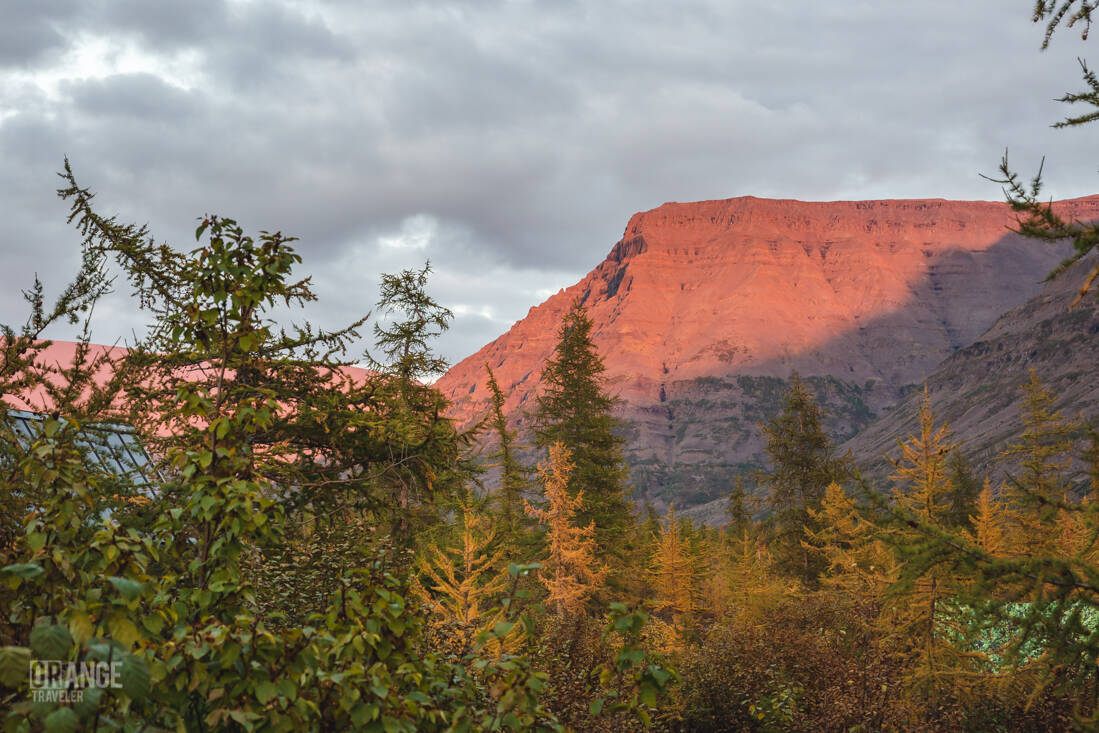
Over millennia of turbulent volcanic activity, the Putorana Plateau was formed, with its gorges, thousands of lakes and waterfalls. Its name is translated from the Yukaghir language as “mountains without summits”. Yet every day, according to plan, we were supposed to climb precisely those summits.
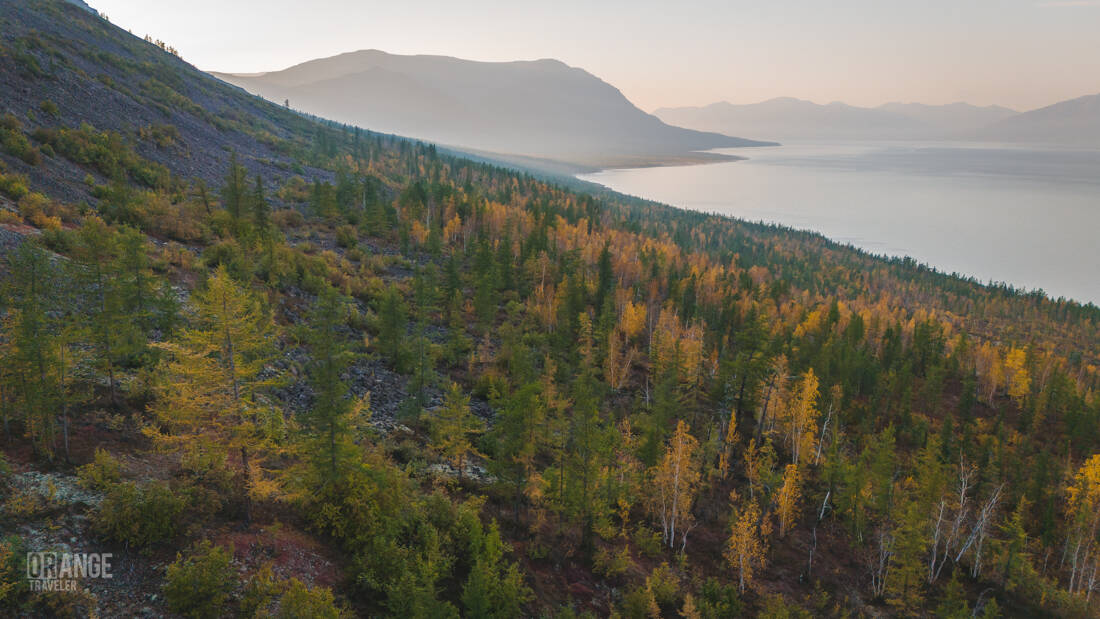
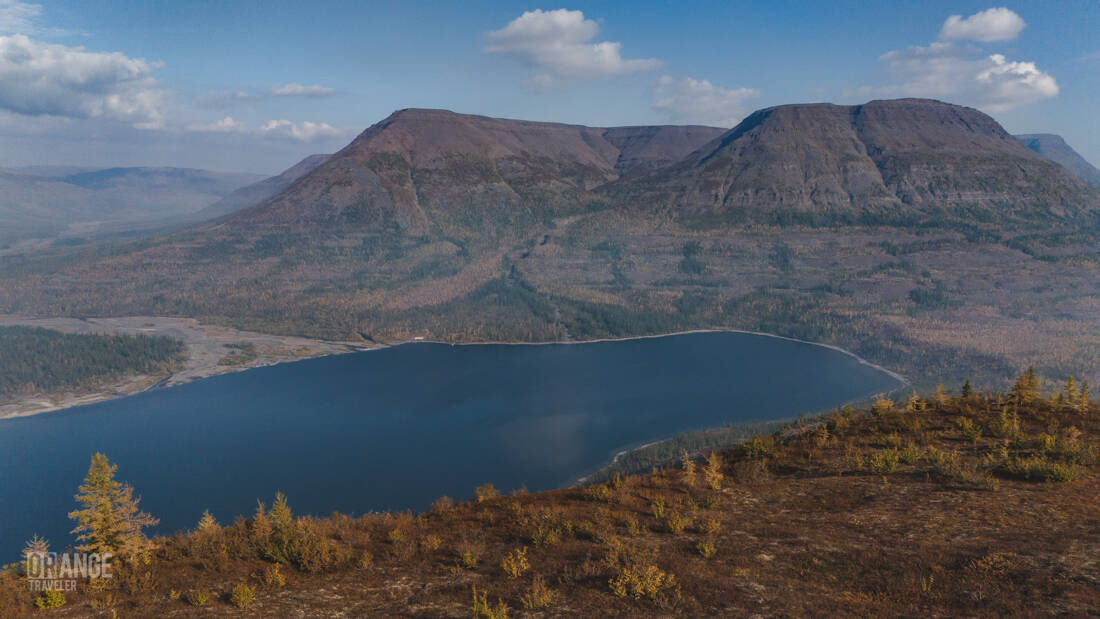
It is hard to imagine the vastness of the Putorana Plateau, however hard you try — 250,000 square kilometres of Arctic desert and tundra. To reach the Kandinsky waterfall, the highest in Russia at 108 metres, you have to fly by helicopter. We, however, landed on the shore of Lake Lama, stepping into a temporary geological microcosm.
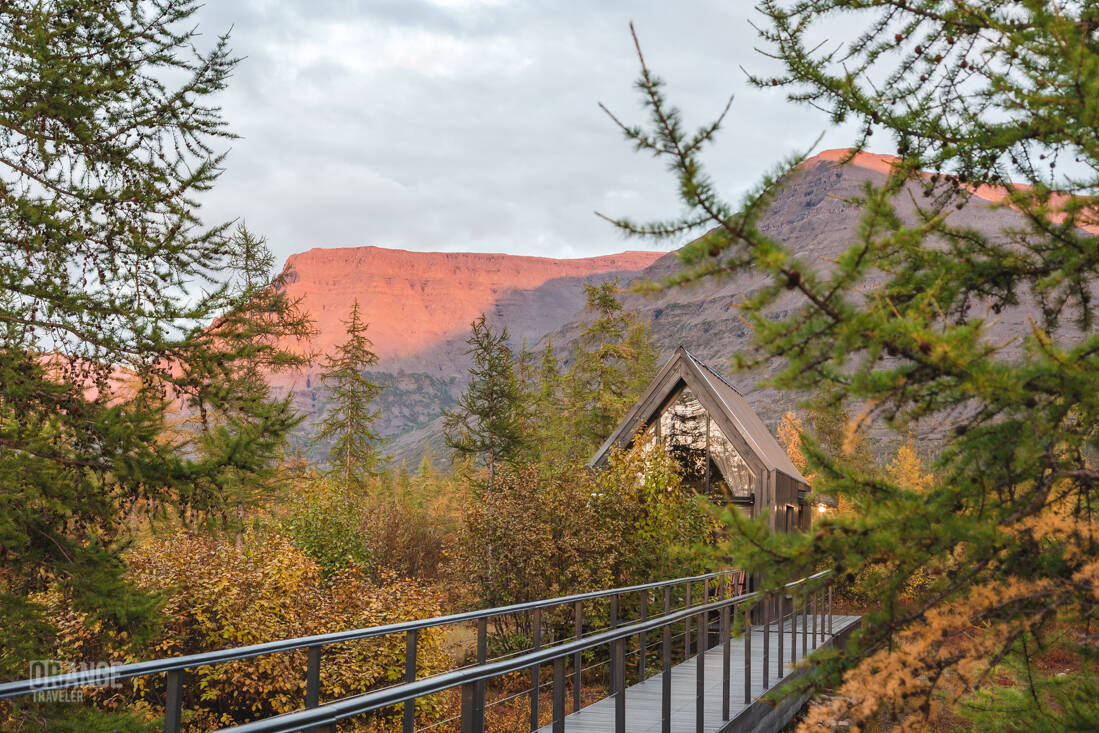
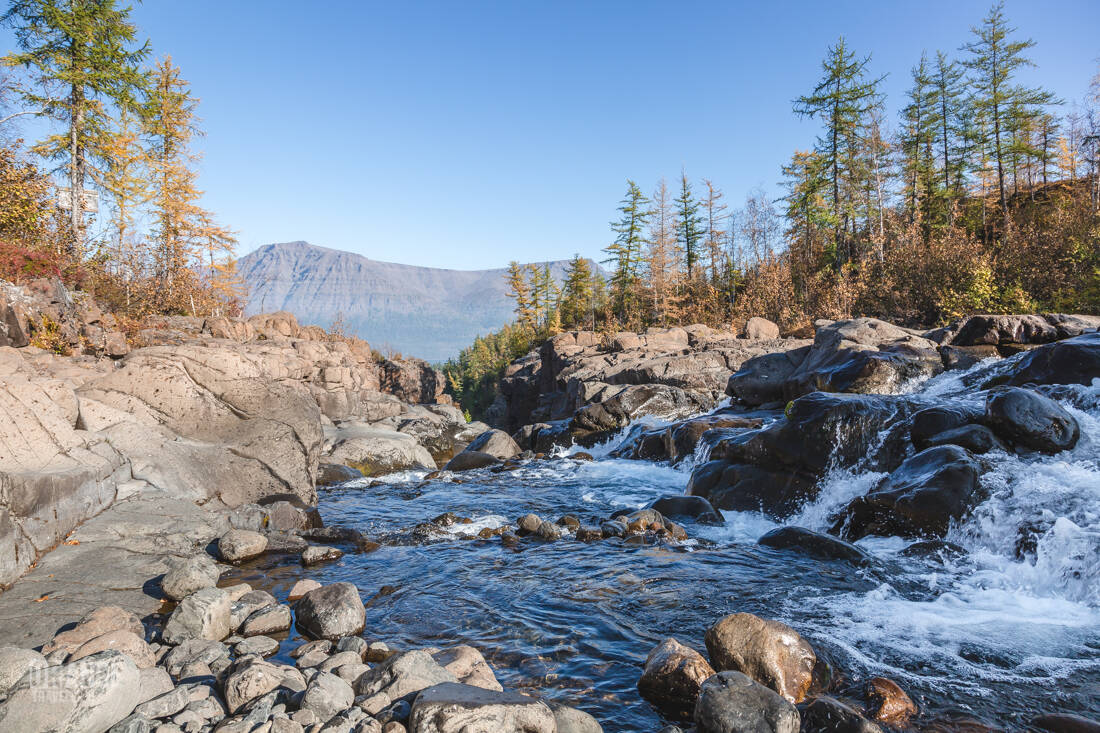
In our area, the whole plateau existed in miniature — waterfalls within walking distance, a basalt stone layer cake, natural viewpoints, including one at the foot of Mount 1019, which we reached on the very first day. And there was also a cosy base — the Neralakh Park Hotel, where every evening we gathered in a tented mess room and, over mugs of fragrant tea with local herbs, discussed the quirks of the universe. An old, forgotten form of communication, from the time before access to signal.
It was just the moment to sit down with diaries and reports about a journey to the plateau, as the explorer and geographer Alexander Middendorf did in the mid-19th century. It was he who gave the Taimyr Peninsula its official name after hearing the Evenki word “tamura” — “valuable, dear”. There is, however, another version, translated from the Nenets language as “bald” or “bare”. A century before Middendorf, the rivers, mountains and lakes had been mapped by Khariton Laptev, a member of the Great Northern Expedition and head of the Lena-Yenisei detachment.
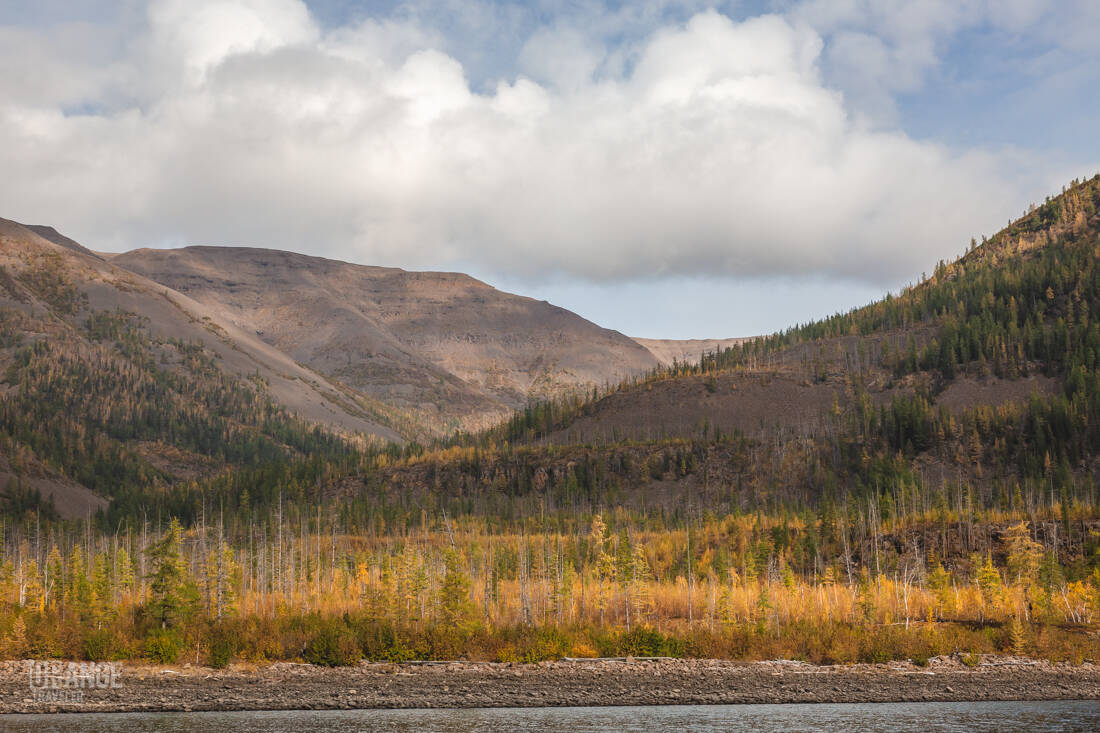
We passed his camp — a “stanok”, as they call it on Taimyr — by boat, following the Norilskaya River.
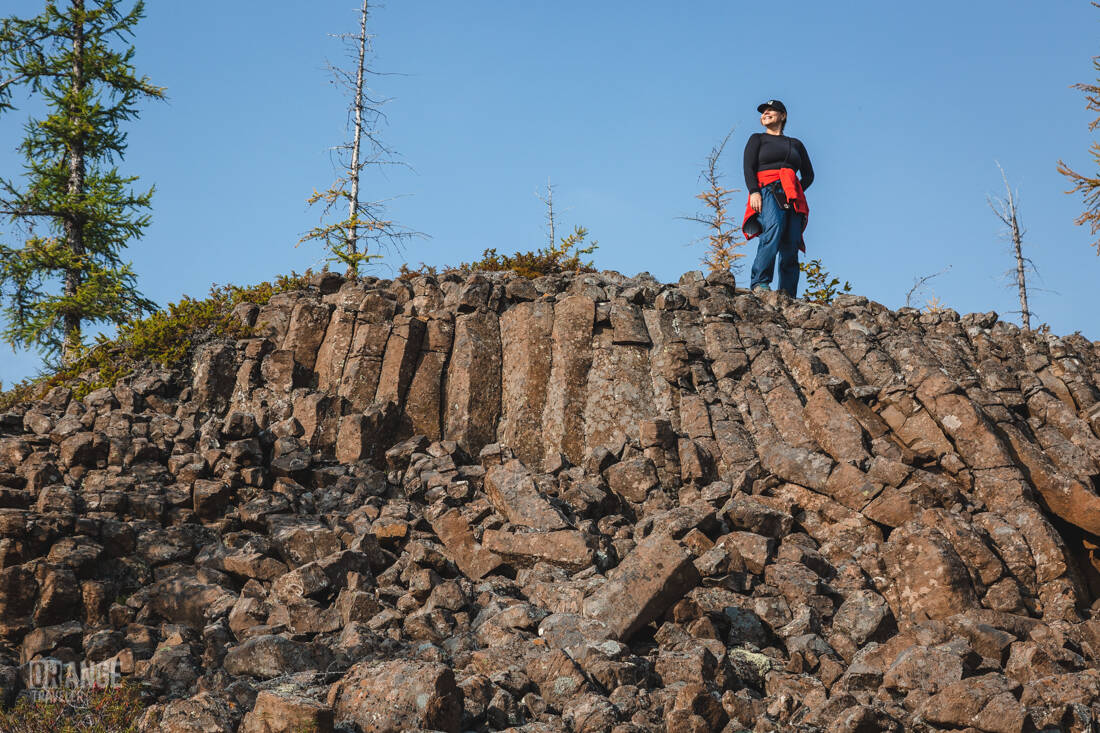
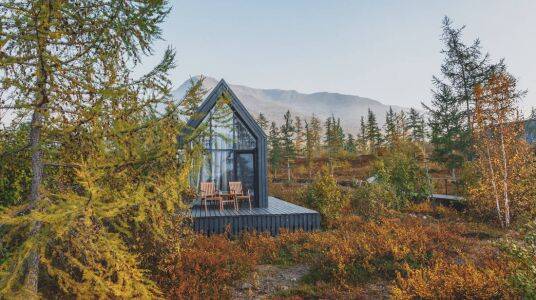
I was enjoying the views, but somewhere deep down I was even surprised by how easy it had been to get here. For many years, the Putorana Plateau had seemed to me a place far from everything, somewhere close to the pole of inaccessibility, the most remote and unexplored region. And here I was, standing near a small house, looking at mountains that were only three hours by river and lakes from Norilsk, and three hours by plane from Moscow. It seems far away — the Taimyr Peninsula, Krasnoyarsk Krai.
And yet, would you believe it — the geographical centre of Russia on Lake Vivi is somewhere relatively nearby. But all this is self-deception. The plateau is enormous, and the truly wild places can only be reached by helicopter. Looking at the map, I realised I was merely on the very edge of this massif.
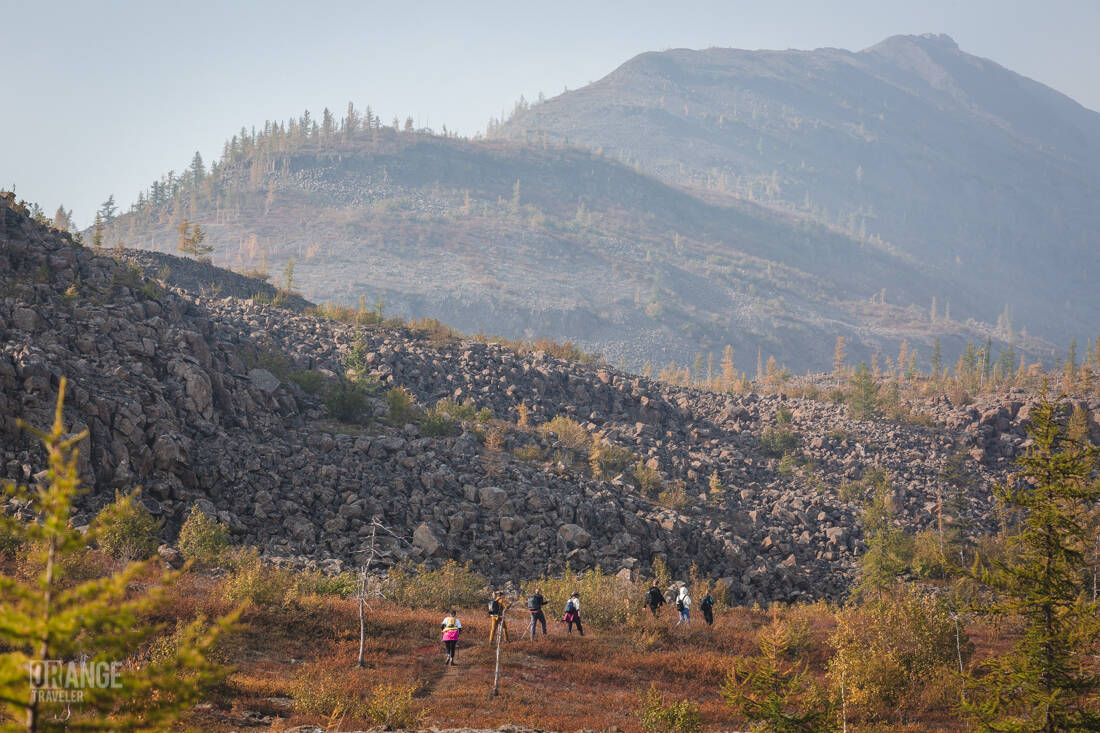
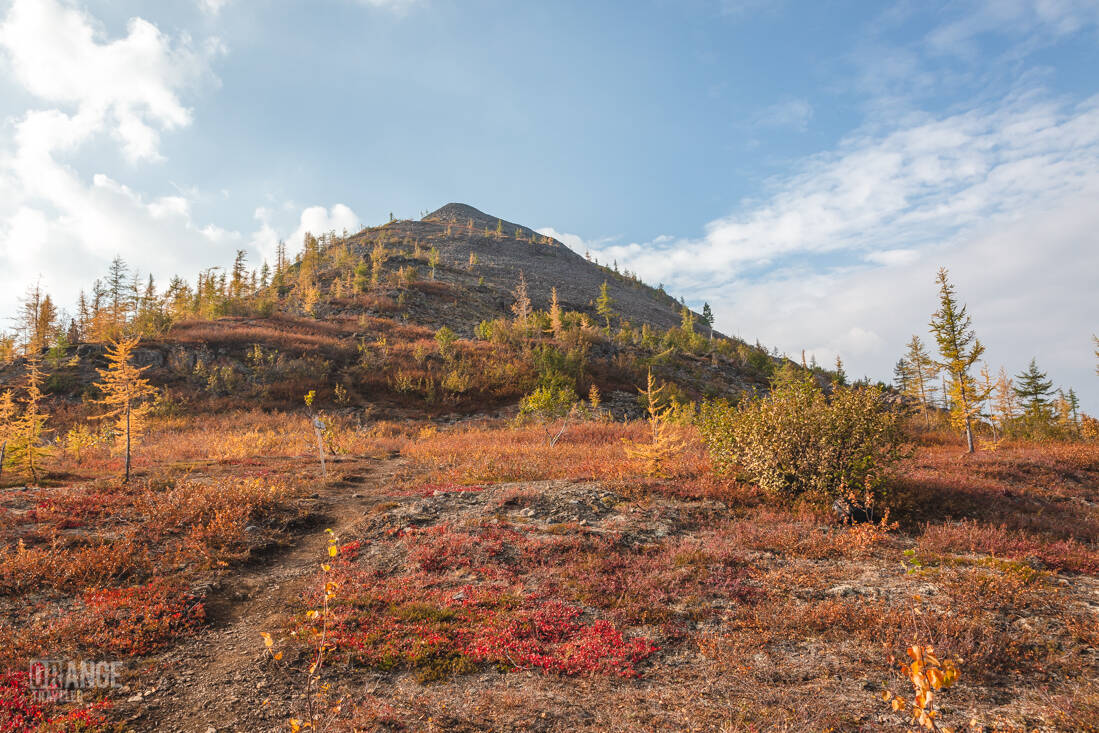
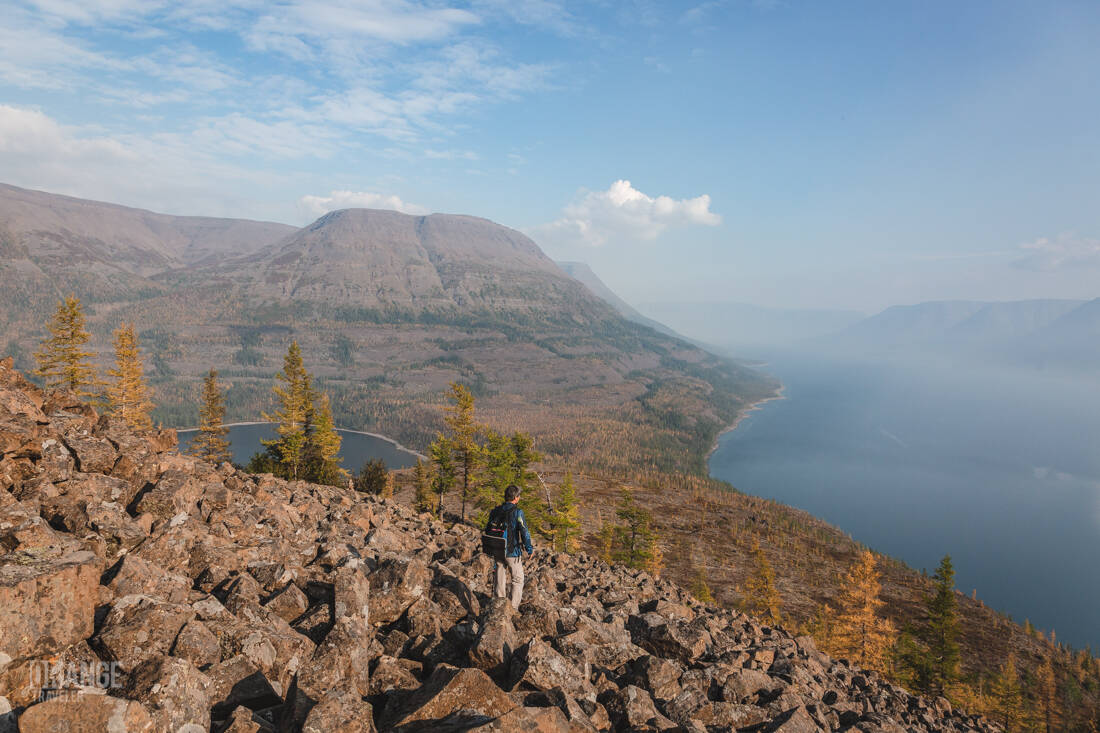
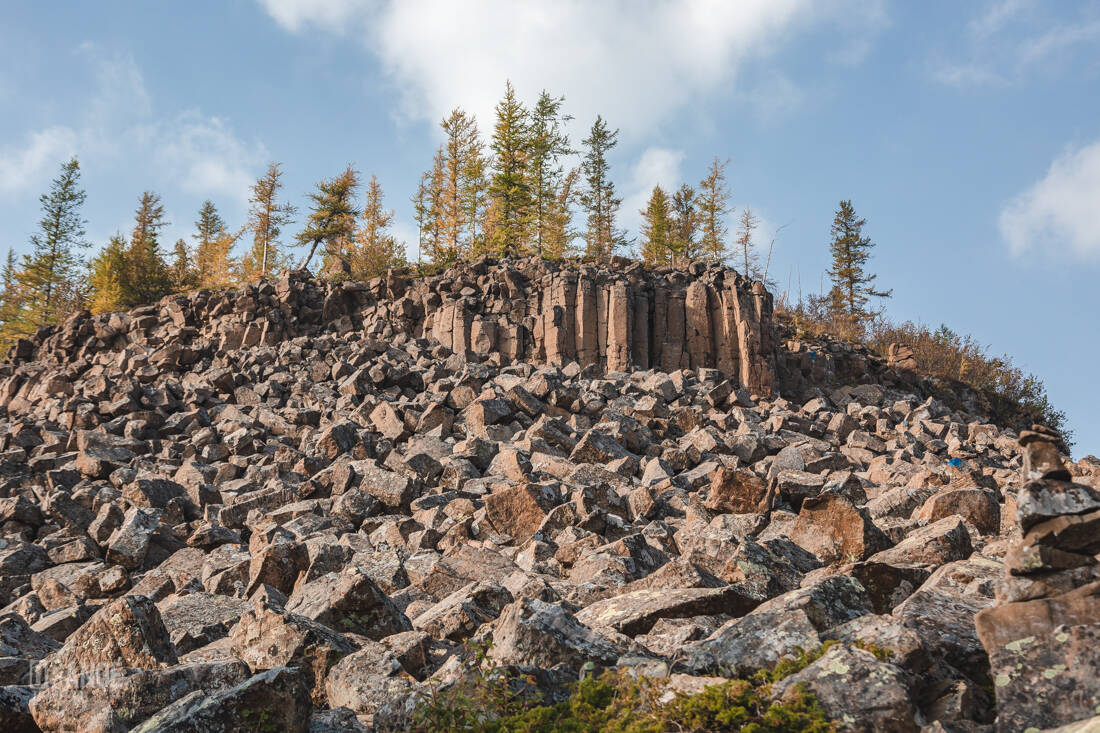
“How many more kurumniks to the top?” The trail to Mount Festivalnaya turned out to be harder than I had imagined. The elevation gain to the goal was 550 metres, but clambering over enormous boulders, each the size of a generous chest of drawers, chaotically piled together, was not that simple. I shifted my body weight onto my trekking poles and looked hopefully at the guide. Maxim merely smiled and, having calculated the whole route in his head, announced with no room for appeal: “We’ve done six; seven to go.”
The trek to Festivalnaya, 988 metres, is the culmination of the active programme for everyone arriving at the very edge of the plateau’s geography. After breakfast, grabbing poles, thermoses and lunch boxes, we got into the boat and set off for the starting point on the Kamenny Peninsula. From there, it is about two and a half hours at a brisk pace to the top, past columnar basalt formations, bald patches of forest-tundra and viewpoints.
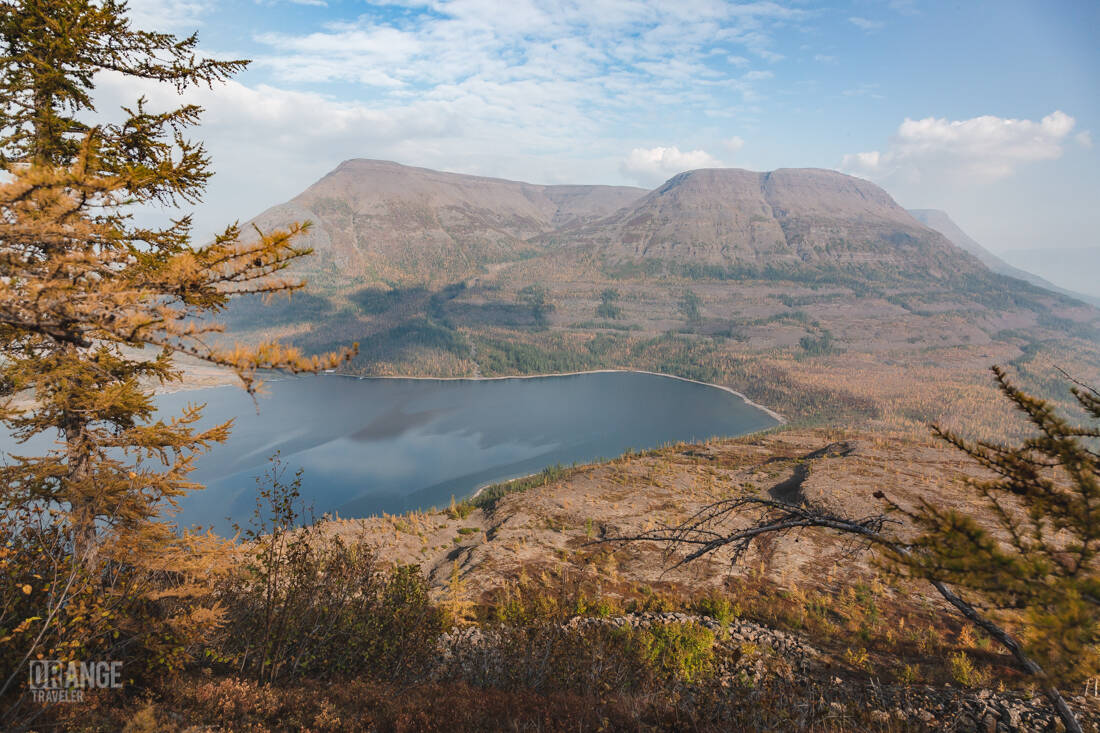
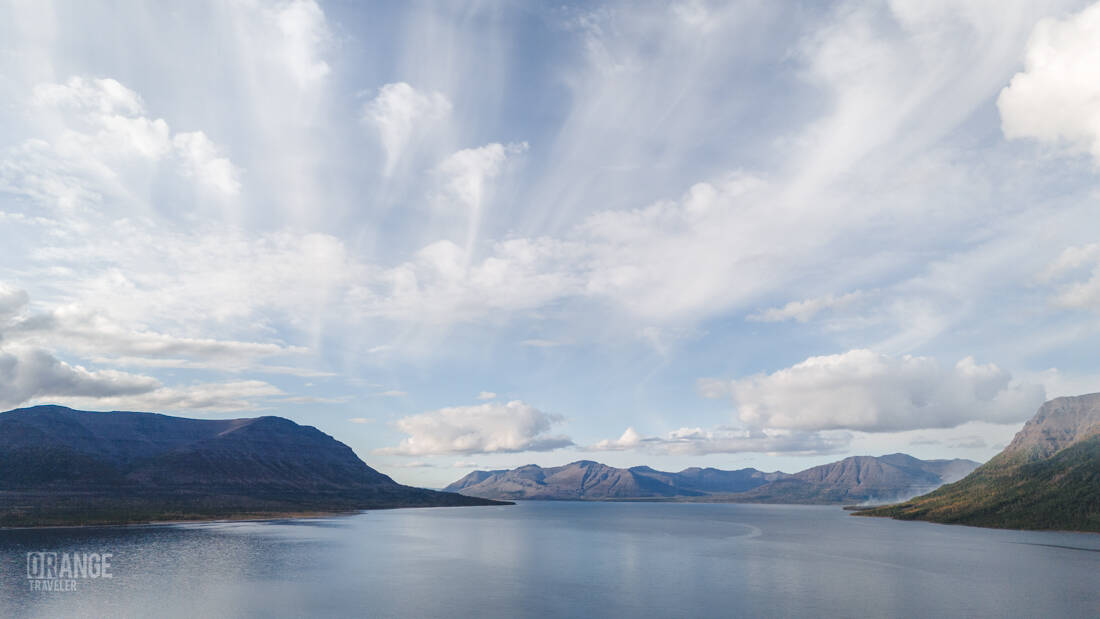
We stopped for a break four more boulder fields later. From the isthmus, there were incredible views over Lakes Kapchuk and Lama, and over the surrounding mountains, broad enough to set up a dance floor on. “Of course, no festivals were ever held on the mountain,” Maxim laughed. “There are several versions of why it has this name. According to one of them, it was named by a small group of friends who climbed the mountain and became its first discoverers. When they reached the top, they found a poster there with the inscription ‘Festival of Youth and Students, Moscow 1957’.”
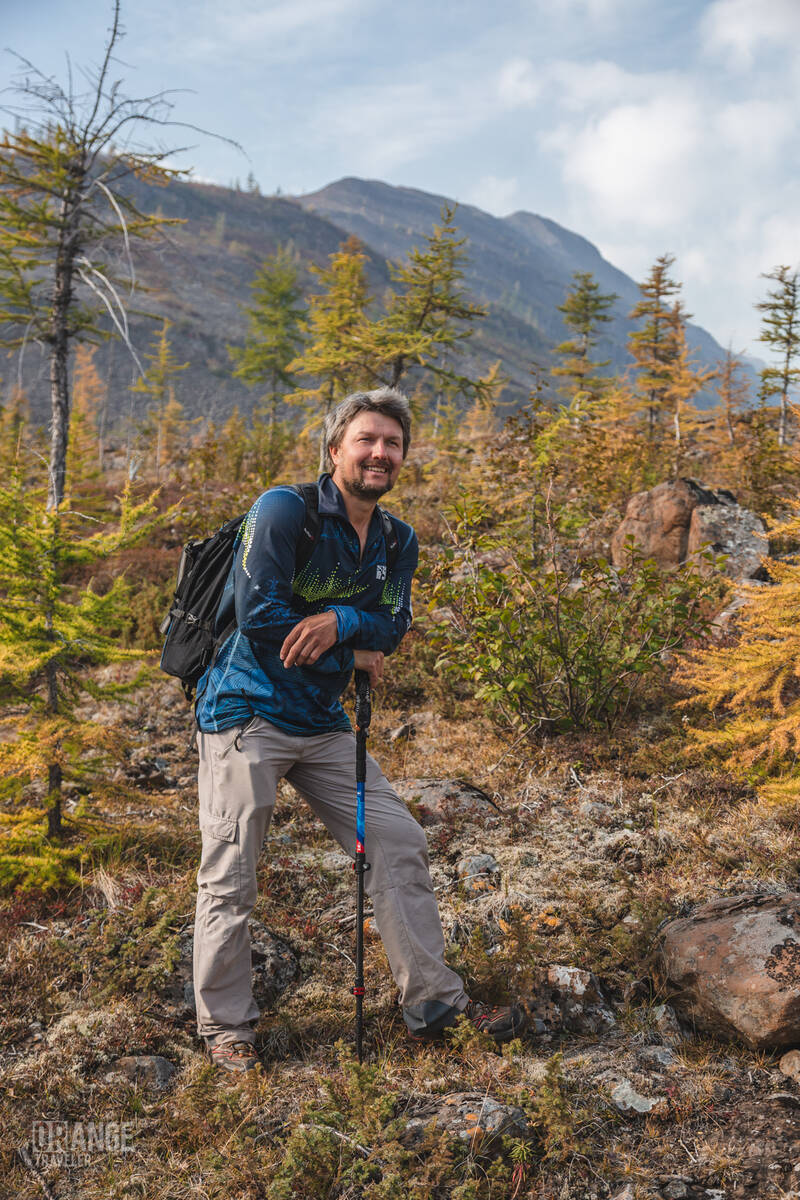
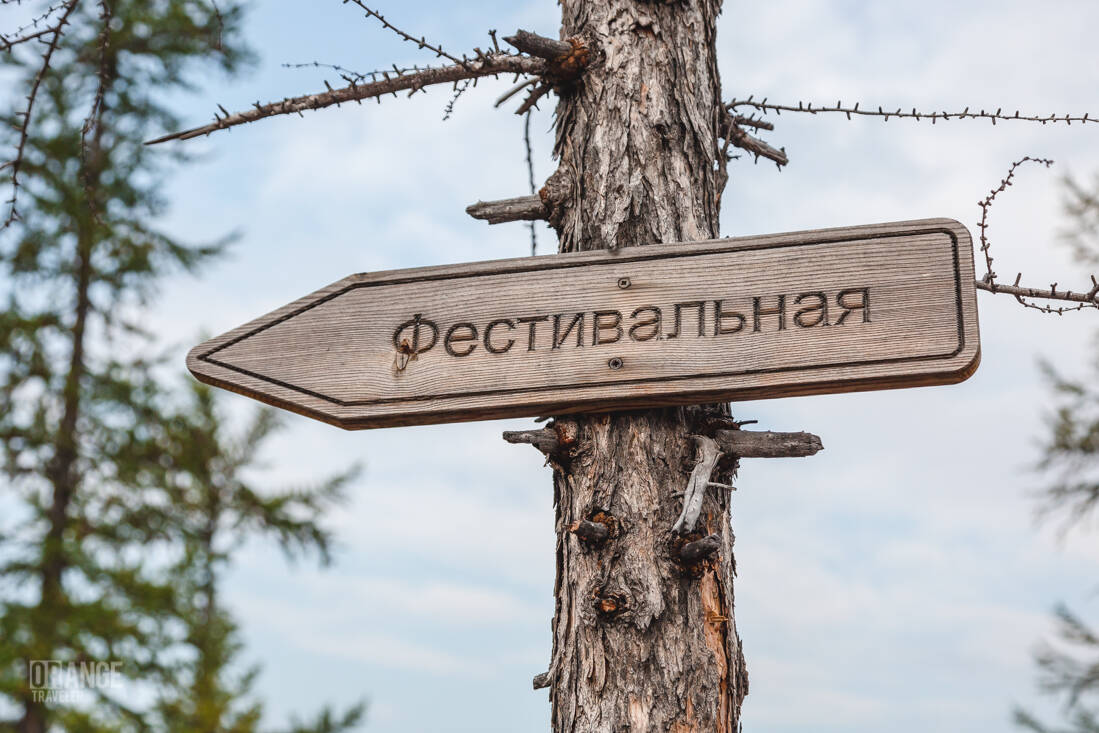
“Maybe someone just used it to wrap sandwiches,” I suggested, chewing mine. The polar sun made me drowsy and forced me to peel off yet another layer of clothing. Winter would come again soon, but today it was still summer. Sitting down on the soft shrubs, I lazily reached for a ripe lingonberry. Time seemed to stop, thoughts drifted off somewhere beyond the table mountains, and to hell with the trek. This was good, sitting here.
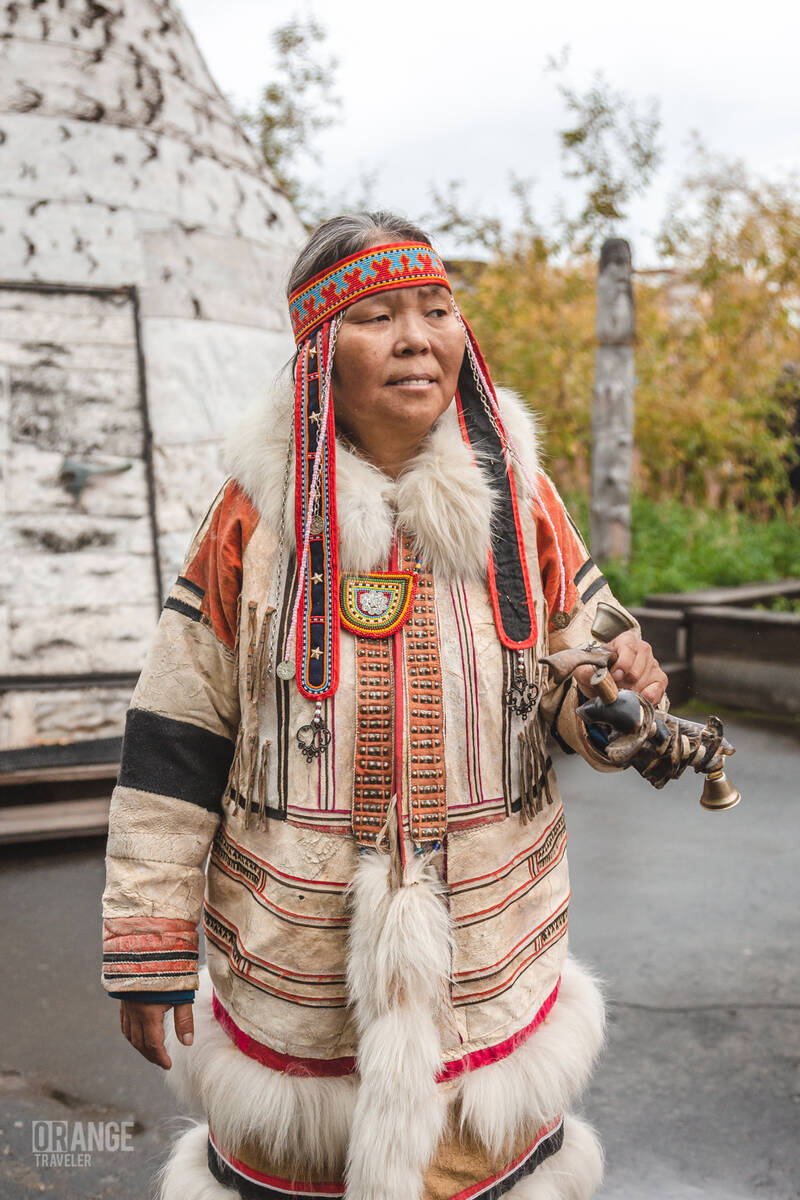
From the point of view of one of Taimyr’s five Indigenous ethnic groups, the Nganasan people, this world of flat mountains and lakes was created by a loon, and not by some supervolcano at all. In the time when there was nothing around but water, the bird dived deep, brought three stones up from the bottom, threw them down, and land was formed. Then came worms, which for some reason unexpectedly began to grow fur, turning into different animals — snow sheep, wolverines and bears, for example.
Apparently, this is how pikas once settled the plateau — lagomorphs that look like feral hamsters. Unlike the other fur-covered animals living on the plateau, they are easy to see. Like faithful sentries, they watch every path and warn one another with a ringing squeak: “Here come those ones again, the ones definitely not descended from worms.”
Orange Fact
The Nganasan people no longer have a shaman. In the local history museum in Dudinka, you can see the attributes of the last of the guides to the world of spirits, Tubyaku Kosterkin, while souvenir tambourines can be bought in the shop.
According to that same Nganasan mythology, pikas are the children of Mother Earth. There are six mothers in all, and one must understand clearly to whose mother the offerings should be taken. Ornaments and prey, for example, are offered to Mother Sun, while Mother Earth is for some reason given fish or reindeer fat. Mother Water is asked for a good catch by dipping a dog into the lake muzzle-first.
Perhaps that was exactly why we caught nothing at all with our fishing rod, returning instead to our cosy barnhouse — a little house with a terrace, where we then sat until dark, ignoring the low evening temperatures. Winter would come to the plateau very soon; snow was promised a couple of days after our departure. It was hard to believe.
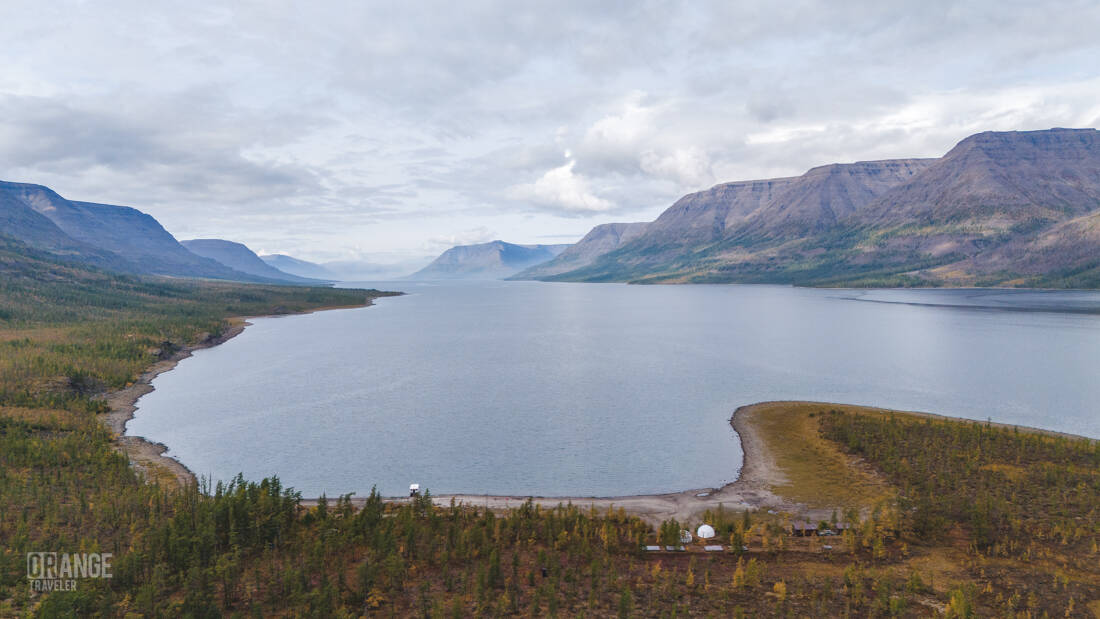
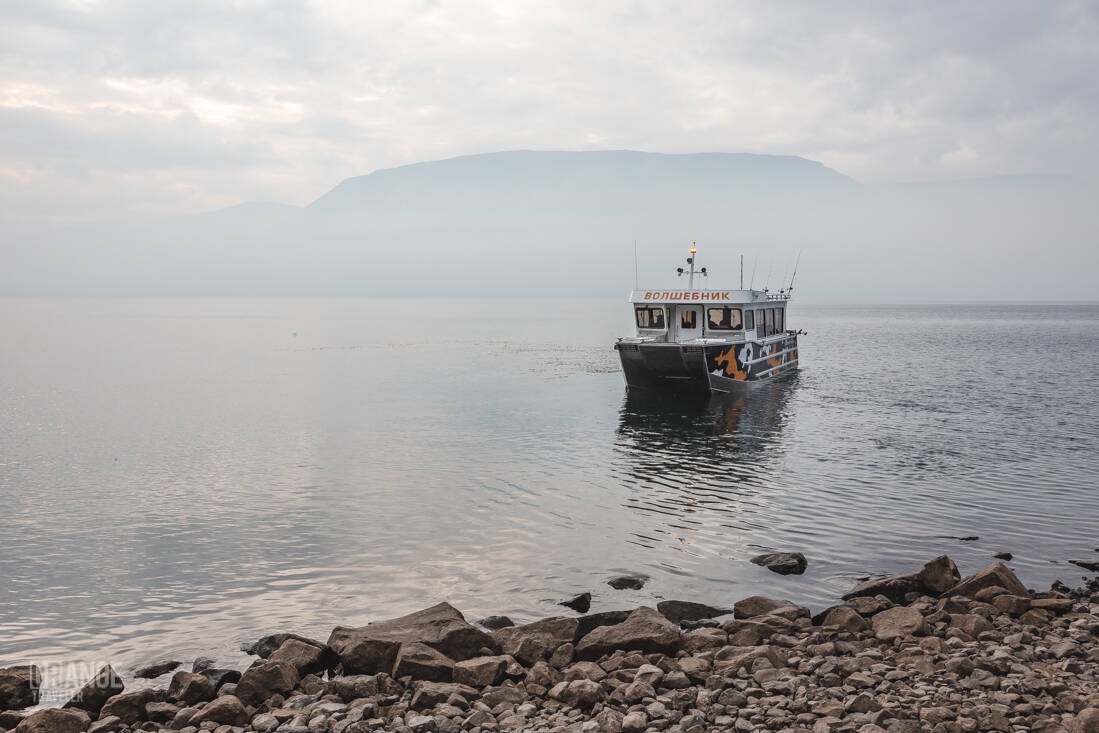
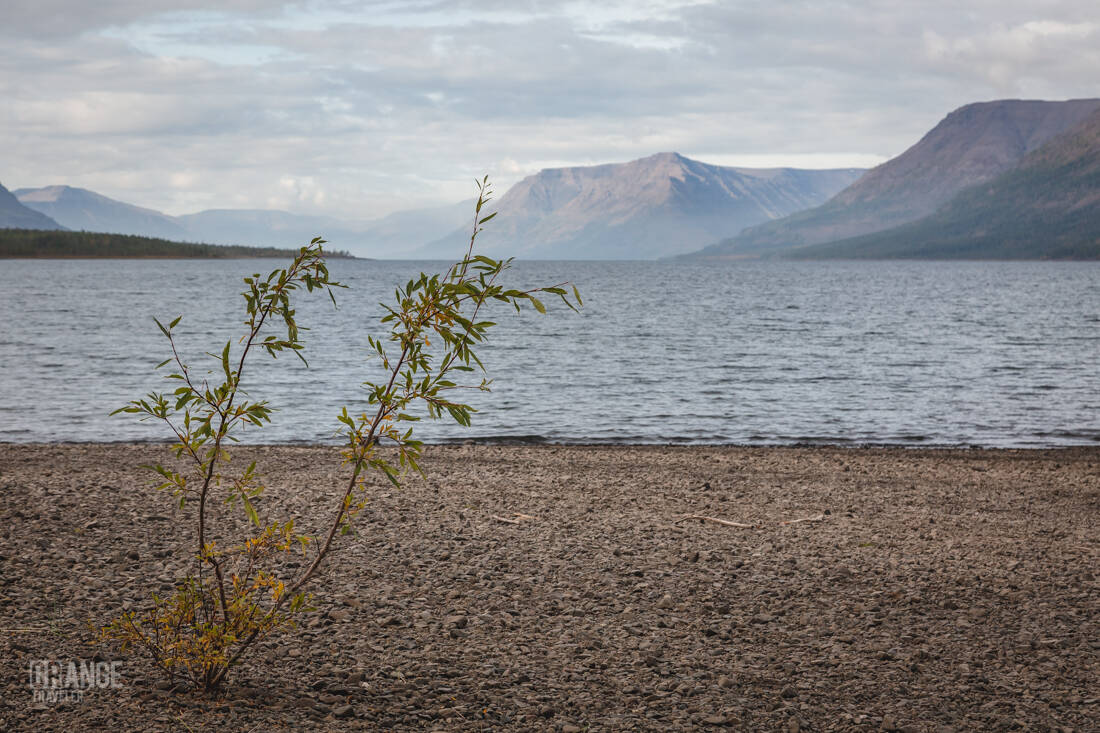
Mother Water, also known as Mama Lama, was clearly in a good mood the next morning. They say she can show her character by furiously hurling waves against the stones on the shore. On days like that, there can be no talk of kayaking. She will overturn the plastic craft and feel no remorse for what she has done. But the plateau was quiet again; surely someone had appeased all the mothers at once. The boat Volshebnik, “The Wizard”, glided over the water and carried us to the eastern shore of Lake Lama, where the Taimyr explorer Nikolai Urvantsev once wintered.
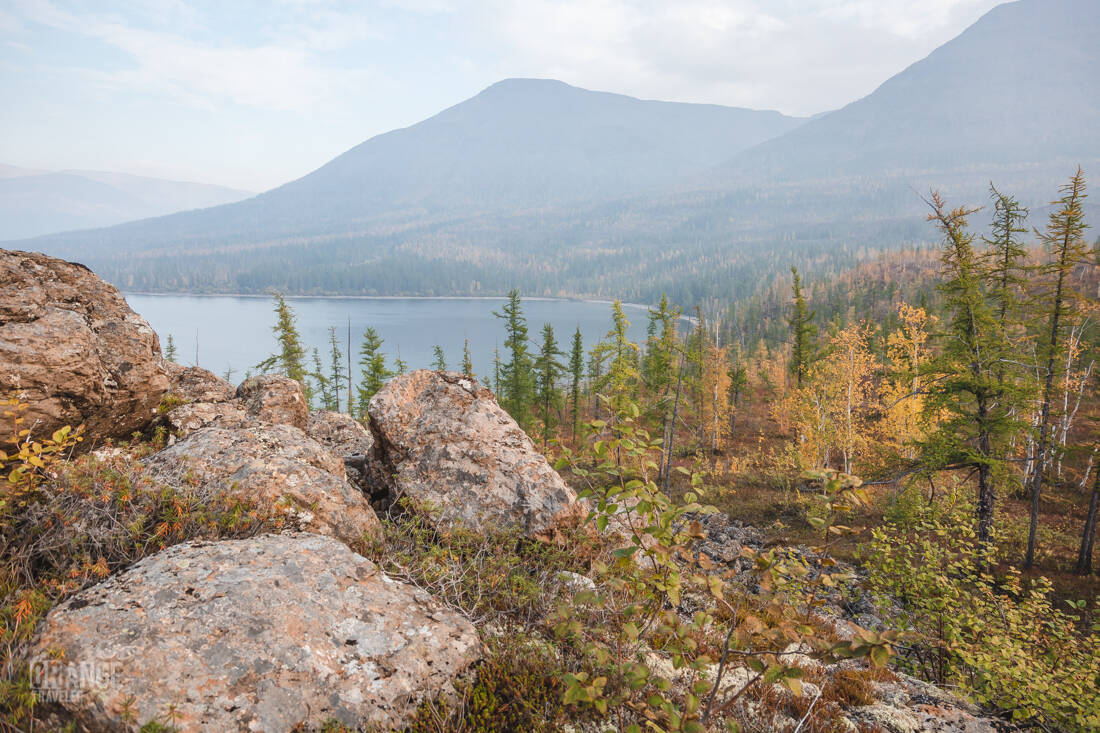
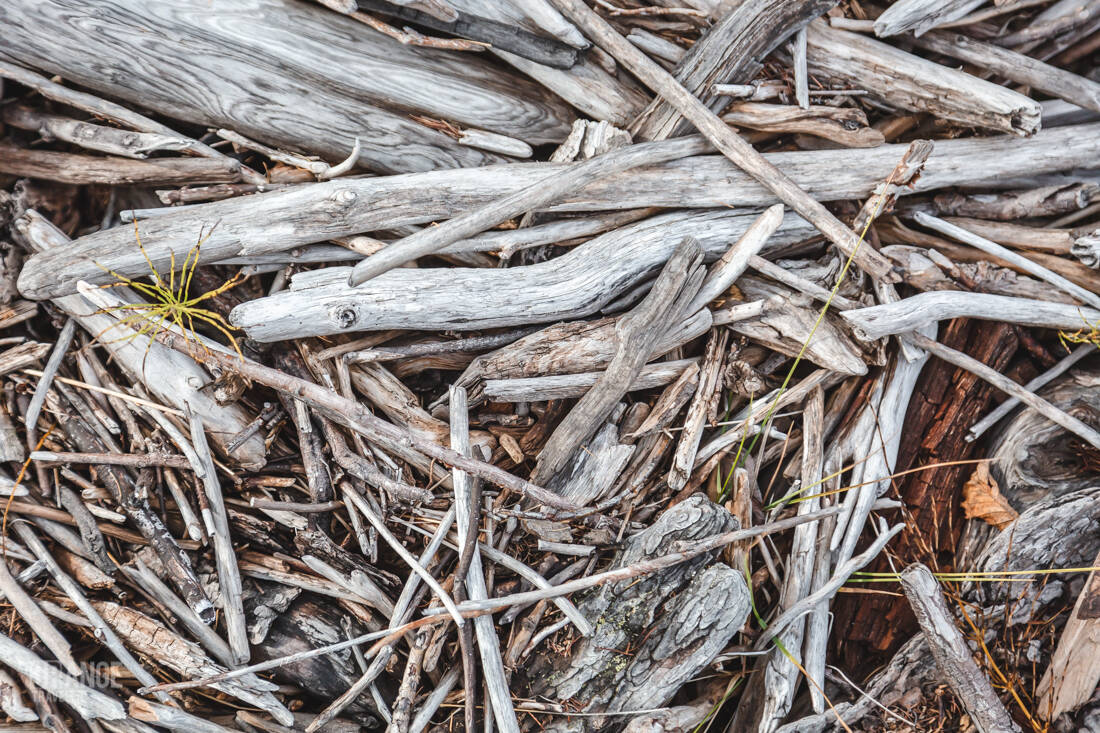
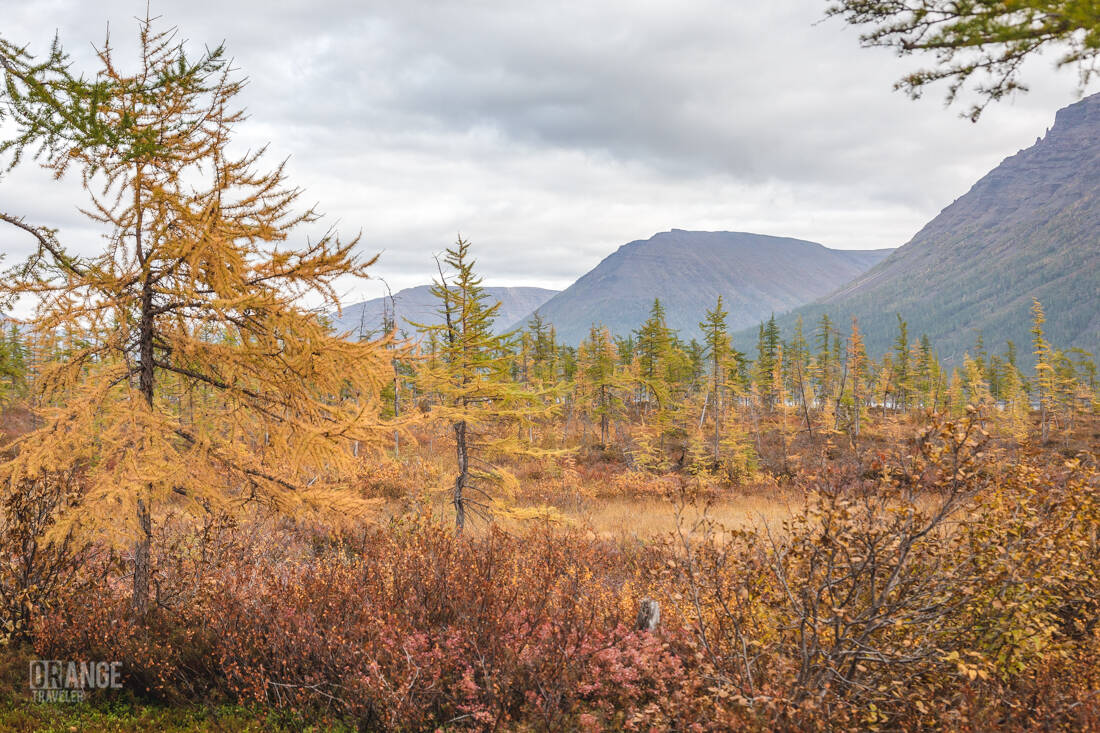
In 1921, he mapped the lakes during the Norilsk expedition. There are thousands of them, and I saw only three. Driftwood is washed up onto the shoal — snags and larch branches, first bent by strong winds, then polished by glaciers and river stones. Any one you pick up would make a fine interior piece; you should take it and bring it home.
Orange Fact
Lama is the largest of the lakes on the plateau, reaching 80 kilometres in length. It is distinguished by a unique microclimate, with morning mists and zigzag rainbows.
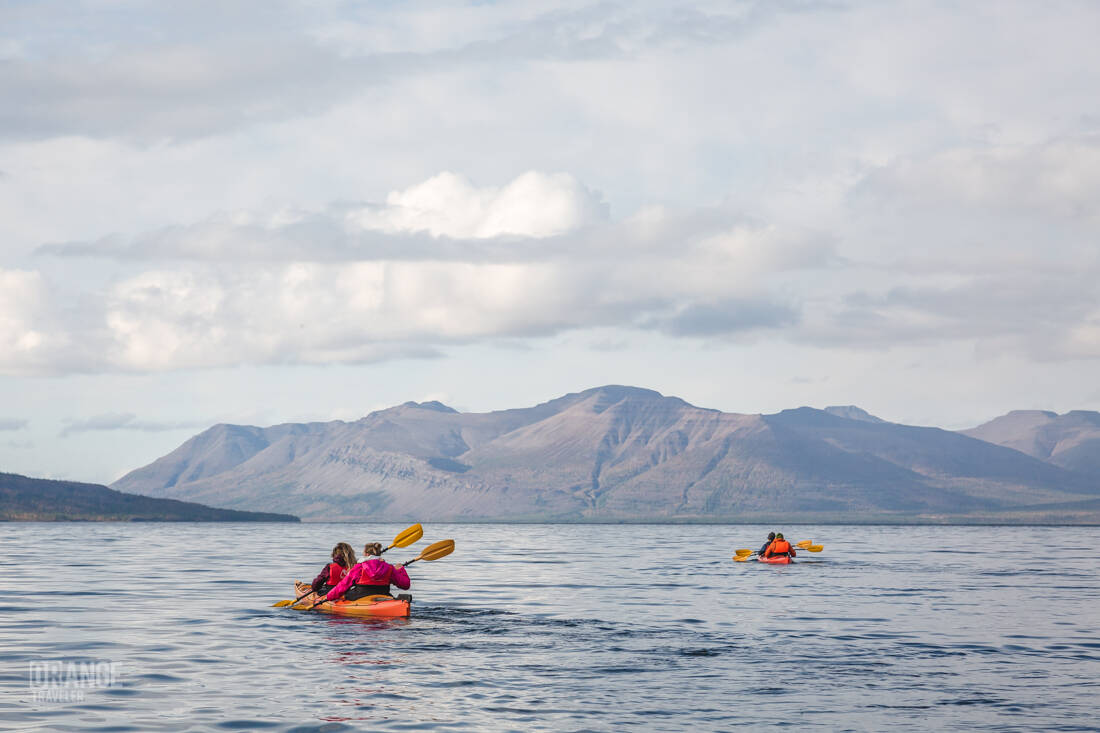
An hour of afternoon paddling on the lake was another experience that could be placed among the meditative ones. My imaginary list has many of them: walking to the Neralakh waterfall and listening to the water thunder down, picking a basket of shiksha berries, steaming in a banya with a view of the lake.
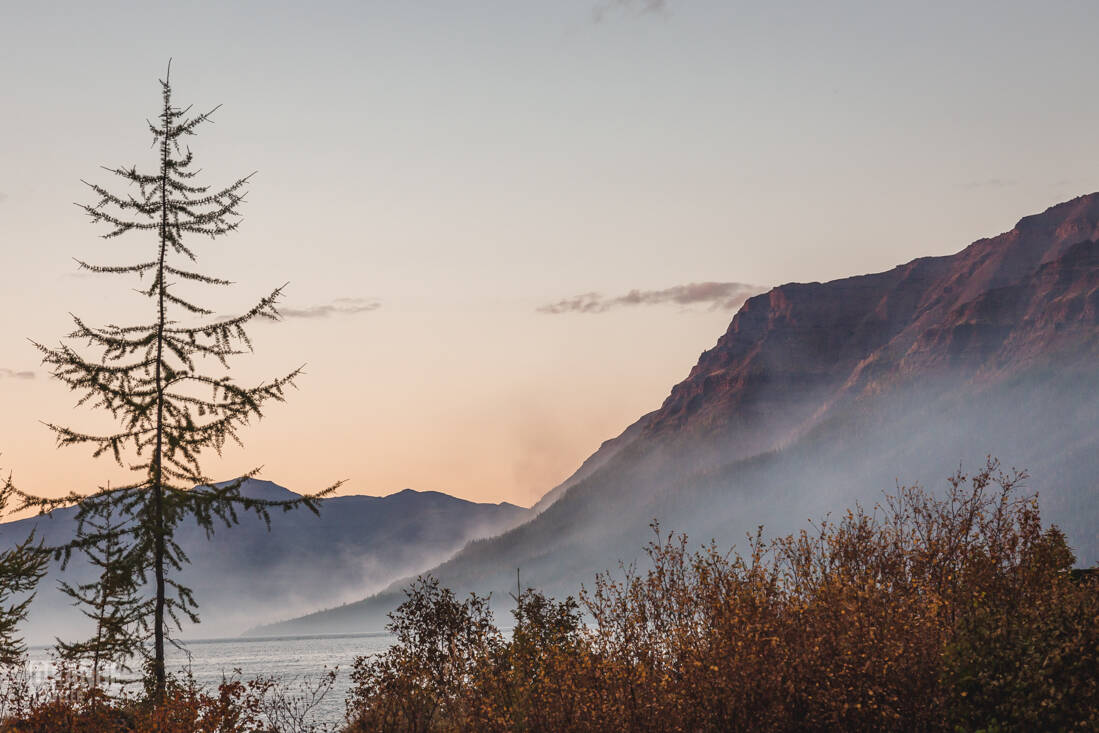
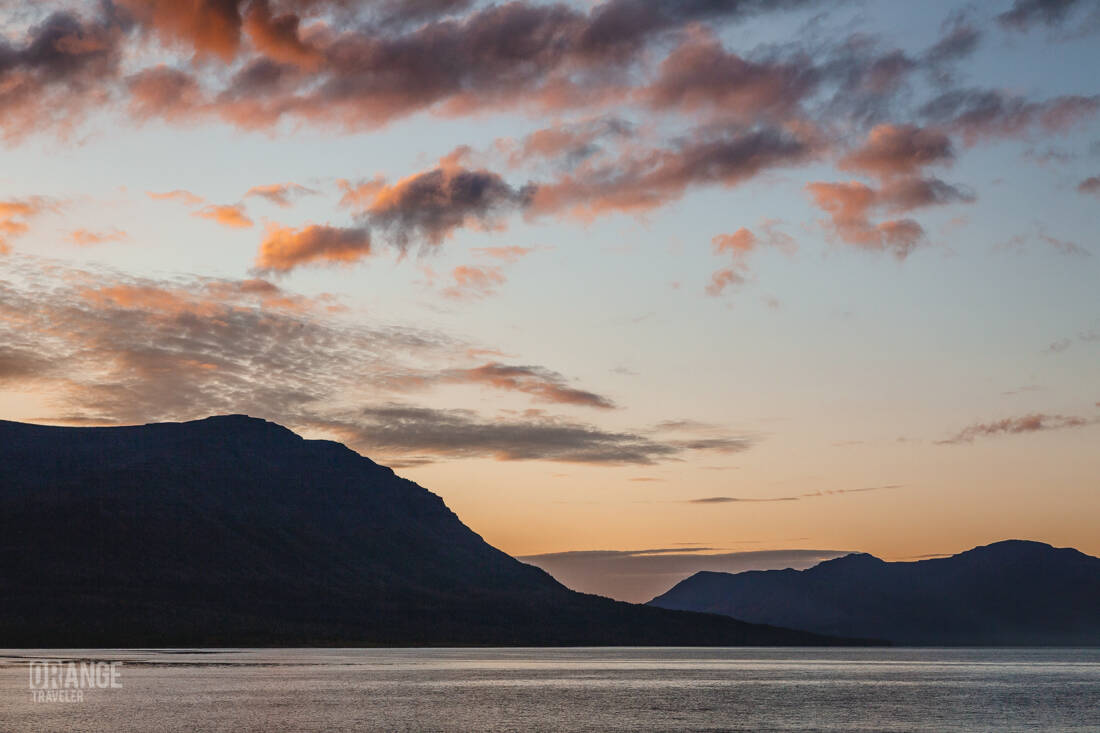
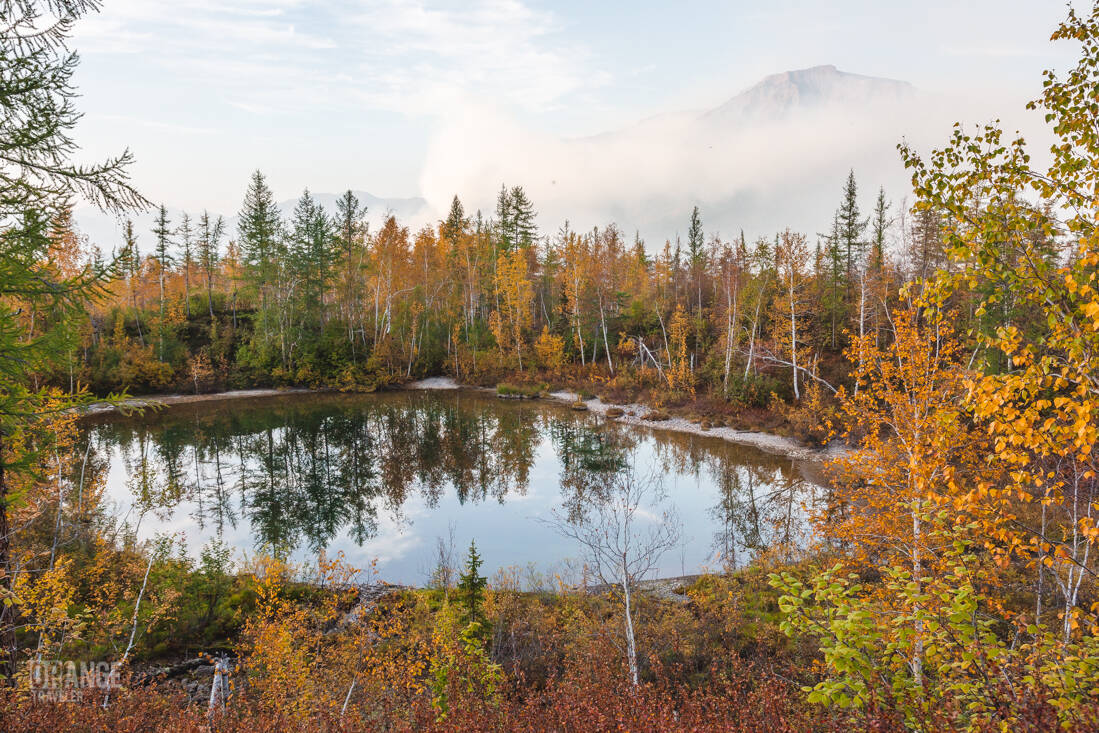
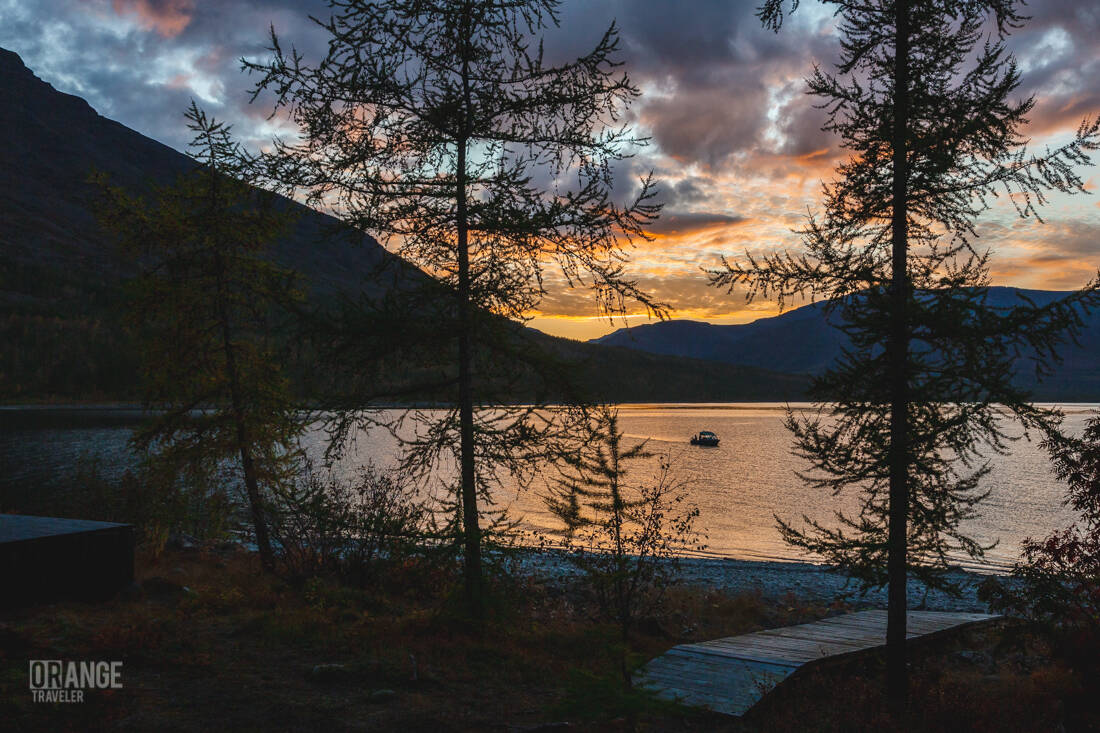
On the final evening, Lama hung pink clouds out like freshly washed sheets. The sun took a long time to set behind the mountains, as happens when you desperately do not want one happy day to end. The omnipresent wind did not trouble the larches, the lake froze in a half-sleep, turning into a mirror. But this was only the prelude to the dazzling performance Mother Sun had prepared for us.
No sooner had darkness fallen than the flashes of the northern lights coloured the sky above us emerald. They twisted in burgundy spirals and beat the wings of purple birds. With our heads thrown back, we could barely breathe. The scent of fresh baking stretched through the air above the lake. I knew that Aurora Borealis quite often makes sounds — particles crackle as they enter the upper layers of the atmosphere. But I had never suspected that the northern lights smell of sweet buns.
“Help yourselves,” said the hotel manager, appearing unexpectedly before us in the night with a plate of hot, fragrant vatrushkas. I was almost disappointed when I realised this was human handiwork. But from that moment on, nothing will ever change my memory: the northern lights on the Putorana Plateau definitely smell of vanilla and cinnamon.
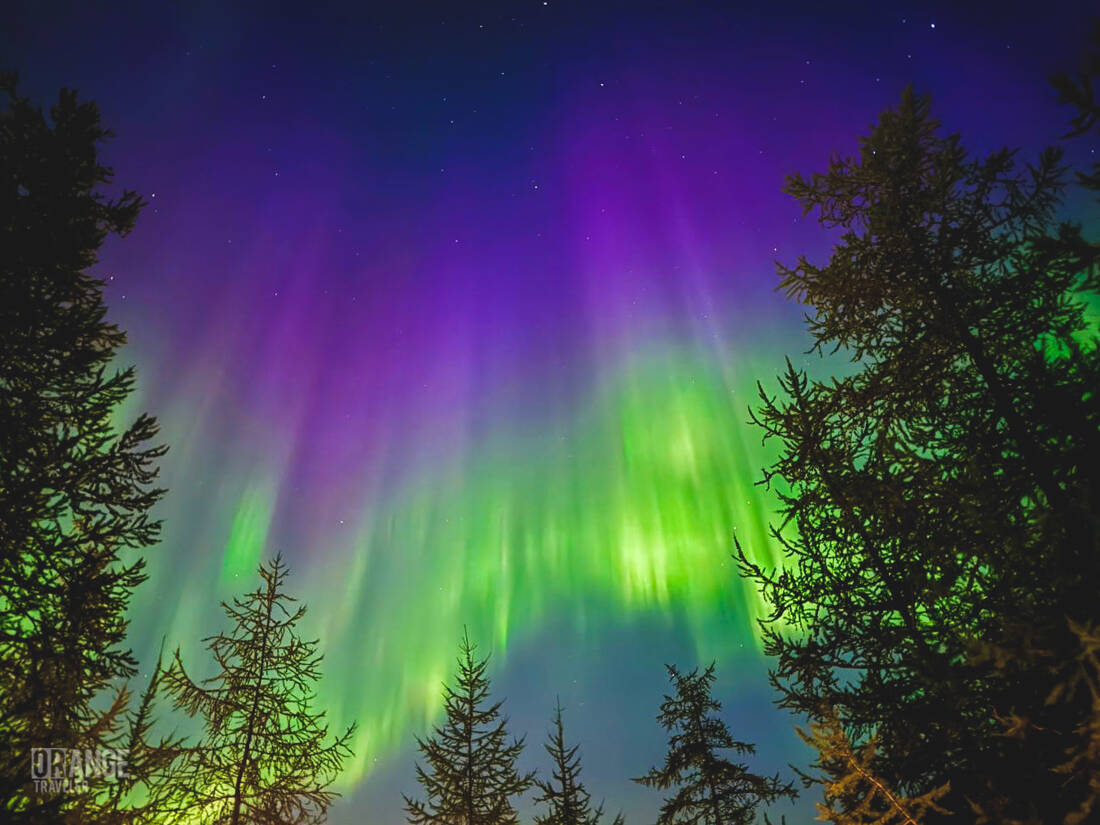
Photo: Olga Stepanova
The best season for a summer trip to the Putorana Plateau is July and August. In early July, the ice usually leaves the lakes, water logistics open up, and the waterfalls are still full after the snowmelt. August is often considered the most convenient month for a journey: the weather becomes more stable, although the north can still change plans quickly.
Summer on the plateau is short. It can be warm during the day, especially in July, but near water and in open areas the weather feels colder. You need to dress in layers: thermal underwear, fleece, a windproof and waterproof jacket, a hat, gloves and trekking boots with good soles.
Yes. Even during the summer season, the Putorana Plateau can be cold, damp and windy. Rain, fog and sudden weather changes are a normal part of the trip here. A sunny day does not cancel out the warm jacket in your backpack, and going down to the water or up to a viewpoint can quickly feel entirely northern.
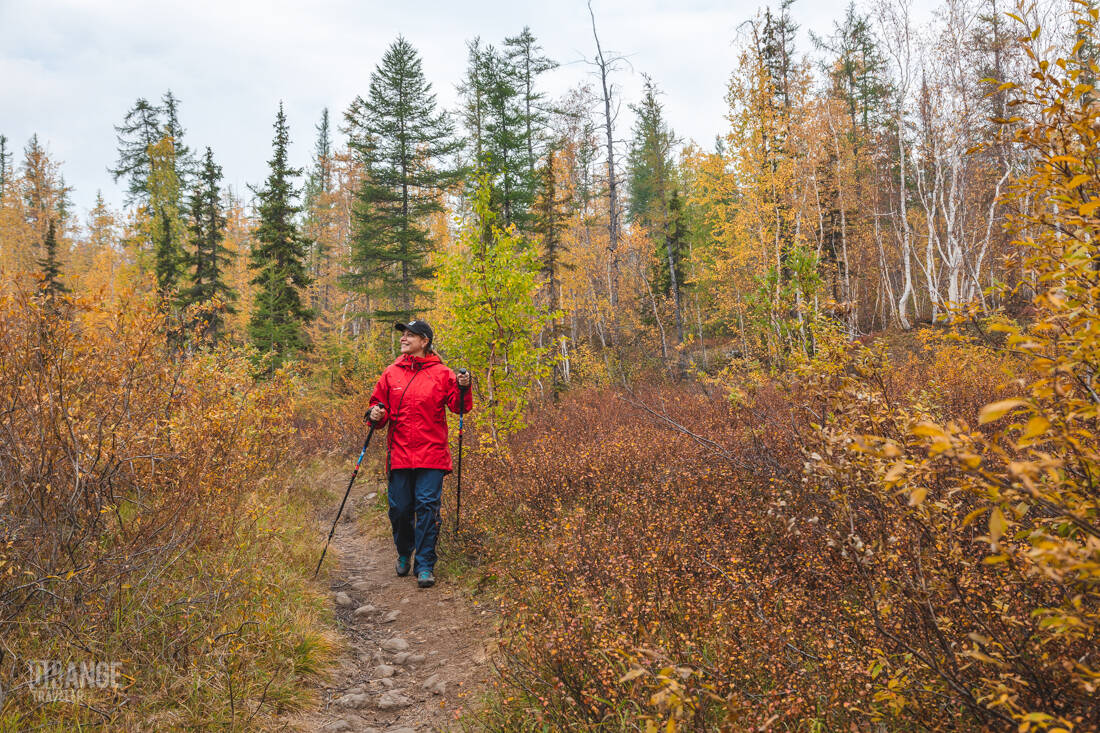
Most treks do not require mountaineering training. If you go slowly and steadily, you can make the ascents. On most trails there are difficult sections with kurumniks — stone fields of large boulders. Even so, you can walk at your own pace: the guides are always nearby, keep an eye on the group and help on difficult sections.
Festivalnaya is one of the most serious outings in the programme. There are many kurumniks and some long climbs. At Neralakh, groups are usually divided according to fitness level: the calmer group goes as far as the lower platform, while the sportier group goes higher.
The northern lights are a frequent phenomenon on the Putorana Plateau. On clear days, flashes appear in the sky for 8–10 months of the year, usually from September to April. For observation, you need dark skies, clear weather and sufficient solar activity. During the summer season, the polar day makes the lights difficult to see, but by late August and in September the chances already begin to appear.
You need normal physical fitness and readiness for northern weather. You do not have to be an athlete, but you will have to walk over stones, climb uphill and spend several hours outdoors. If you have problems with your knees, back or balance, it is better to discuss the level of exertion with the organisers in advance.
You need a waterproof jacket, a warm layer, a hat, gloves, trekking boots, spare socks, sunglasses, sunscreen, repellent and a small backpack for day outings. The polar summer can deceive you: the sun shines for a long time, but wind and water quickly take away warmth. And here you will find plenty of useful tips on what to take with you on an expedition.
You can book the trip here.



 Travel reportage
Leave a comment