“I’m confused. So who is whose son?” I asked our guide Gulia cautiously.
“Mirzo Ulugbek was the grandson of Amir Timur, or Tamerlane, whom his own son, Shahrukh, beheaded. Shahrukh, in turn, was the fourth son of the great conqueror. The heir was supposed to be the beloved grandson Muhammad Sultan, Jahangir’s son, but he was killed in battle. Miran Shah, from whom the Mughal dynasty descended, took part in all of his father’s military campaigns, but an unfortunate fall from a horse ruined his entire life.
There were four sons in all, and several daughters.”
Trying to make sense of Amir Timur’s family tree — that is, Tamerlane’s — I came to grief. Too many relatives. Then again, in Uzbekistan people still hold weddings for two hundred guests. I hear the names Amir Timur and Mirzo Ulugbek often in Samarkand. In 1370, Amir Timur made Samarkand the capital of his empire, which stretched from Persia to Transcaucasia. He ruled for 35 years and led 27 campaigns of conquest.
From those campaigns he brought back trophies: books, ideas, princesses who became concubines, elephants and other important valuables. That is why almost all of Samarkand’s architecture and sights are connected with the name of the great conqueror, his wives, children and grandchildren. In general, the classic sightseeing programme involves visiting numerous mausoleums. It is one thing when the graves belong to people who are at least somewhat famous, but, honestly, most of the names on gravestones and burial sites mean very little to a visiting tourist.
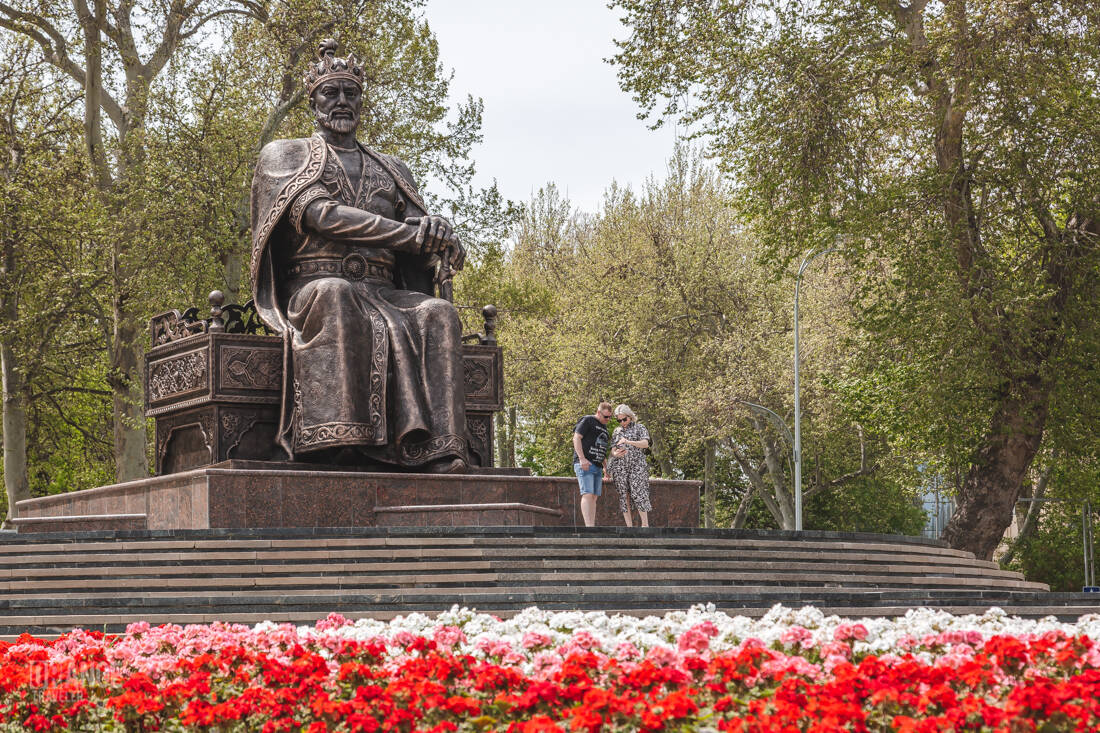
In Samarkand, Amir Timur is not usually called Tamerlane: it is a European nickname meaning “the Iron Lame One”, and Uzbeks do not particularly like it. Whatever name one uses, he went down in history as a ruthless military commander, decisively cutting off the heads of everyone who stood in his way, as well as a champion of science and new knowledge, who sought to turn Samarkand into a centre of culture and learning in Central Asia.
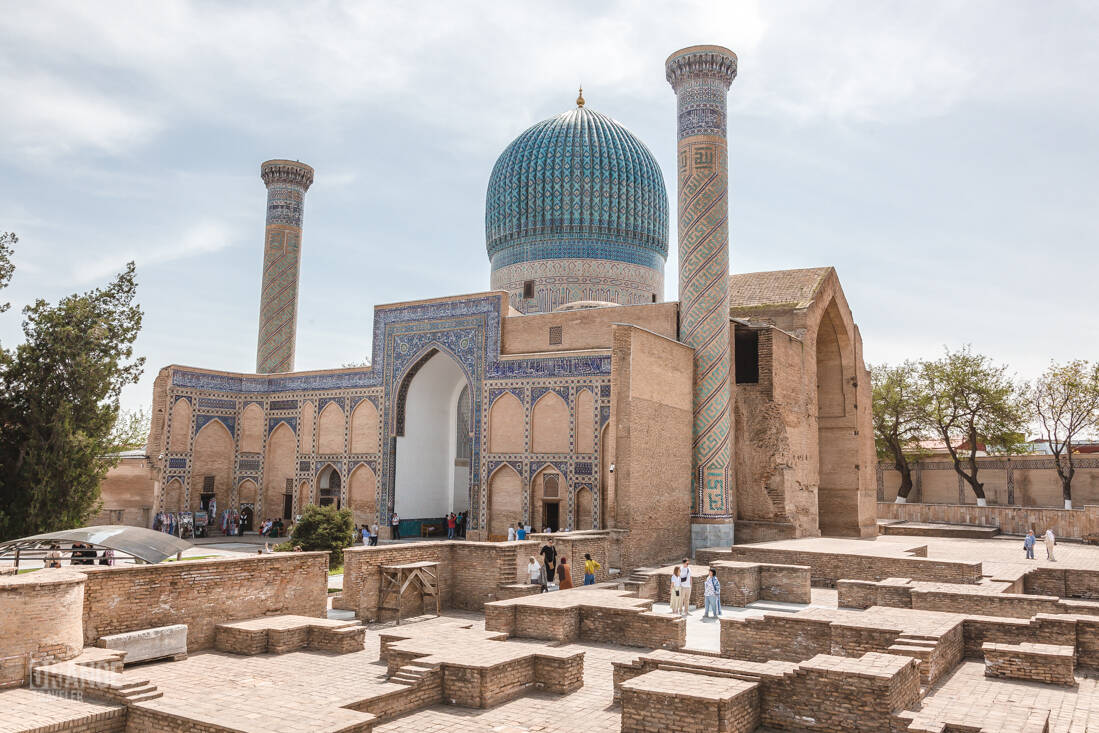
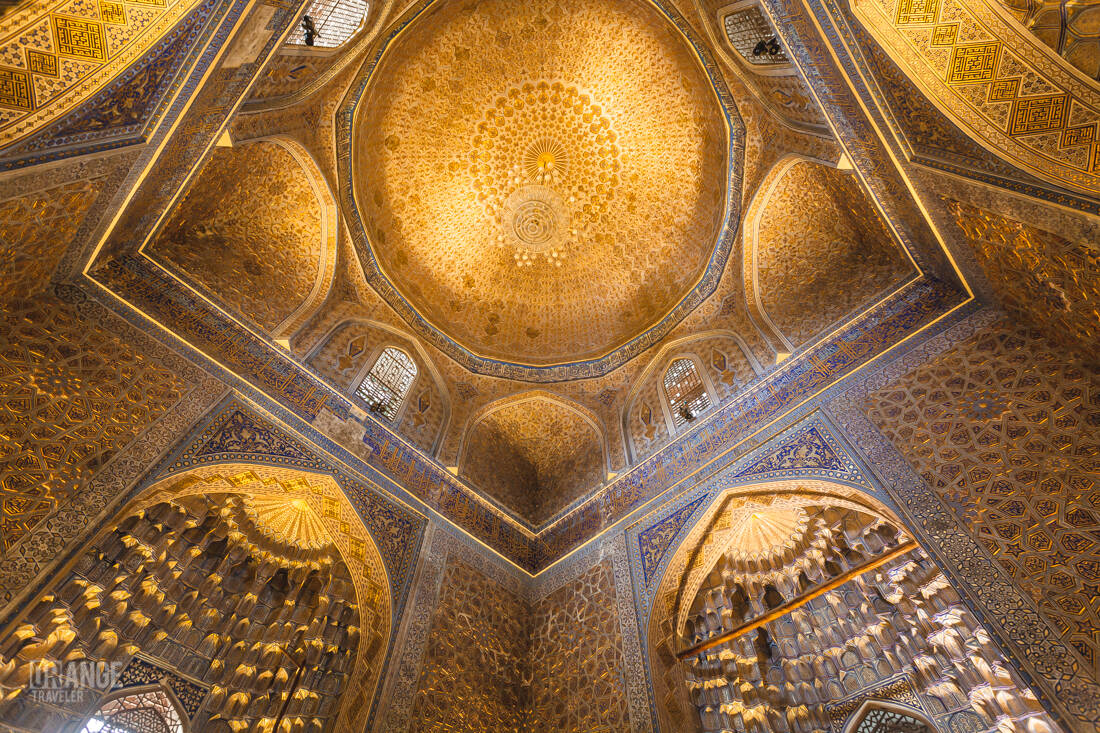
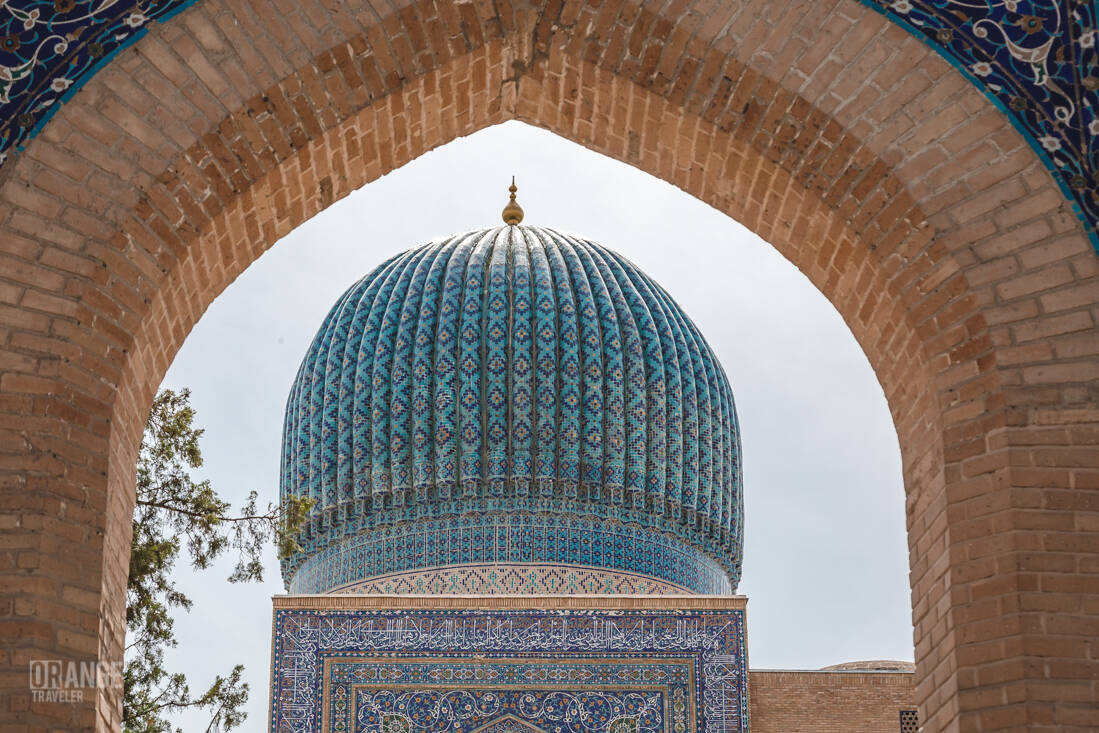
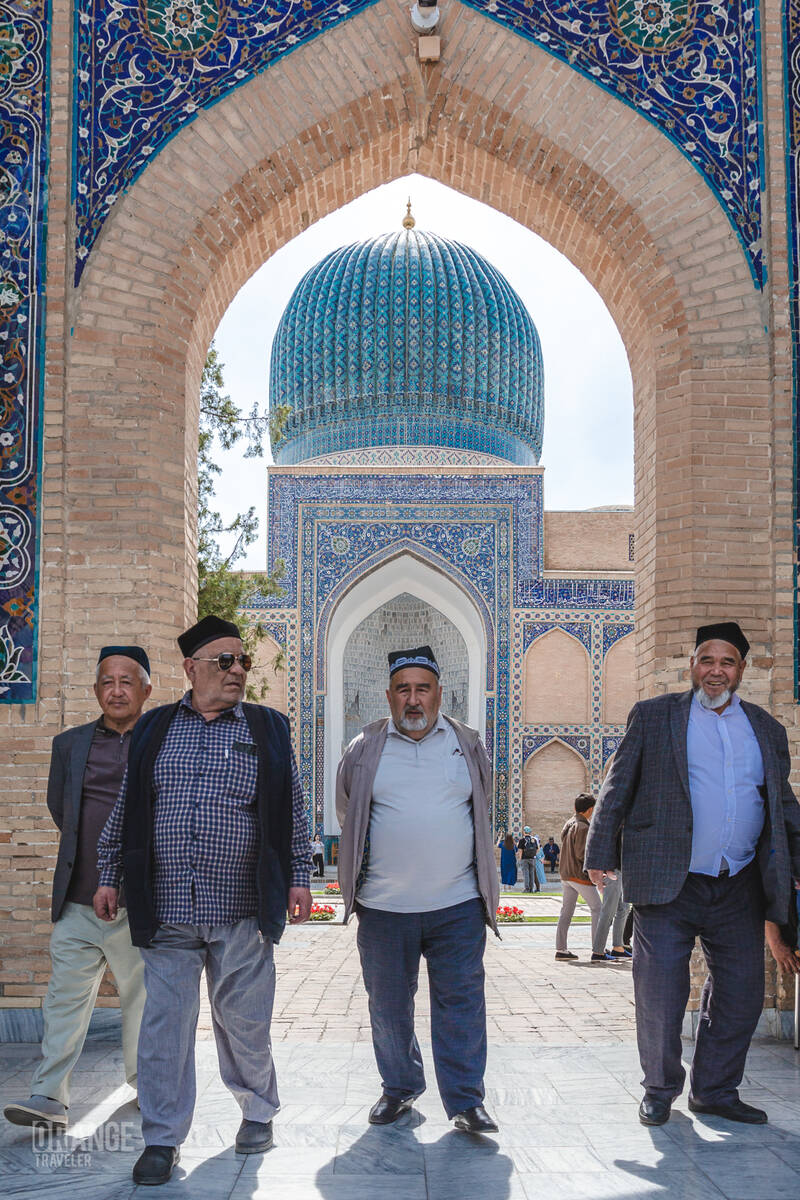
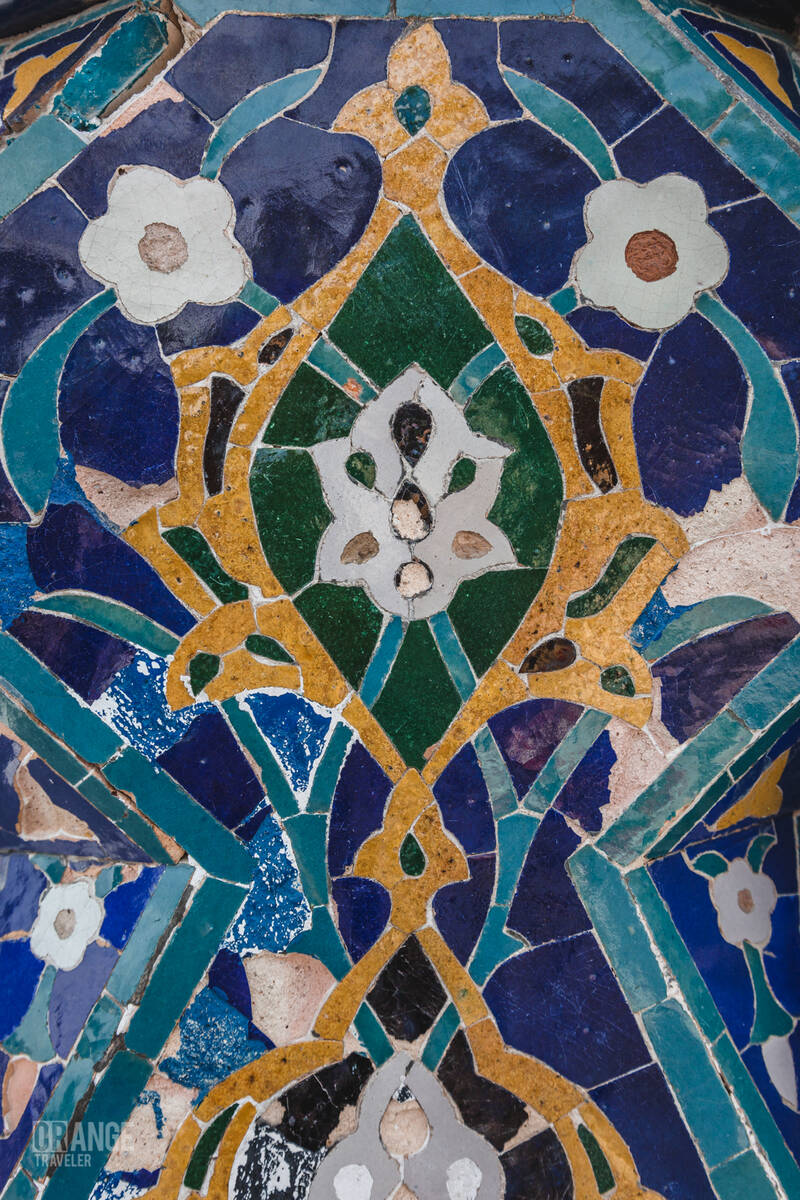
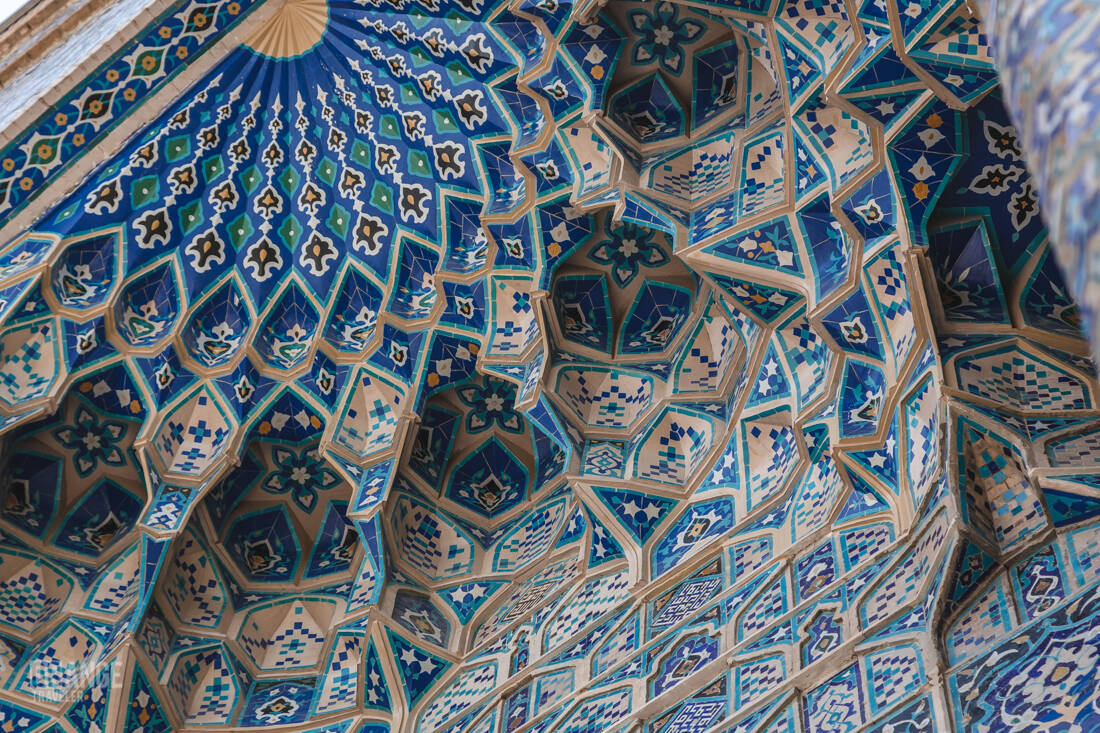
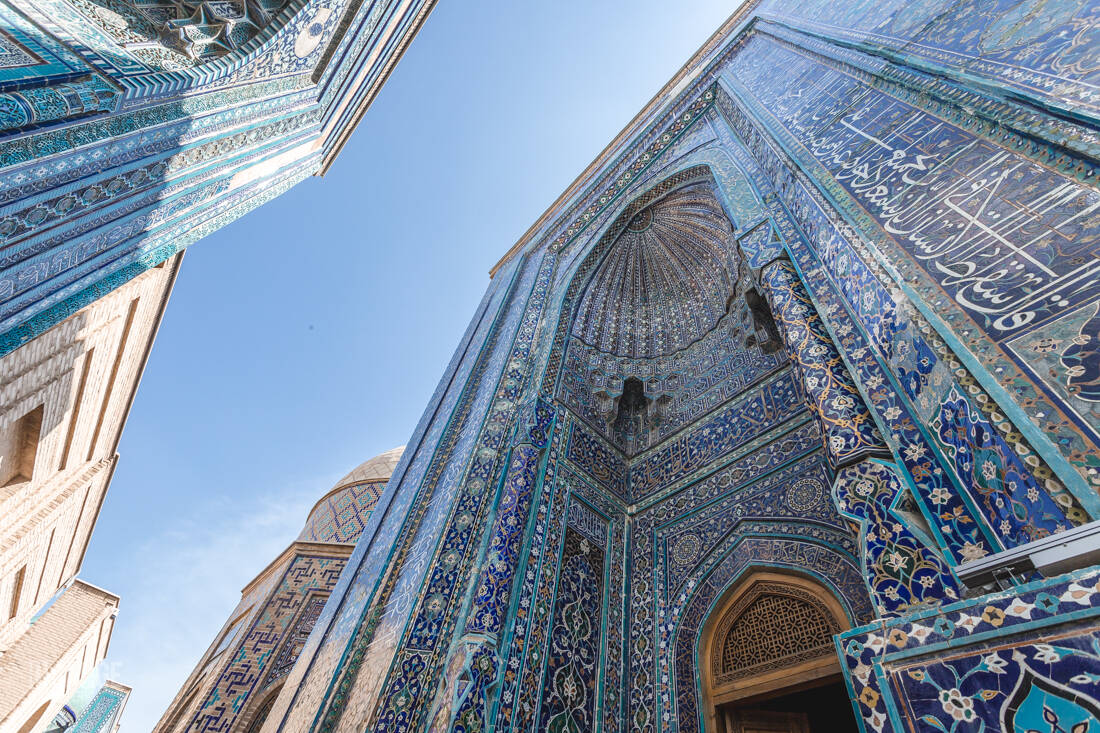
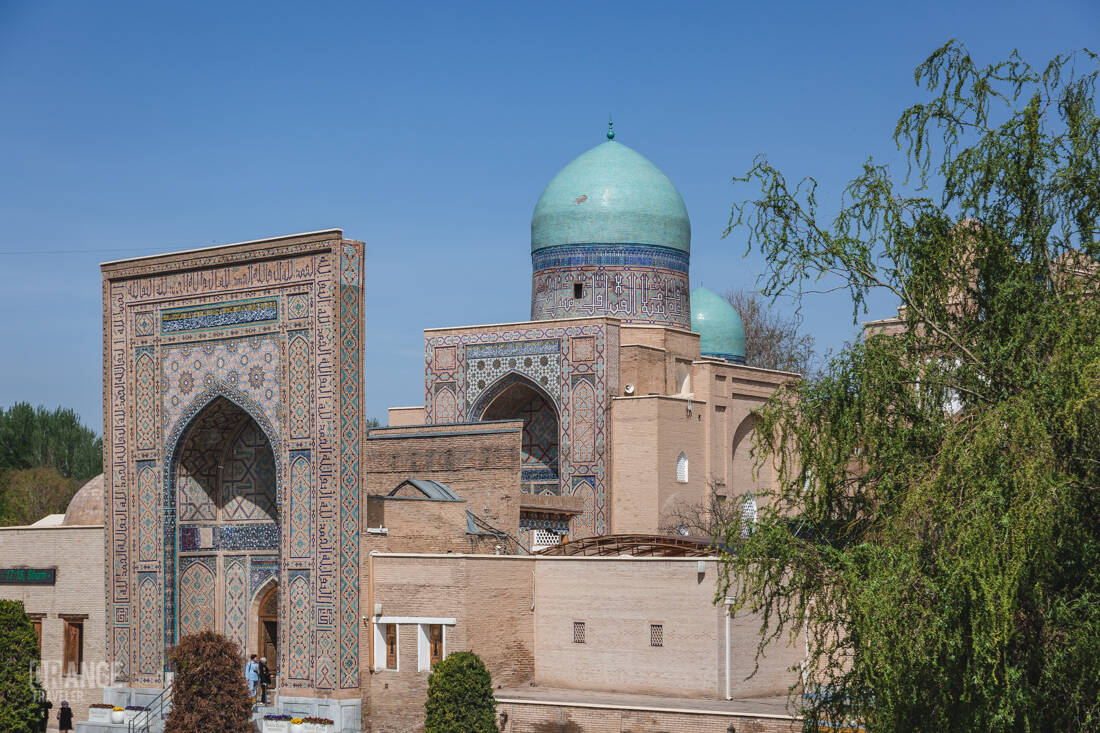
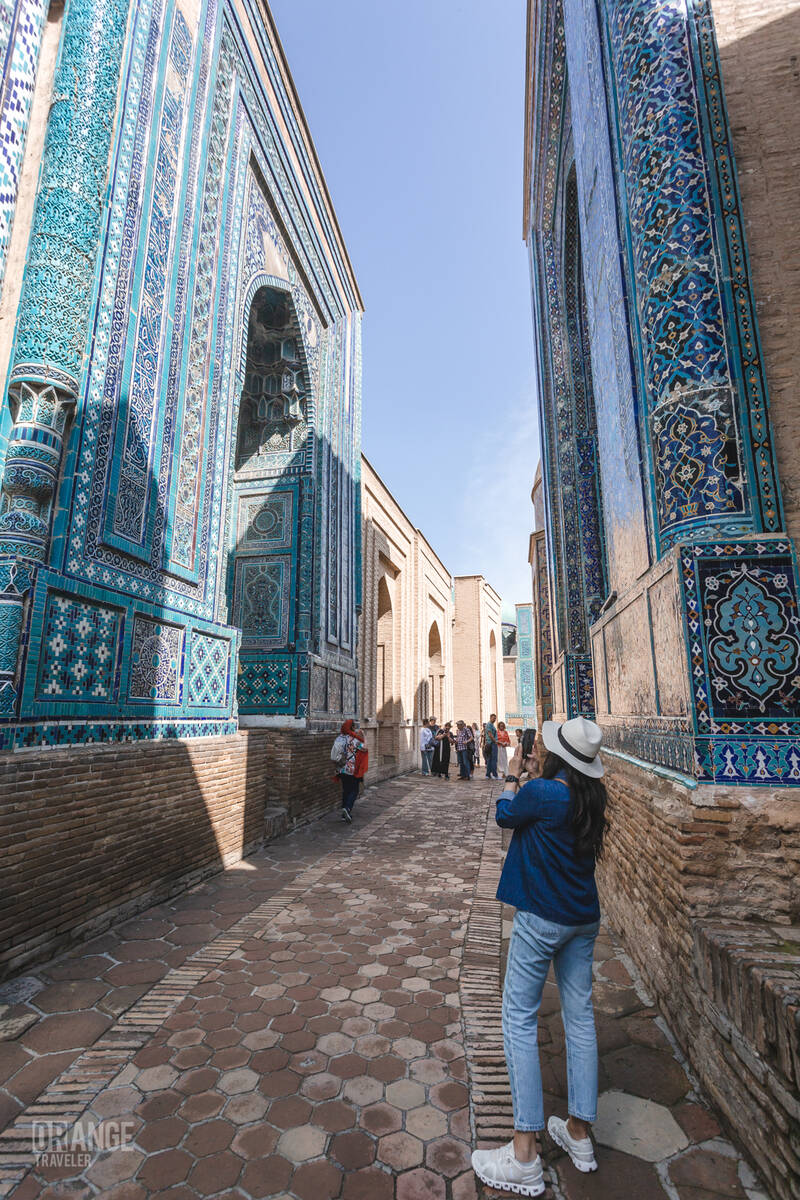
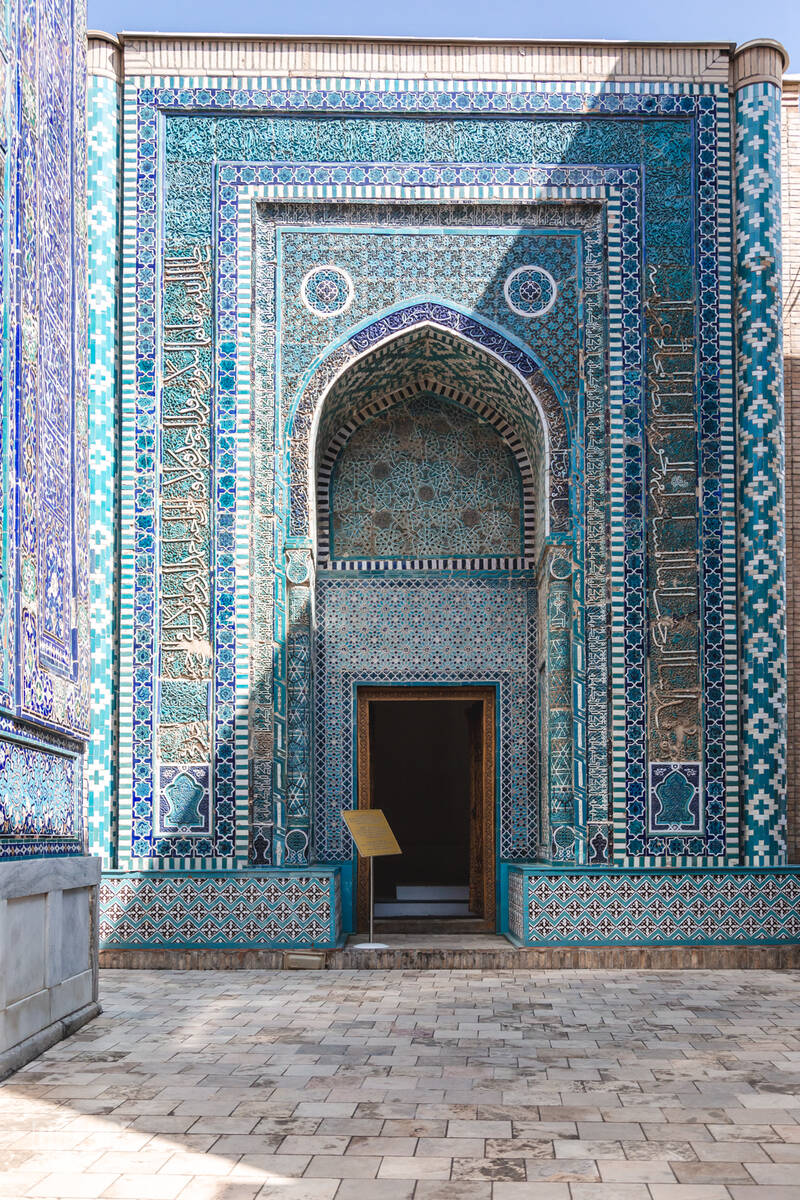
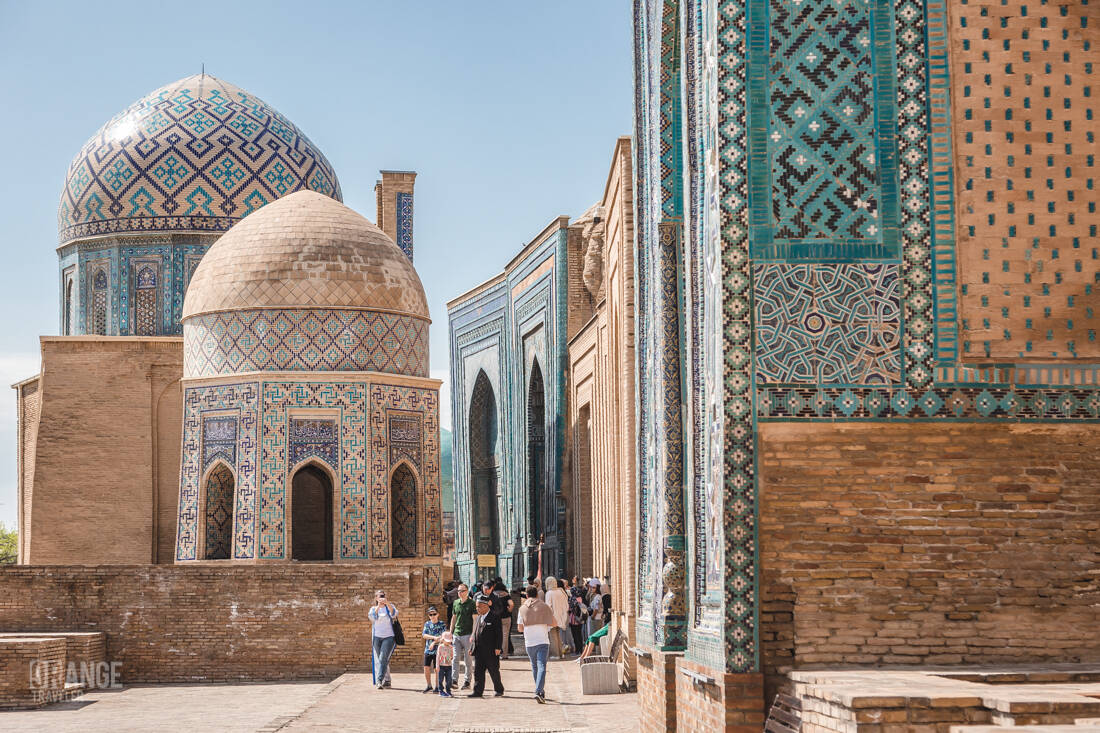
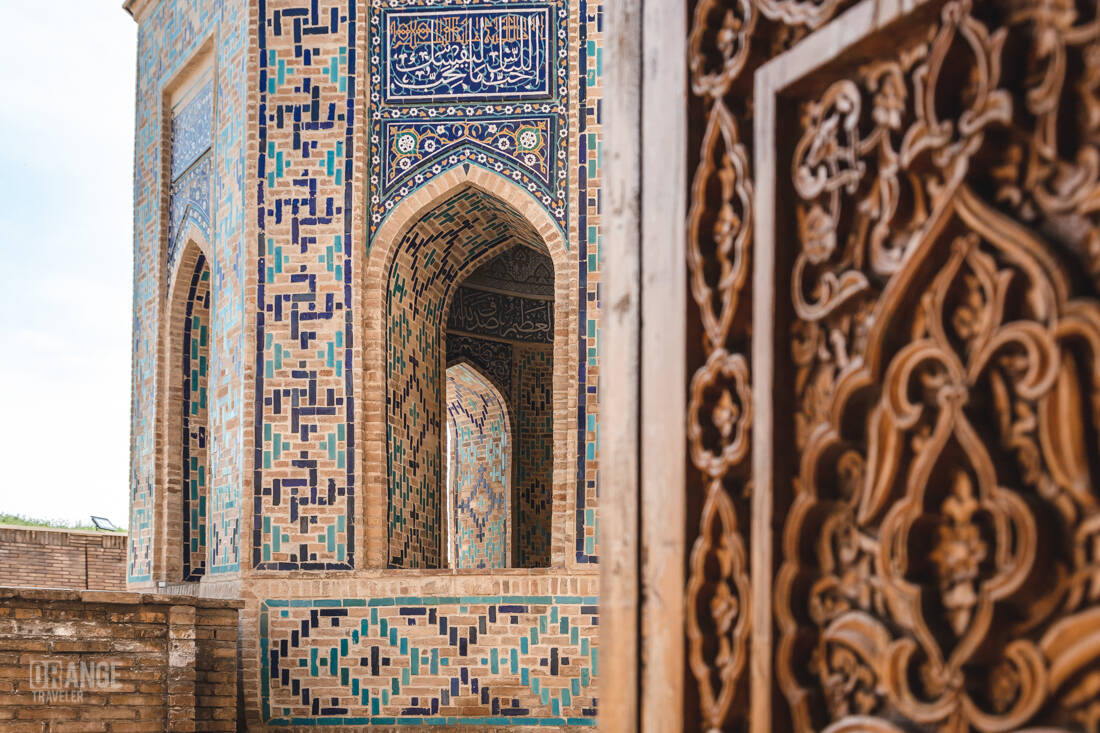
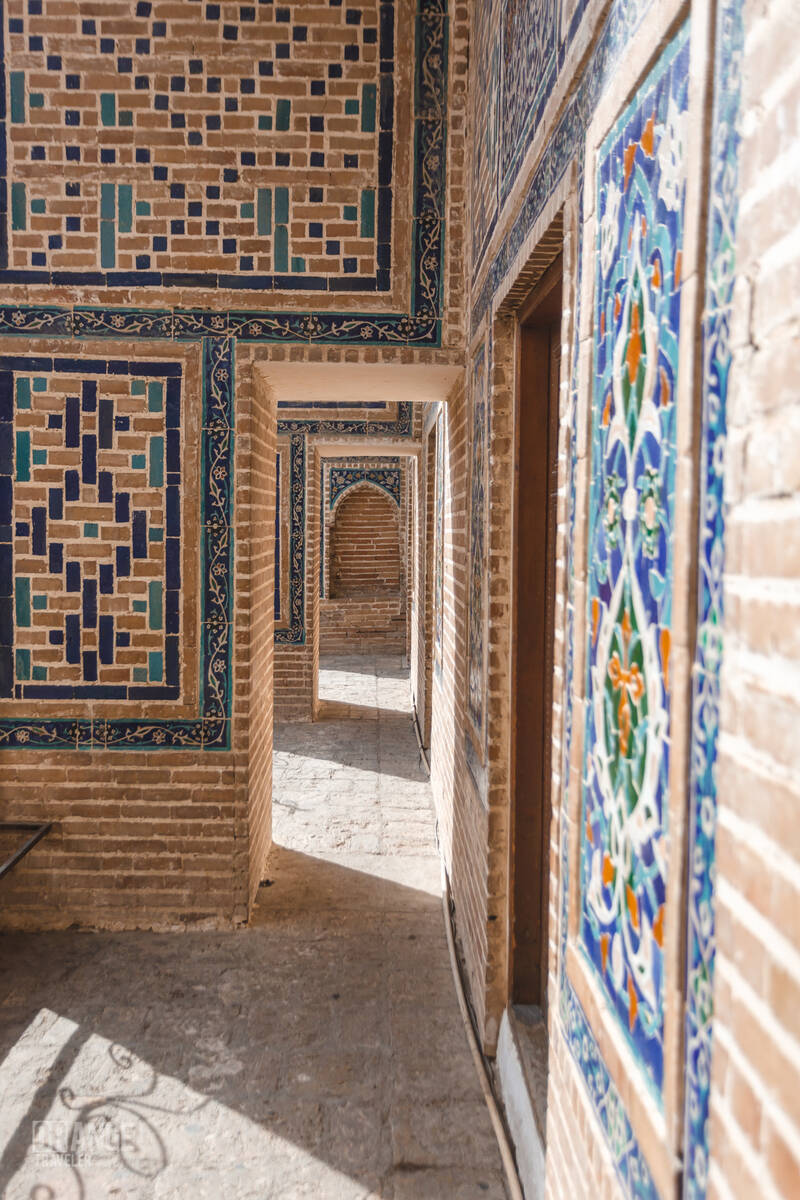
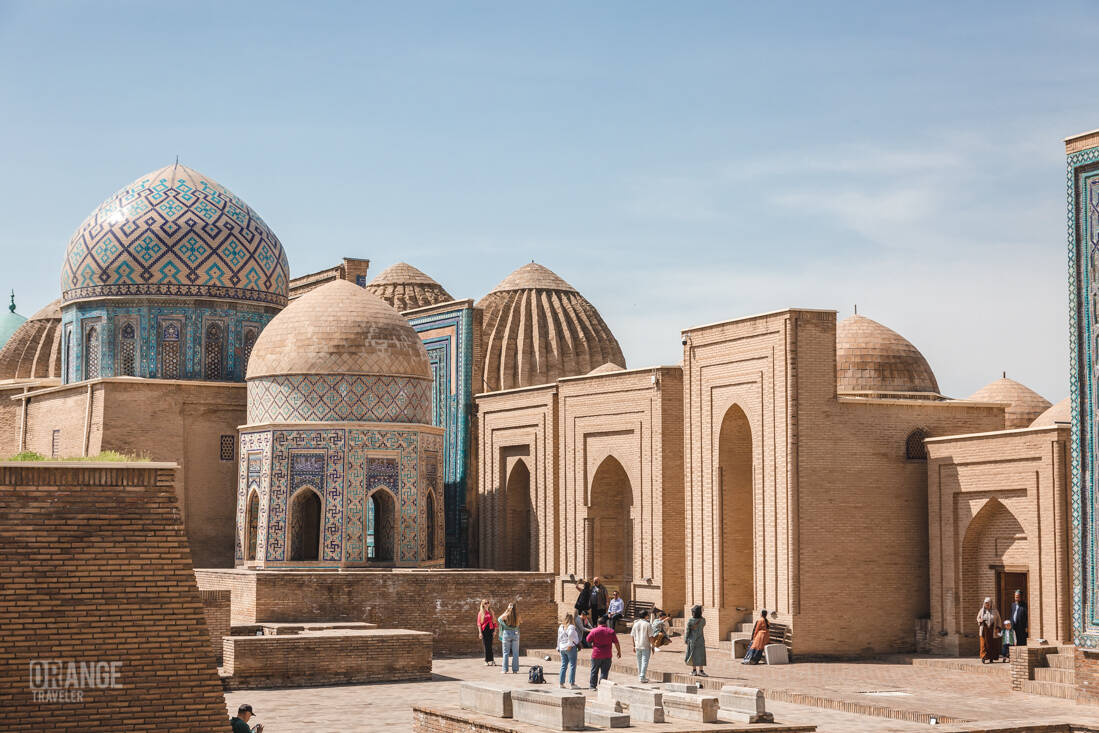
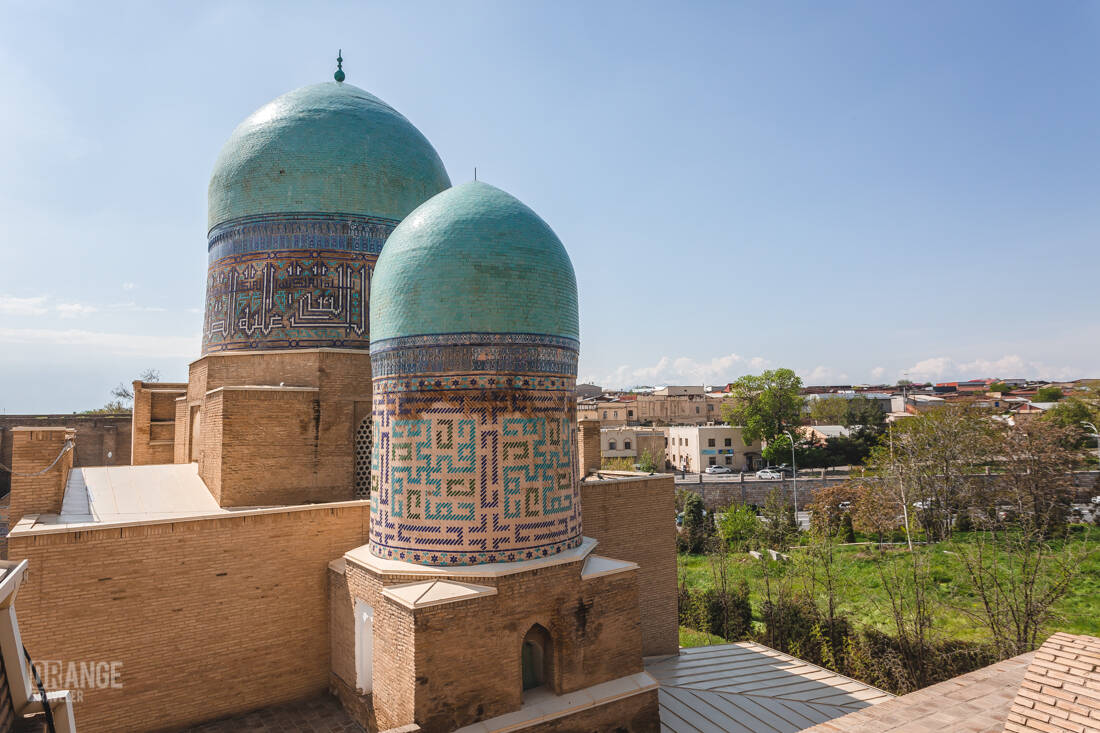
The Gur-Emir Mausoleum in Samarkand was the first in a long series on my programme. It was originally built at Amir Timur’s command for his heir, Muhammad Sultan. For Bibi-Khanum, one of his 18 favourite wives, the Bibi-Khanum congregational mosque — one of Samarkand’s principal sights — was erected. Mausoleums were built for several of his other wives in the Shakhi-Zinda complex. The mosaics, the play of light and the wood carving make the right impression, and you catch yourself thinking: some men really do know how to do things properly for the women they love.
Take the Taj Mahal in India — it, too, was built in the name of feeling. “Gur-Emir is nothing other than the prototype of the Taj Mahal,” Gulia said. “After the Timurids were pushed out of Central Asia, they settled in India, where the Mughal dynasty emerged. So they are ours — the Timurids.”
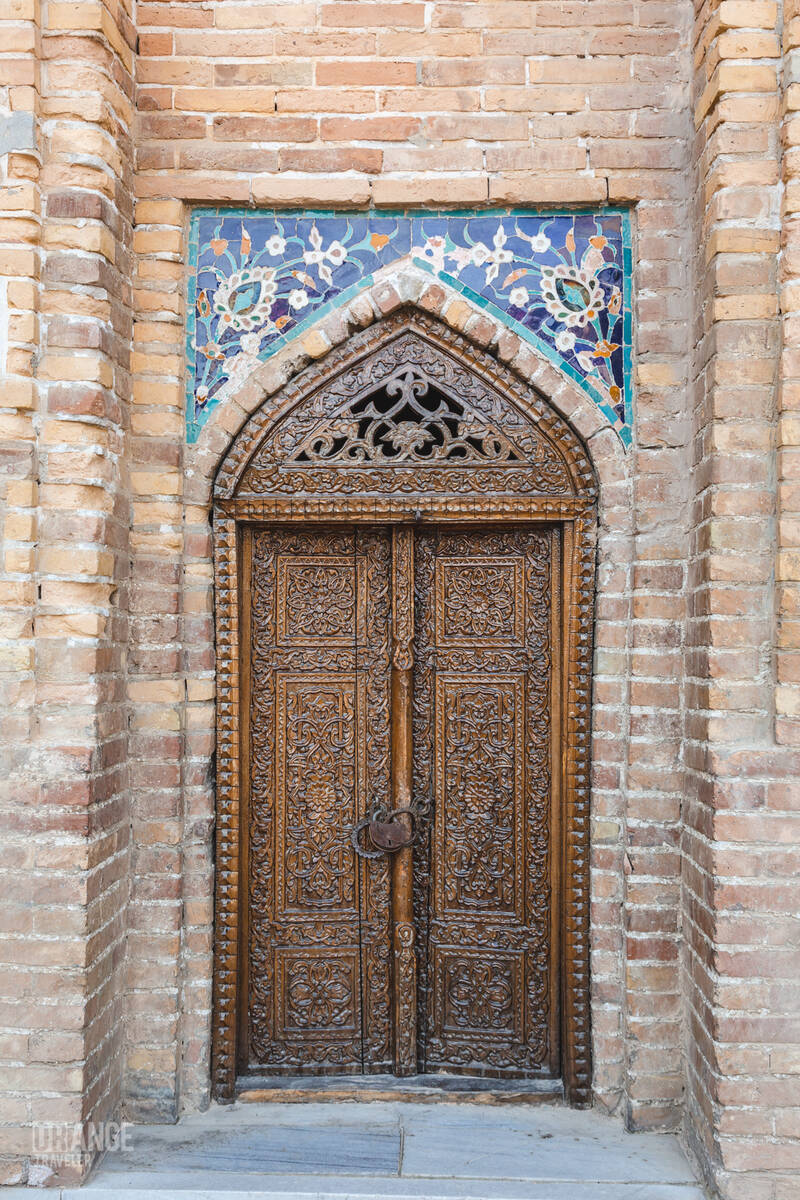
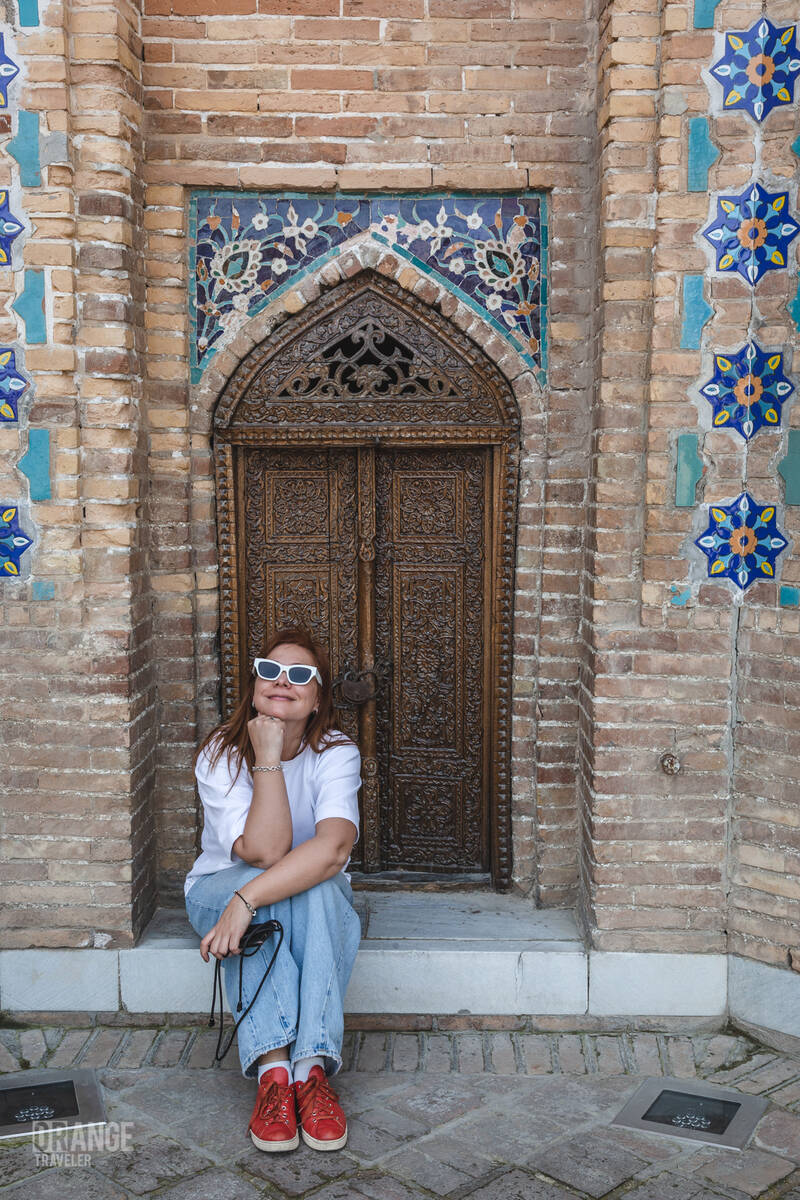
Incidentally, the entrance door is original. It was once inlaid with ivory and precious stones. The Gur-Emir Mausoleum was subjected to a major robbery in 1905. One night, thieves killed the guards and carried off fragments of mosaics and precious decoration. Later, all this loot was found in the Friedrich Museum in Prussia and bought back for 600,000 marks. Tamerlane’s grave lies in the middle; his remains rest in a dark-green sarcophagus.
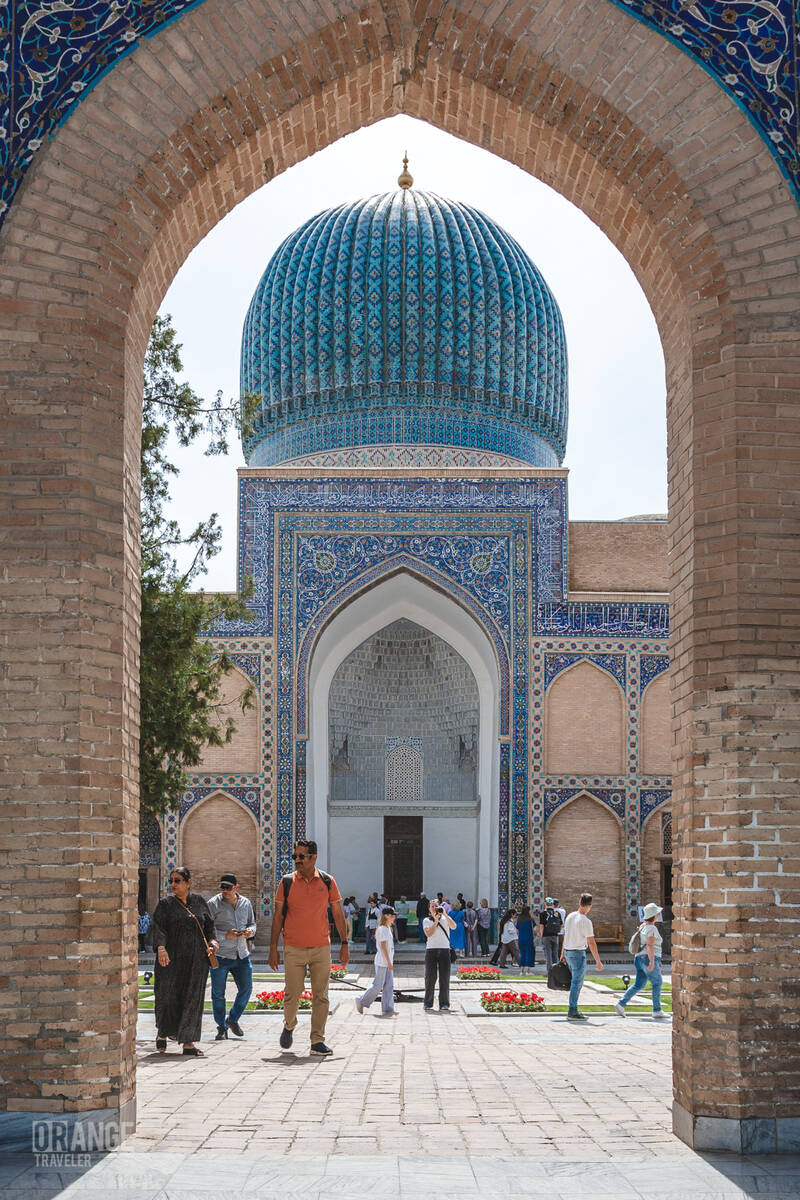
It is believed that his gravestone is cursed, and it is easy to believe it. The people of Samarkand have always said: “Do not disturb the bones of the Great Lame One.” In 1740, a Persian military commander dared to steal the jade slab from Tamerlane’s crypt, but the misfortunes that befell him afterwards forced him to return the stolen object to its place. Cracks from that robbery can still be seen on the slab. Conspiracy theorists are certain that the opening of the tomb on 20 June 1941 led to the beginning of the Second World War.
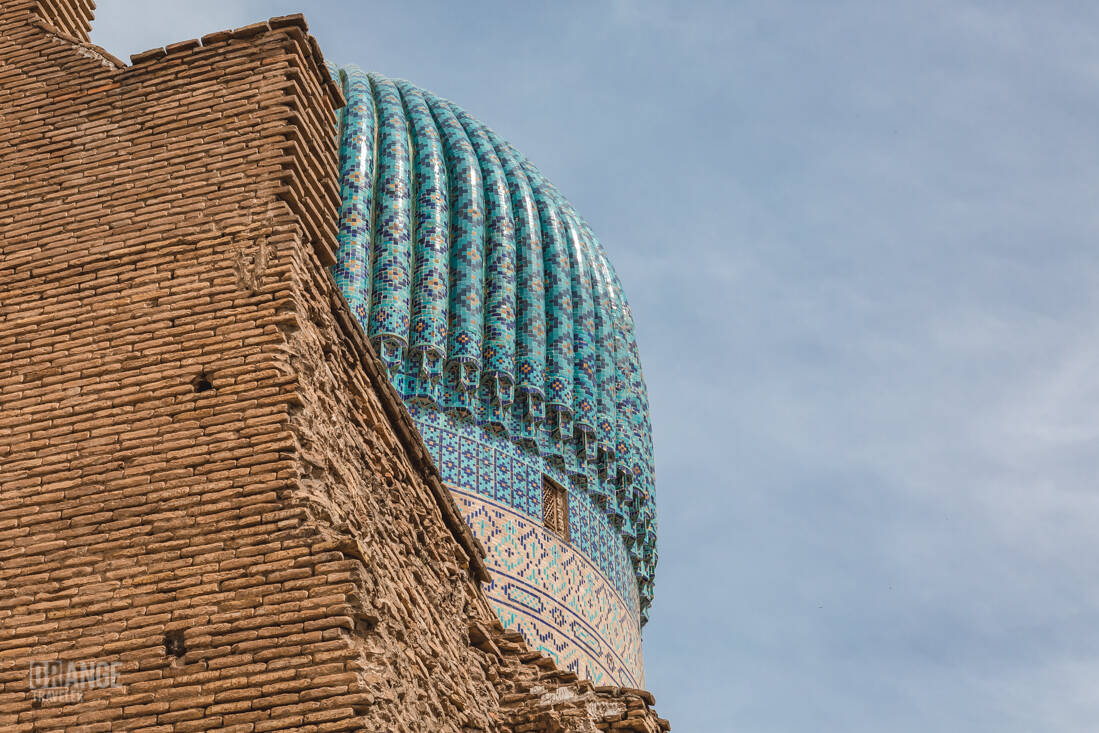
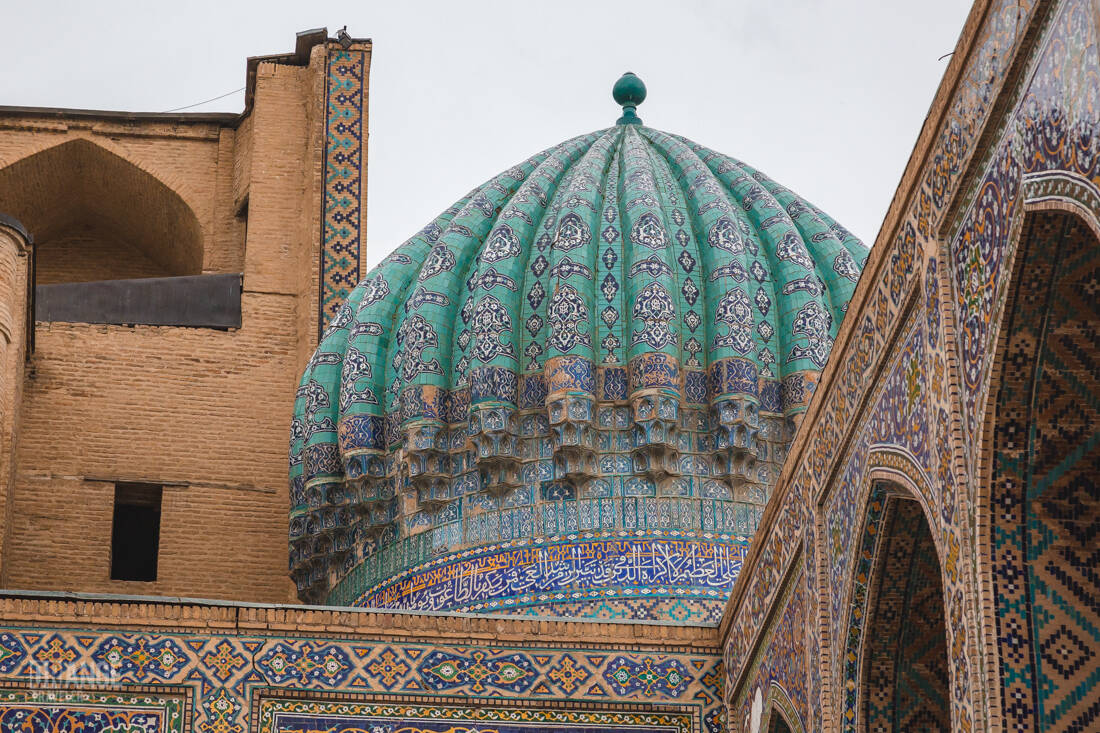
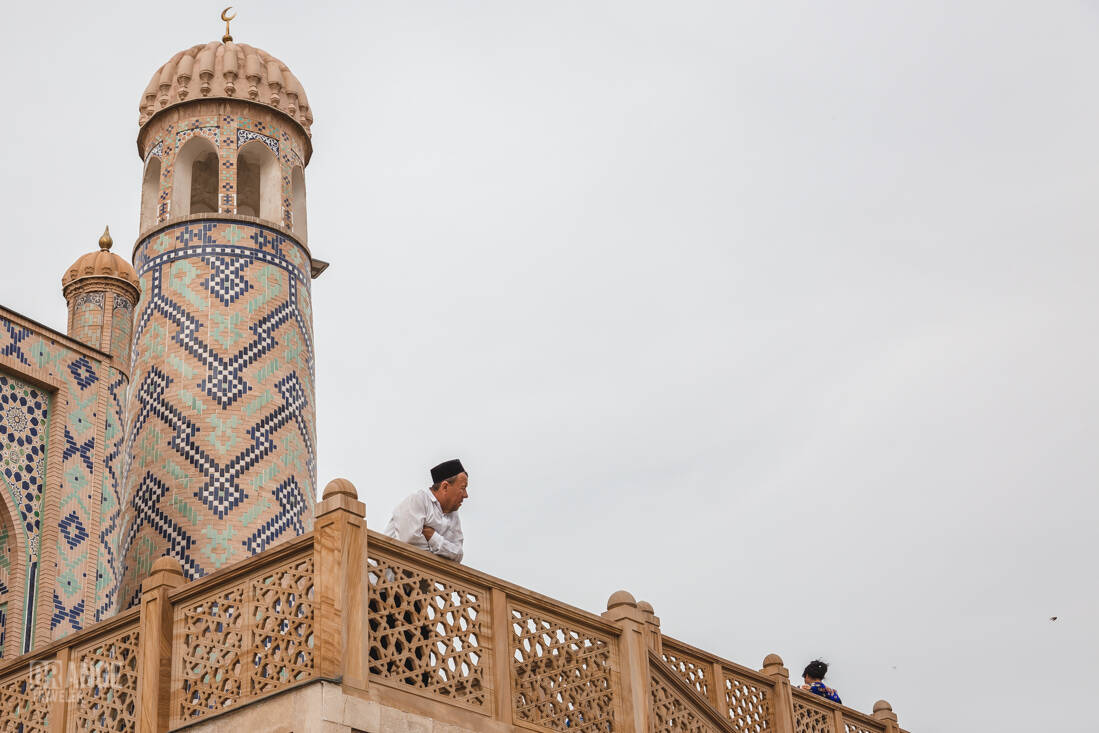
The dome of the mausoleum is double and has 64 stiffening ribs — a technology that came with Persian architecture. Inside, it is decorated with shaped patterns made of papier-mâché using Samarkand paper. People here like to talk about symbolism, saying that this is the number of years lived by the Prophet Muhammad: 63 years and one in the womb. Only two of the original four minarets have survived; the other half collapsed during the earthquake of 1897.
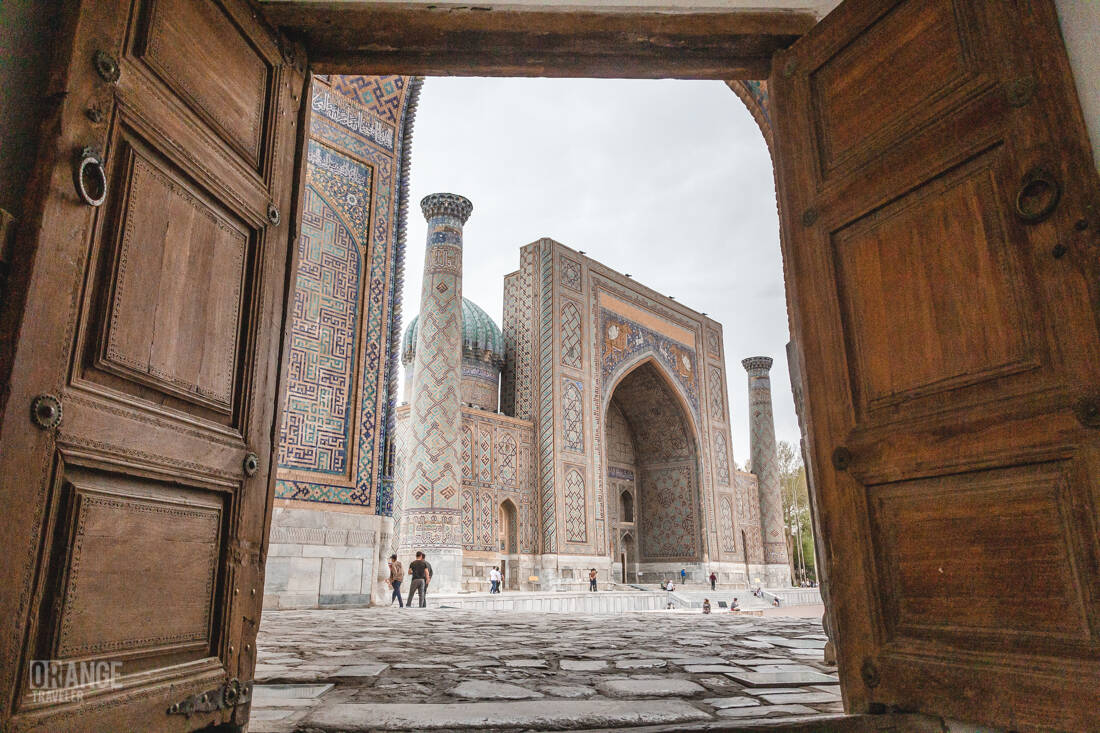
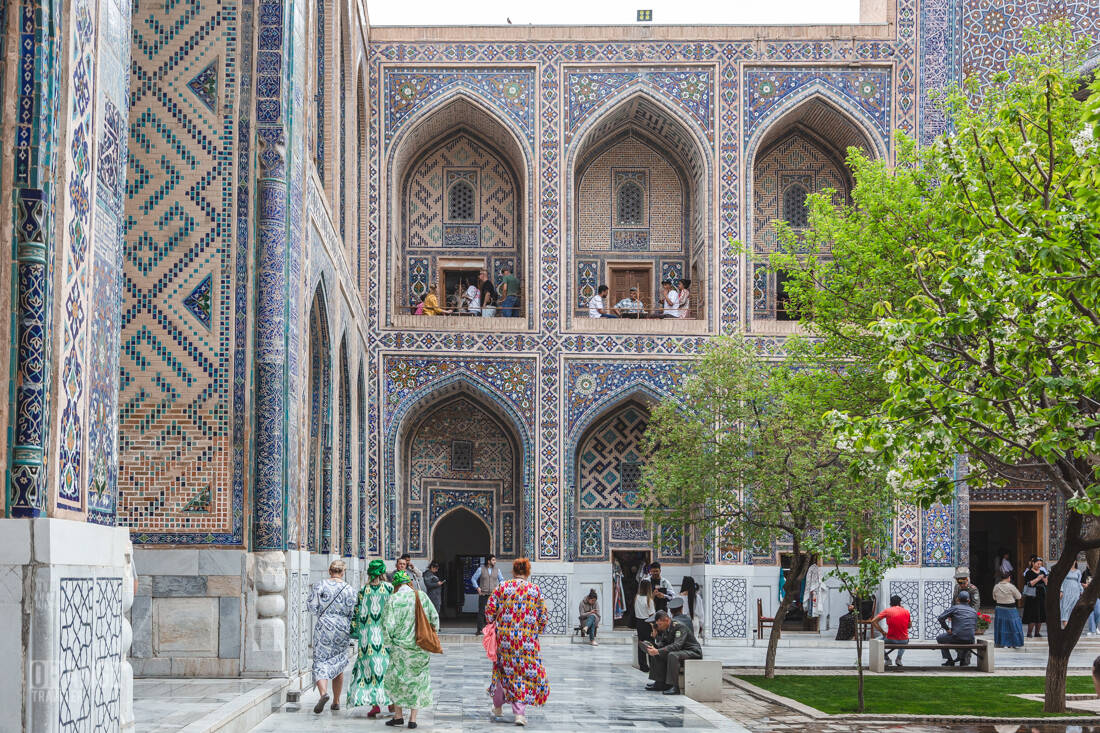
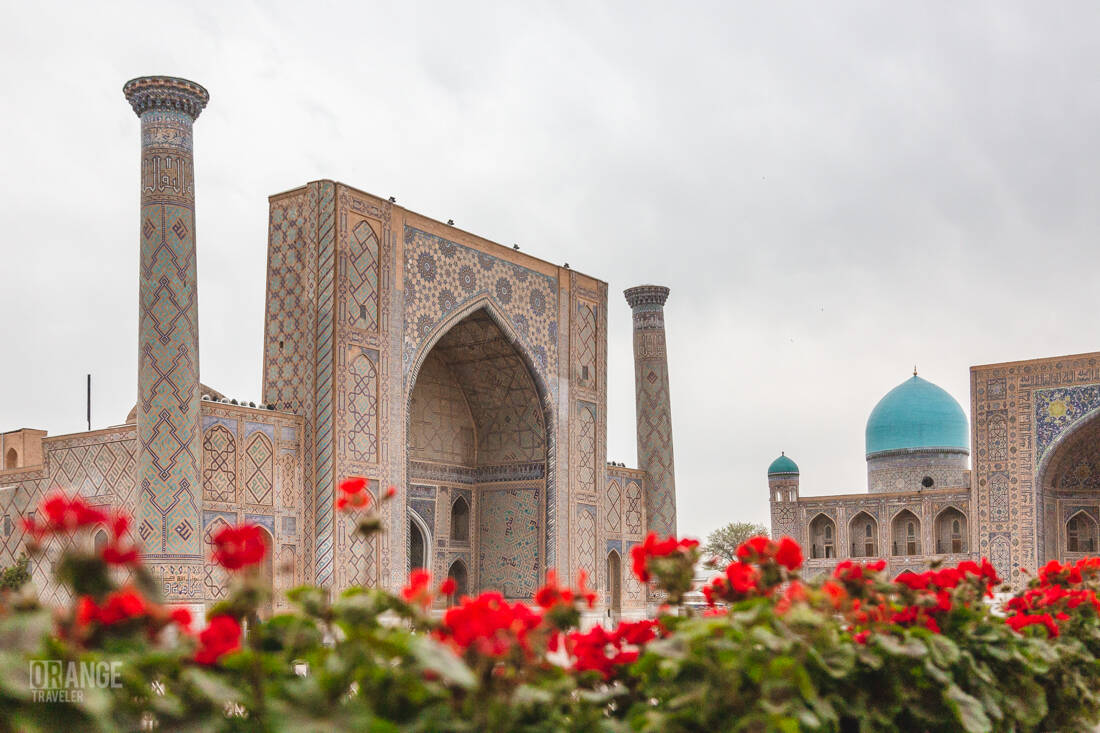
There is a permanent crush at the Registan, Samarkand’s main historic square. Within the perimeter of three madrasas, tourists gaze at the blue fluted domes and the buildings instantly recognisable by their style, asking the same questions over and over again.
“Your minaret is leaning — isn’t it going to fall?” “What sort of beast is that on the gates of the Sher-Dor Madrasa, with a tiger’s body and a dragon’s head?” “How much is a chapan? And the chugurma — that white sheepskin one?”
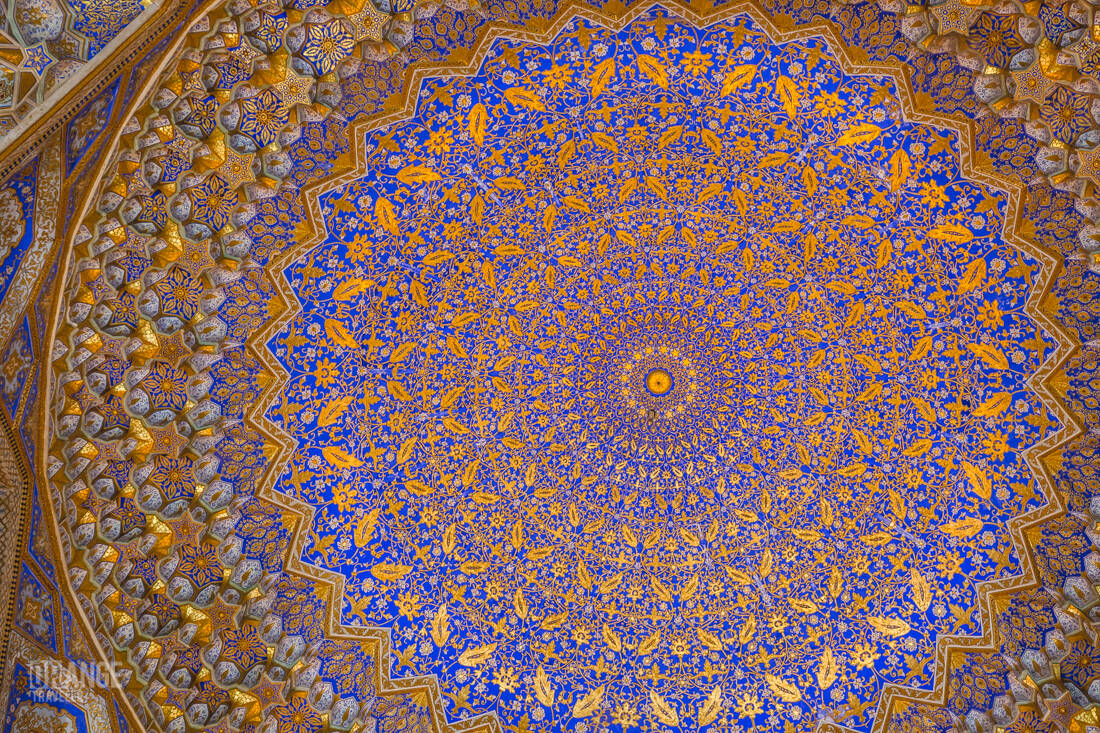
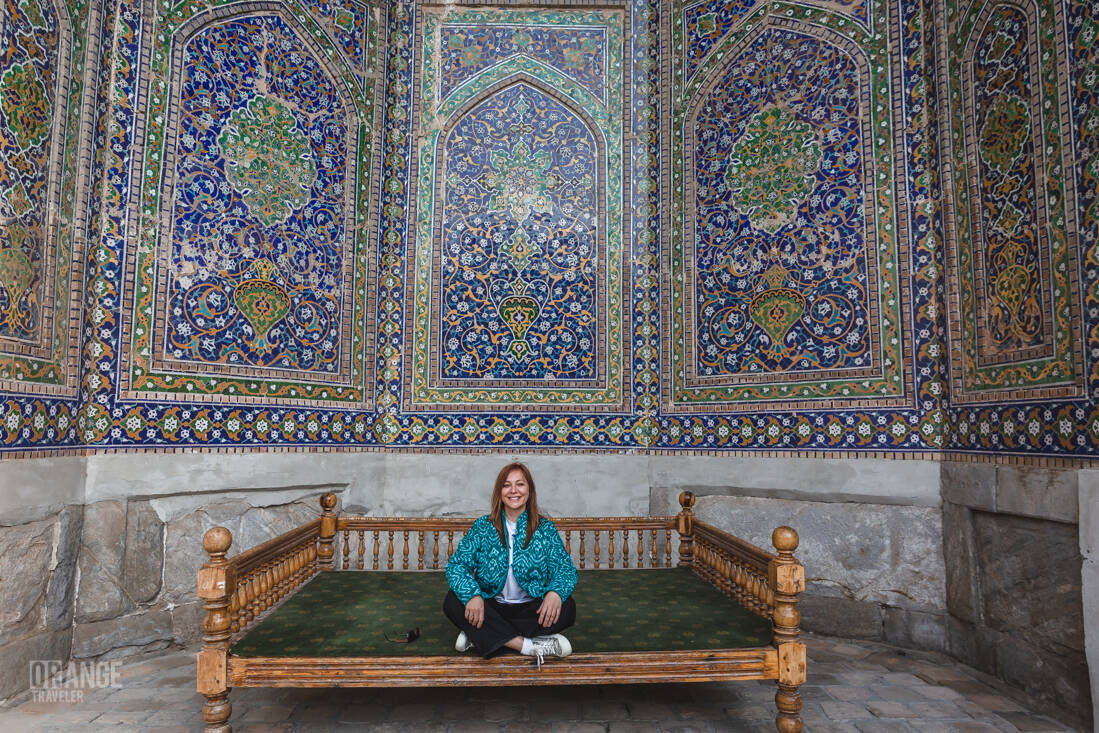
As it turns out in practice, the only way to find the madrasas deserted and be alone with history is to come very early in the morning. The complex opens at seven, when cleaners are washing the square and most of the craft shops in the inner courtyards are still closed. It is a kind of golden hour, when you can lounge on a tapchan and, with your head thrown back, admire the painted ceiling of the Tillya-Kari Mosque.
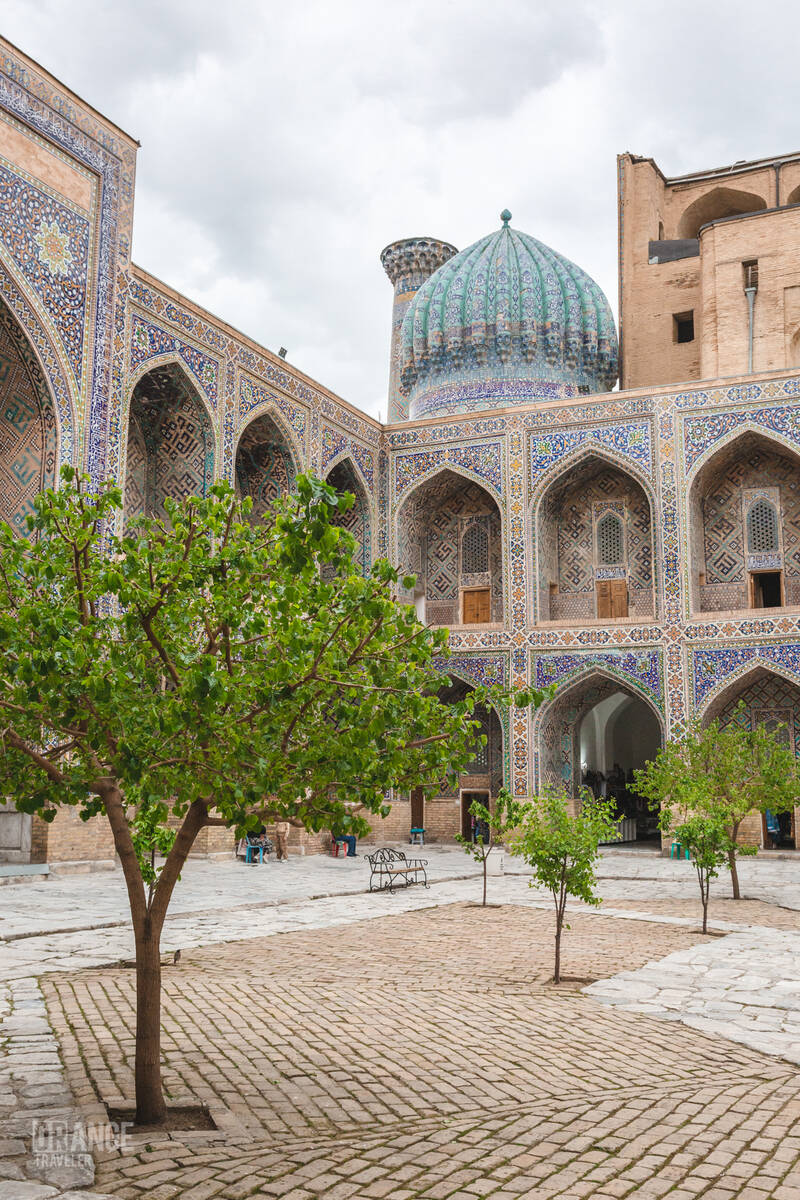
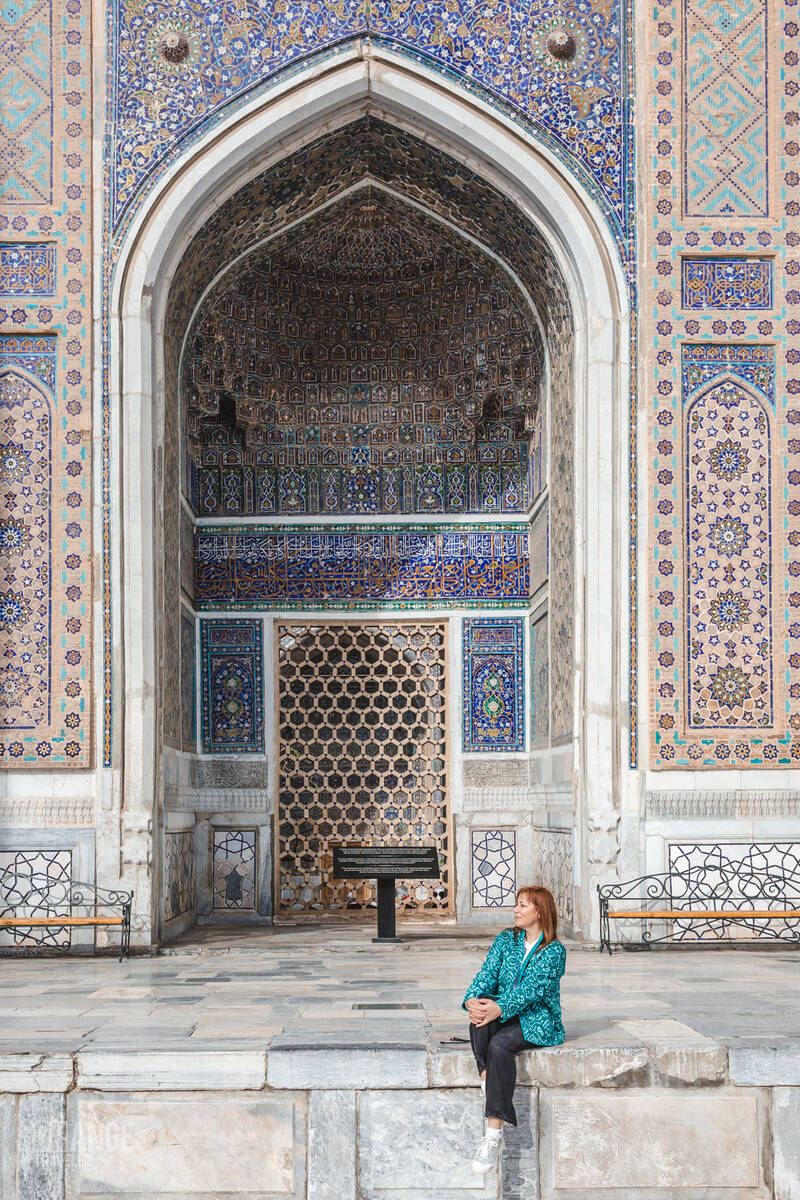
In the 15th century, Amir Timur’s grandson Mirzo Ulugbek, who had been drawn to knowledge since childhood, built the first educational institution with the help of the most famous architects of the time. Then Tillya-Kari was erected, with its incredible painted gold-leaf dome, which does not actually exist — it is an illusion created by the ornament. Two hundred years later, Sher-Dor was built as a mirror image of the Ulugbek Madrasa. Its entrance arch depicts a creature with the body of a tiger and the head of a dragon.
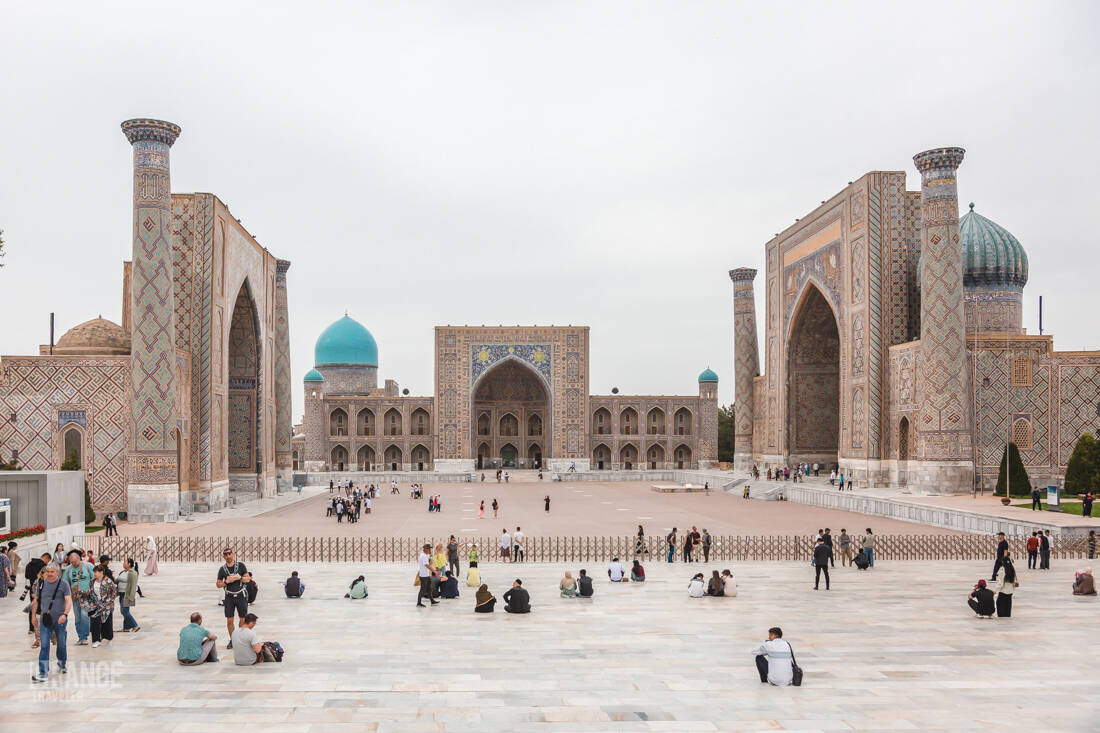
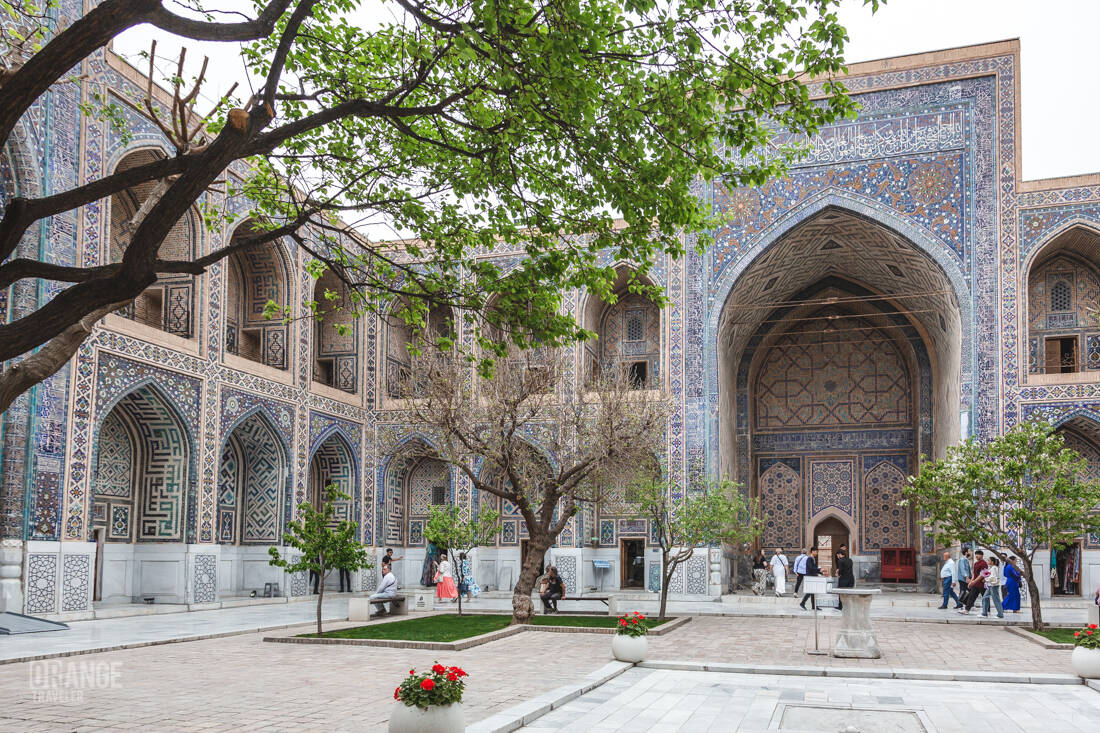
For centuries, beneath the blue domes and painted ceilings of the three madrasas, everyone who came from across the vast Timurid Empire in search of knowledge was taught here. Alongside theology, they taught 11 secular sciences: mathematics, geometry, literature, poetry, logic, law and art. Inside each madrasa are cosy courtyards, where souvenirs are sold in small shops housed in the former cells around the perimeter.
You can climb one of the minarets, if you wish, and look down on the square from the height where the muezzin once called people to prayer. In the evening, the Registan hosts a light show.
In Uzbekistan, they insist that even plov appeared thanks to Amir Timur. Which of the more than one hundred known varieties it was is unclear, but the concept itself — rice with meat and carrots — was supposedly invented by his cook. There is, however, an alternative version from Bukhara: Avicenna invented plov as a cure for melancholy.
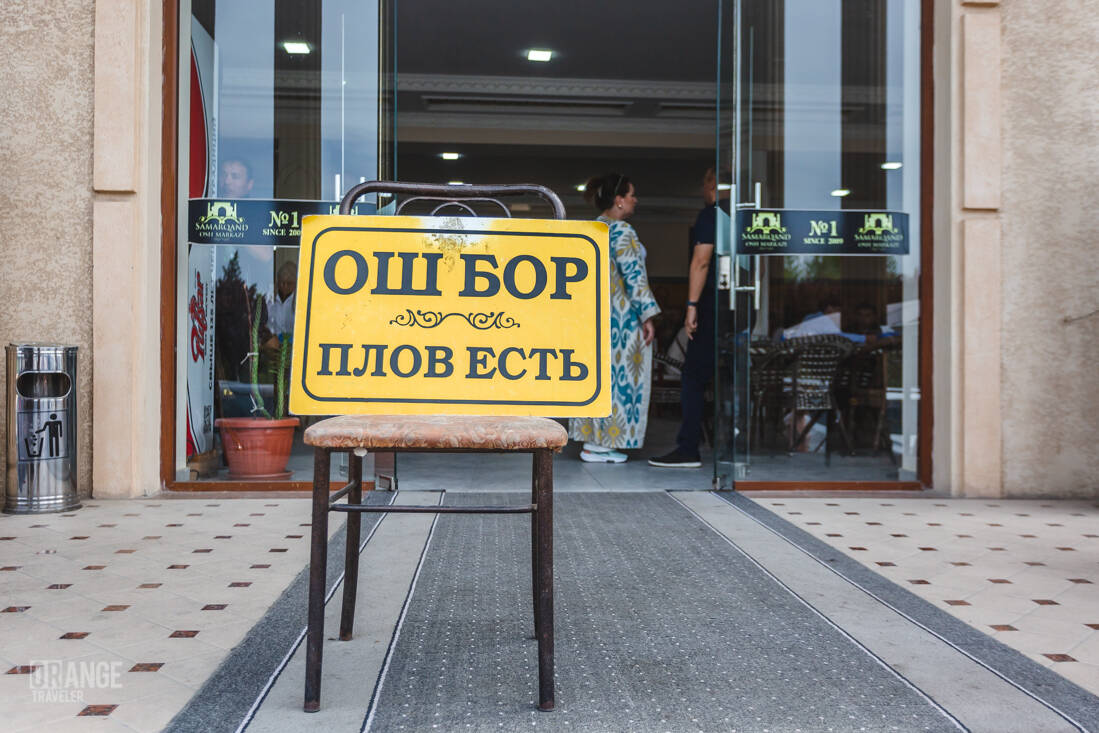
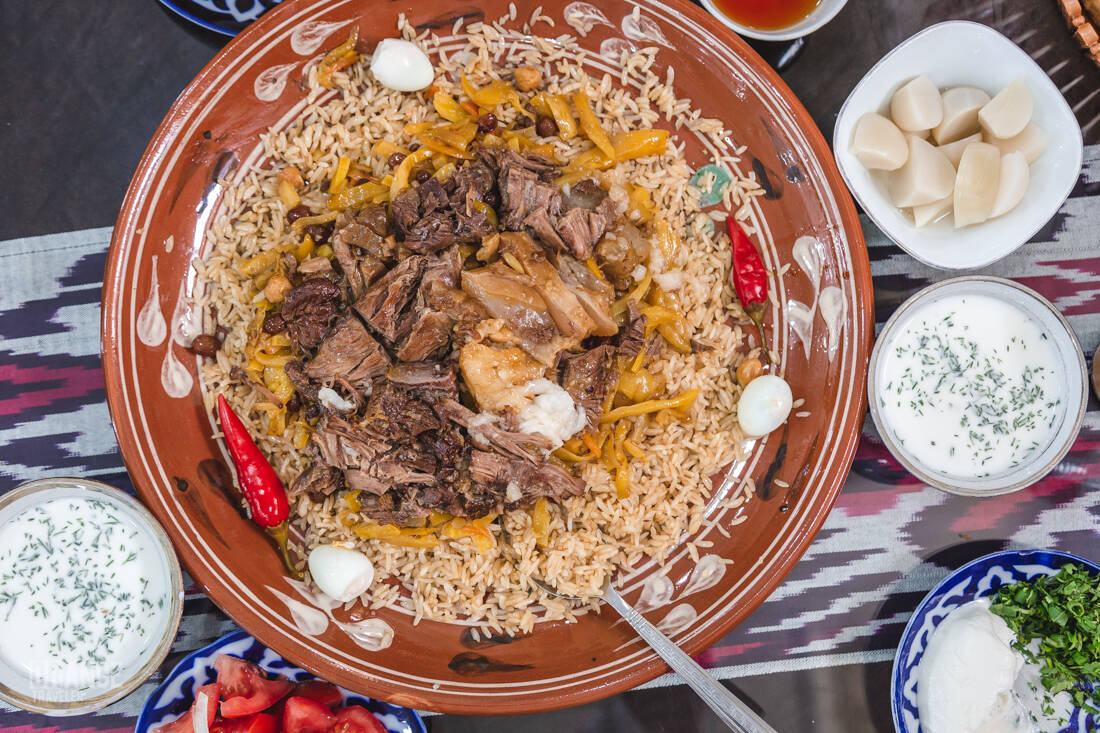
“Plov available,” announced the sign at the entrance to Samarkand’s Super-Osh plov centre, a cult place where the menu is dominated by one dish alone. It is cooked only once a day, in a huge kazan. Samarkand plov is not stirred: all the ingredients are laid out in layers — rice, meat with fried onions, yellow carrots, seasonings and a whole red chilli pepper. As soon as the kazan is empty, visitors are immediately informed that there is no more plov: the sign is simply changed.
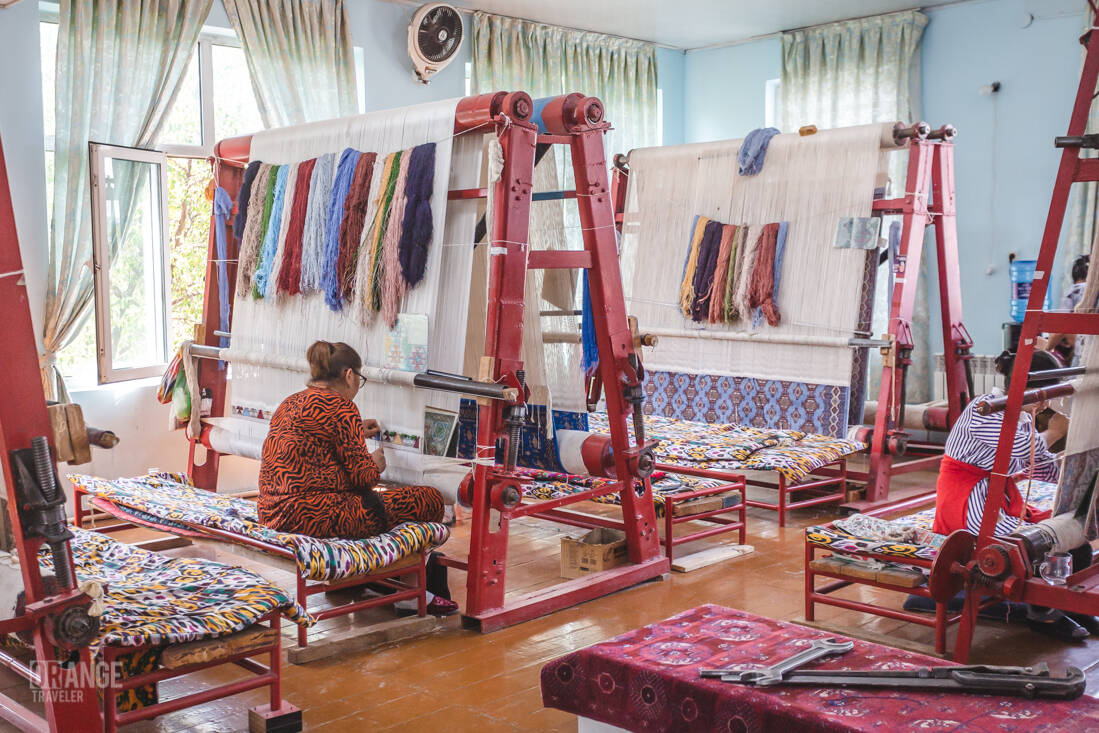
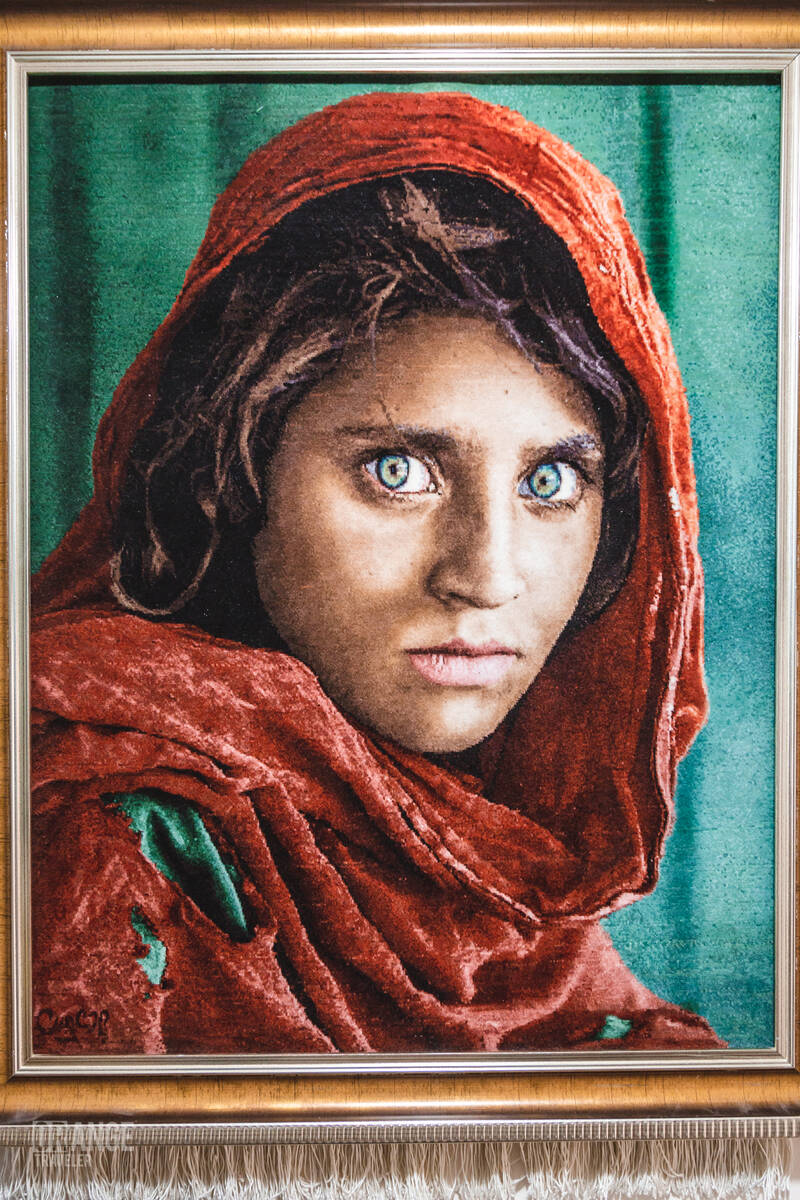
Tamerlane, seemingly, had nothing to do with carpets. But this ancient craft does not need his name. At the Khujum Centre, it has been practised by the fifth generation already, and you can buy handmade Samarkand carpets there. The art of knotting silk thread has reached such heights that the craftswomen can easily make a carpet with the face of Mona Lisa — or mine. The work takes a long time, from eight months, and a commissioned piece comes with a bill containing several zeroes. And that bill is not just payment for 100 knots per centimetre. It is expensive these days to shimmer in silk.
Orange guide
Ulugbek Observatory in Samarkand
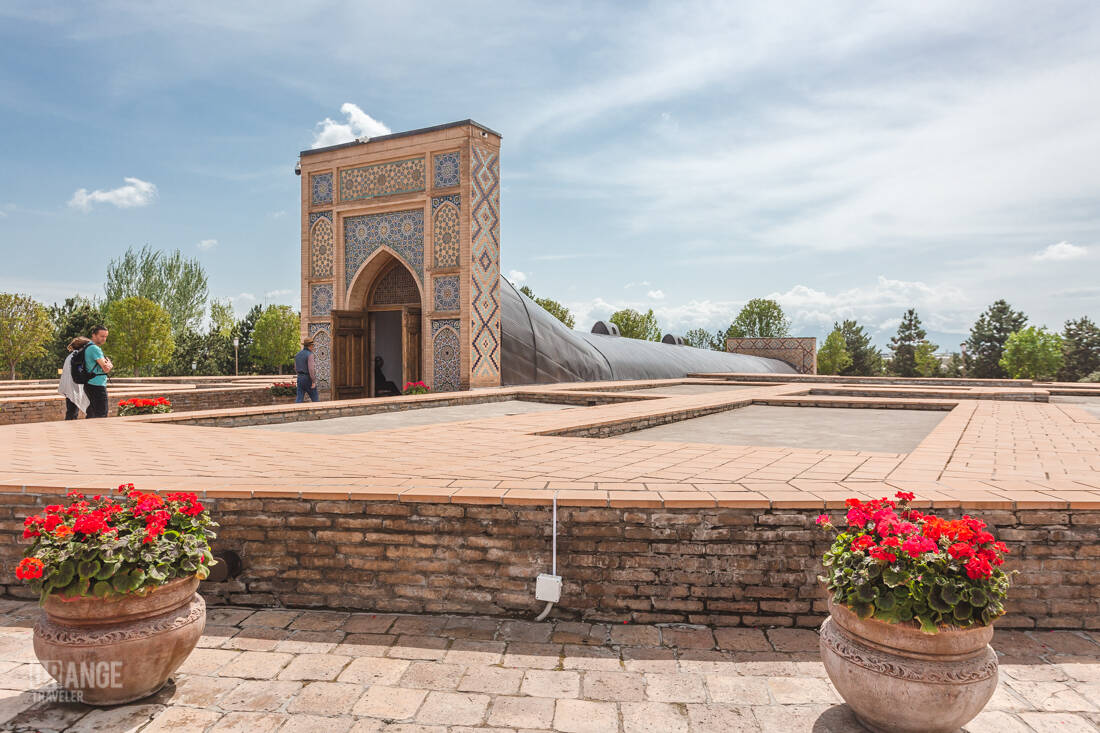
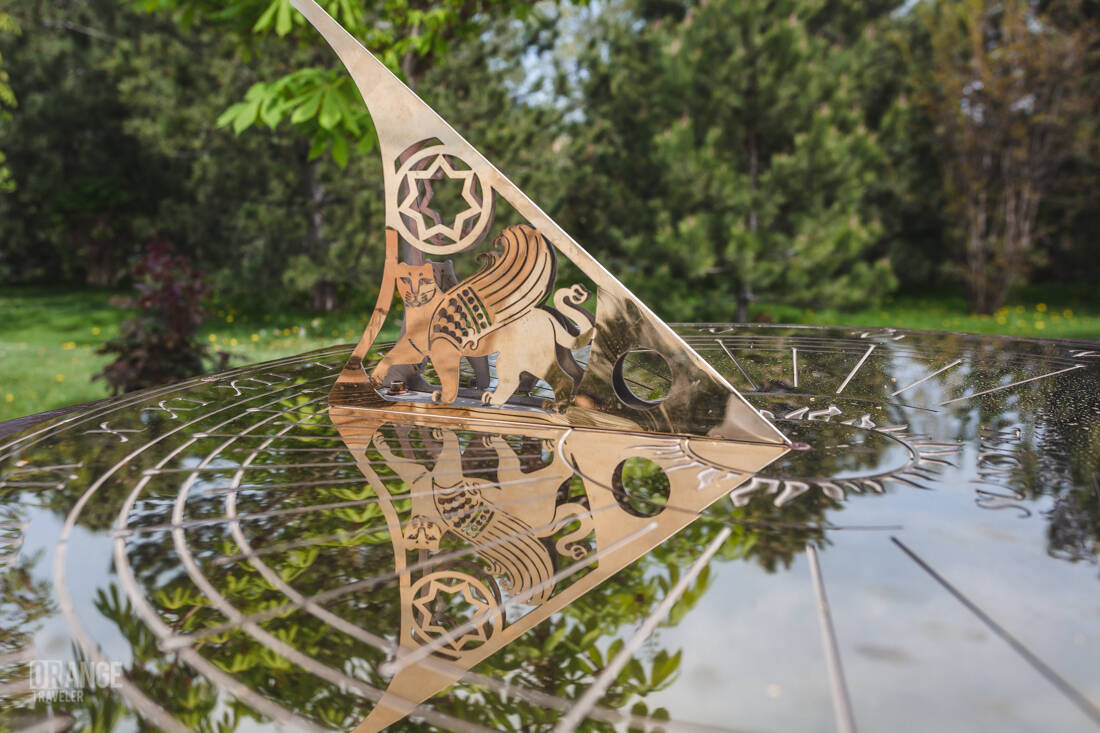
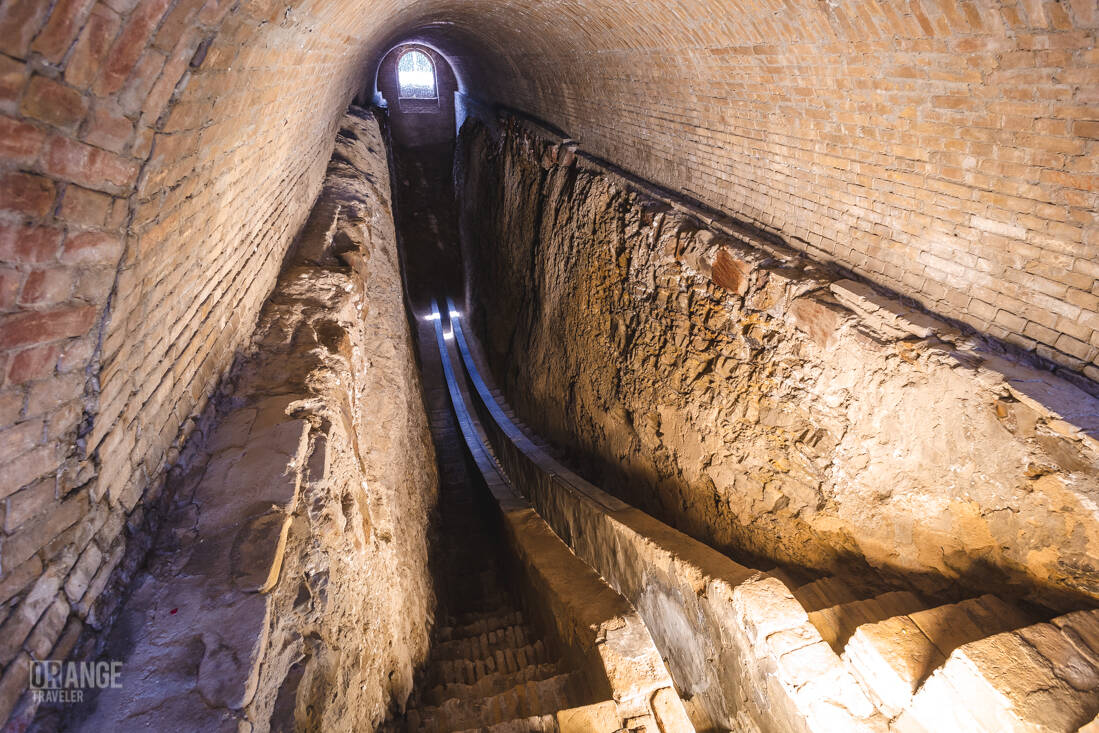
The ruins of the scientific institution built by Mirzo Ulugbek, the science-minded ruler of Samarkand, were found during the 1908 archaeological expedition of the orientalist Vyatkin. Forty years later, archaeologists excavated a grand sextant — some call it a quadrant — with a radius of more than 40 metres, located 11 metres below ground. Here, scholars observed celestial bodies, took measurements and, as a result, made discoveries. For example, in 1437, astronomers — or stargazers, if you prefer — compiled a catalogue of the starry sky, including 1,018 stars. Here, too, they calculated the length of a year, with an error of 58 seconds: 365 days, 6 hours, 10 minutes and 8 seconds. It is assumed that astronomers at the time were already familiar with the concept of meridians and that the mass of the Earth had been calculated.
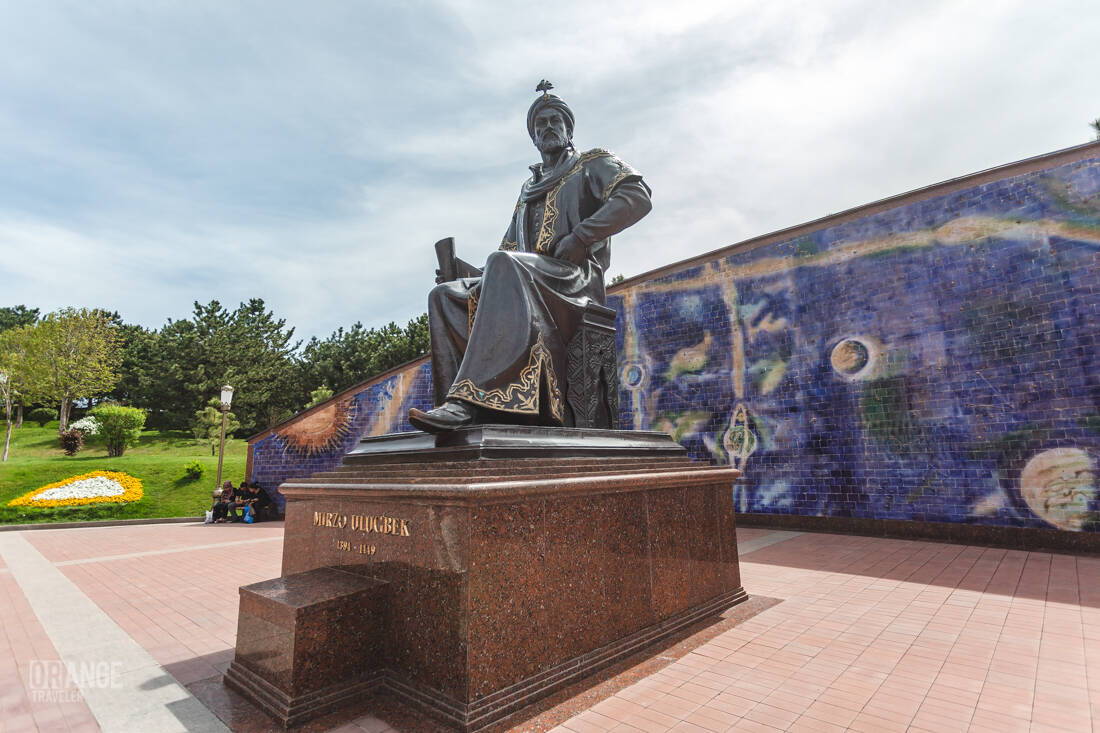
After Ulugbek’s death, the observatory continued to operate for another 30 years before falling into decline. Local residents carried off the fired bricks for their own needs. One legend says that somewhere here the library of Mirzo Ulugbek is hidden: it had been inherited from his grandfather, who brought books back from his campaigns. Mirzo Ulugbek himself was overthrown by his own son, Abd al-Latif, in open battle. The religious elite turned the prince against his father and supported the coup. The defeated Ulugbek set off on the hajj, but ended up before an unlawful court and was killed by a butcher named Abbas.
Take the Afrosiab train from Tashkent to Samarkand: the journey takes two hours. Train tickets must be bought in advance; they go on sale 60 days before departure.
I would like to thank Timur Way and Yuliana Bozhko personally for organising an unforgettable journey through Uzbekistan. The company’s website offers engaging tours led by professional licensed guides.

Read more about Uzbekistan:
Uzbekistan: Questions and Answers
Khiva: An Ancient City of Uzbekistan
The Livestock Market in Urgench
Ceramics from Gijduvan
Bukhara: Twenty Cubits of Pearl Adras
Samarkand Carpets




 Travel reportage
Leave a comment