“Who needs a donkey these days?” my guide Madamin said. Everyone has long since switched to Chinese electric cars, which do not need feeding. In Uzbekistan, animals were used as draught power for centuries, especially in the mountains and hard-to-reach areas. Until quite recently, laden donkeys were fully fledged road users. But over the past few years, the need for pack animals has almost disappeared.
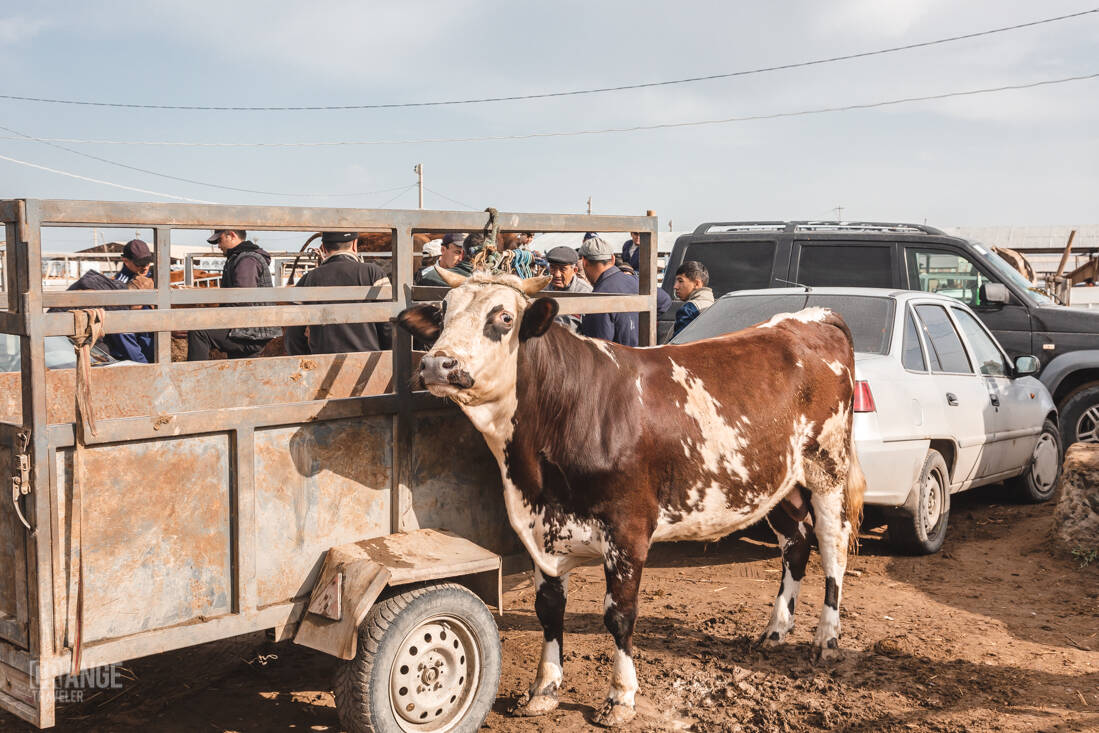
“You can sell one at the market for 500,000 sum, and even then nobody will buy it.” I felt sorry for the donkeys. At which market? I asked. “At the livestock market. It opens every Sunday.” It was Saturday. “Madamin, I need to go to the market tomorrow. Shall we?” I asked briskly. His eyes went wide. “To the livestock market? What for? Do you want to buy a donkey?”
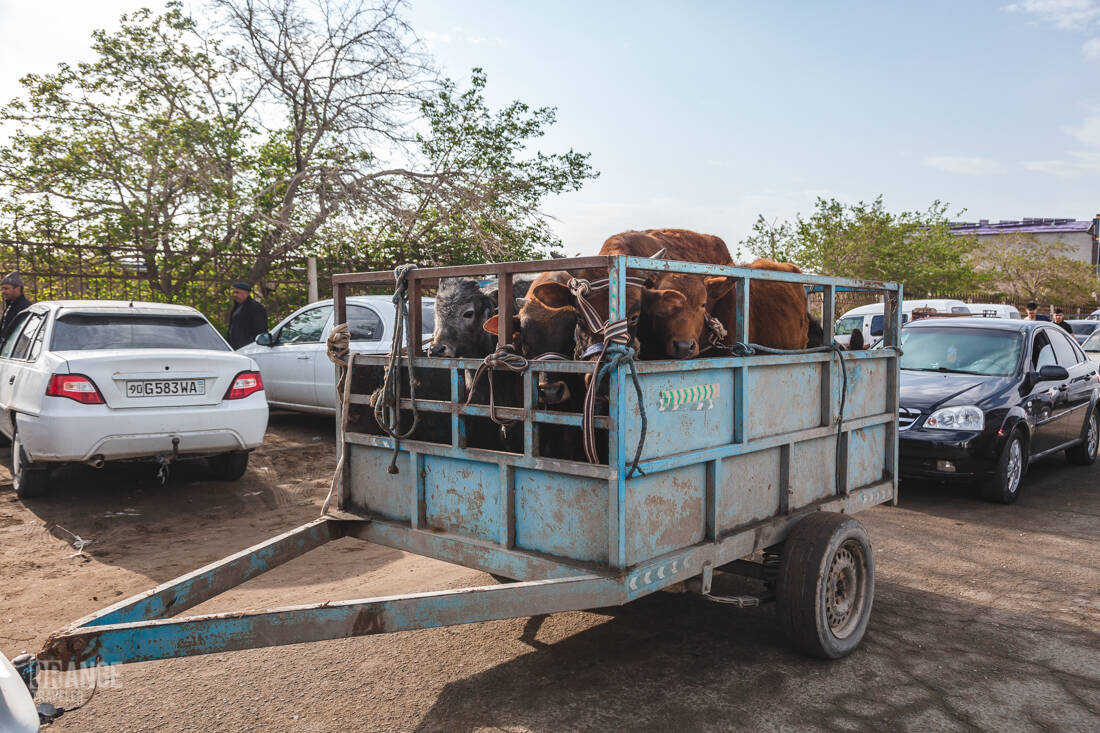
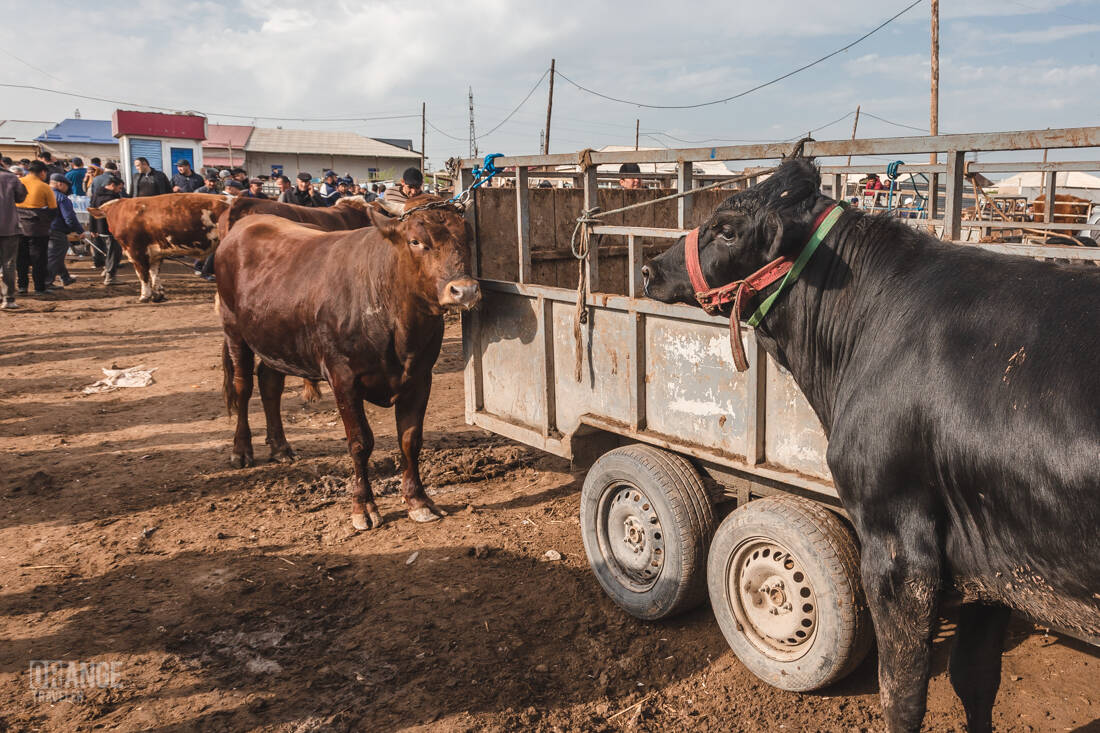
Buying a donkey would not have been a bad idea, had I known what to do with it afterwards and how to turn its fortunes around. “We will have to get up early: the market starts at six in the morning.” It took us about forty minutes to drive from Khiva to the market outside Urgench. We got caught in a traffic jam just before it, stuck among livestock trucks already carrying away bought cows and young bulls, and then spent a long time looking for parking.
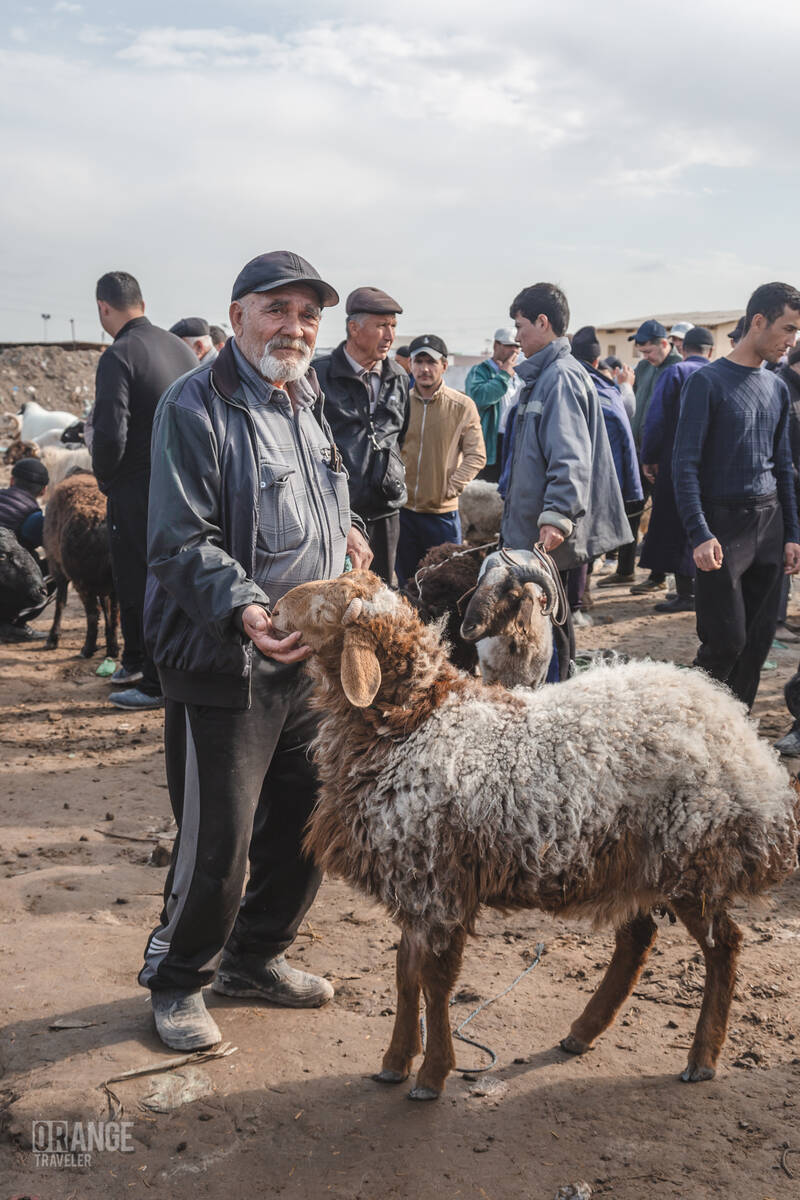
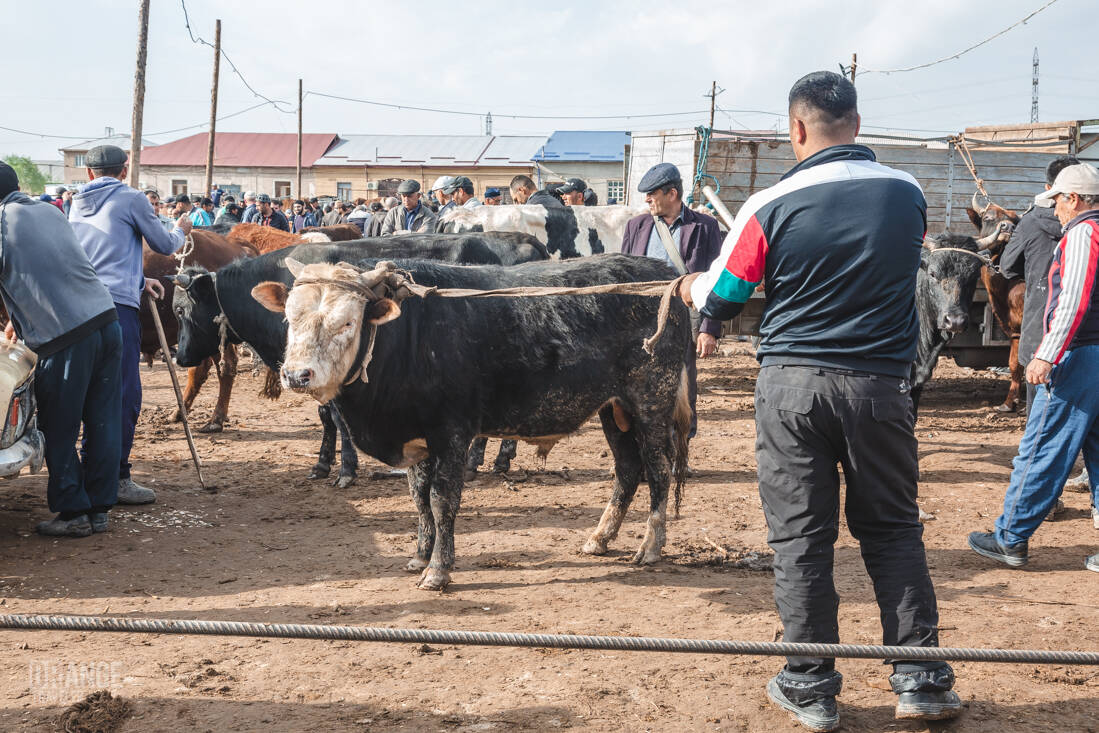
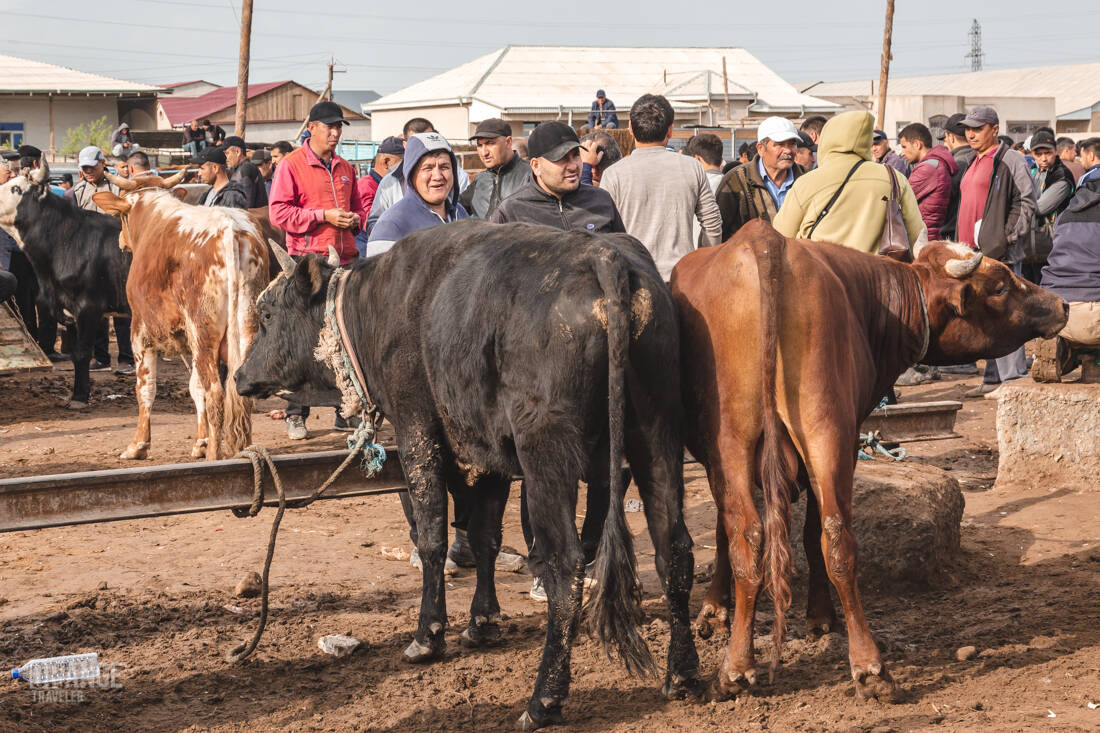
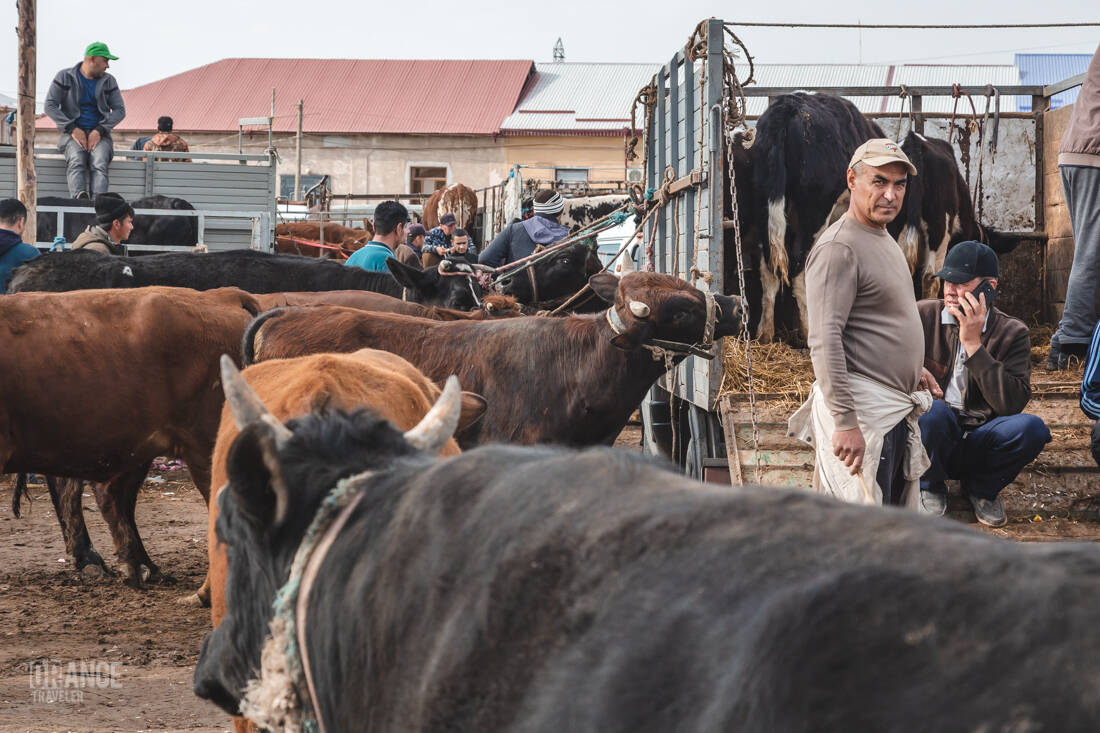
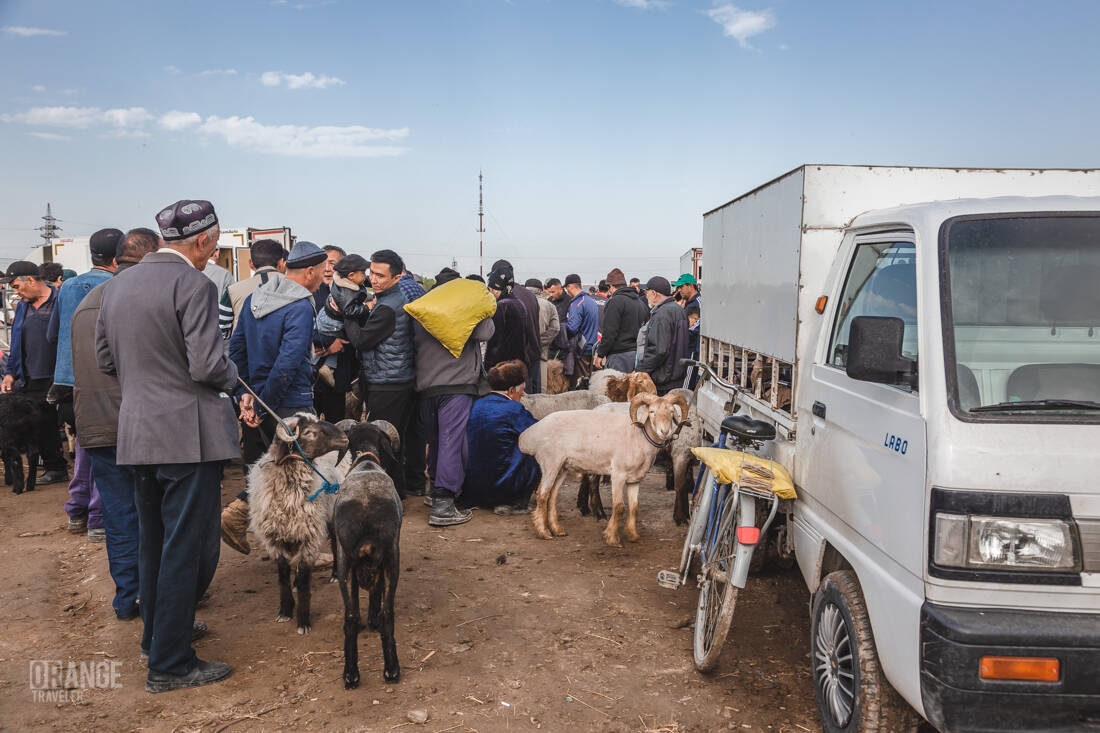
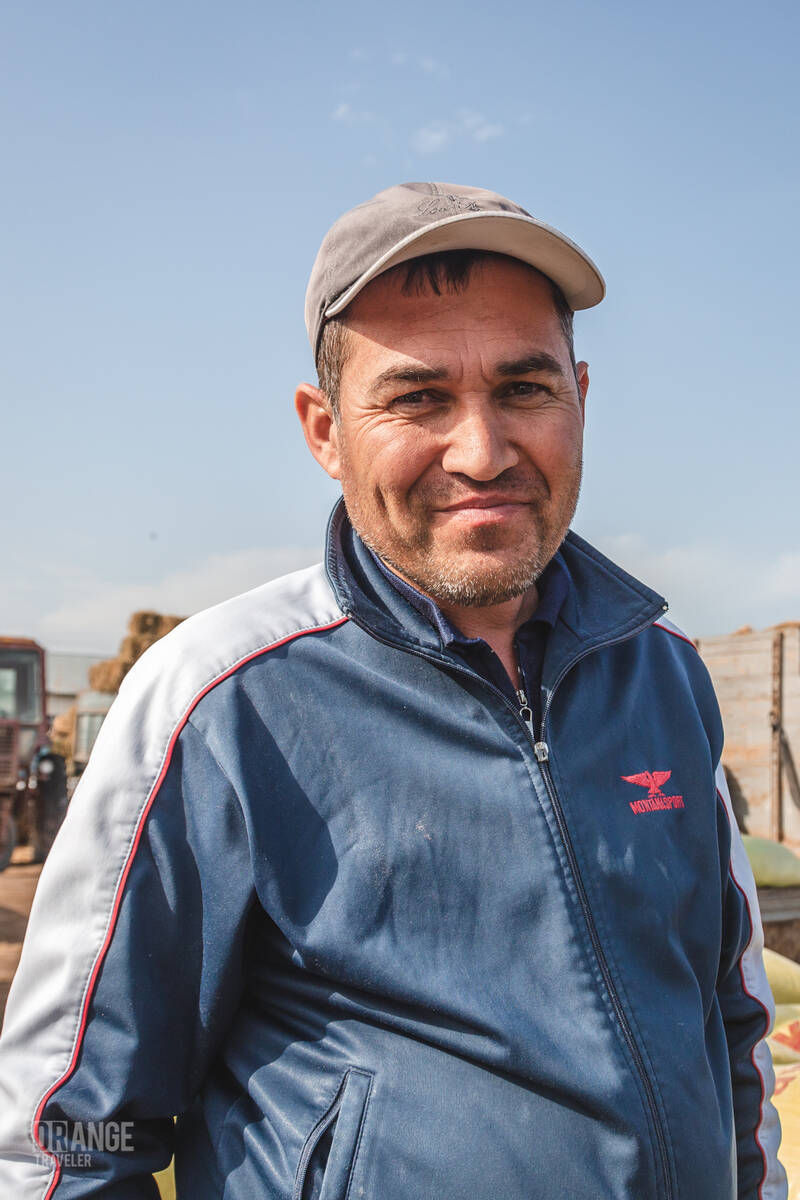
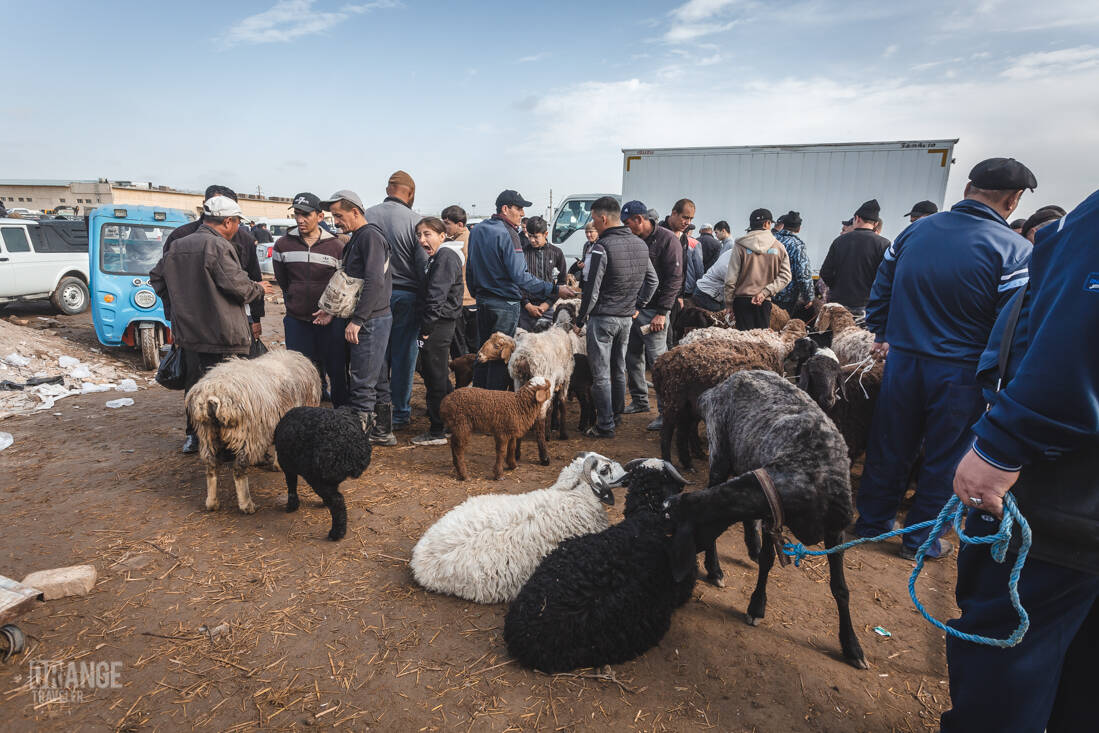
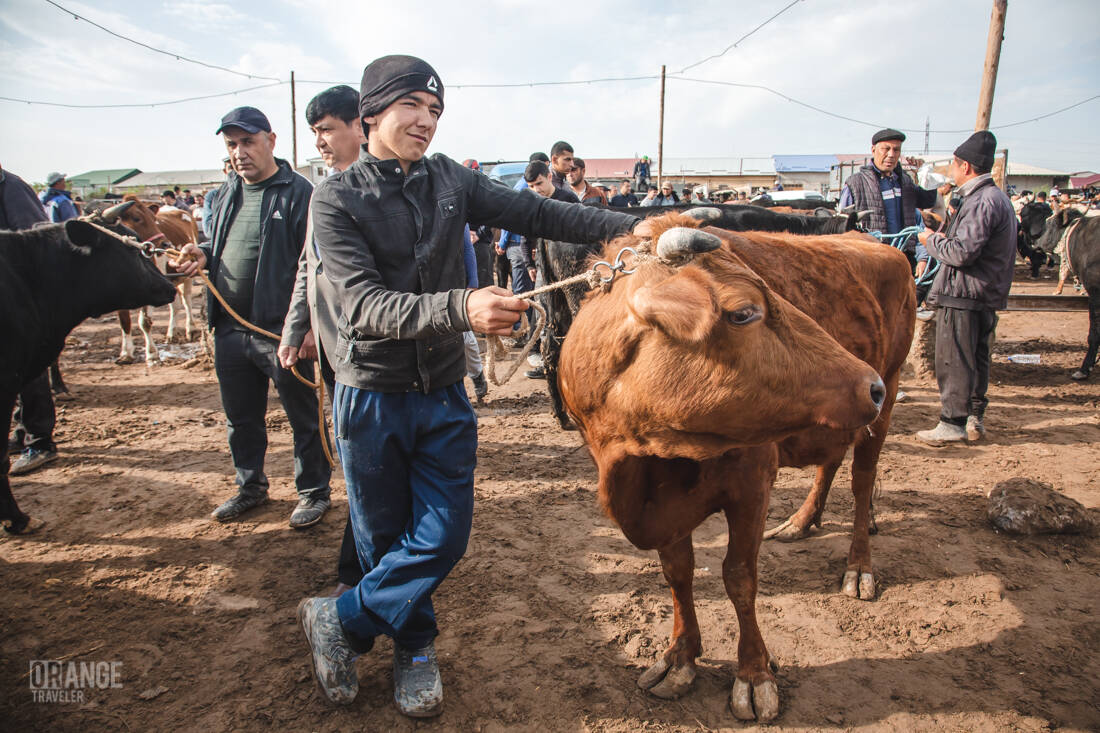
Trading livestock is a man’s business. There were no women at all in this part of the market, and tourists were certainly not brought here, so my arrival caused a real sensation. No, nobody tried to sell me a huge ginger cow. As soon as they spotted my camera, the sellers either began posing or asked me to photograph their live merchandise. People stepped aside and greeted me, smiled, and kept me safe from an over-eager bull that nearly kicked me. “You really are the queen of the livestock market,” Madamin laughed.
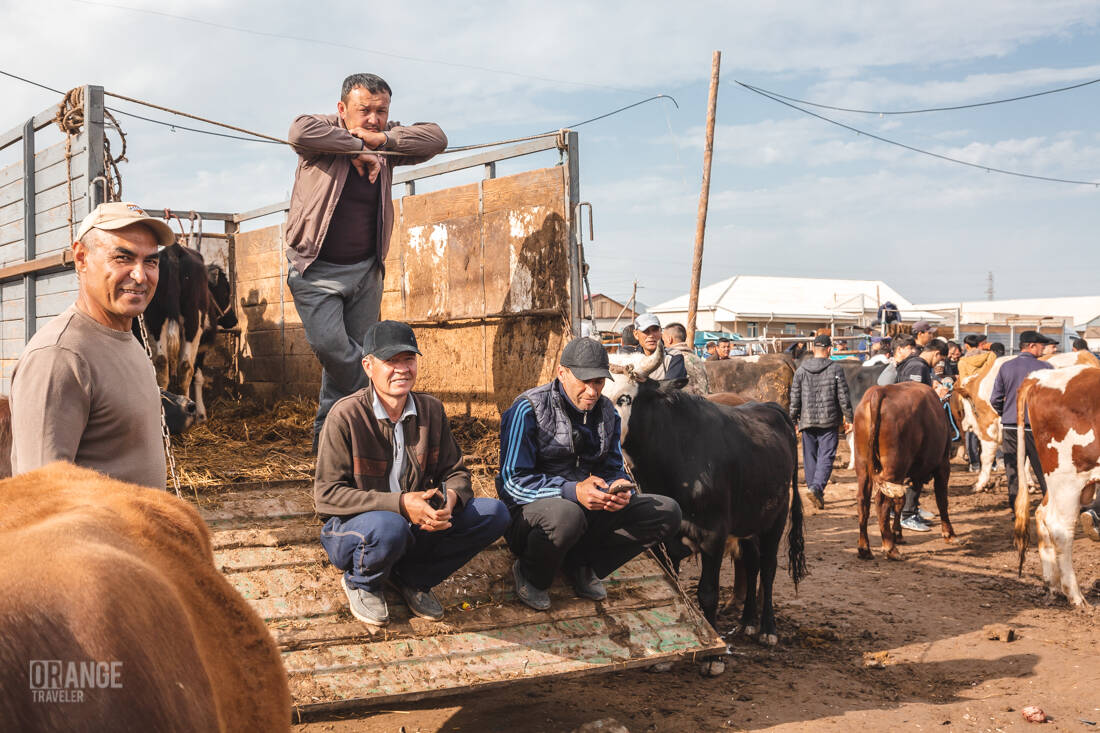
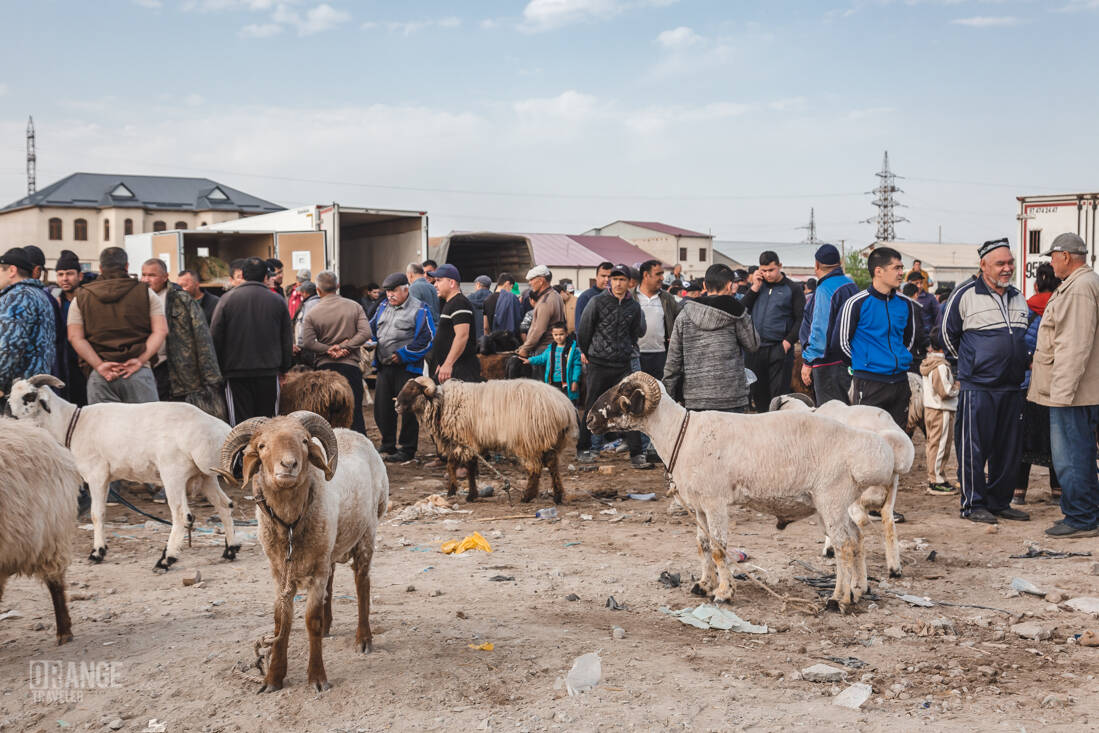
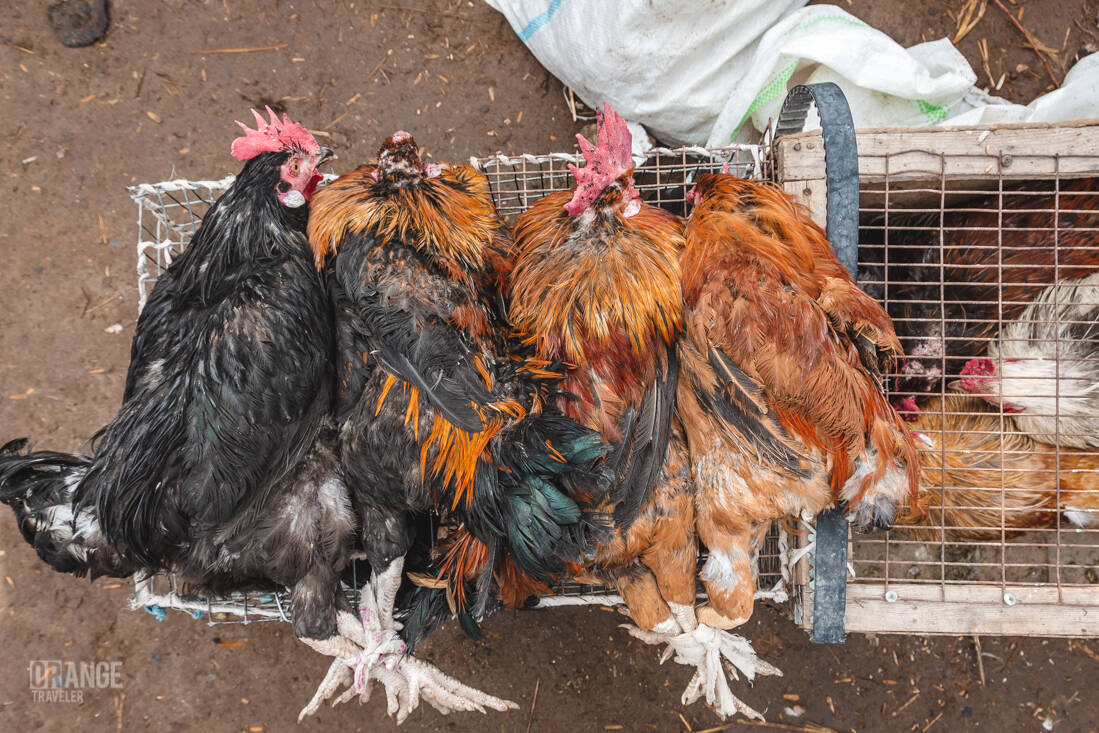
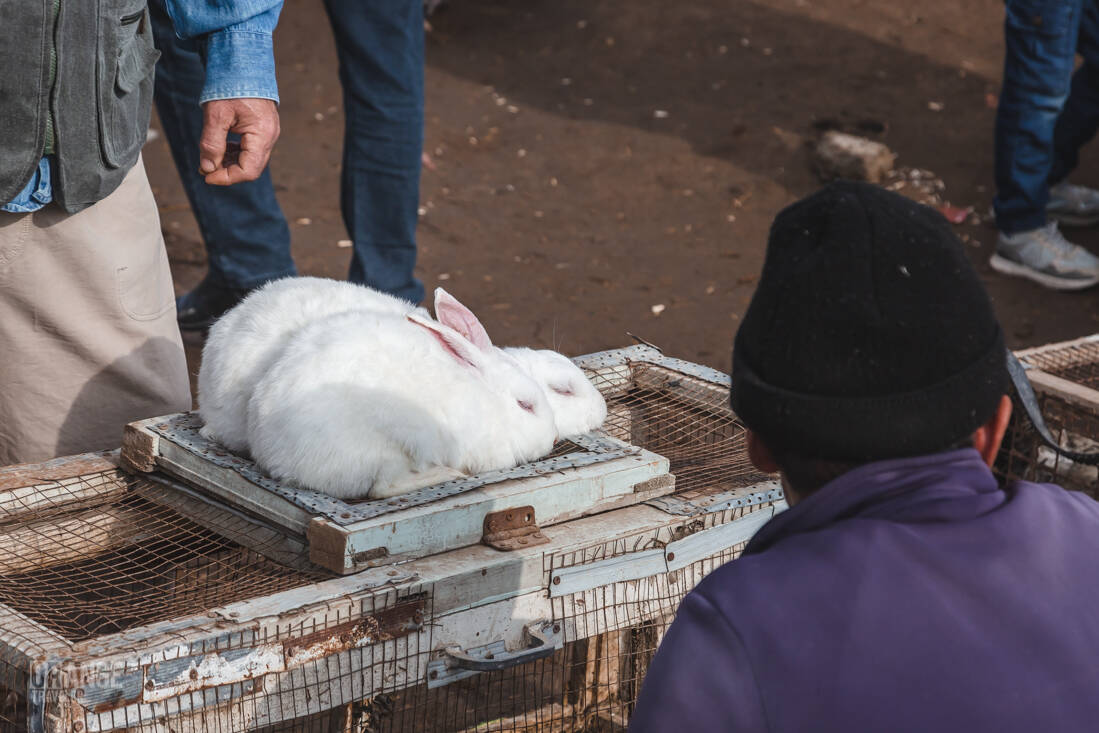
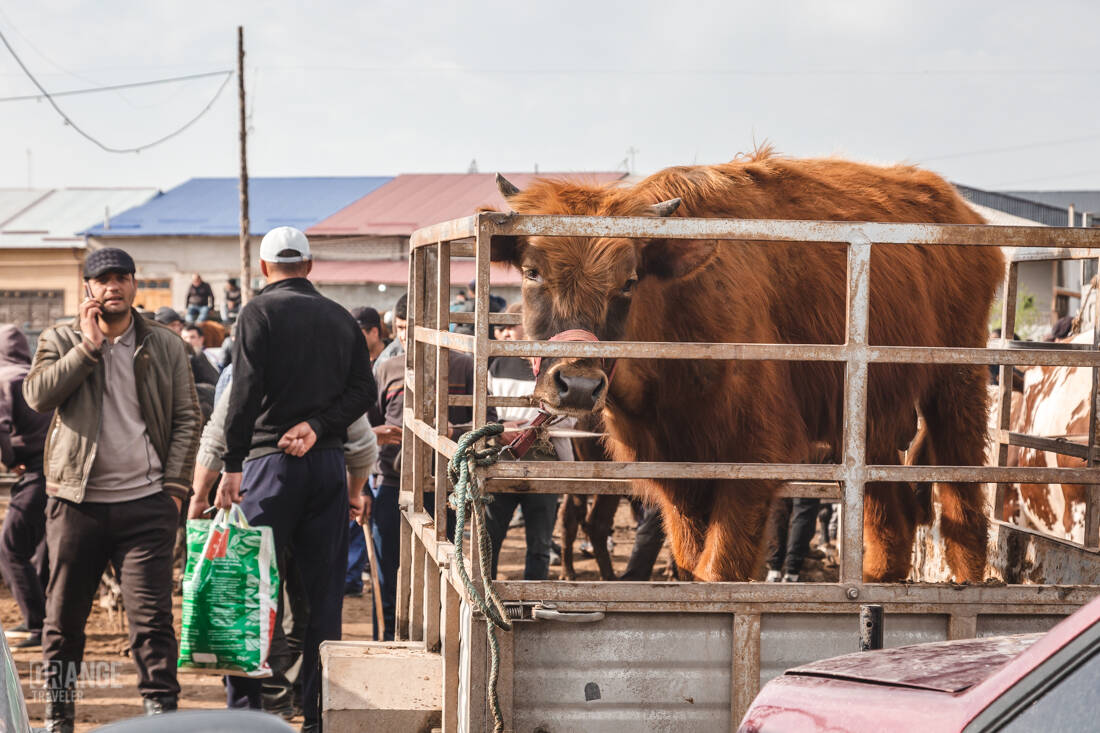
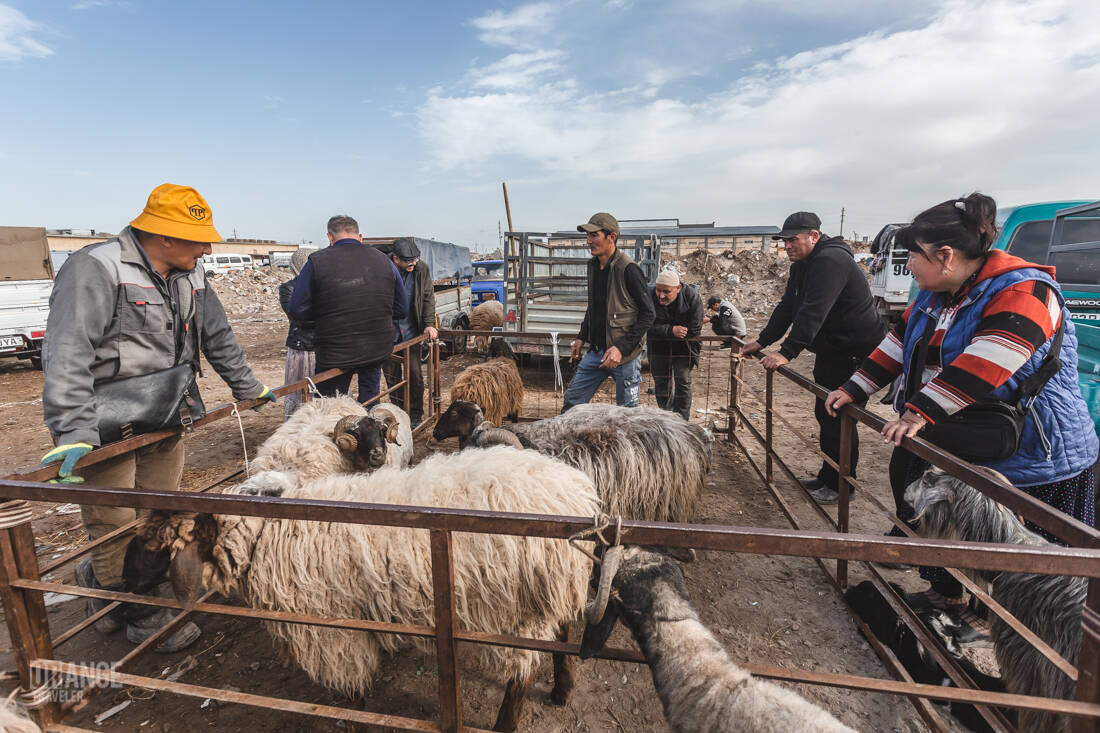
The massive-looking cows seemed expensive to me: from USD 2,000 a head. Though I know nothing about Uzbek livestock farming, perhaps that is a perfectly normal price. Rams went for from 3 million sum. Chickens cost 100,000, while chicks were only 10,000. I rolled my jeans up to my knees so as not to get them dirty with manure. There was especially a lot of it in the cattle section. Sheep and rams were sold in another part of the market.
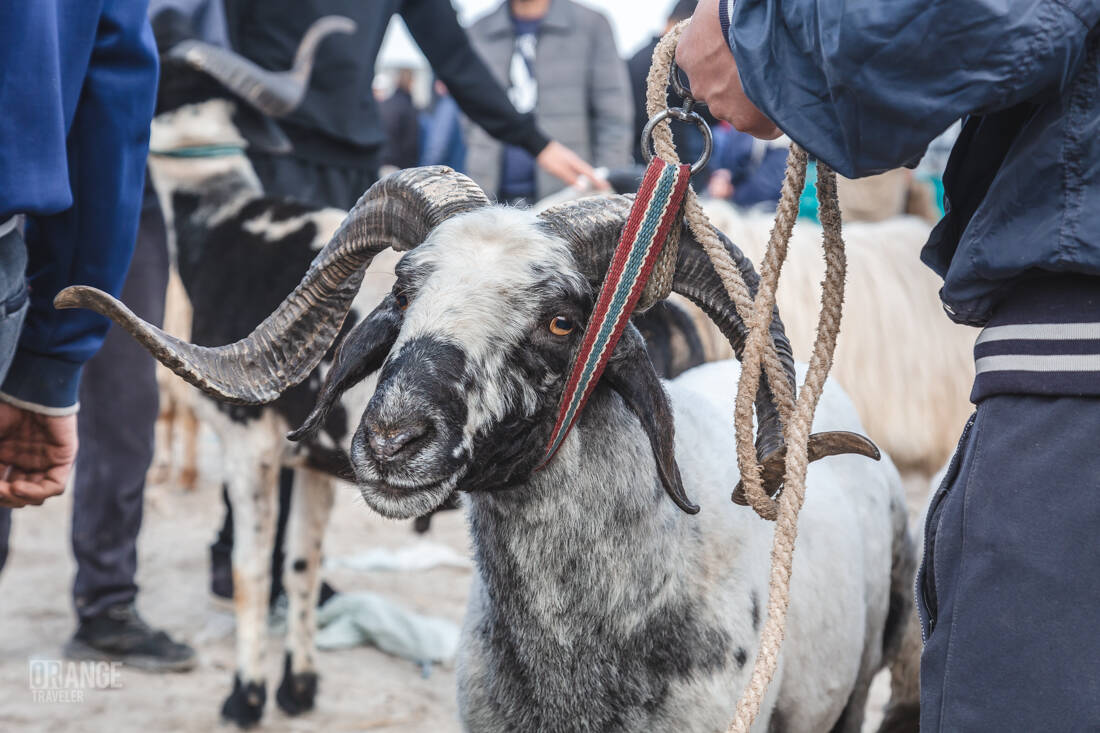
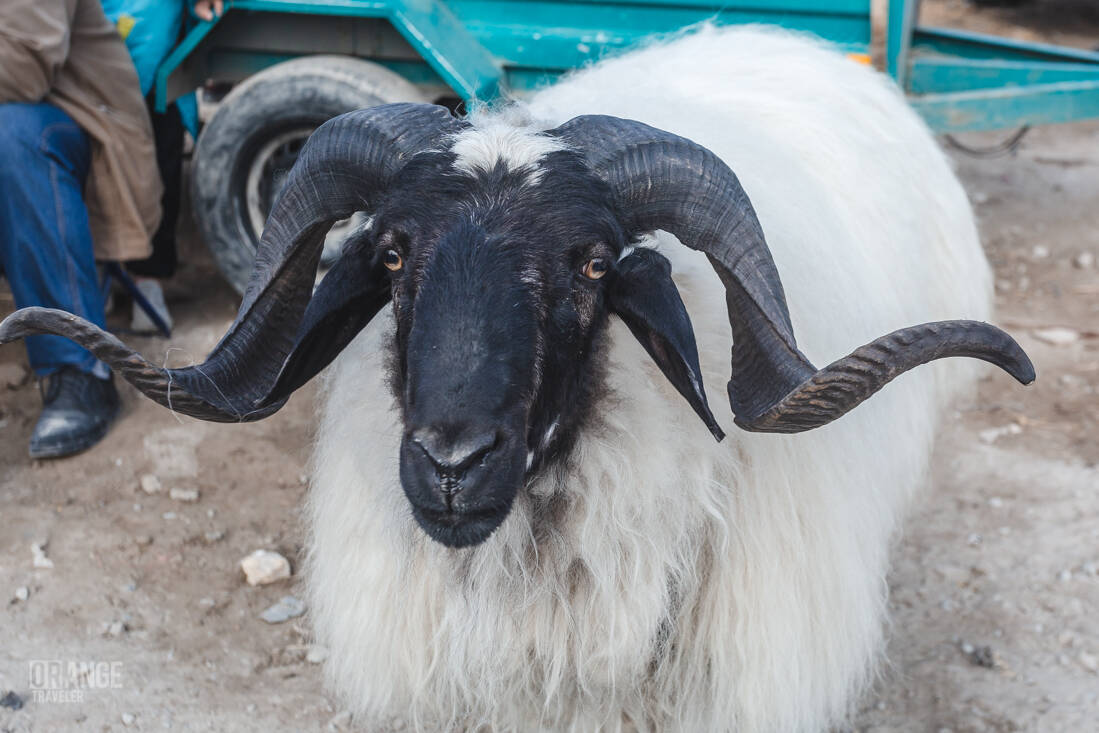
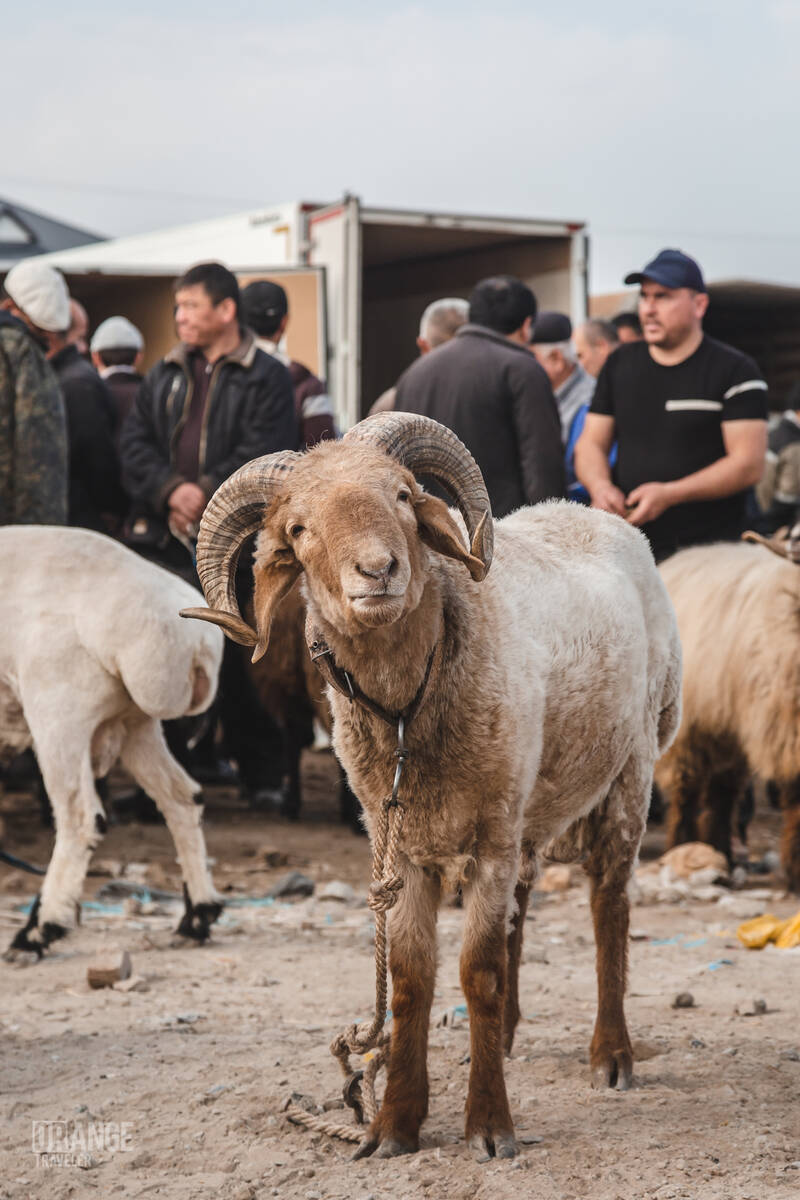
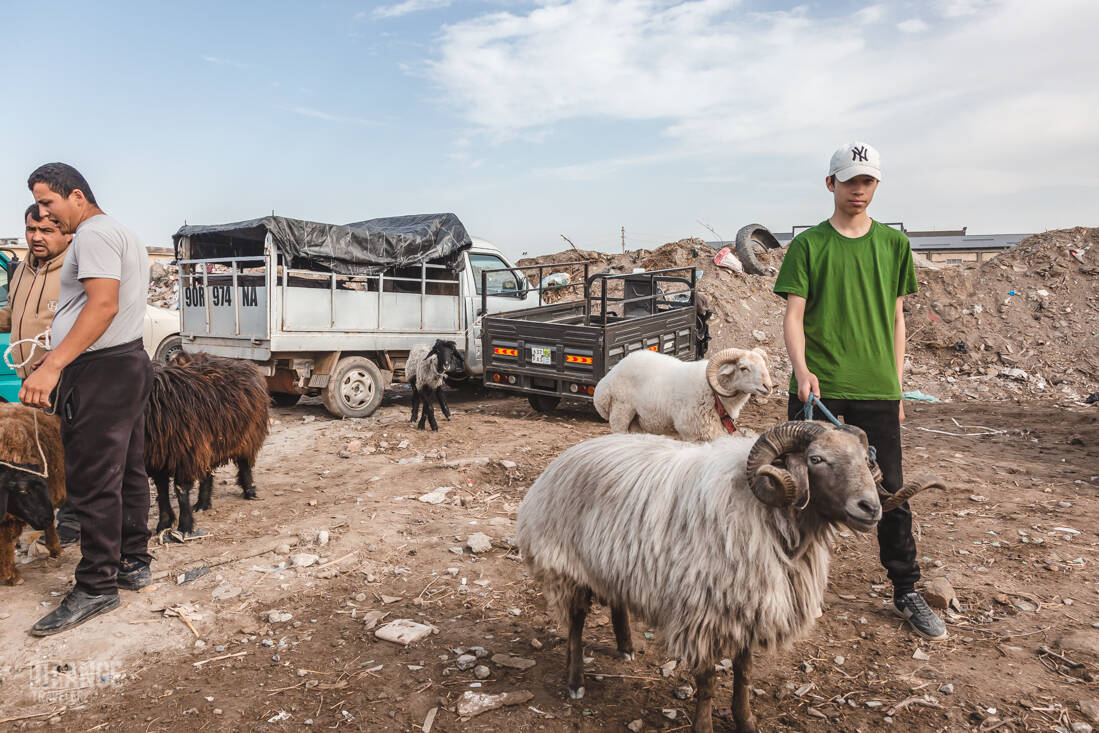
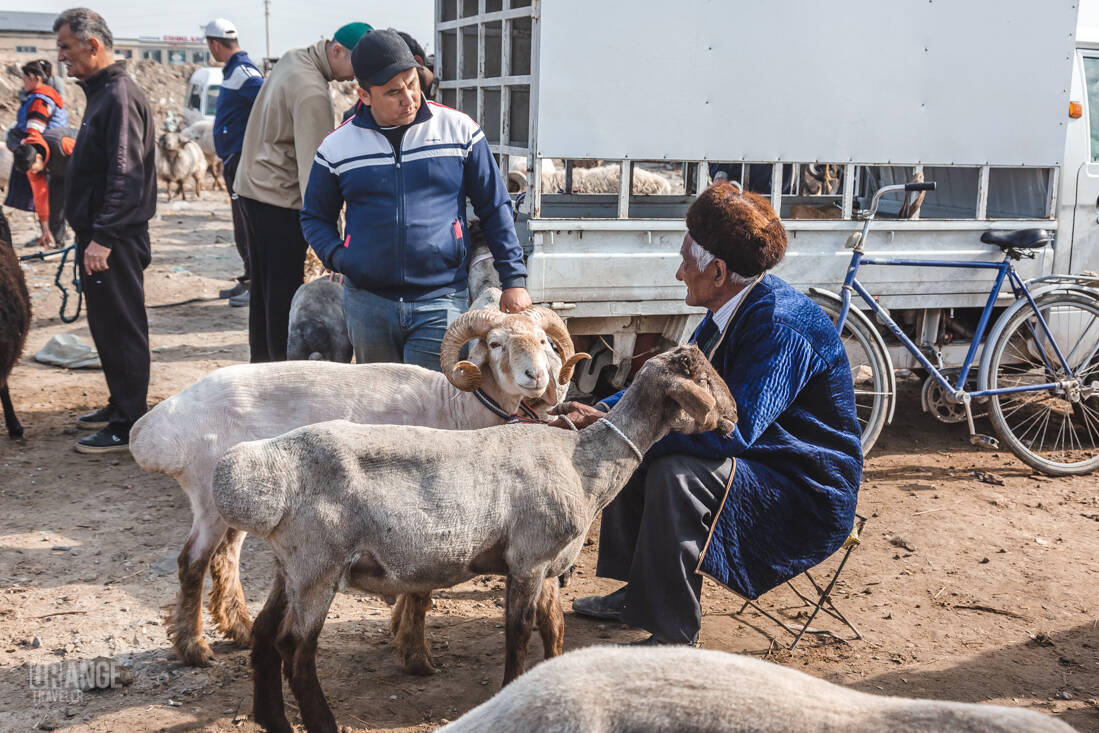
First of all, and to my shame, I saw fat-tailed rams for the first time in my life. I had no idea that fat accumulates on their bottoms, making their backsides resemble those of well-fed Brazilian women. May the lovely ladies forgive me this comparison: it is by no means fat-shaming.
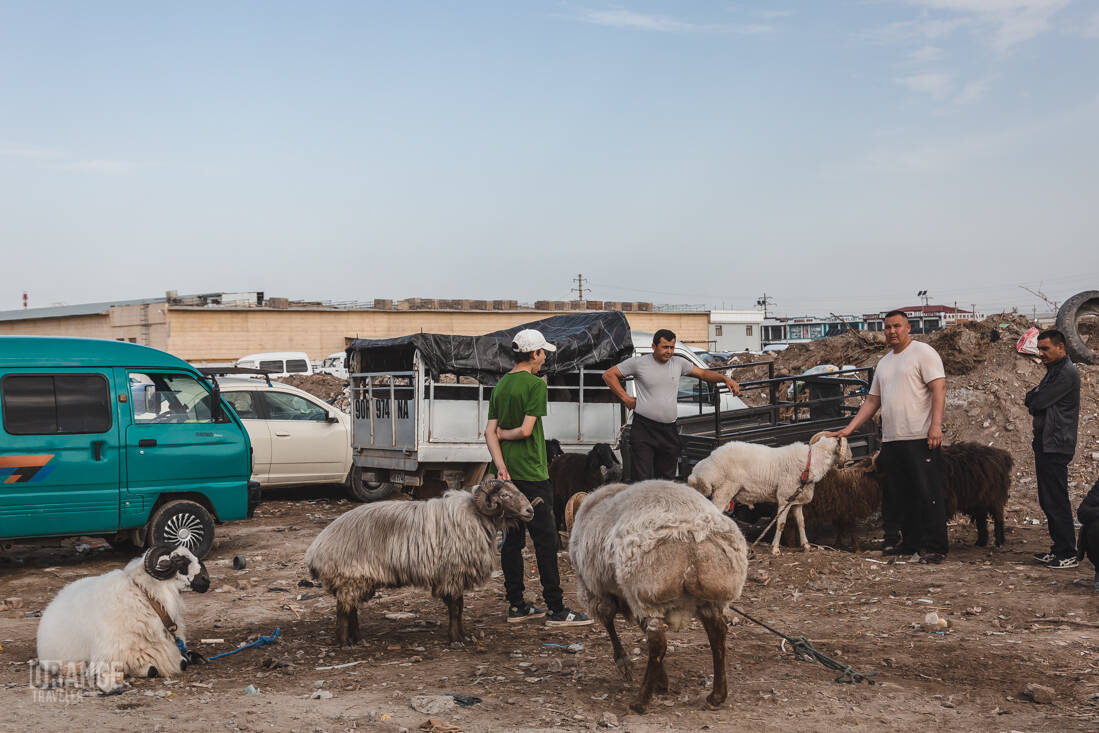
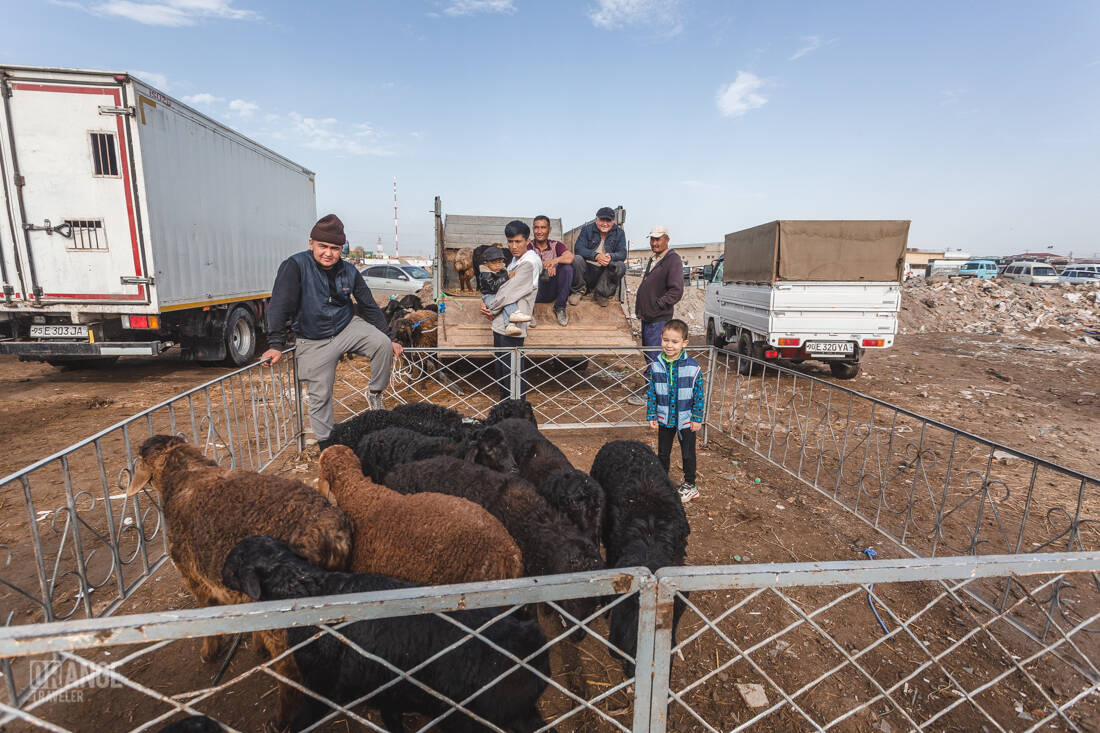
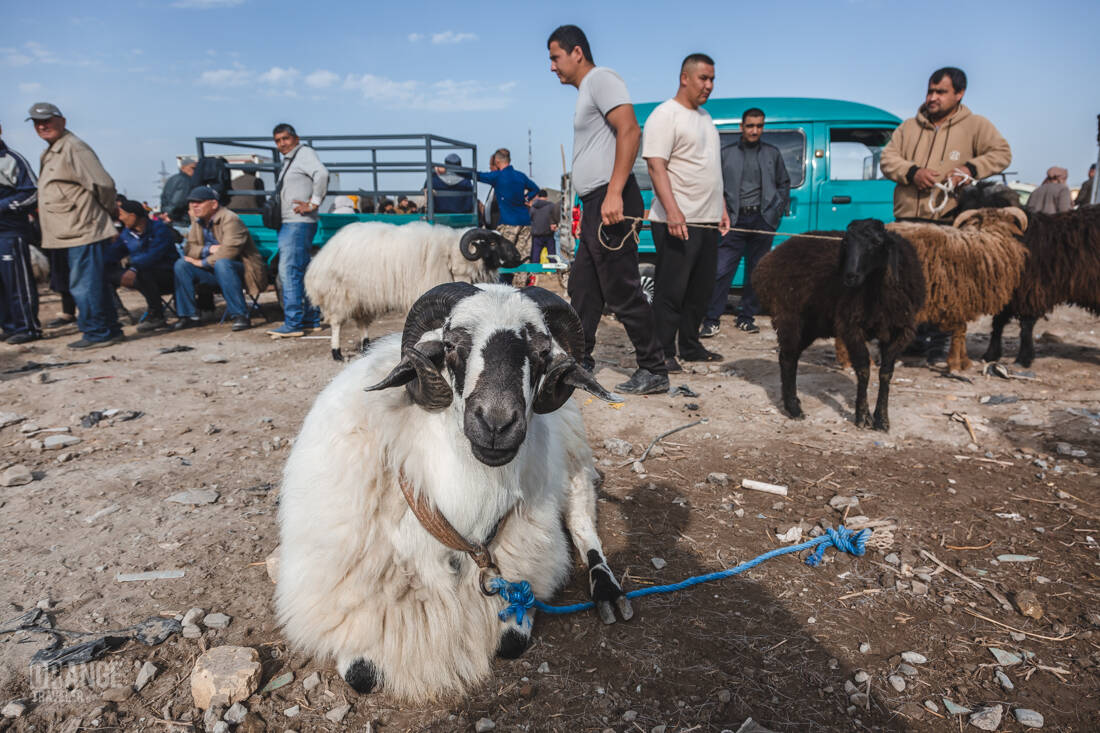
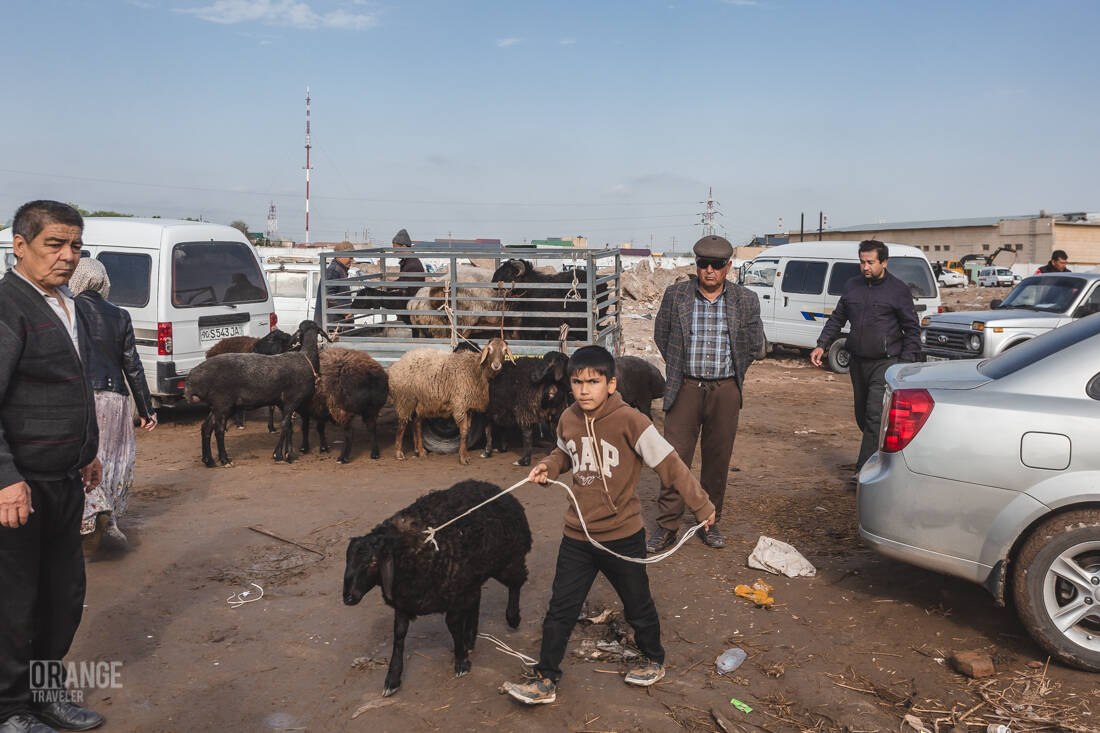
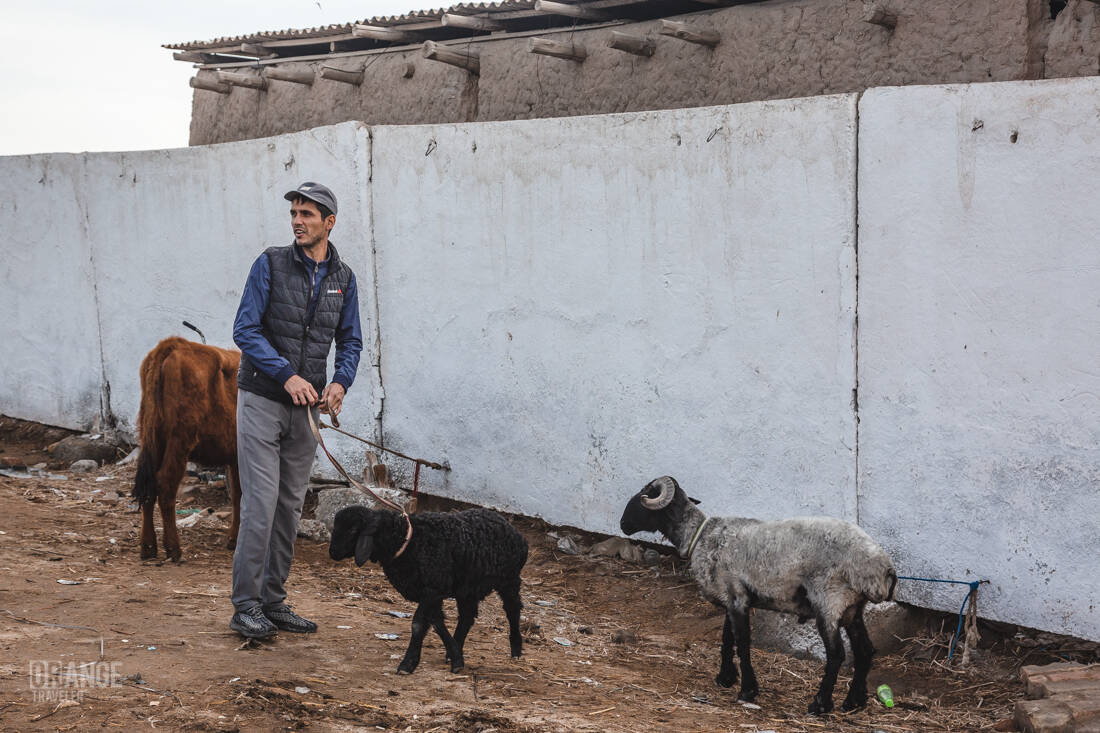
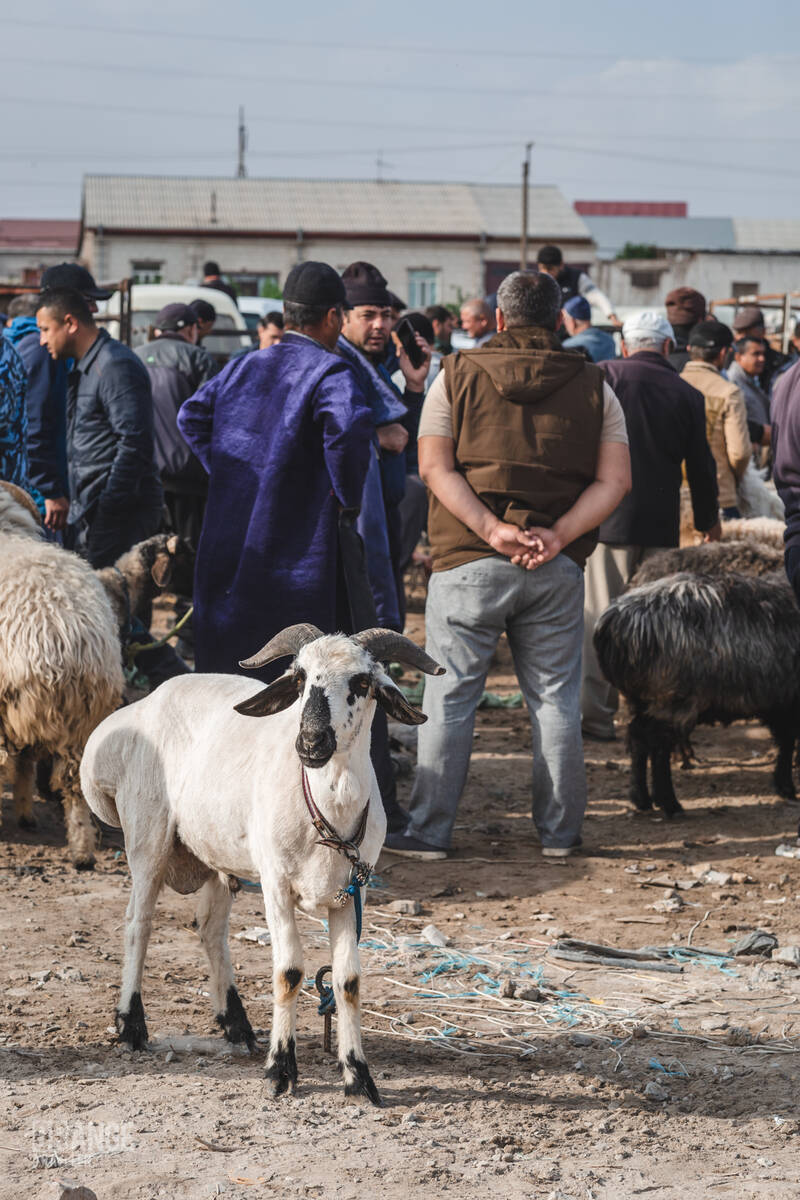
Fat-tailed sheep, karakul lambs, pens with brown and black rams. An indescribable cacophony of bleating animals, emotional bargaining and human voices. Nobody was selling donkeys. Nor were there any one-humped camels, with prices starting at no less than USD 5,000.
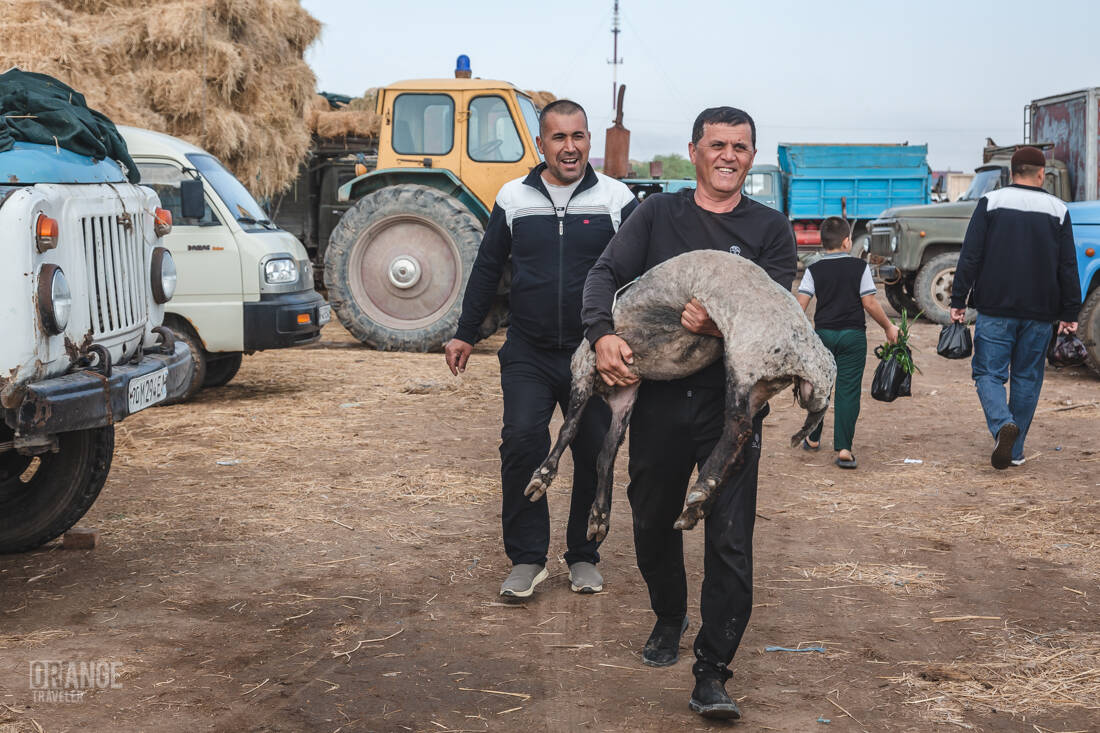
The brisk trade went on until about 9 a.m. Happy buyers carried lambs in their arms or led young bulls along on ropes. Men crammed whole batches of rams into small trucks and vans, nudging them along by their fat rumps.
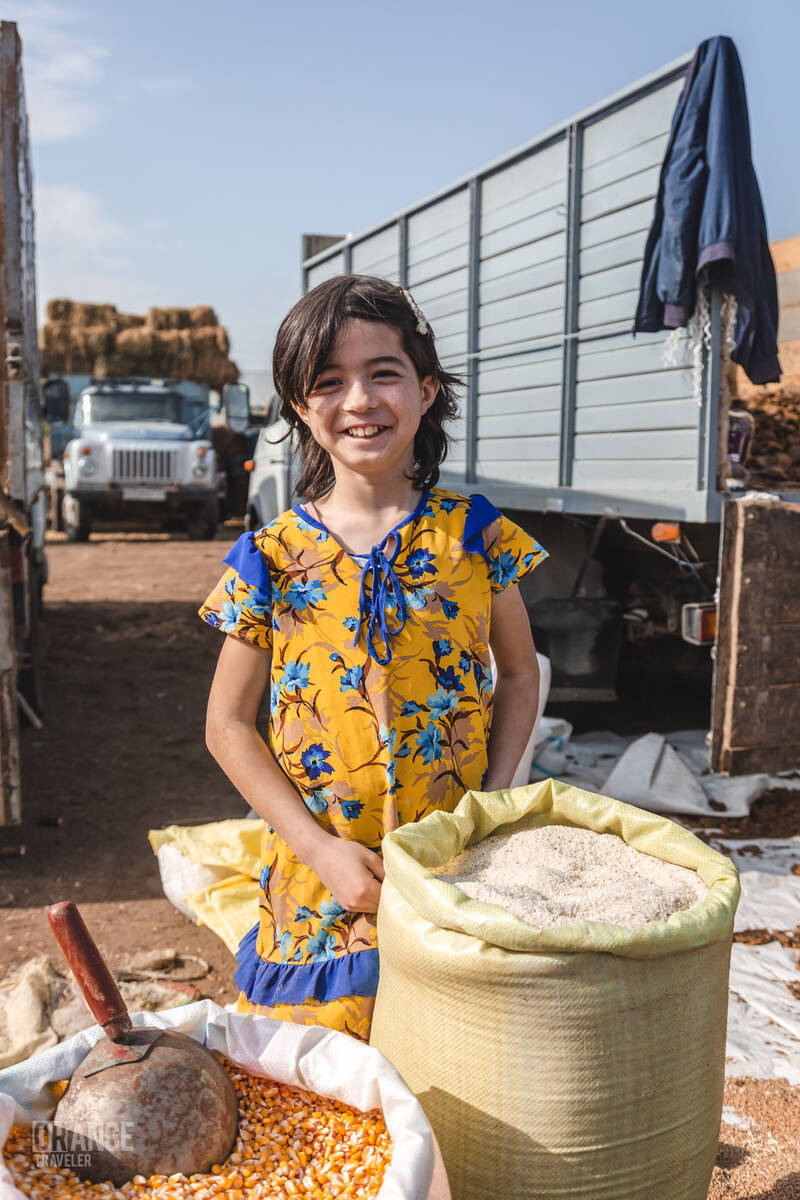
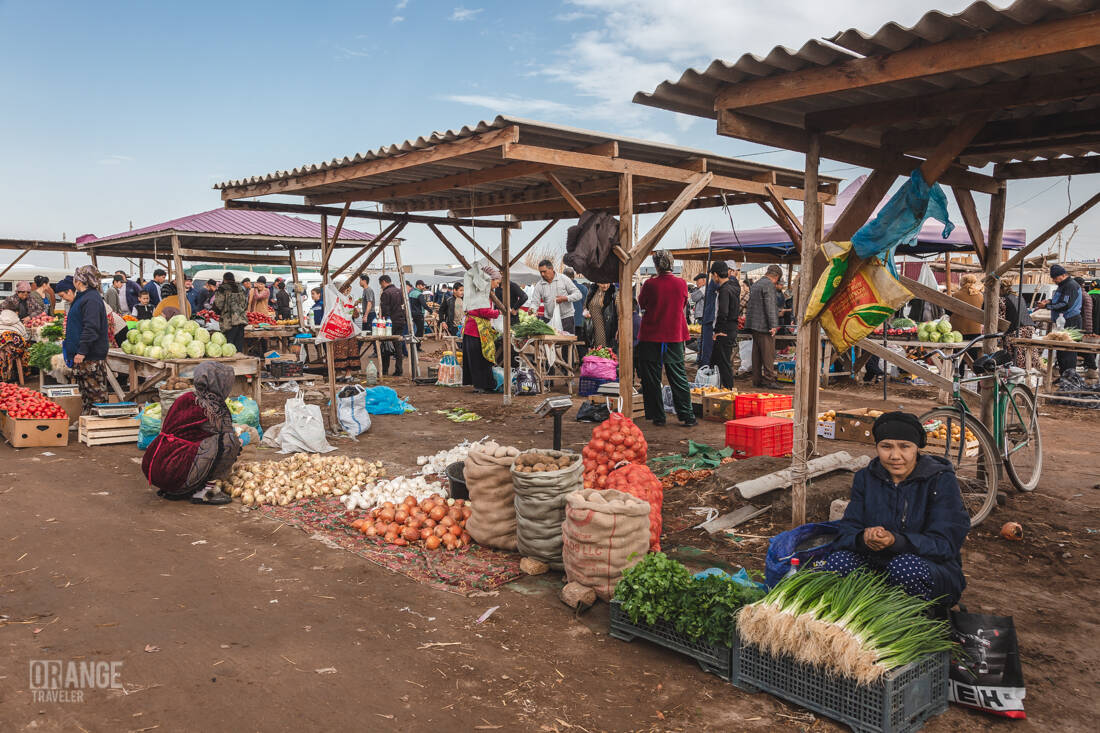
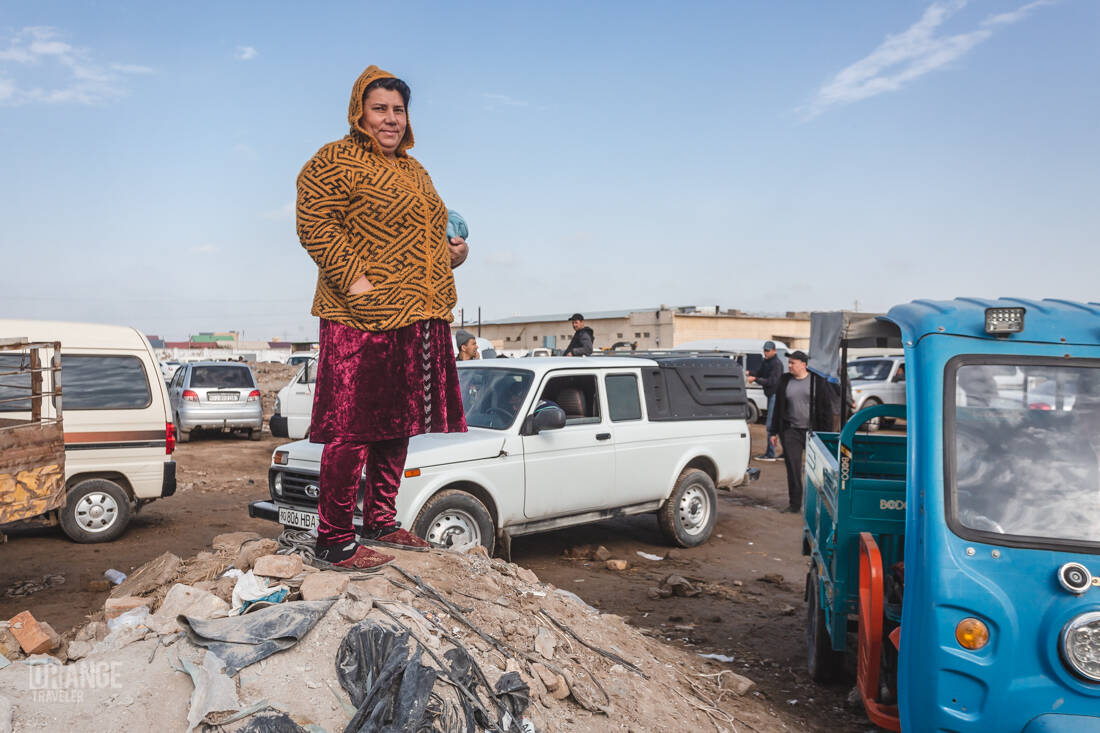
There were also farmers’ stalls at the market, where you could buy vegetables and fruit, groats and feed. Here, women and even young girls helping their mothers weigh out goods bustled around improvised counters. I noticed an old woman making brooms. With her wrinkled hands, she deftly gathered twigs into a bouquet. I bought a broom from her, a large and sturdy one.
Madamin laughed again. “Did you seriously buy a broom at the livestock market? Are you going to fly to Moscow on it tomorrow?” It was the first joke of a dozen similar ones that I heard at two airports the following day. By the way, should you also feel like buying a broom in Urgench, bear in mind that, under the law, it is considered a bouquet of dried flowers, which you may legally bring with you.

My thanks to Timur Way and, personally, Yuliana Bozhko for organising an unforgettable journey through Uzbekistan. The company’s website features engaging tours accompanied by professional licensed guides.
Read more about Uzbekistan:
Samarkand: In the Name of Amir Timur
Uzbekistan: Questions and Answers
Khiva: An Ancient City of Uzbekistan
Ceramics from Gijduvan
Bukhara: Twenty Cubits of Pearl Adras
Samarkand Carpets


 Travel reportage
Leave a comment