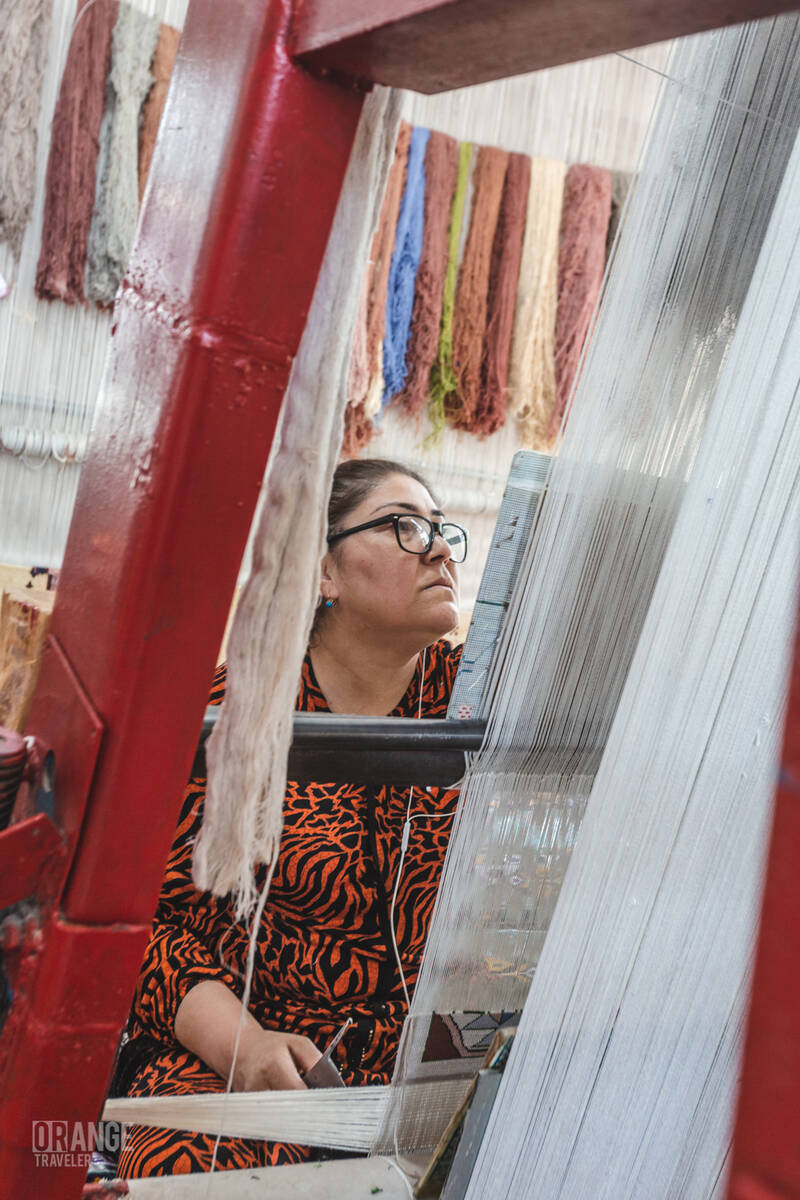
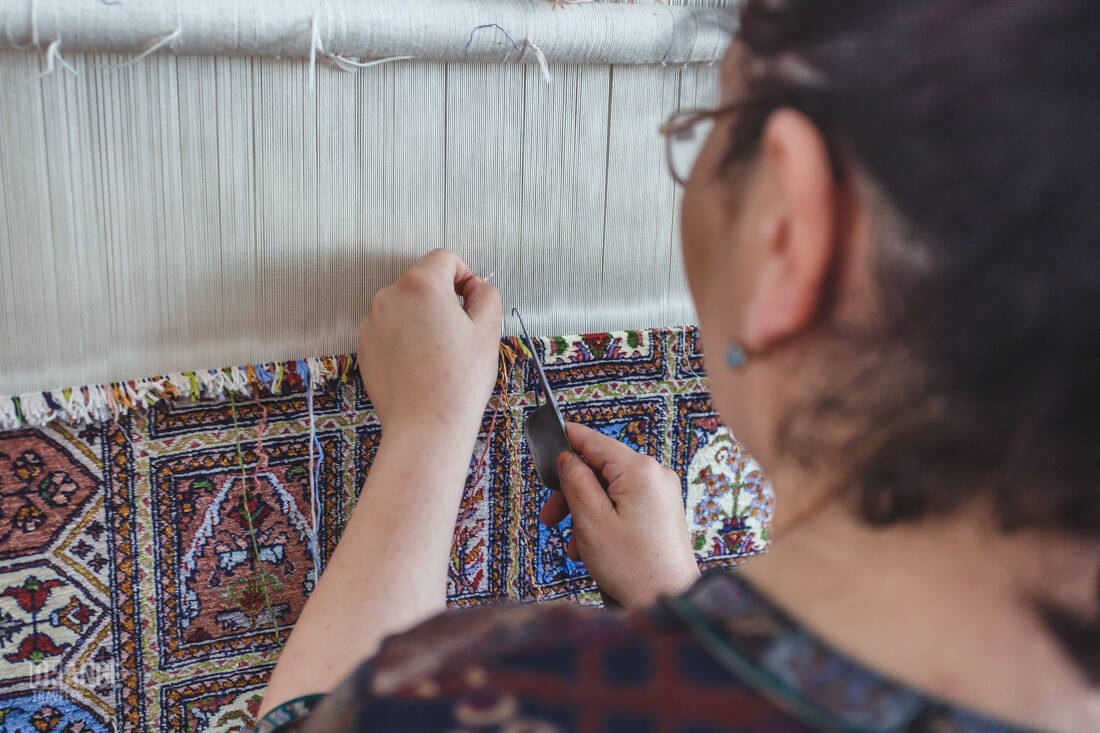
Women sat in front of an enormous “canvas” of white threads in a large hall at the Hujum carpet manufactory. They deftly tied knots, checking the pattern and calculations on graph paper. During a break, someone was tinting her eyebrows by the window — the light was better there. There were about ten craftswomen in the room, but around 400 women work at the factory, most of them coming in at whatever time suits them.

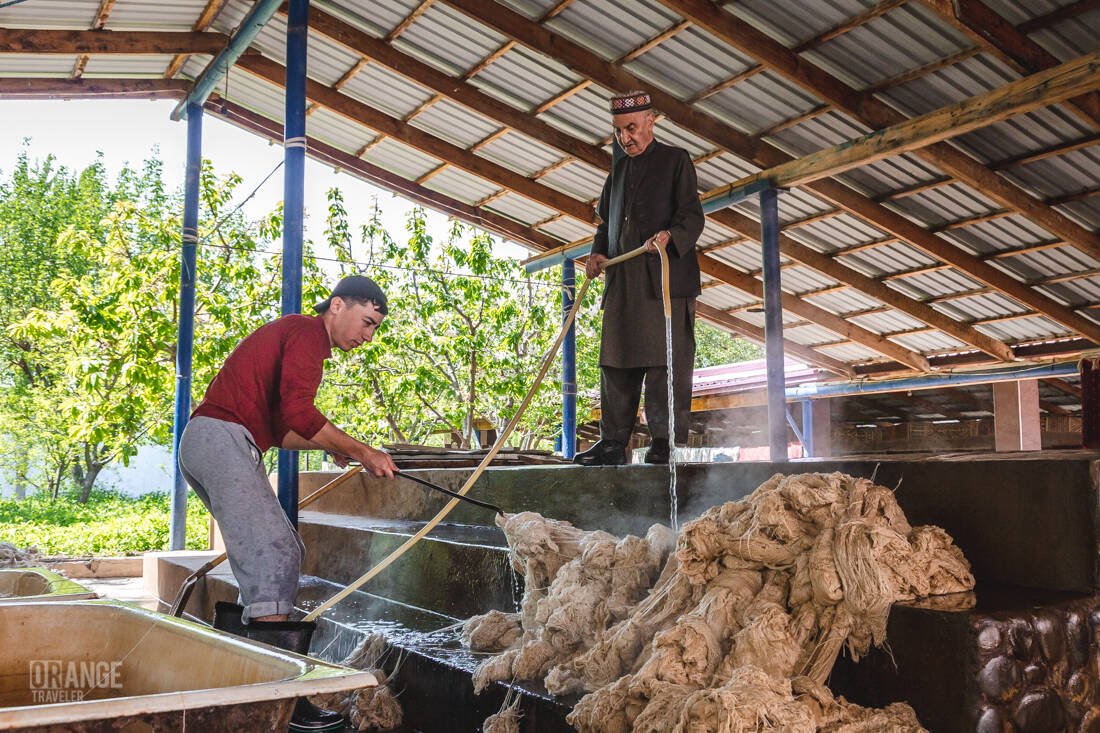
We entered the factory through an inner courtyard, where three people — an elderly man and woman, and a young man — were soaking huge skeins of silk thread in vats. They were preparing them for dyeing. The silk threads are also dyed here by hand, in enormous cauldrons. Walnut and pomegranate peel, the prickles of dyer’s madder, asparagus flowers and stems, and indigo are used as dyes.

Few people know that Hujum was the name of an entire campaign for women’s rights that unfolded in Central Asia in the 1920s and 1930s. In those days, almost all women were illiterate. Women were often married off at a very early age and occupied solely with the household and children. The role of women was to be reconsidered: they were to be freed from domestic labour and given the chance to receive, if not an education, then at least knowledge that could provide them with work.
Hujum was supported by decrees abolishing the bride price and later by a decree introducing measures against the murder of women in connection with their emancipation — not everyone welcomed the changes. Women were taught, invited to take part in universal industrialisation and urged to abandon the paranja, and this was done quite radically. Within the framework of Hujum, industrial enterprises were created, including carpet centres.

The factory I visited began operating in 1992. The present-day Hujum is capitalist, of course. The craftswomen are paid by piecework and follow a schedule that suits them. The craft has nevertheless remained exclusively female: men simply are not ready for such delicate work, exhausting and requiring perseverance.

A small rug measuring 1.20 × 1.80 metres takes, on average, about 12 kilograms of silk and six months of work. A larger carpet requires a year, or even three, if the work is fine and the idea ambitious. On average, a craftswoman physically cannot make more than one centimetre a day, even though her pay depends on the number of knots. The work also involves frequent breaks, because the eyes become too tired. By the way, the factory trains its craftswomen free of charge.
Yet only a few remain to work there three months after completing the course — the craft is simply too difficult.
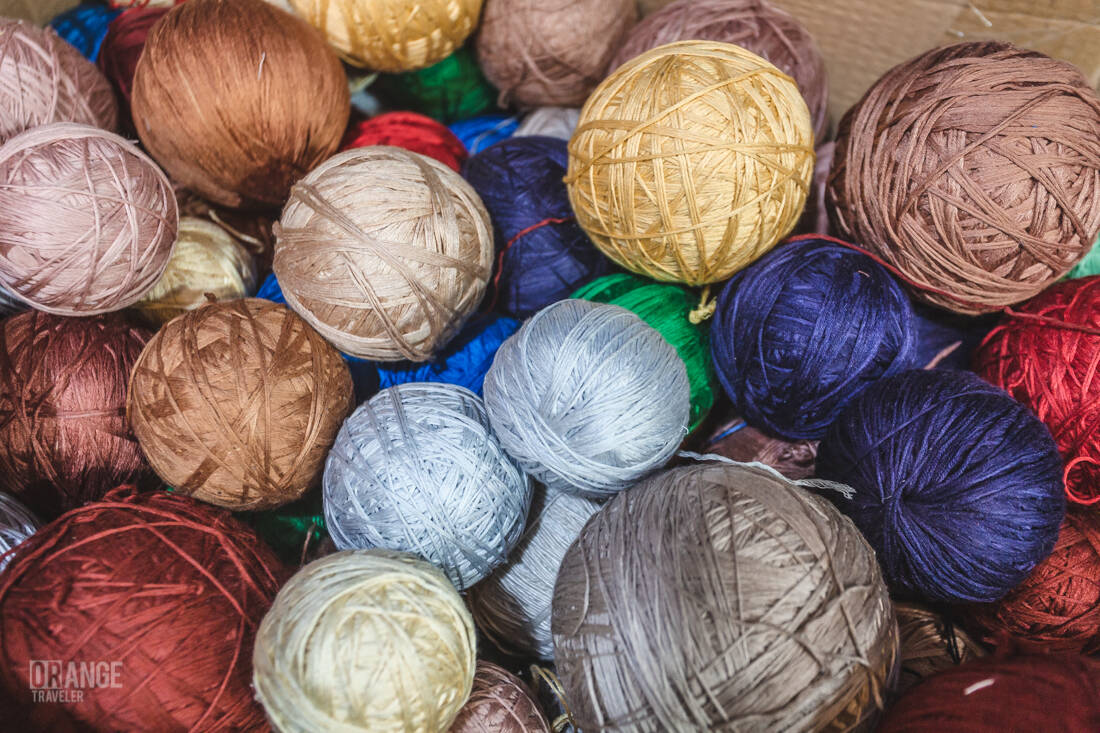
The carpets at this factory are woven mainly from silk thread, twisted from 100 of the finest strands drawn from mulberry silkworm cocoons. Carpet weaving requires only three tools: scissors, a changa and a brush used to press the knots down — to “make an utop”, which produces a locking effect.
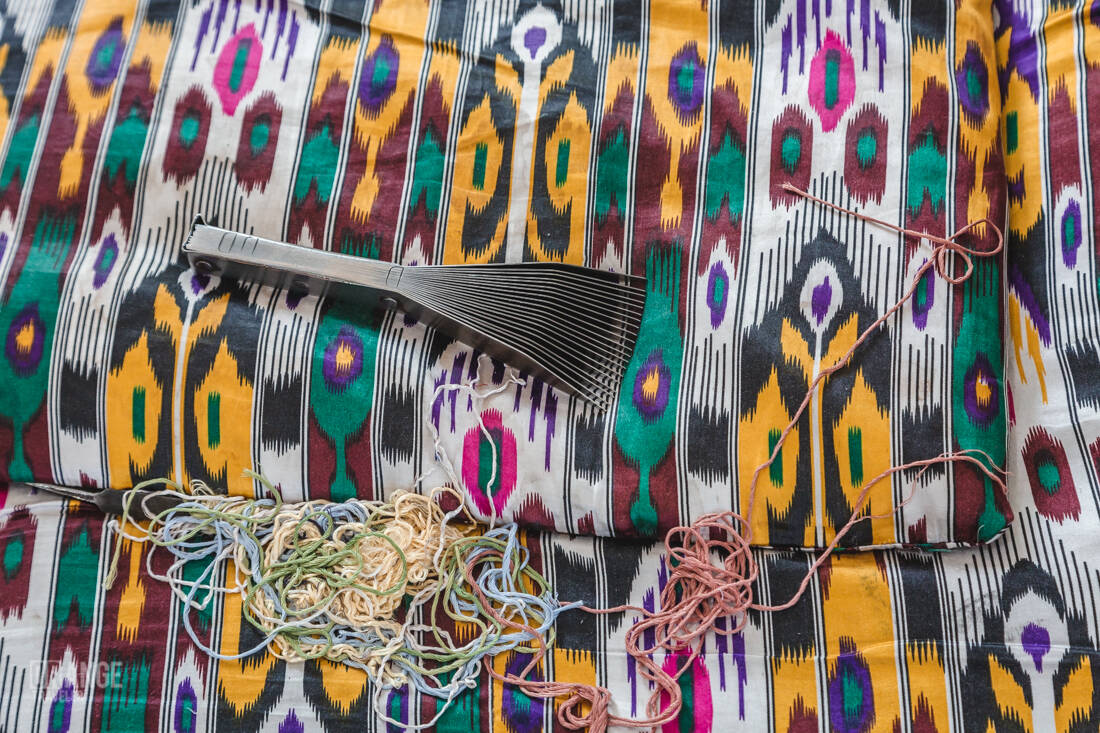

“There are no two identical carpets,” they assure me in the workshop. This is because it is never possible to achieve precisely the same colours when dyeing the threads, and no two works are alike.

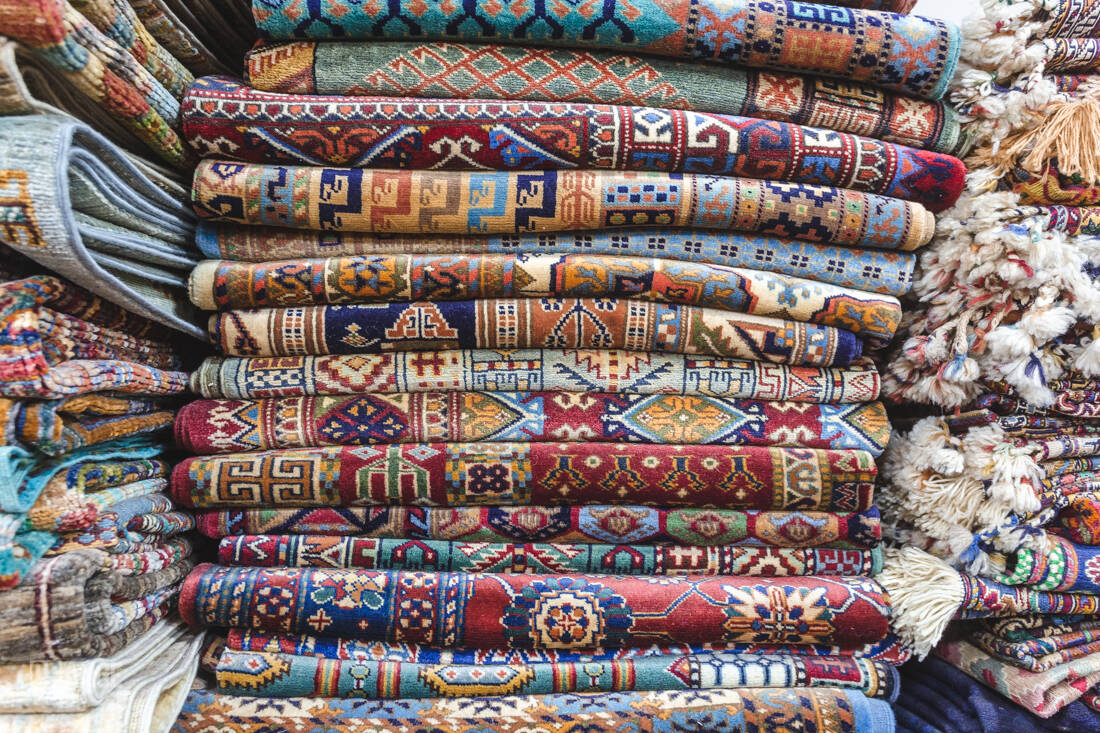
A carpet is not simply home decor; it is a collection of symbols. In the past, when girls made carpets themselves, they wove into the pattern everything they wanted to receive from their future husband. Quite literally: however many chains and necklaces, camels and rams, and so on. The groom would come and assess not only the beauty of the work, but his budget as well — could he afford this girl? More often, though, the ornament is floral. This, incidentally, distinguishes Samarkand carpets from Bukhara carpets, where geometric patterns are preferred.

The factory is open to visitors. Guides explain the process in detail. For example, the more knots there are in a square centimetre — their number can reach 100 — the more beautiful the work and the finer the pattern. To make one knot, a weaver has to perform eight precise movements with her hand. She produces between 20 and 35 knots a minute.

Another way to check whether a carpet is expensive is to set it alight. Burnt silk smells of singed hair, while viscose melts like plastic. But this method is not terribly reliable. Unscrupulous manufacturers often use viscose as a base and add silk only to the fringe. A silk carpet, however, looks just as perfect from the reverse as it does from above — every centimetre of the work is visible.

The average lifespan of a silk carpet is 70 years or more, since neither moths nor damp can harm it, while constant walking over it only makes the silk shine more brightly.

Charmed though I was, I bought nothing. First, the price stung. Second, the design of my home had never envisaged such accents. Third, modesty got in the way of the idea of ordering a carpet with my own portrait. So it is your turn!

I thank Timur Way and Yuliana Bozhko personally for organising an unforgettable journey through Uzbekistan. The company’s website features engaging tours accompanied by professional licensed guides.
Further reading about Uzbekistan:
Uzbekistan: Questions and Answers
The Livestock Market in Urgench
Khiva: An Ancient City of Uzbekistan
Samarkand: In the Name of Amir Timur
Bukhara: Twenty Cubits of Pearl Adras
Gijduvan Ceramics








 Travel reportage
Leave a comment