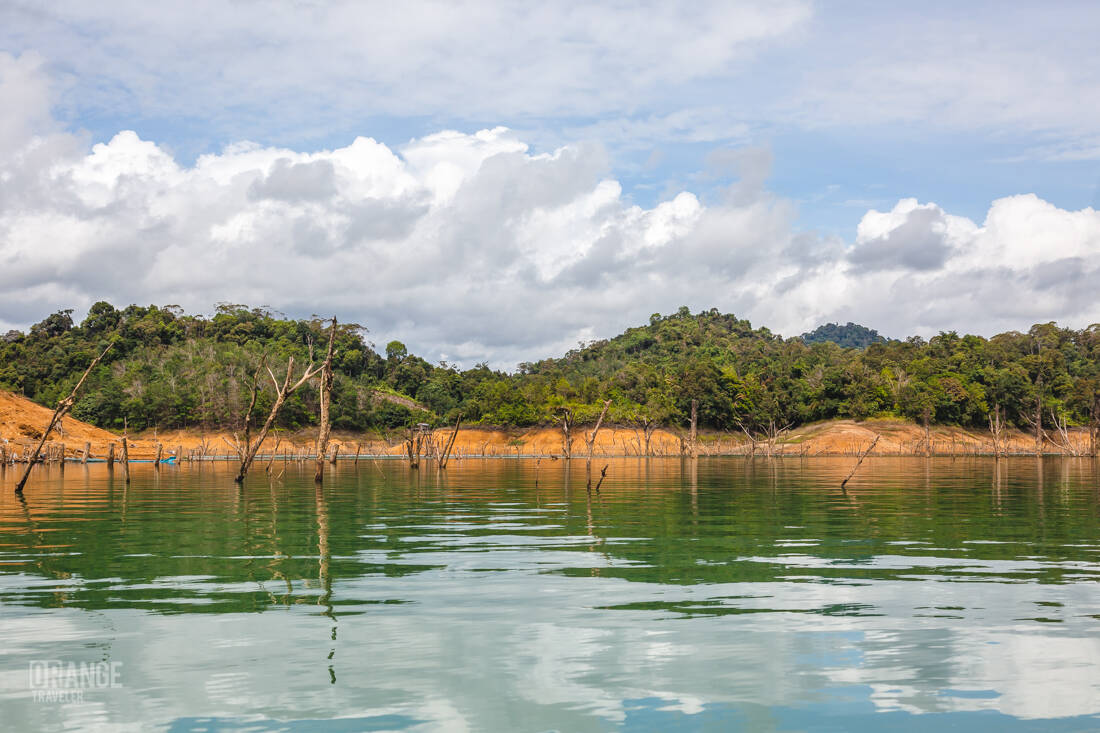
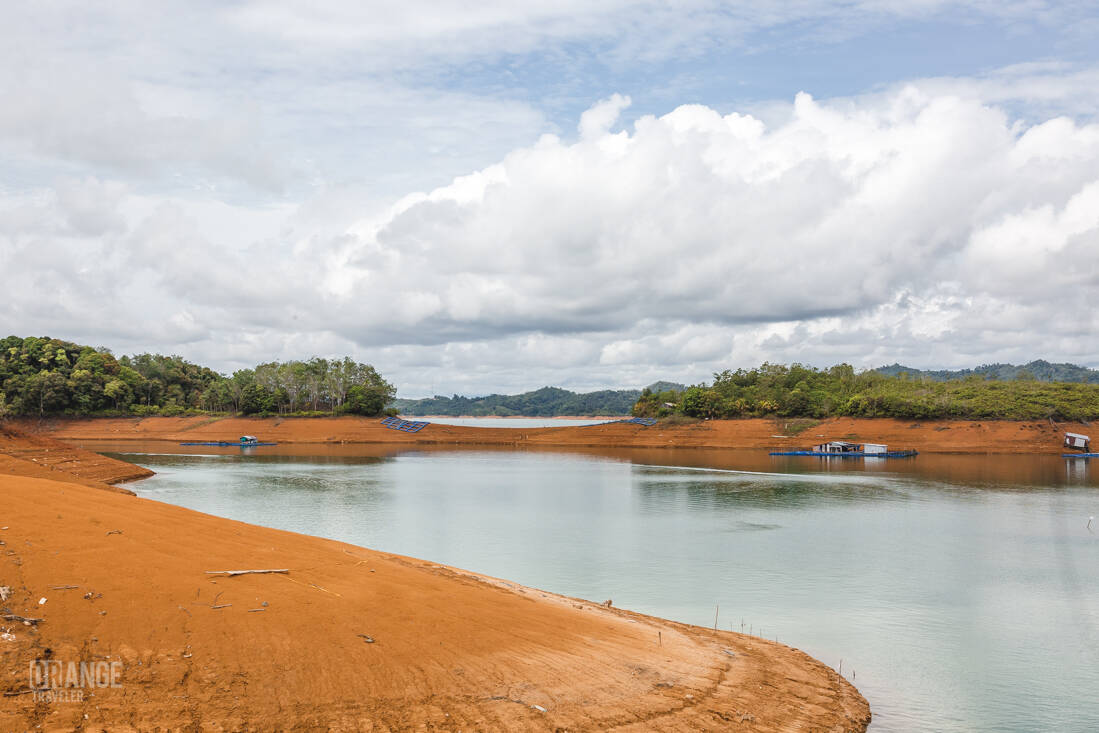
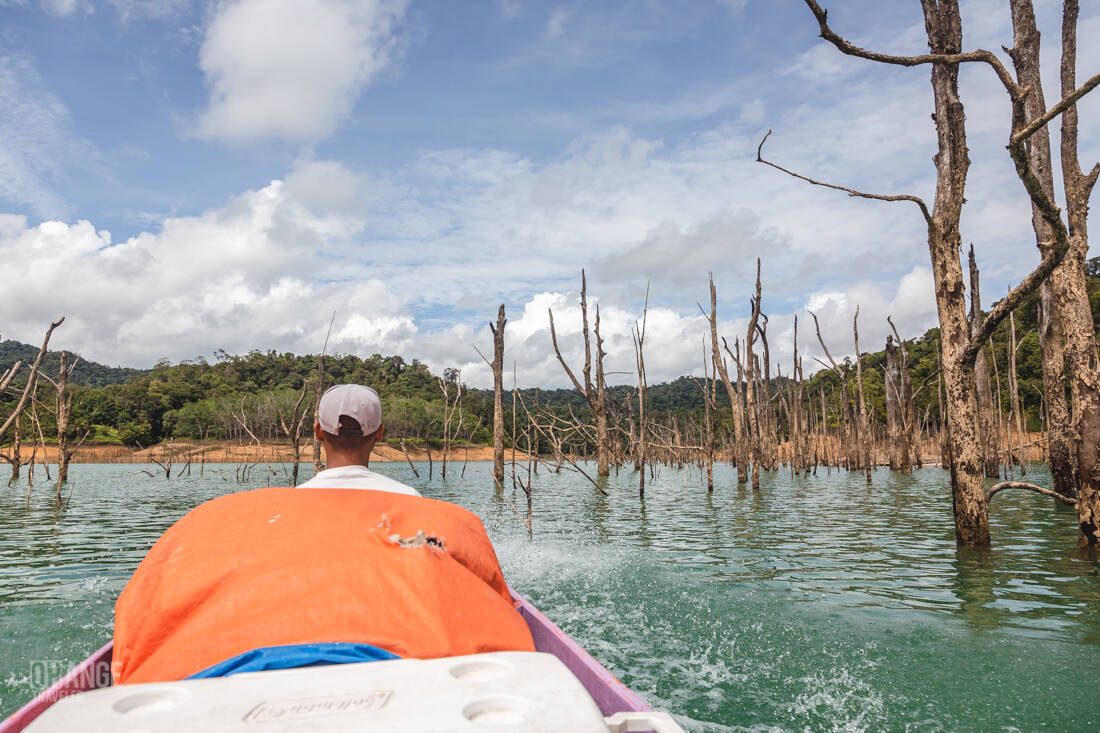
We — my guide Lemon, of a completely indeterminate age but clearly wise with experience, his assistant Tono and I — were speeding across the Batang Ai reservoir in a long wooden boat, a longboat. The helmsman, sitting at the stern, deftly wove between the skeletons of trees. The reservoir appeared here in the late 1980s, when a hydroelectric power station was built. Several villages were flooded and their residents relocated, but the forest was not cut down, so the trunks sticking out of the water looked rather strange.
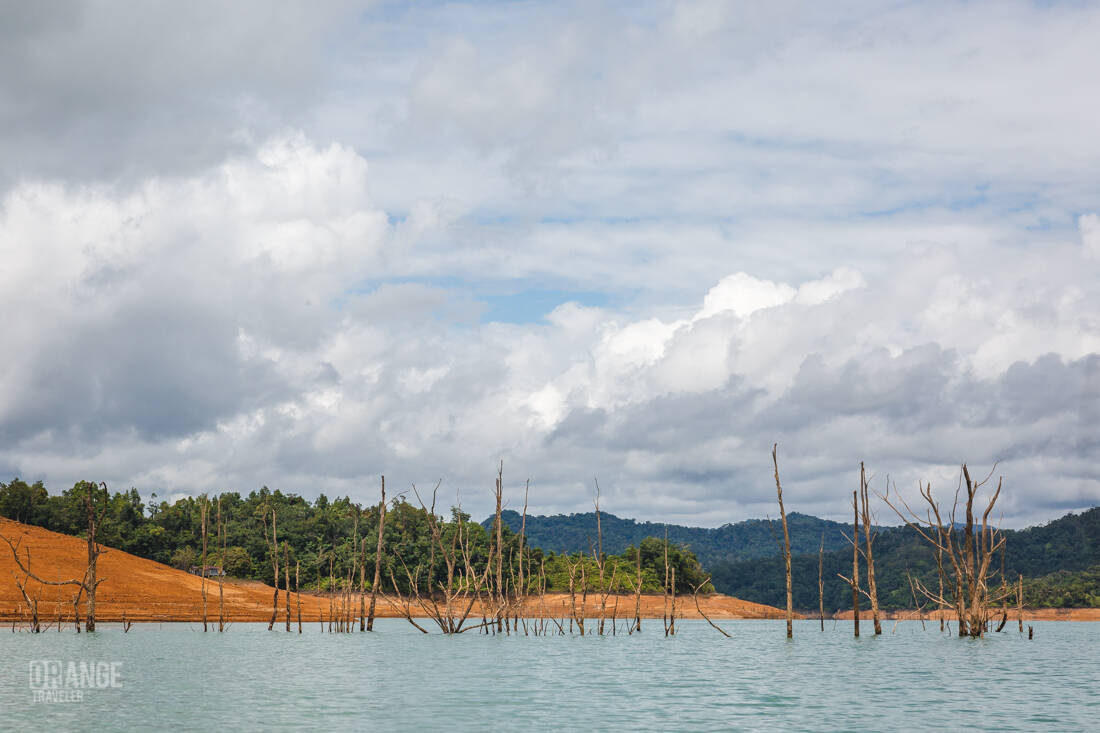
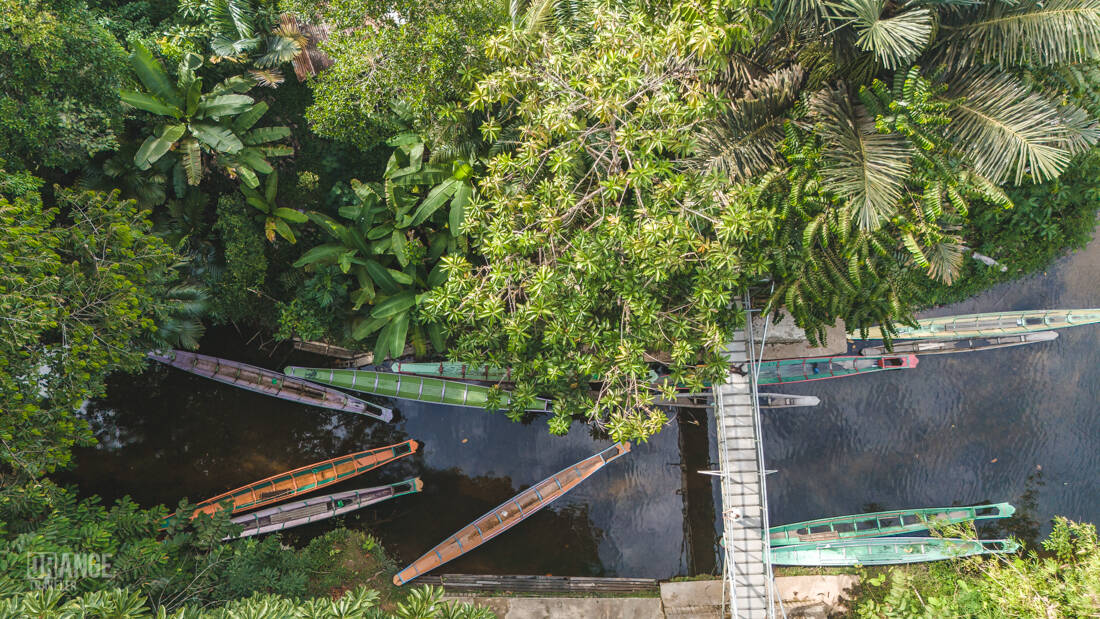
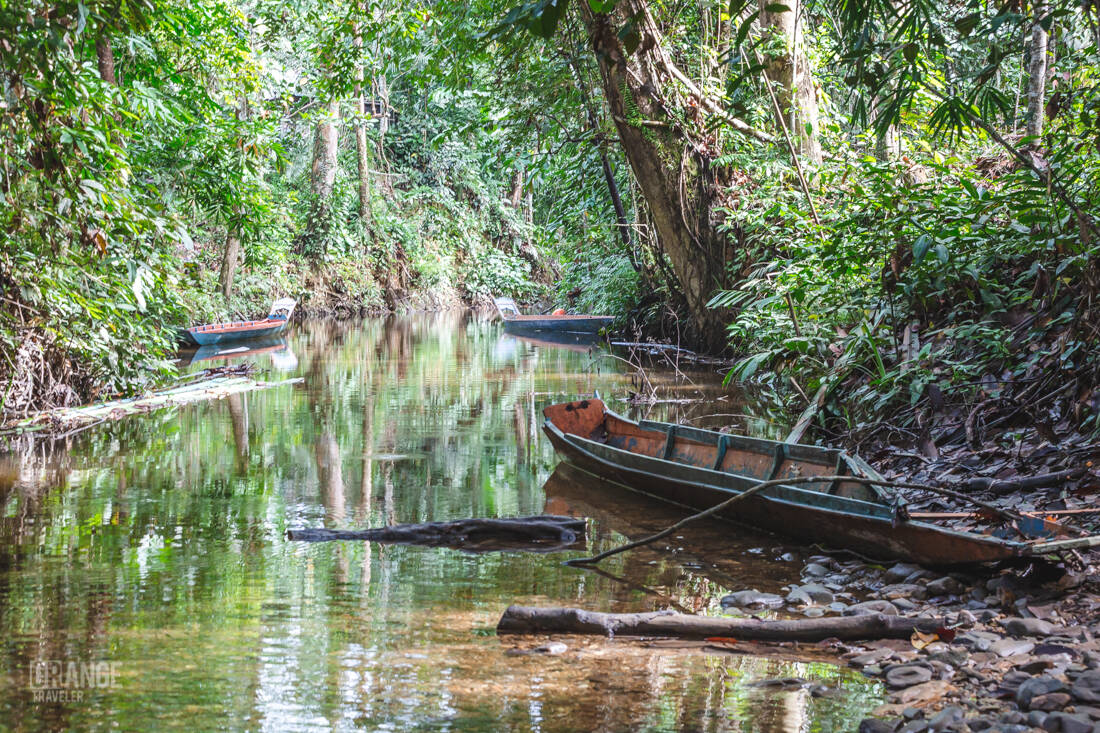
We passed the areas with dense clusters of trees at low speed. The whole trip felt like a water ride: the guy sitting at the bow gave practiced hand signals, showing which way to turn to avoid an obstacle. The boat itself was so low that at first I kept calculating the damage I would suffer if this vessel capsized. But to my surprise, the Iban boat — the very kind used by all members of the tribe to travel along the local rivers — turned out to be highly maneuverable and stable. It moved easily through shallow water. In such places, the navigator would take out a long pole and push off from the riverbed. On the turbulent rapids of the Delok River, the sensation was like a roller-coaster loop: it took my breath away, while only a few sparkling drops landed on me.
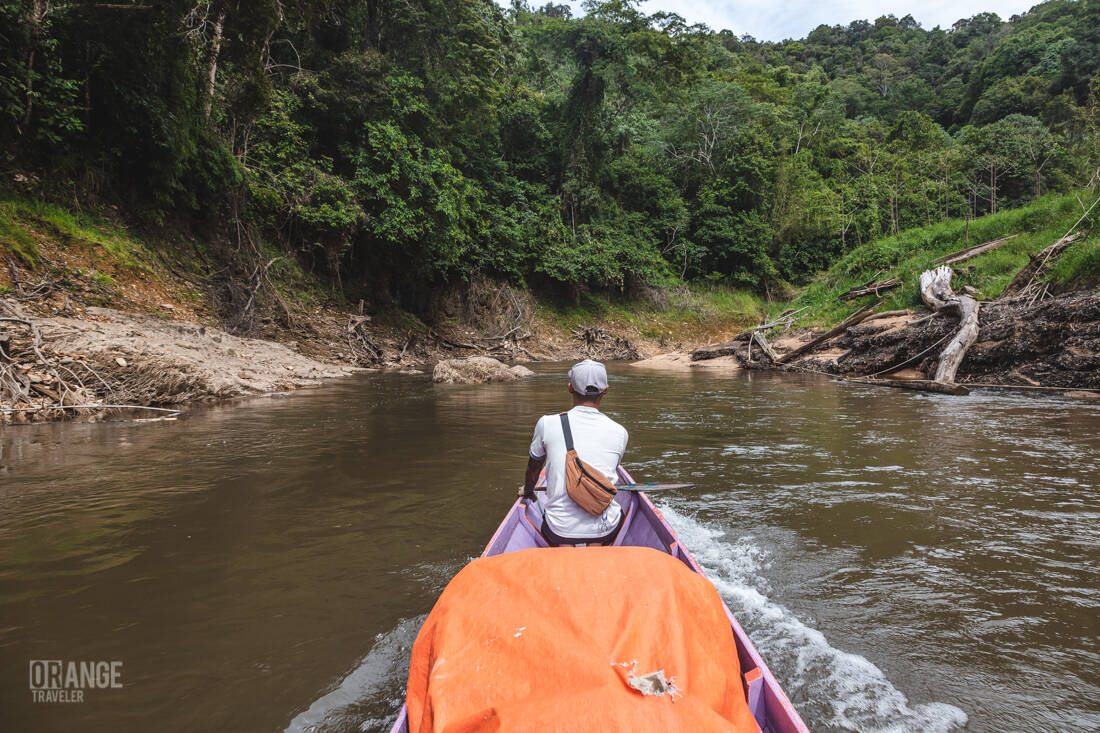
These boats are made in the traditional way: hollowed out from a large trunk of local trees — ironwood, meranti or engkabang. The bottom is reinforced, cross braces are added, and simple seats are installed. In the past, people moved only with paddles, standing at the bow as they rowed. Today, almost every boat has a motor.
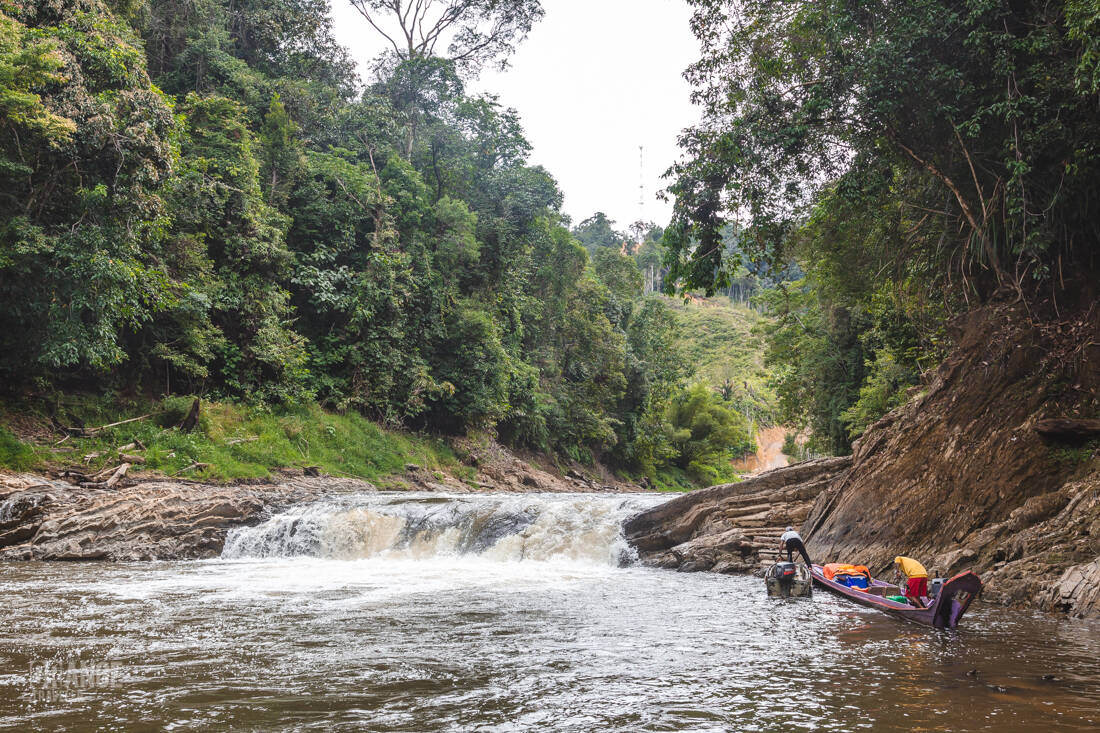
An hour later we reached a high rapid that longboats cannot pass. The solution was simple: we just changed boats. All our belongings, including the boat motor, were quickly moved to another vessel, and twenty minutes later we moored in a small channel by our first lodge, Nanga Sumpa, somewhere in the jungle of Batang Ai National Park in Sarawak.
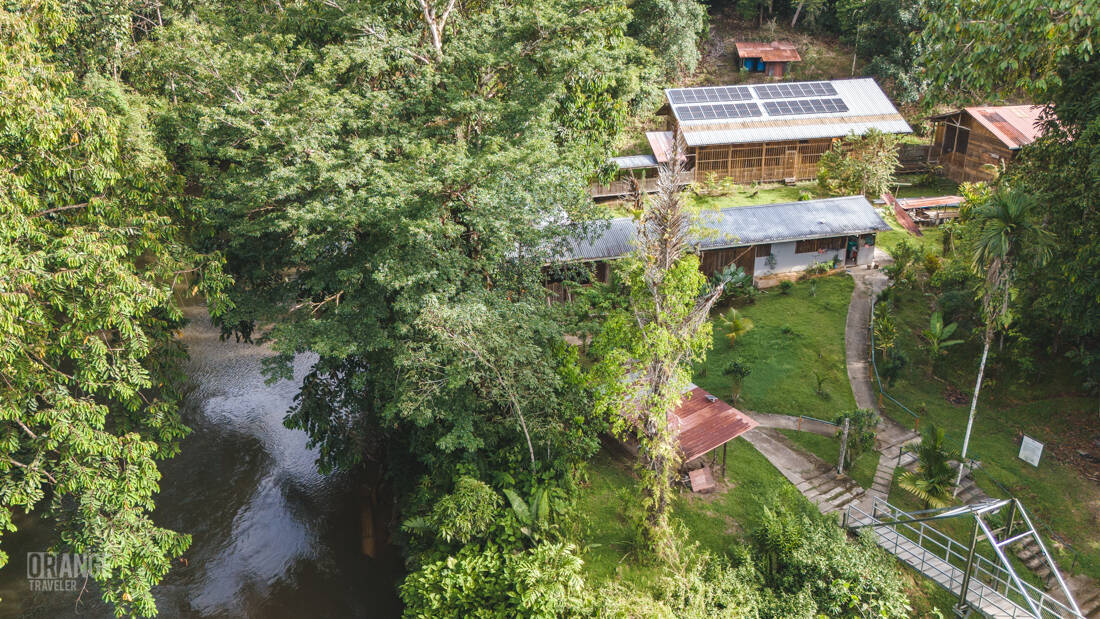
The room was simple: a couple of beds with mosquito nets, a chair and a table, a bathroom. A fan creaked under the ceiling, sending down a pleasantly cool breeze. Before the jungle trip I had received all the necessary instructions. “Bring synthetic clothes. Nothing cotton will dry. You’ll need light shoes.” I was ready for everything to be rather camping-style. At least this lodge had a fan; the other one would not even have electricity and, consequently, nothing else either. I listened to the advice, but my T-shirts and shorts made of artificial, albeit modern, fabrics did not exactly dry in an instant. A couple of minutes later someone hammered on the door: “Olya, quick — orangutans nearby.” I grabbed my camera and, forgetting to take off my Crocs, ran out for a very brisk walk.
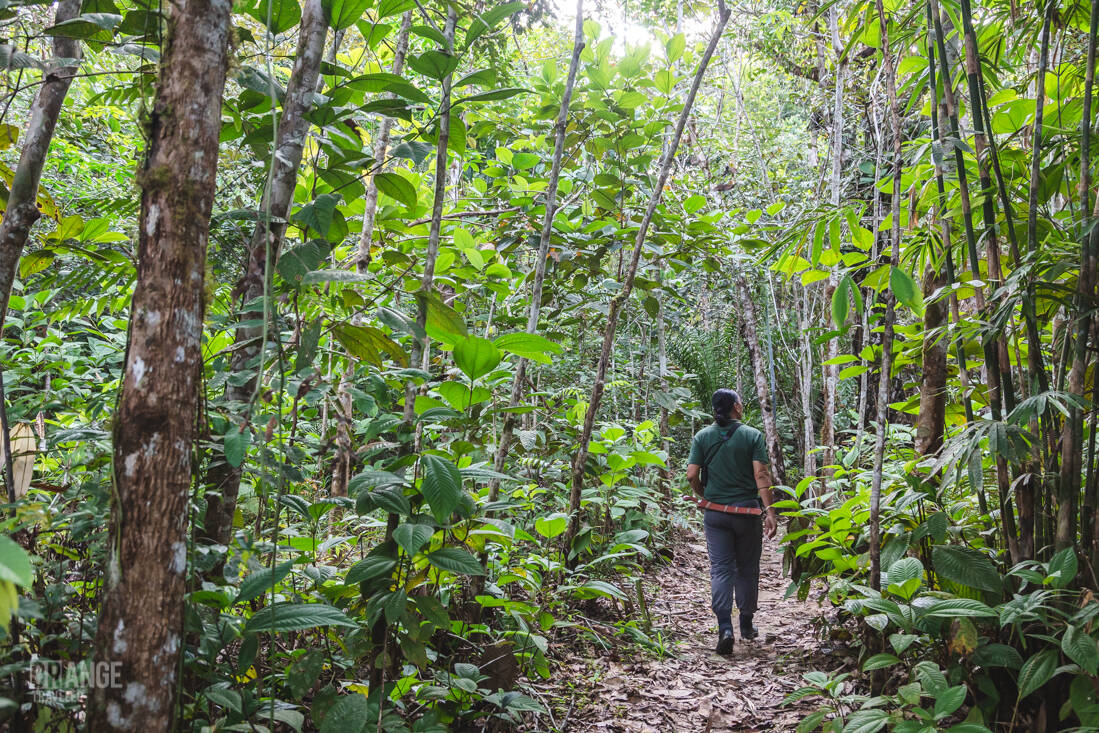
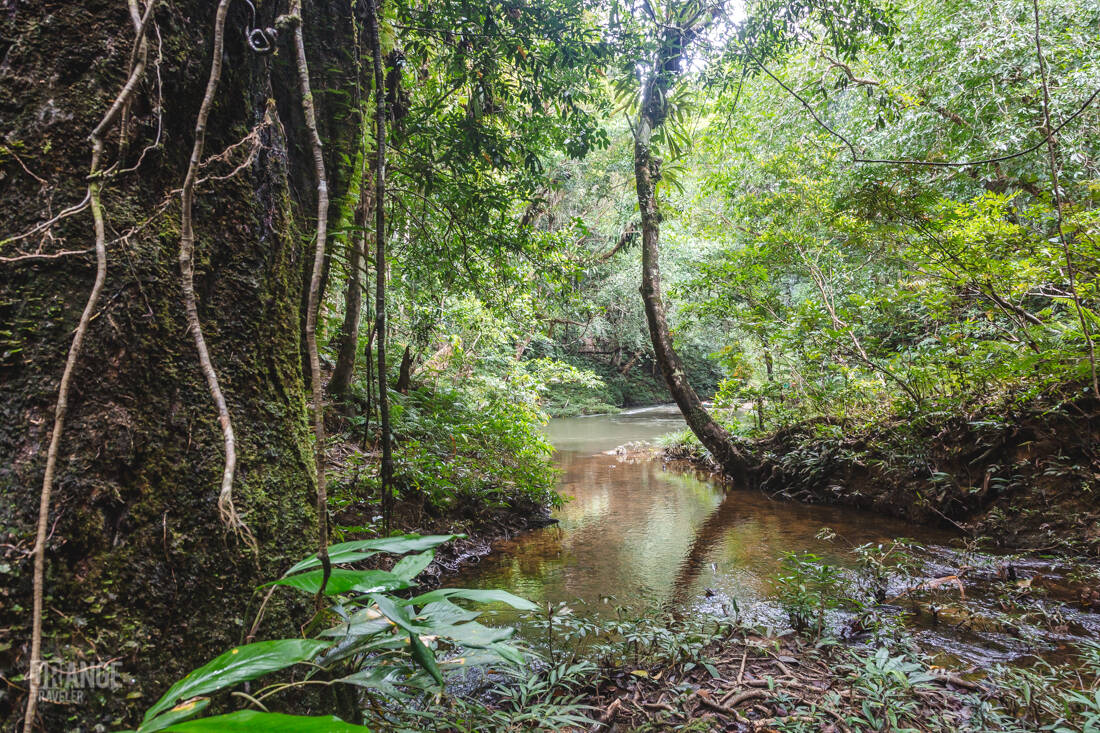
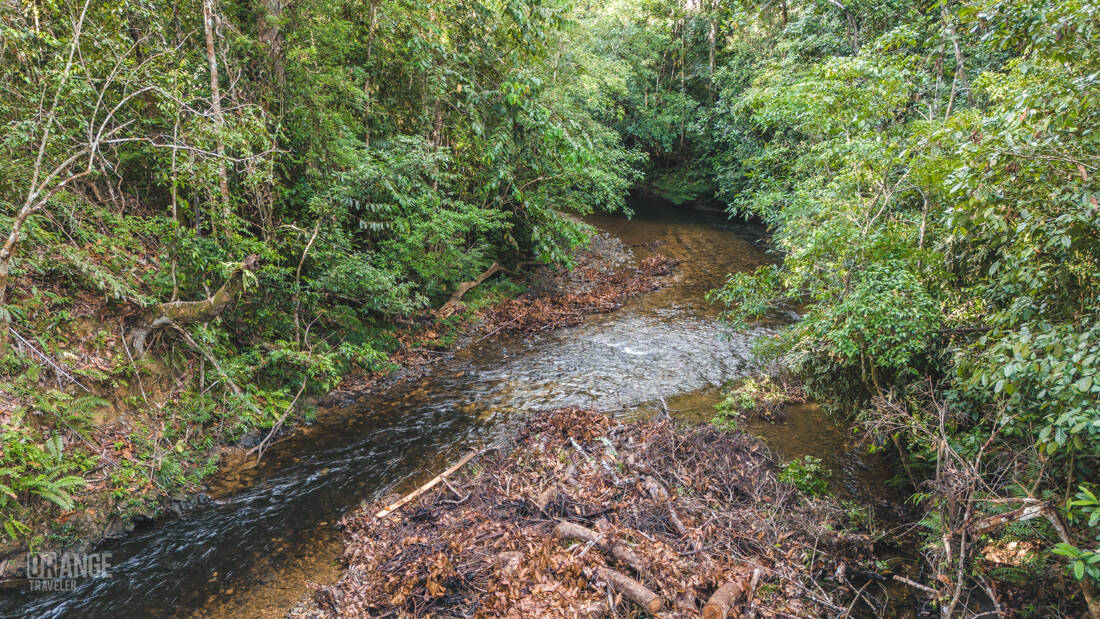
Lemon moved quietly along the trail through the forest thicket, stopping now and then, sniffing the air, listening. Little by little we came out to the river, intending to cross it by wading. Lemon took a step, shouted something — I did not even catch what — and, unexpectedly for me, splashed into the water. Instinctively I rushed to help him, and at that very moment burning needles pierced my legs. My vision went dark from the pain: fire ants were biting me. I screamed and also threw myself into the river, howling and literally losing my slippers — my Crocs.
“It will pass now,” Lemon comforted me. “It hurts, but it is not dangerous at all.” It turned out he had been trying to warn me by shouting: “Ants!” Gradually the pain subsided, but I had no desire for a repeat. The good news was that these bastards are, in general, quite easy to spot. They are large.
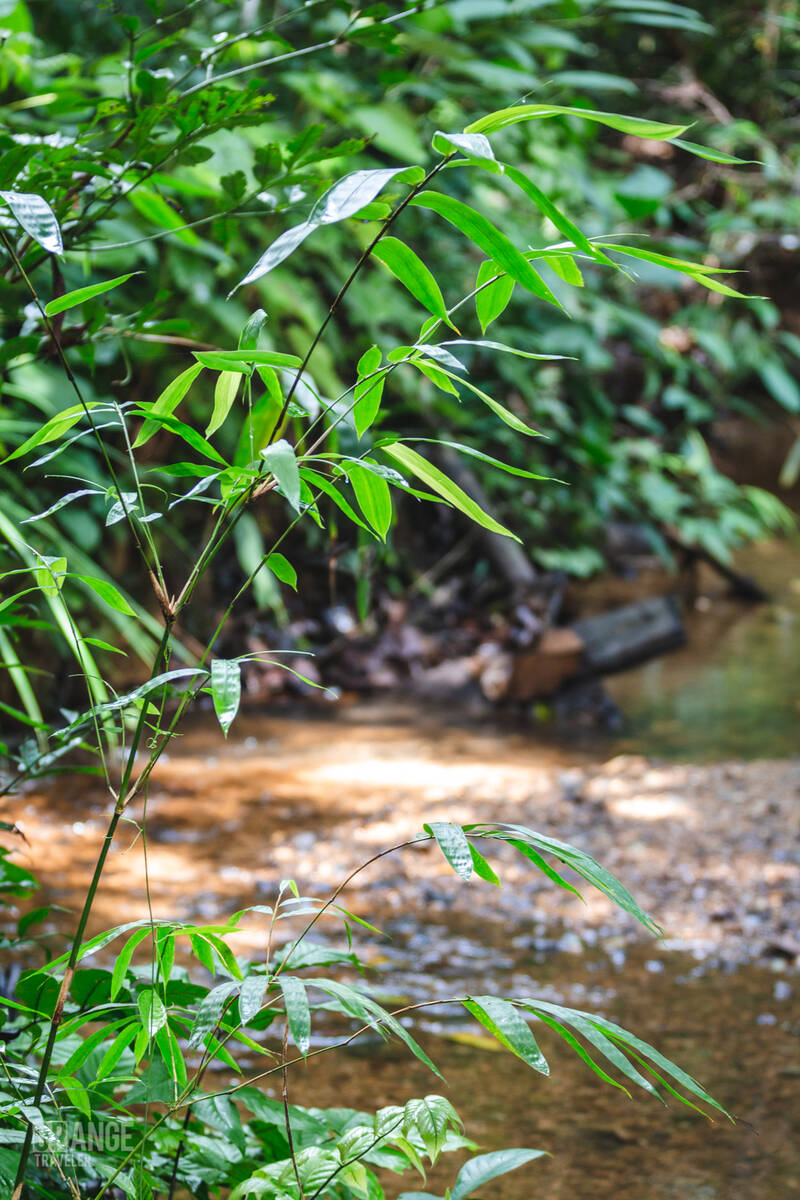

“Olya, when you are in the forest,” Lemon instructed me, “you must have two pairs of eyes. You need to look up and under your feet.” The forest did not let the stranger in willingly. Or perhaps it was simply testing my strength: grabbing my sleeve with branches, throwing lianas under my feet, catching all kinds of thorns on my trousers, and demonstrating its ant defenses. It also hid the orangutans from us, although, to be honest, it seems we ourselves frightened them away.
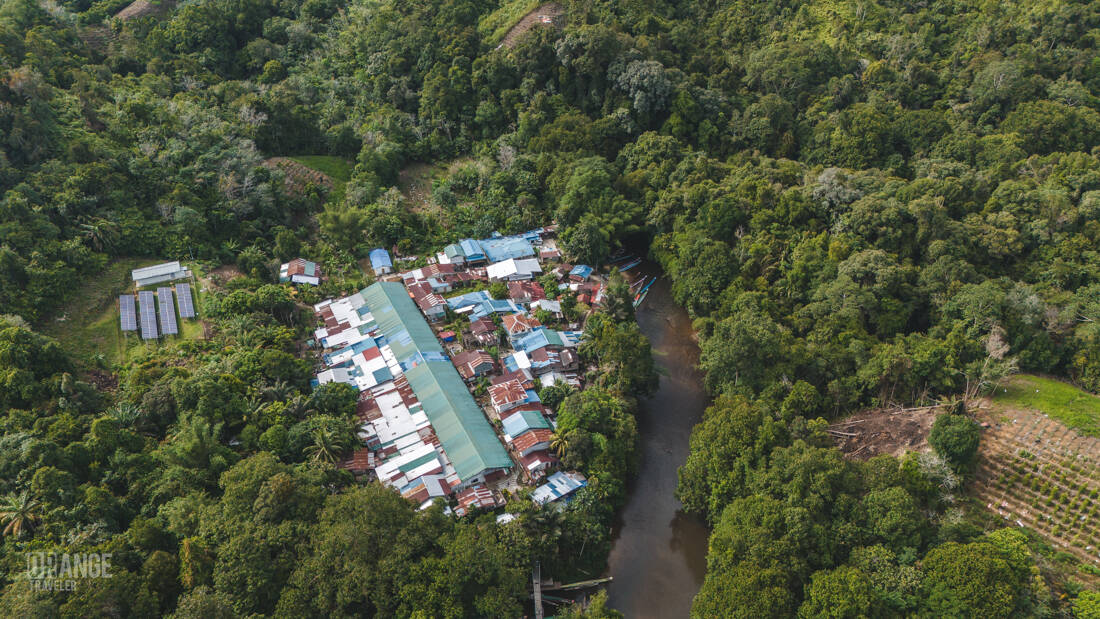
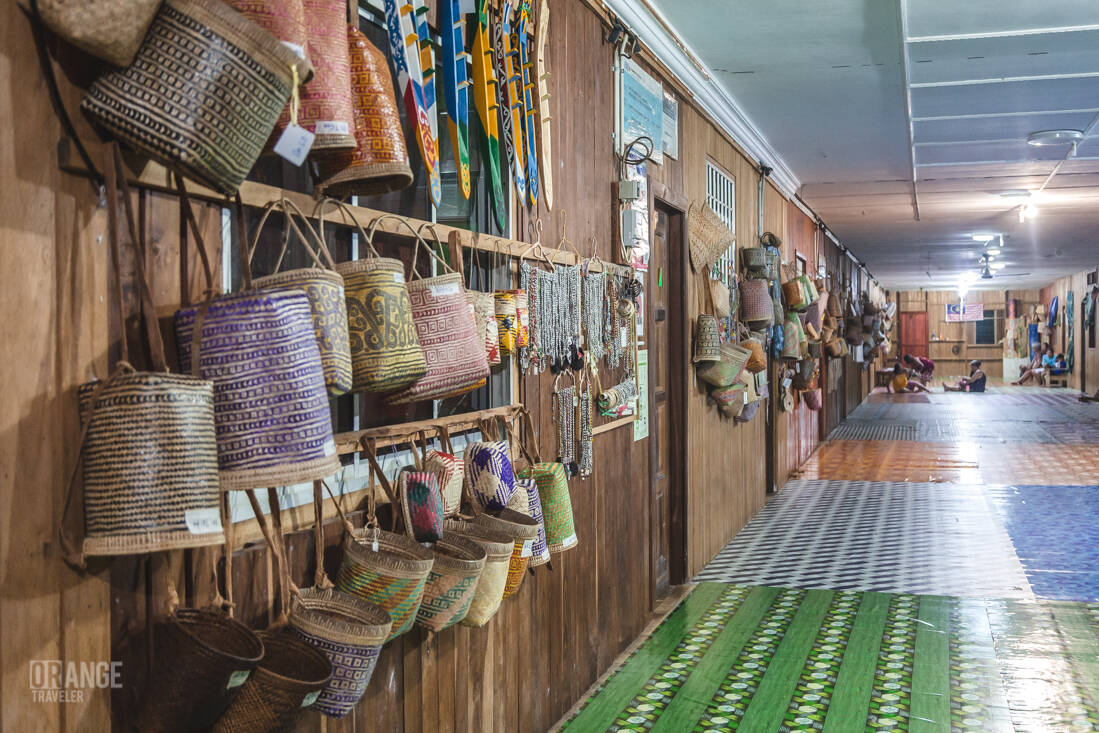
After dinner, having crossed the river on a suspension bridge, Lemon and I found ourselves in a longhouse, a traditional Iban dwelling. It is a traditional communal apartment, where two dozen families live door to door. They live peacefully, almost like one family, hard as that may be for a resident of a Moscow high-rise to believe. Moving slowly along the long corridor, I looked with curiosity into half-open doors: someone was watching a football match on TV, someone was busy doing housework in the rooms. Everyone meets in the raye — that is what the communal space is called. People discuss the news, gossip, weave baskets from local cane and grasses. By most of the doors, samples of different sizes with geometric and anthropomorphic patterns hung on strings. It became clear that I would definitely help the community by carrying away several baskets.
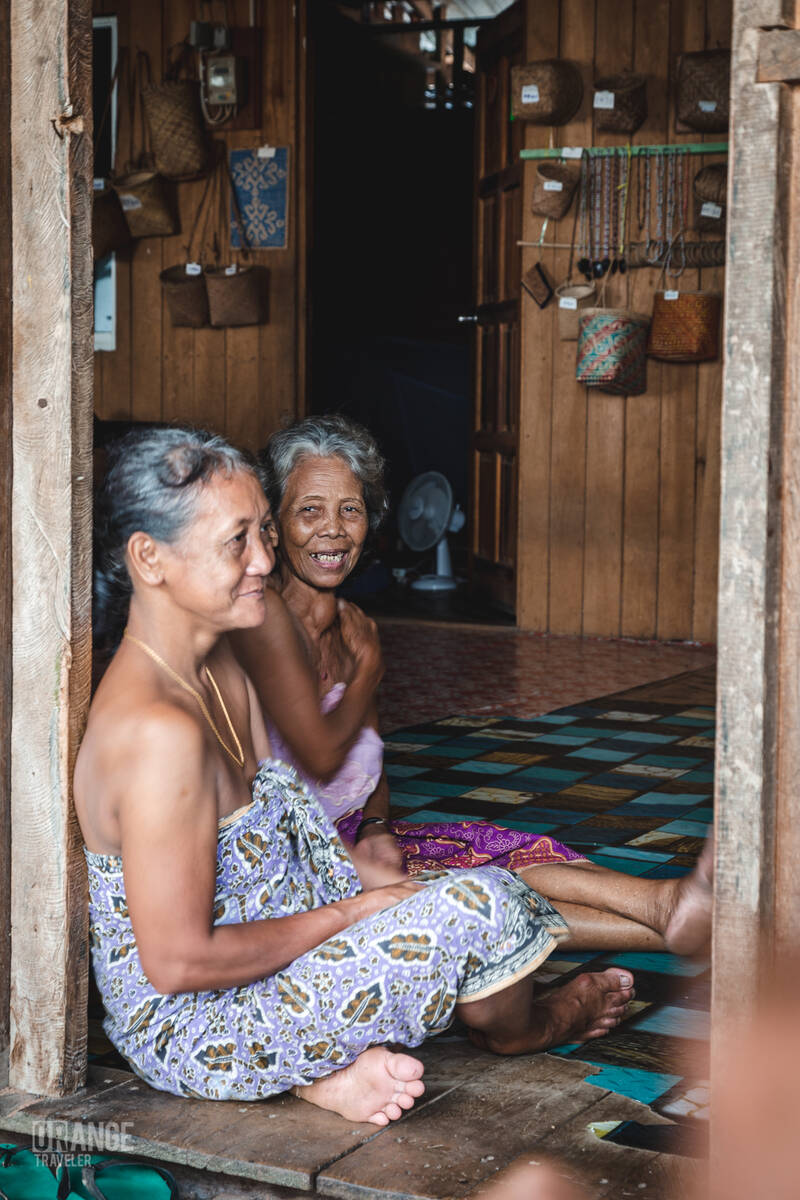
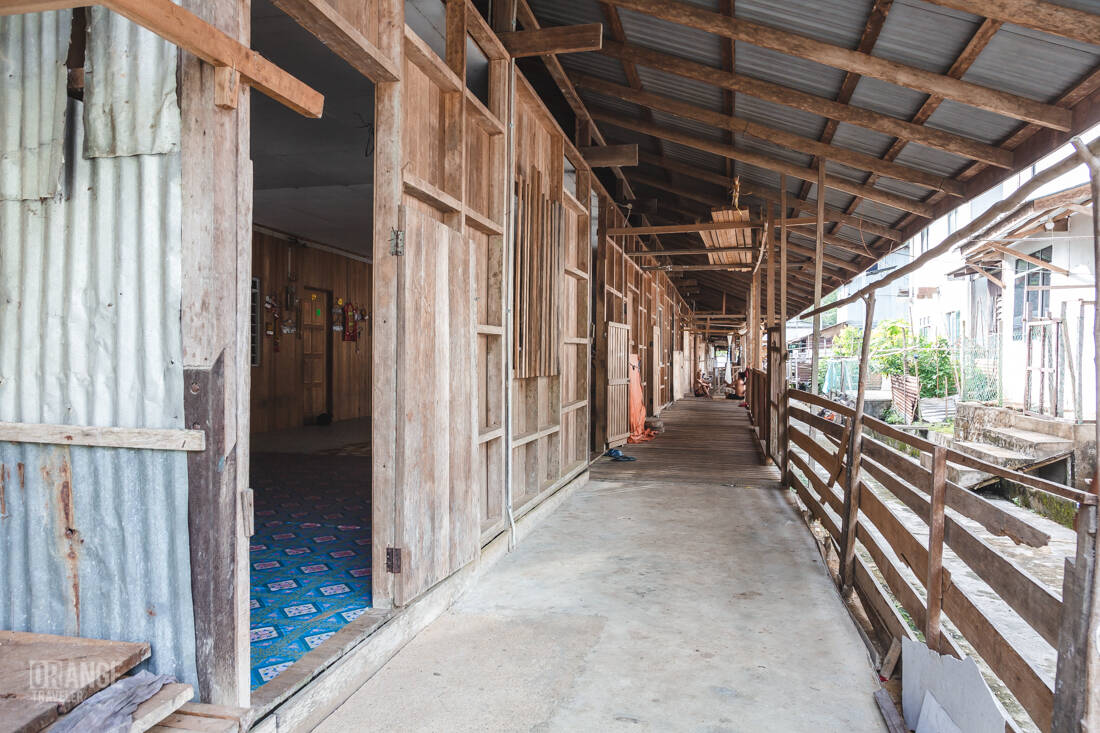
None of the residents of the house spoke English, but everyone smiled. Children spun around nearby — it was obvious at once that guests were loved here. We were invited to sit on a wooden sofa and were immediately treated to a shot of rice wine. It is made for guests by the chief’s wife, who also poured the drink into the glasses. An evening with the Iban is a rare chance to talk with local people and ask questions, including foolish ones, about how they live deep in the wet jungle. The dialogue became possible thanks to Borneo Adventures, the company I was traveling with. For many years, it has supported the Iban community, helped with all kinds of issues and, of course, provided jobs. Villagers work as guides and trackers, cook food and gladly help tourists with everything.
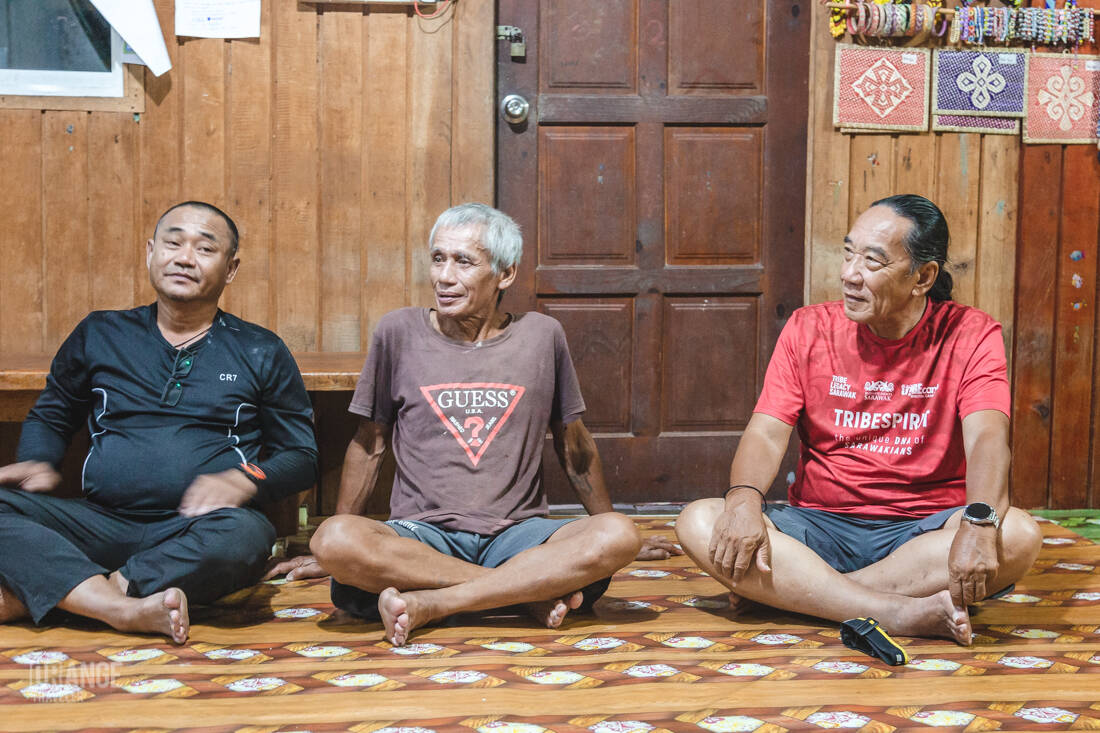
“And how did you become chief?” I asked, looking at the lean, elderly, gray-haired man. It turned out: through elections. In the past, the role was passed from father to son. If a choice had to be made, the strongest man became the leader. But from the 1980s onward, everything changed. Many villages and longhouses began to prefer a manager who could read and write. Today, they need a leader who at least knows how to use the internet and communications. He is chosen at a general meeting.
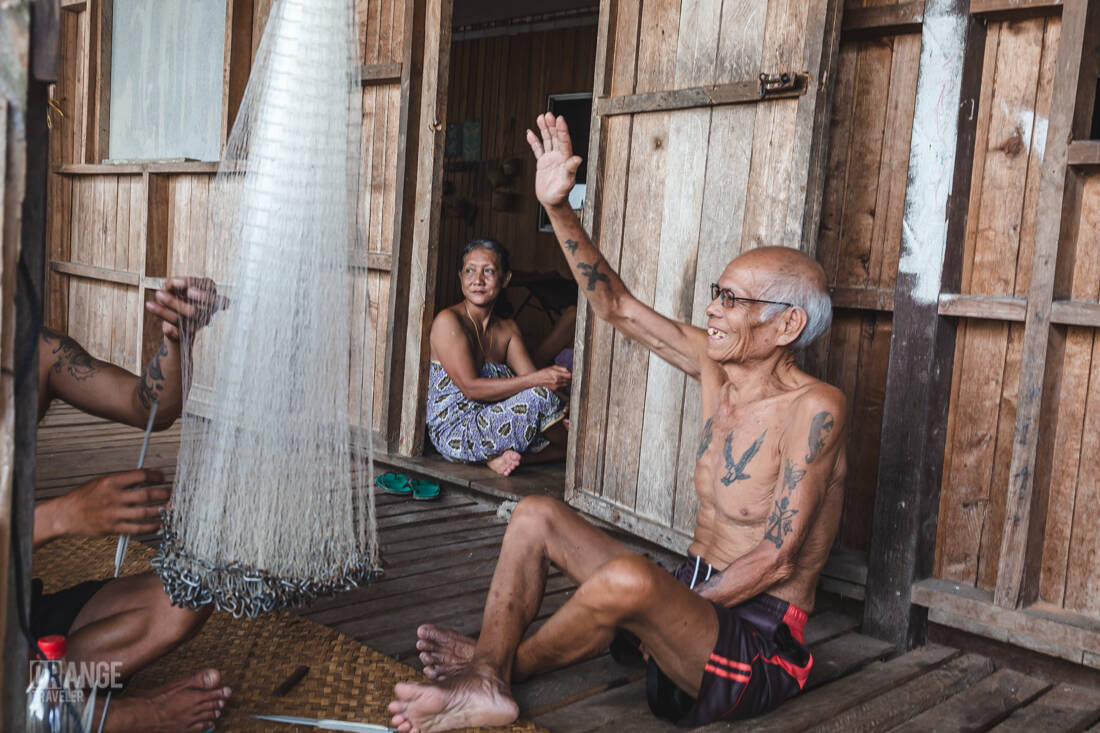
We talked about local tattoos. Today, the fashion for traditional Iban ornaments has returned, and young people gladly decorate their bodies with them. My guys, who accompanied me on the trip, were exactly from this group. We also had a confidential little chat about data privacy and relationships. It turned out that if newlyweds need privacy during their honeymoon, it is better to go to a special little hut by the garden beds, farther away from the longhouse. We learned about the subtleties of dating, too: people look for marriage partners during festivals, when neighboring communities meet.
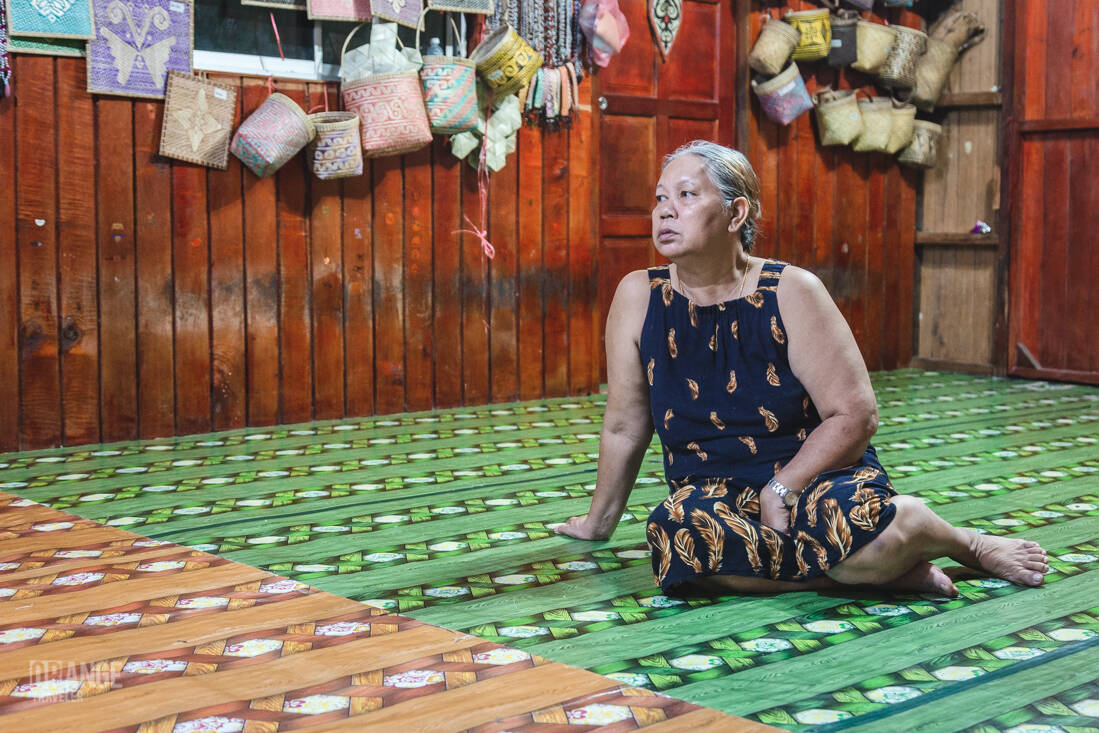
People go to the shaman not only with medical troubles. He knows how to listen and give advice on any subject, perform rituals and conduct a healing ceremony. However, in the longhouse, those who work with tourists are trained in first aid — in case the ancestral spirits suddenly fail to offer support.
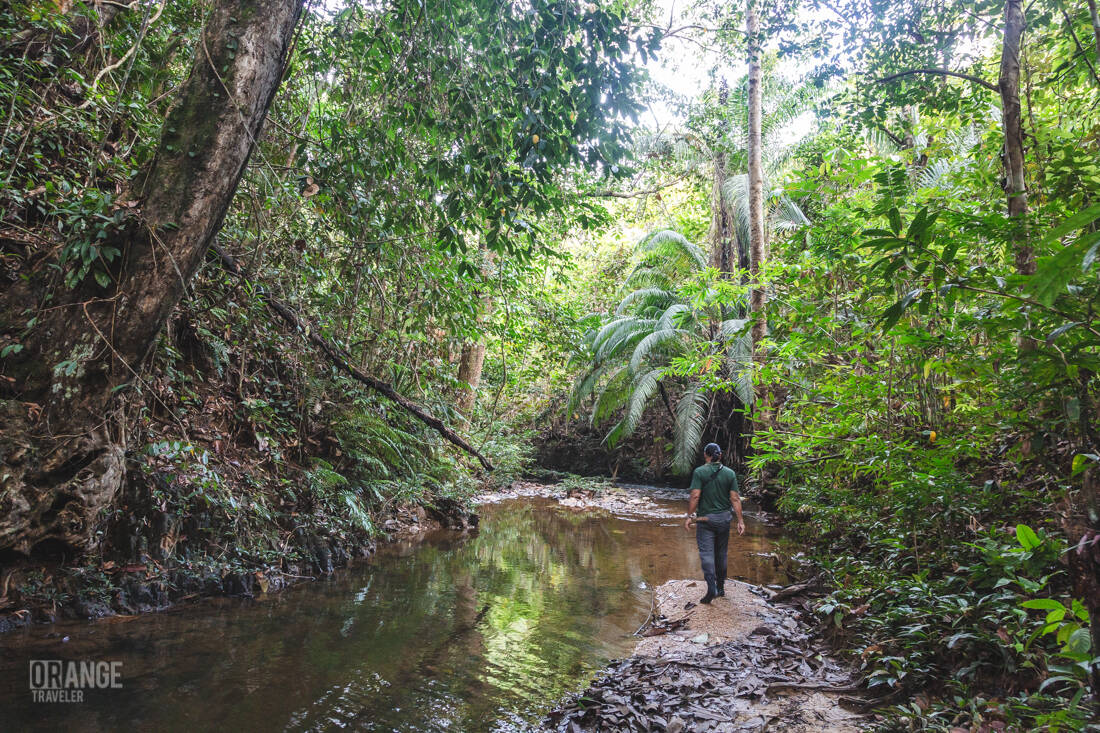
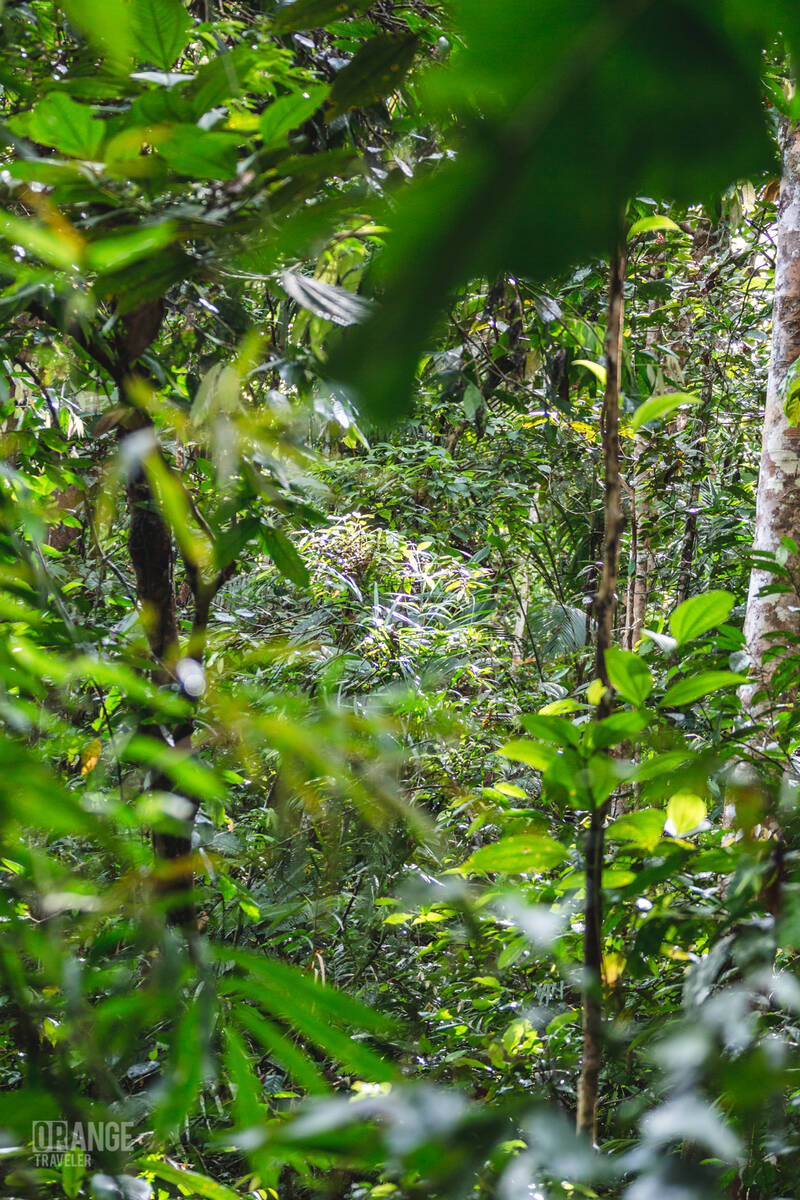
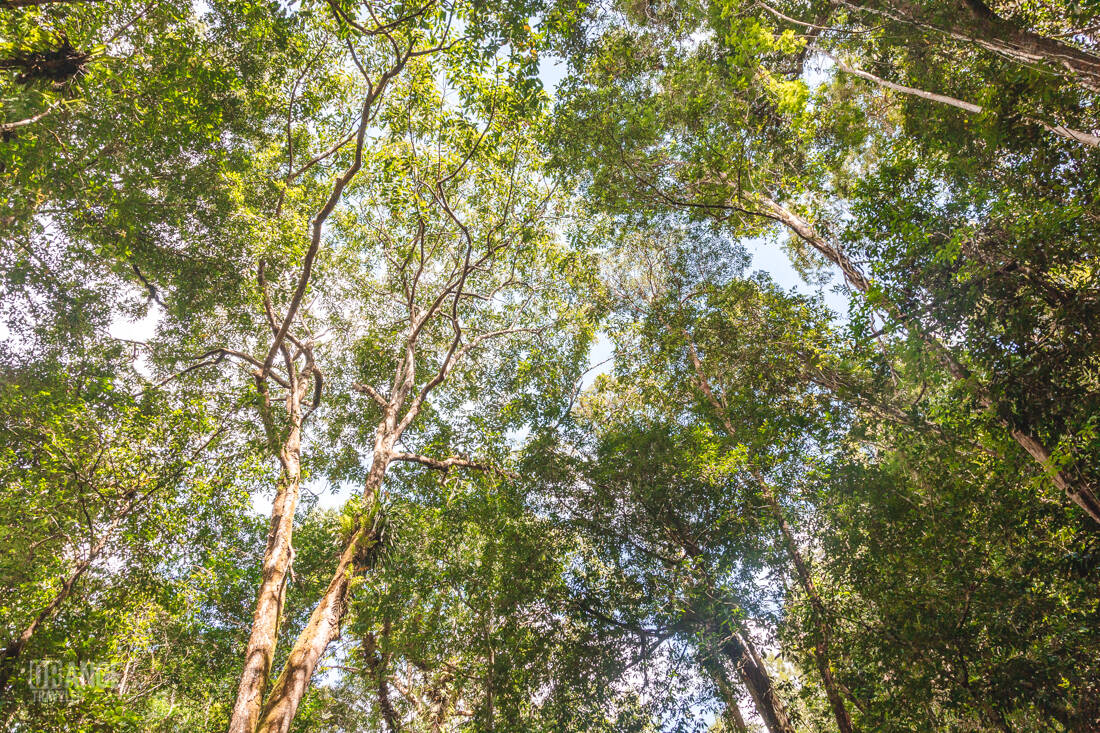
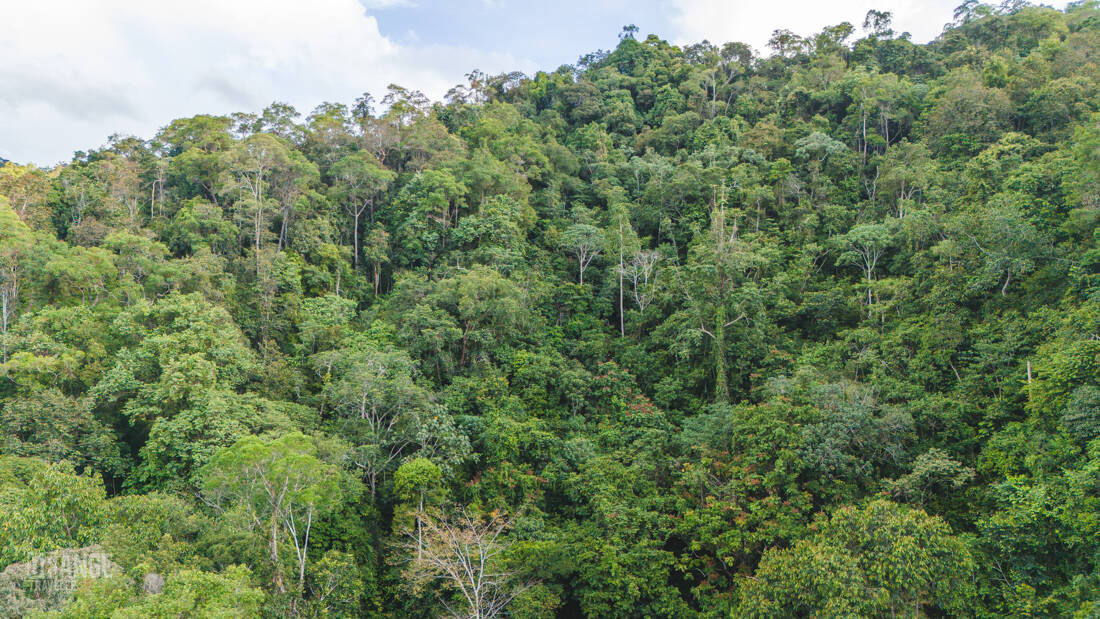
Early in the morning after breakfast, we set off into the forest again in search of wild orangutans. We walked slowly along overgrown paths and climbed a high hill. I lifted my head to look up: the thicket was so dense that the sky was invisible. “This tropical forest is one of the oldest on the planet. It is about 130 million years old, which makes it twice as old as the Amazon. From the ground to the canopy, this forest contains five different ecosystems, and hundreds of species live and grow in each of them,” Lemon told me. “There are 156 species of snakes here, of which about 10 percent are venomous. There are around 15,000 plant species, 3,000 trees, more than 200 terrestrial mammals and 420 bird species. And among them, a hundred are endemic.”
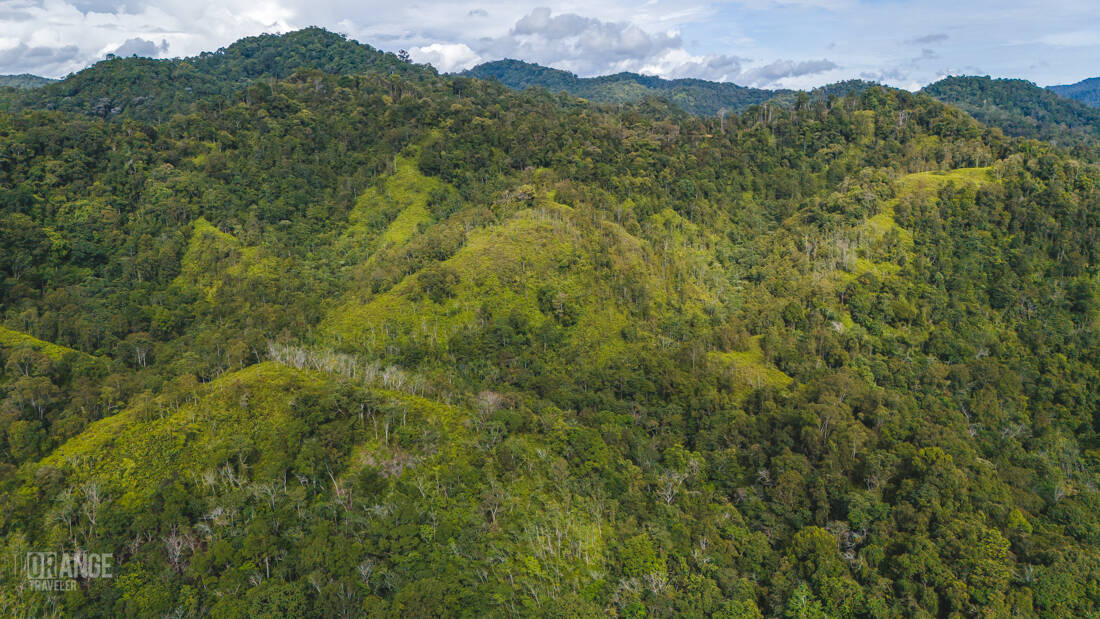
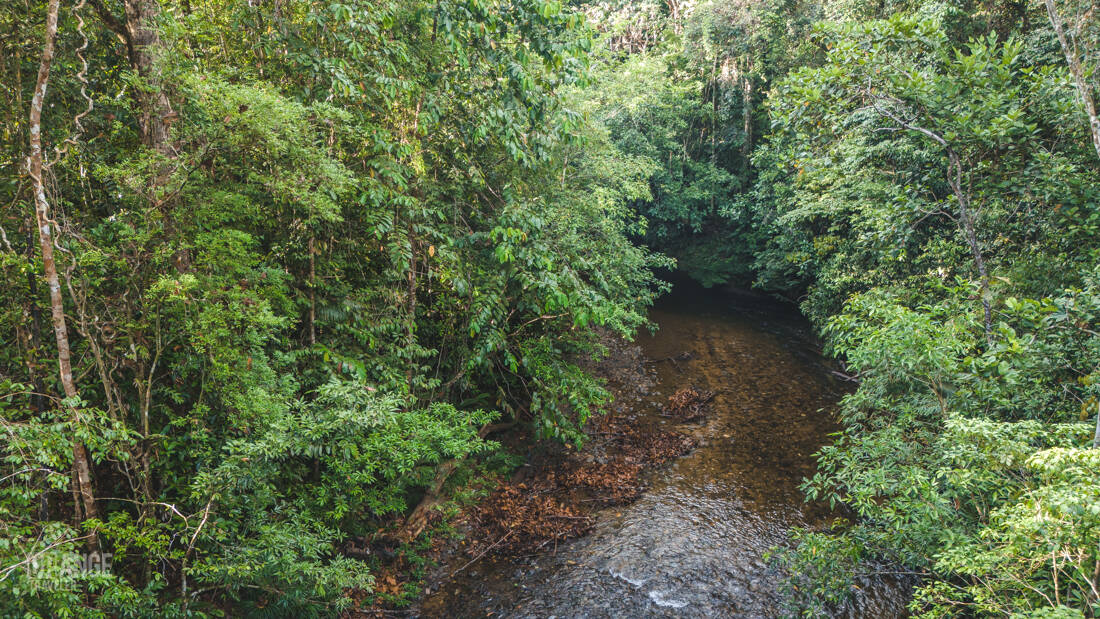
In the jungle you learn quickly — just as I did with the ants. I remembered forever who they are and where they live. You can walk safely through the jungle only in the company of a real Iban. For the people of this tribe, the forest is everything. Here they hunt, perform rituals and collect medicinal plants.
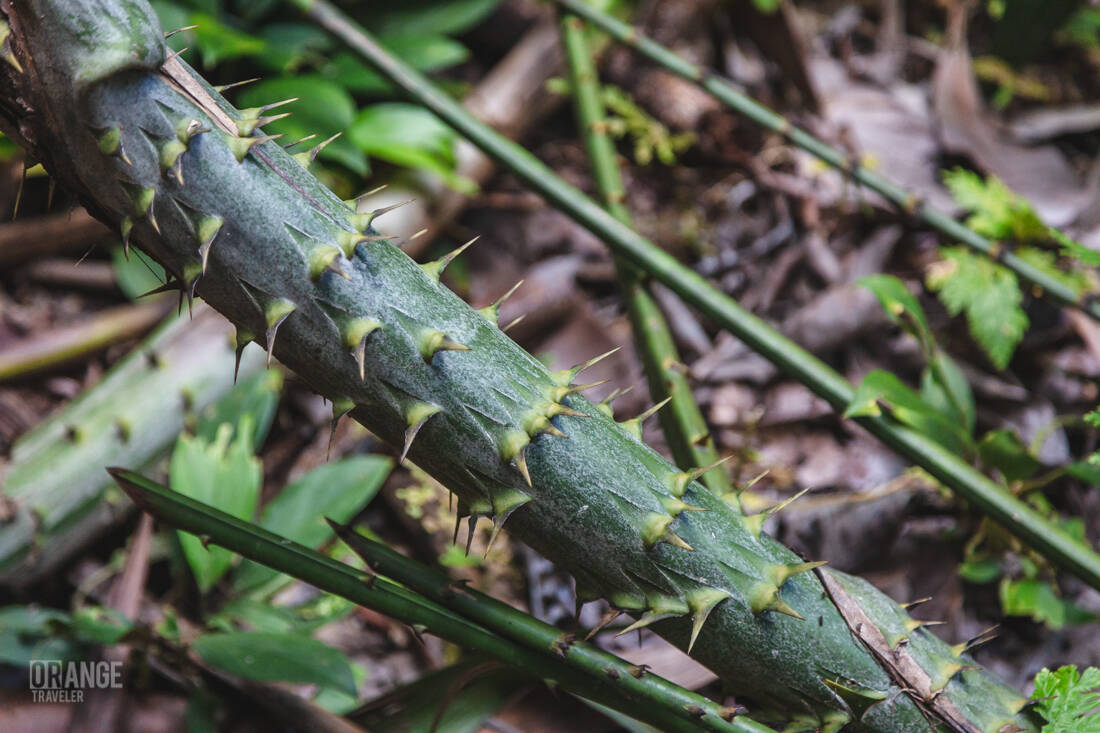
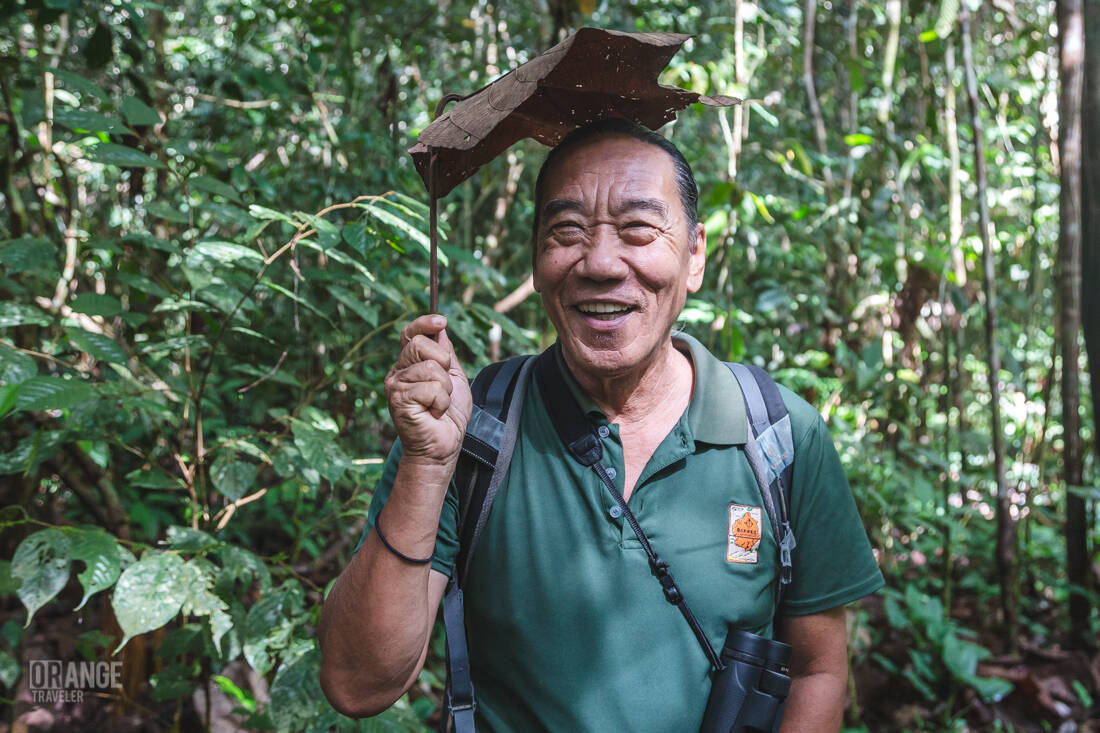
A huge mandau hung from Lemon’s belt — a machete-like knife traditionally used by the Dayak. From time to time he cut plants with it or used it for a visual lesson, making an incision in the bark of a rubber tree, from which sap began to ooze. Latex is made from it. It seems that in the forest all the senses become exposed. You listen to every sound and peer into the crowns of the trees.
Is that a brown leaf swaying in the distance, or is it an orangutan waving its paw? The guide bent down and picked up a gnawed guava fruit. It meant that orangutans had been nearby very recently. They eat fruit but throw away half of it — the part with the prickles.
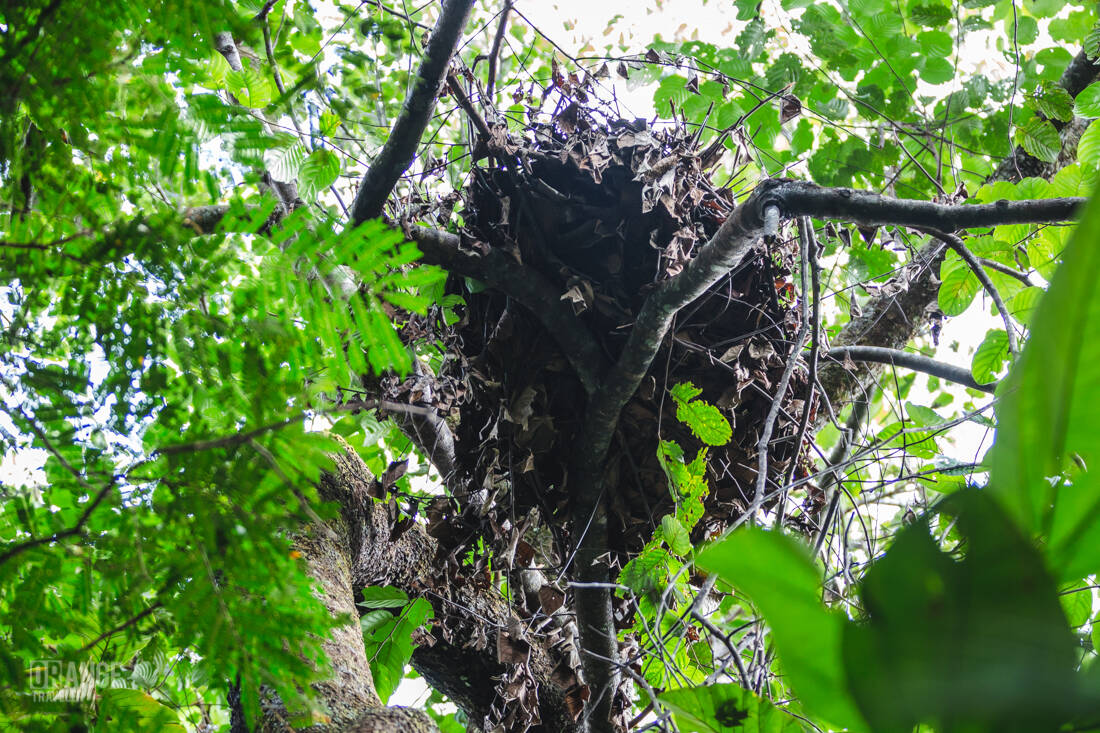
“And here is an orangutan nest,” Lemon said, pointing to a cozy bed high above, woven from branches. It had simply never occurred to me that huge red primates build nests for themselves, although of course they must sleep somewhere. A well-built nest is essential for primates’ survival. “Beds” made of branches protect the apes from predators, help them retain warmth and provide a safe place to sleep high above the ground.
It was drizzling. In the jungle the humidity is 100 percent, so the drops falling from above did not interfere with our hike at all. I was wet all the time anyway — and that was not counting the fords we kept crossing. If my hair is constantly damp here and I cannot dry out at all, then what about the animals’ fur, I thought. “Orangutans do not like rain. They try to shelter under the tree crowns. They can use large leaves as an umbrella and sit under them during a heavy downpour.” It seems I am beginning to love these red-haired relatives more and more.
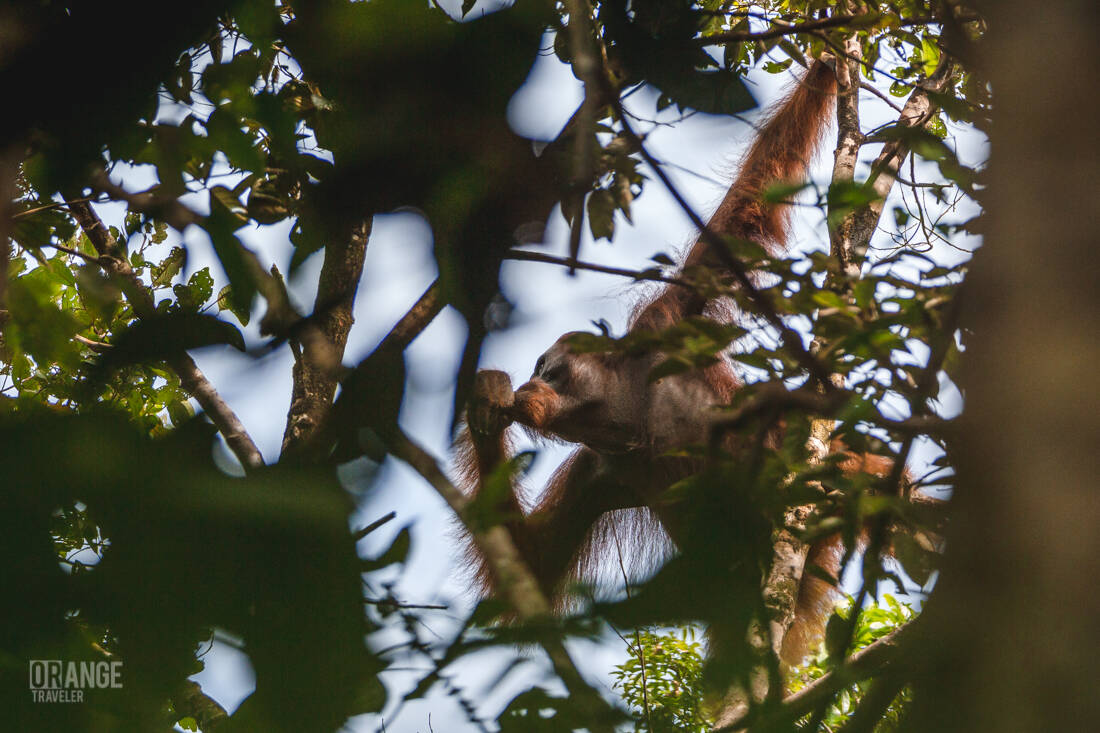
A branch cracked above. Lemon took out his binoculars and waved to me. “It’s a large male.” I forgot about the second pair of eyes that was supposed to watch for ants and snakes underfoot and quickly found a convenient little clearing to catch the orangutan in my lens. It was not easy: large leaves hid the “forest man.” The young shaggy teenager was alone. His massive cheek pads had not yet grown, and his long hair had not yet come in. He was alone, but he was clearly sending signals to someone.
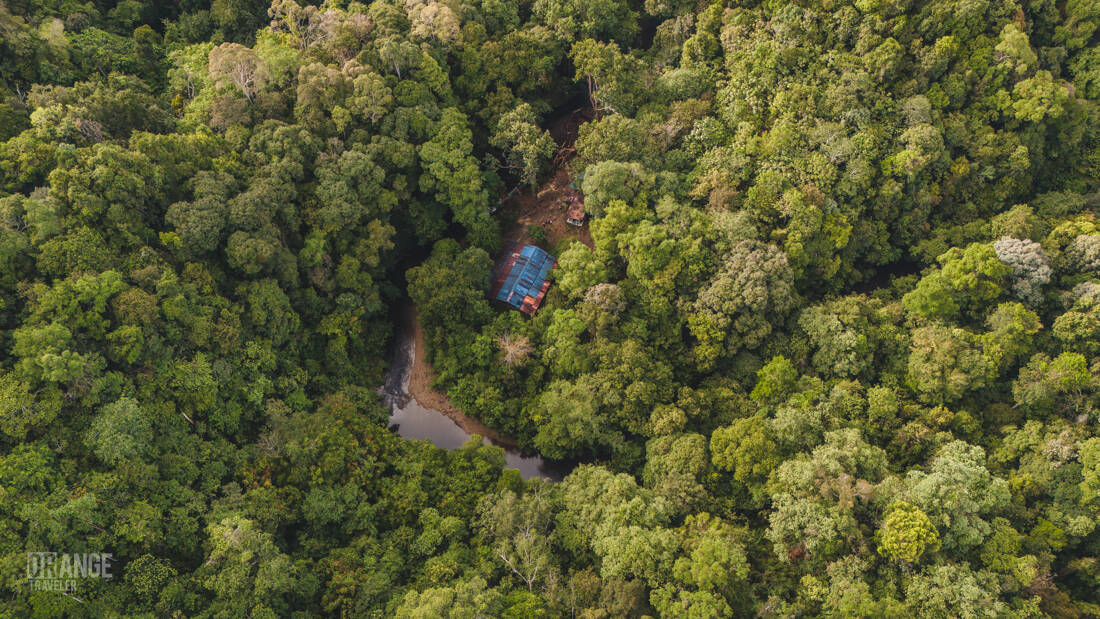
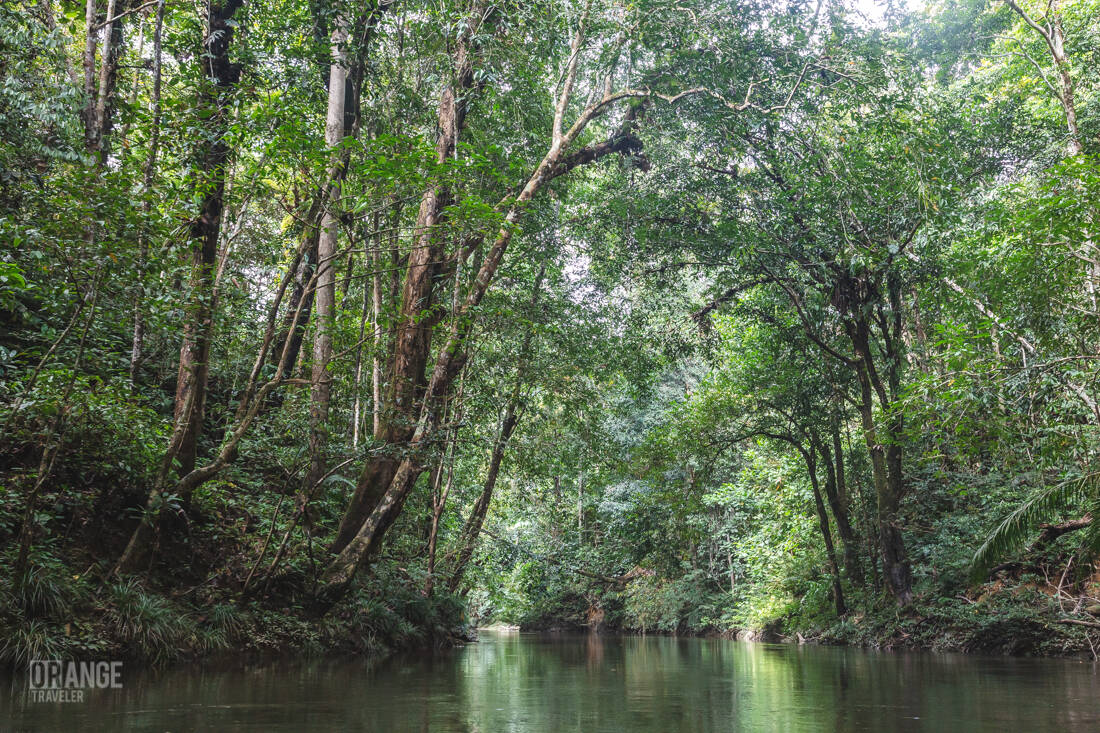
A new day in the jungle began with a new adventure. We took a longboat upstream, changing our base. Long lianas, with sunlight streaming along them, hung over the water. The rapids murmured, and we deftly maneuvered past them. Surely millions of years ago it looked much the same. The feeling that I had entered a green time capsule would not leave me.
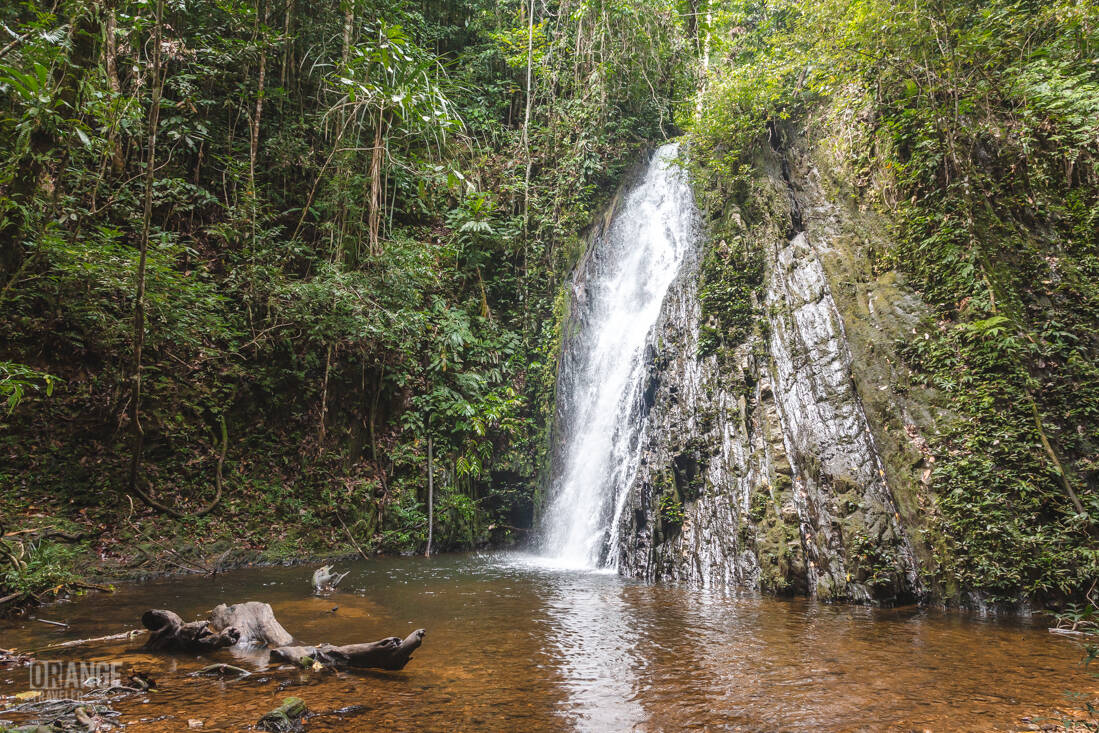
An hour later I was dropped off at the foot of Enseluai Waterfall. I got out of the boat, walked to the waterfall hidden in the jungle and sat down on a wet log. Are there any meditations on this planet equal to this one in energy? The roar of water, sparkling drops, tiny shimmering rainbows, green tones, the smells of the tropical forest — wet leaves and earth — the delicate scents of flowers flashing bright petals in the jungle, remoteness from everything whatsoever.
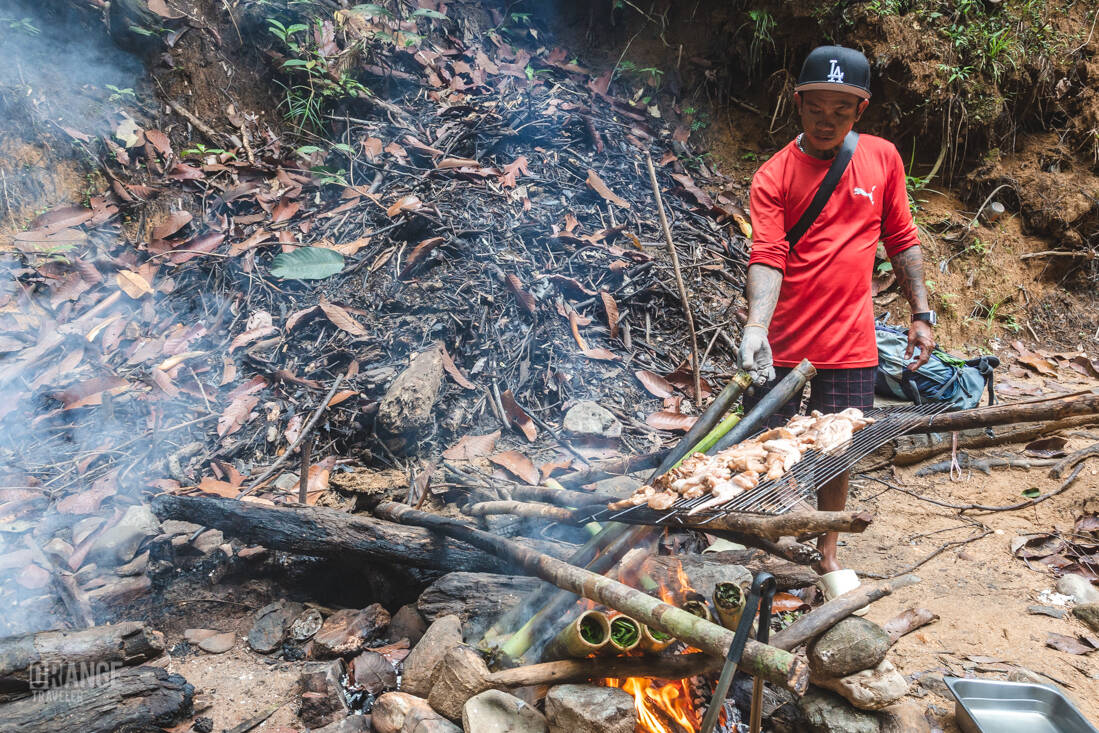
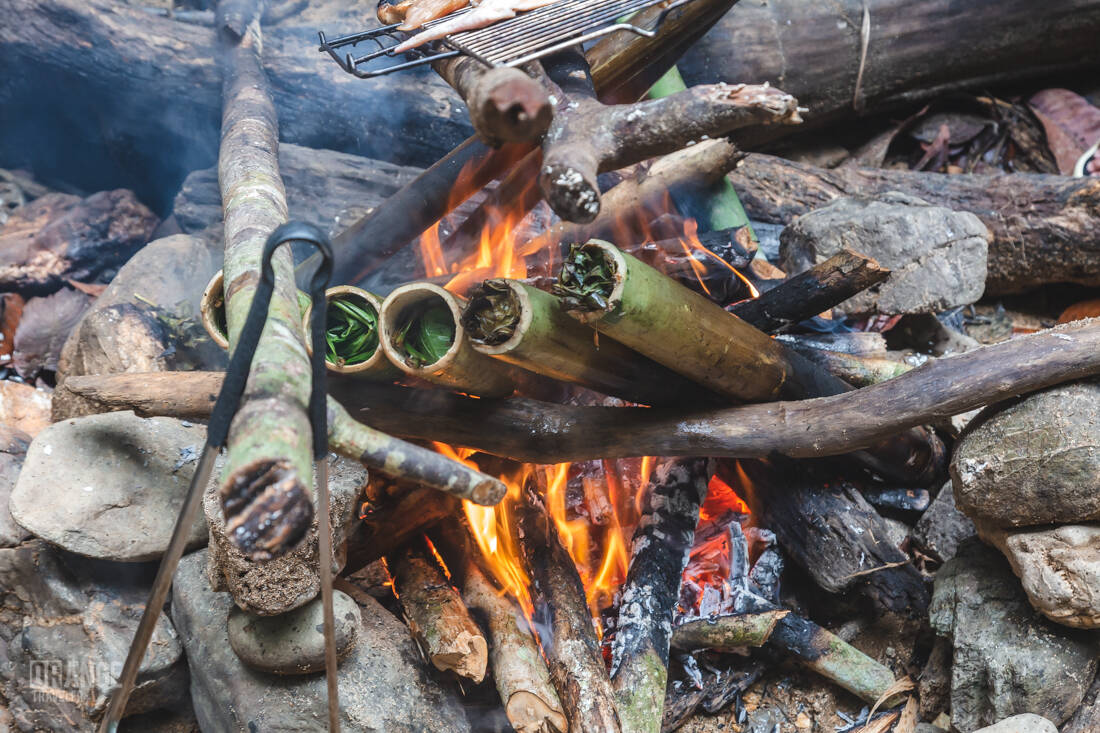
On a river spit, several men were setting up a picnic area. They lit a fire and cut bamboo. Inside the stems they placed rice and spices, and the chicken that had been marinated that morning and acquired in the Iban village. This is the traditional Iban method of cooking. All you have to do is keep turning the bamboo. The stems were neatly trimmed with a machete, split in half, the rice reached the right texture, and the chicken was juicy. With traditional sambal sauce, it turned out to be incredibly good. And presumably not even fatty — essentially steamed.
Orangutans, on the other hand, need 3,000 calories a day. They eat tons of fruit, so it is the fruiting cycles of trees that determine their migrations. Random facts about orangutans were, every single one of them, astonishing, and we are similar to them in many ways. They can laugh and even troll their relatives. They can even do very cool beatboxing. They are lazy, and if the weather is bad, they may not leave the nest for a long time at all. In essence, they are solitary — only mothers with babies are social. But sometimes, apparently when they feel especially lonely, orangutans can spend the night near other individuals. In that case, though, they sleep worse. Orangutans have the longest dependence on the mother of any animal on Earth. They are capable of “making medicine” themselves: by chewing medicinal plants, orangutans make a paste and apply it to open wounds.
When wild orangutans notice a predator, they make a loud “kiss-squeak” — a call that sounds like a human kiss. Scientists believe this sound means: “I have seen you,” and also lets other orangutans know that danger is approaching. Although they are agile, and despite their impressive weight, they sometimes fall from these heights and get injured. They come down to the ground extremely rarely, preferring to spend most of their lives in the tree crowns.
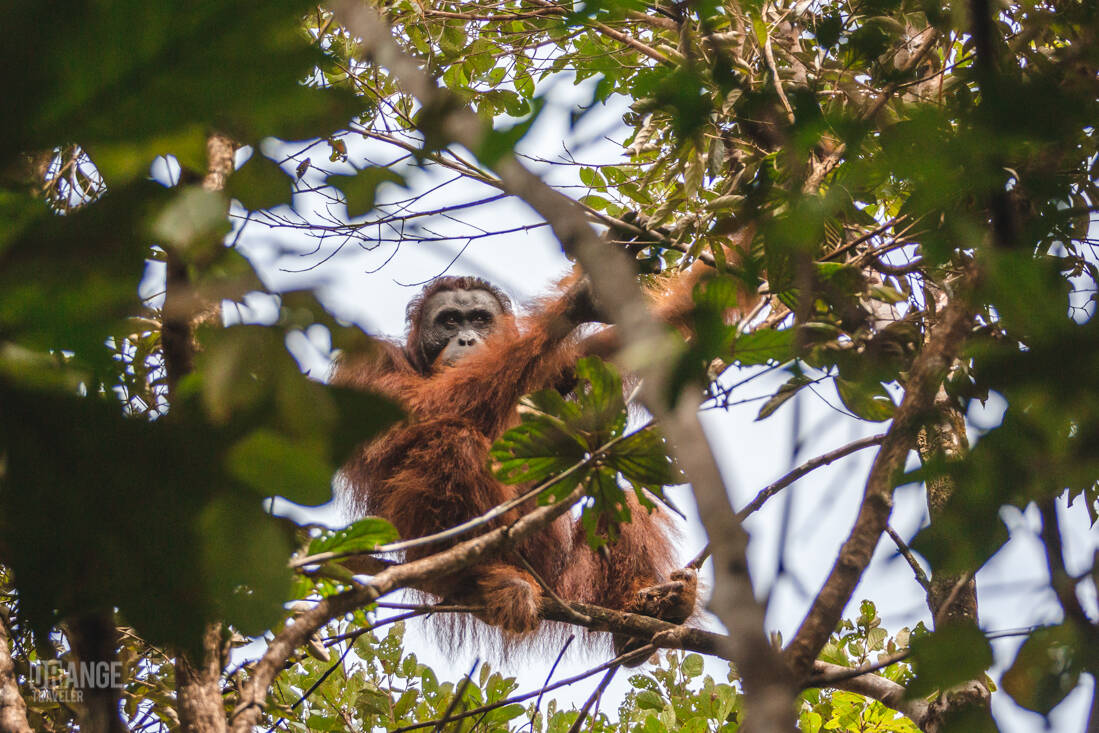
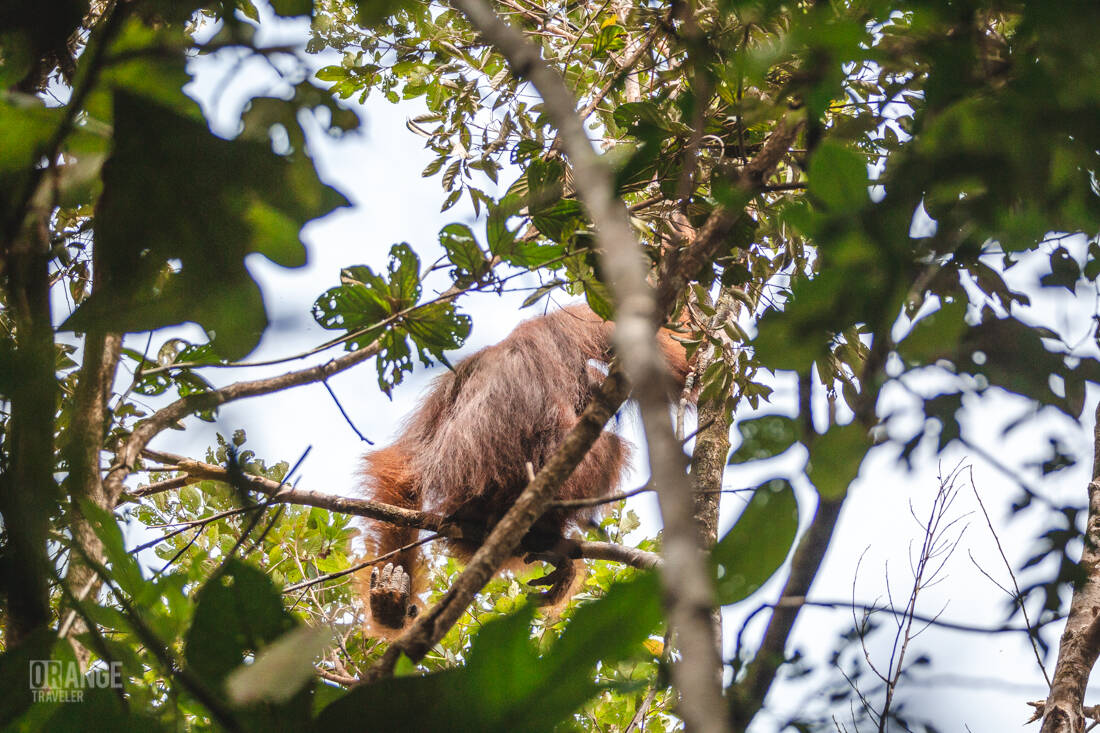
And what is their old age like? What do they do in the survival years, when they are over 50, their fur has turned gray and arthritis torments them? How do they die? “I have never in my life seen the skeleton of an orangutan,” Lemon admitted honestly. “No one has ever seen anything like that at all. Perhaps they stay in their nests or go somewhere far away. The high humidity and bacteria in the forest quickly erase everything from the face of the earth. Nothing remains.”
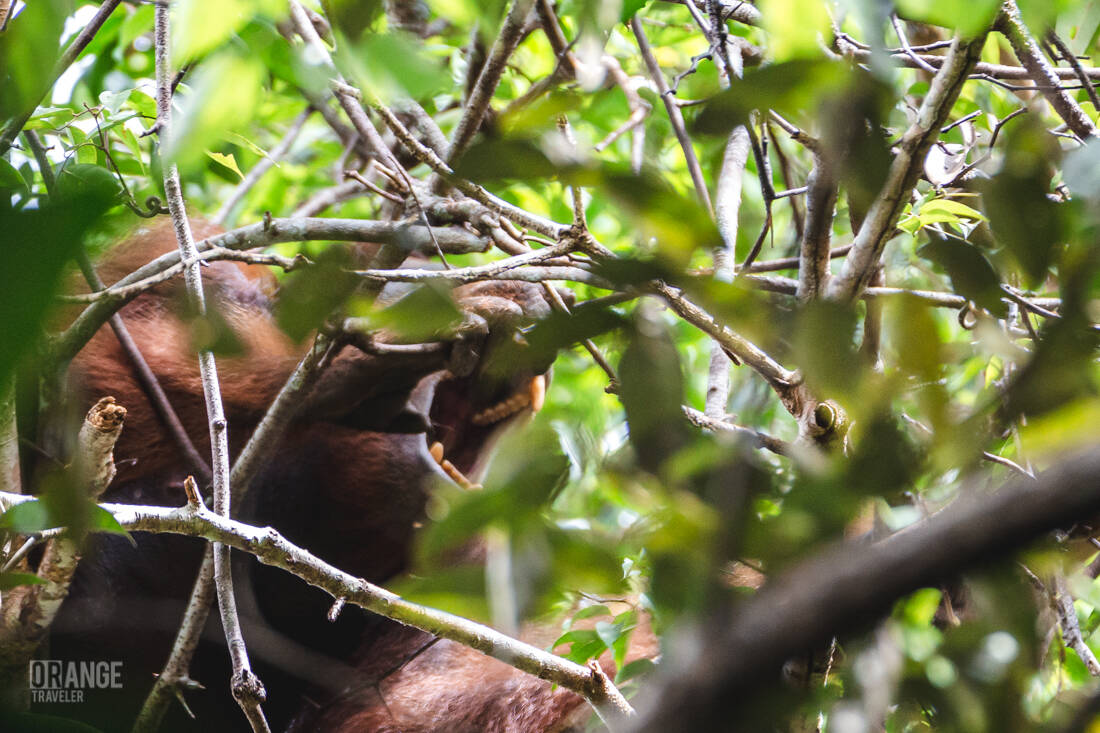
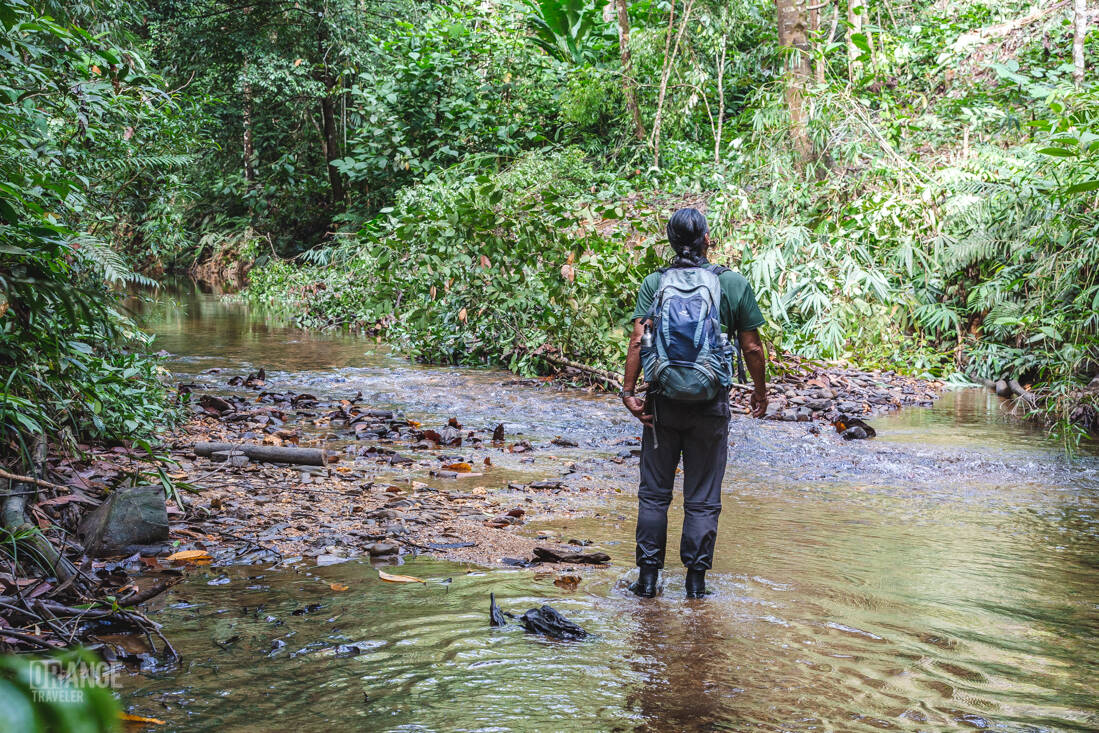
One encounter with the orange animals was not enough for me. Now armed with knowledge, I wanted to see them again and again. But this turned out to be far less simple than I might have imagined. The next day we spent many hours in the jungle. We saw flashes of paws, heard the noise of breaking branches from rapid movement through the crowns, but we could only guess: they were up there.
Synthetic clothing: T-shirts, shorts, long lightweight trousers, socks and underwear
A hat
A raincoat
Repellents
A headlamp
Power banks. I took solar-powered ones
A waterproof backpack and dry bags
Necessary medication
Trekking boots, although in reality I found Crocs more comfortable. Water quickly drained out through the holes, and the shoes dried fast. The only thing that needed changing was damp socks.
You can book a tour to Batang Ai on the Borneo Adventures website. Thank you for organizing an unforgettable journey into the jungles of Borneo. The company offers fascinating tours led by professional licensed guides.

What else to read about Borneo:
Selingan — Turtle Island
Kinabatangan River
Sepilok Orangutan Rehabilitation Centre
Labuk Bay: The Proboscis Monkey Forest
Batang Ai National Park is located in Sarawak, Malaysian Borneo. Trips usually start from Kuching and continue by road and longboat.
Most travelers go from Kuching by car to the Batang Ai area, then continue by longboat across the reservoir and along the river.
Yes, wild orangutans live in the Batang Ai area. Sightings are possible, but they are never guaranteed. This is a natural rainforest habitat. Batang Ai is one of the best places in Sarawak to look for wild orangutans. Unlike rehabilitation centres, it offers a chance to see them in the forest, although patience and luck are essential.
The lodges are simple. Expect humidity, insects, basic rooms, river crossings and limited electricity in some places.




 Travel reportage
Leave a comment