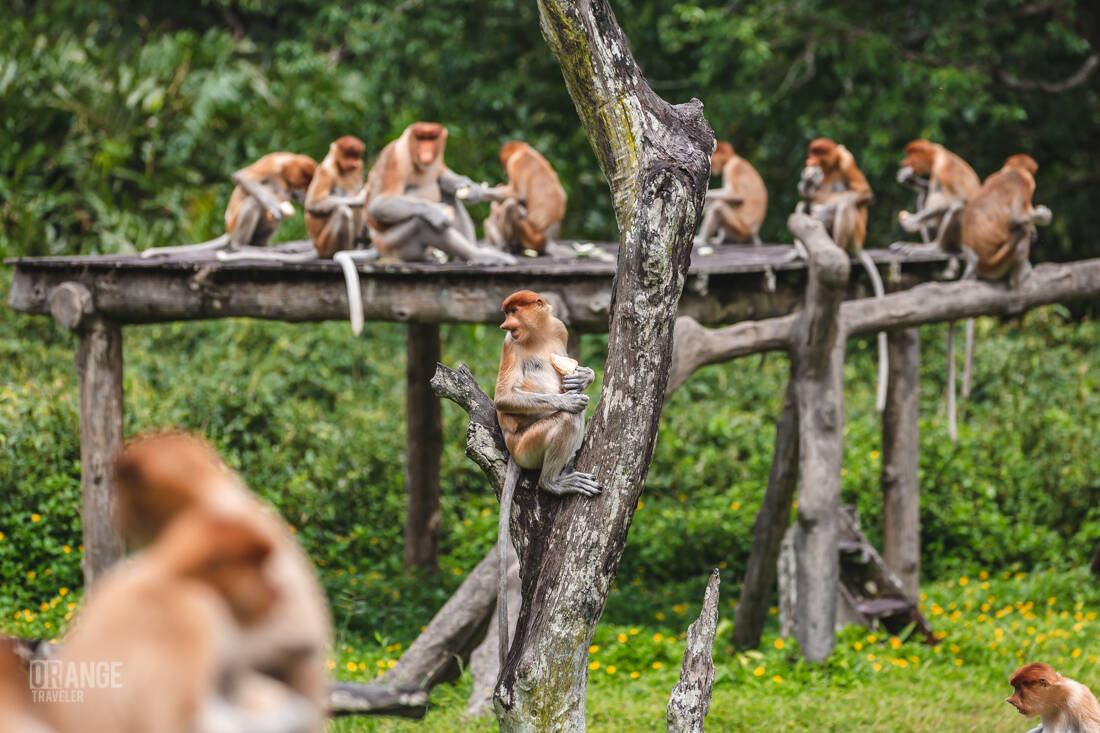
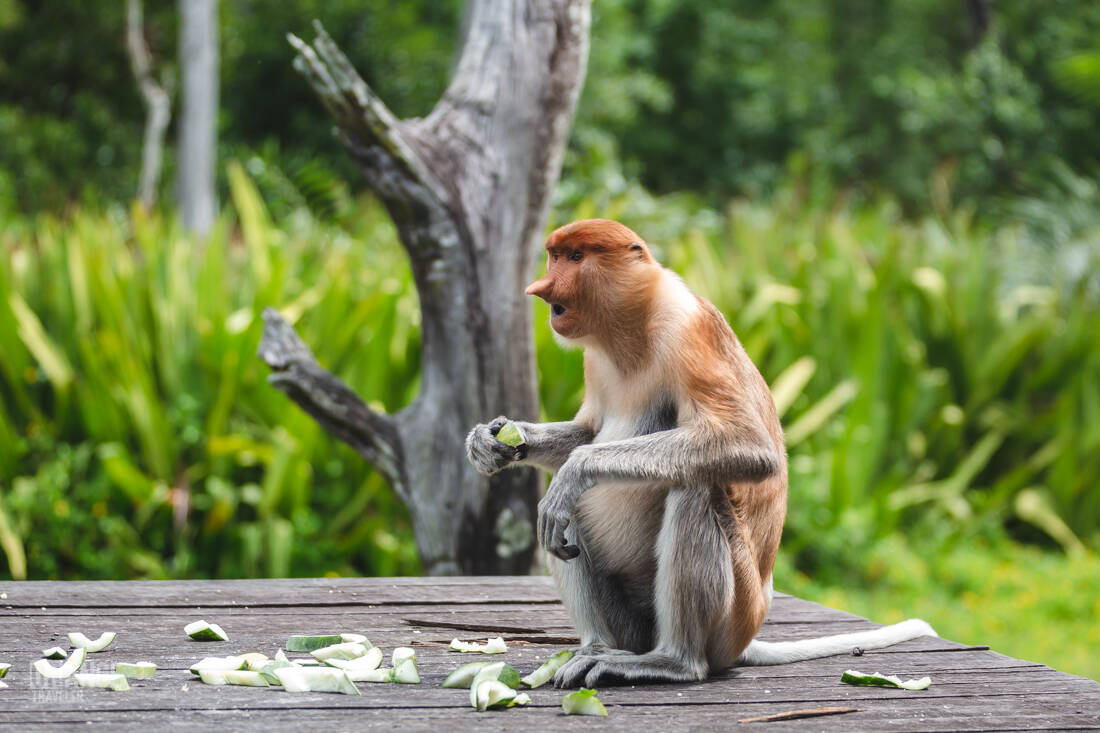
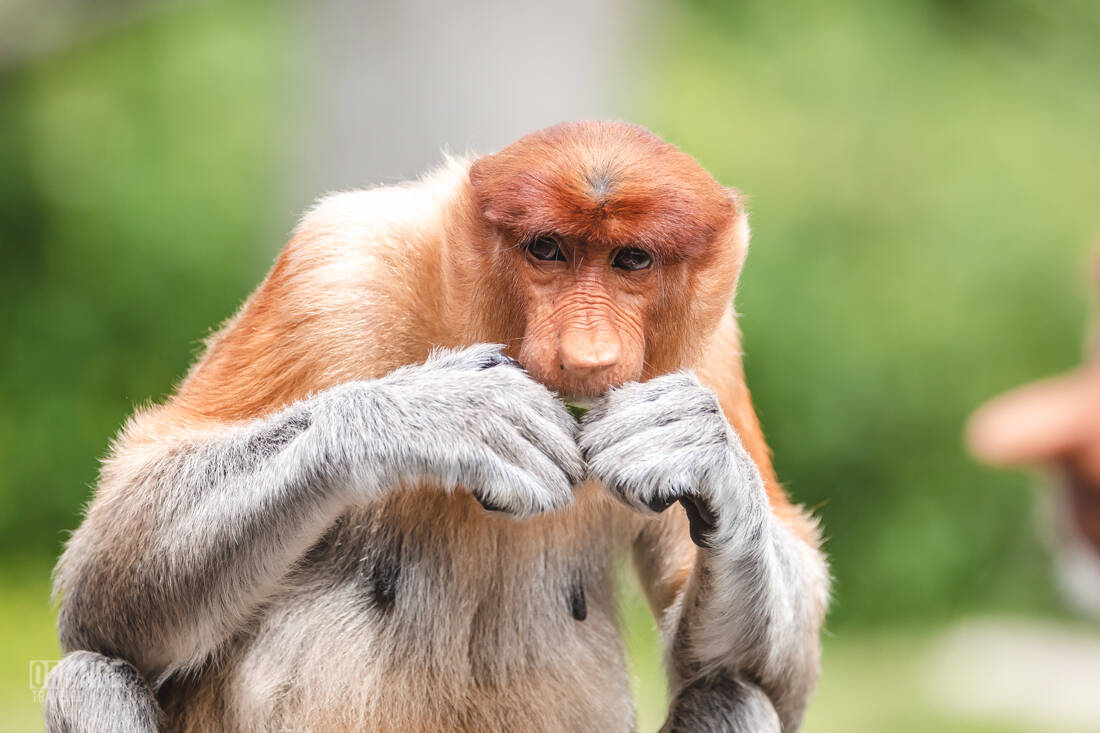
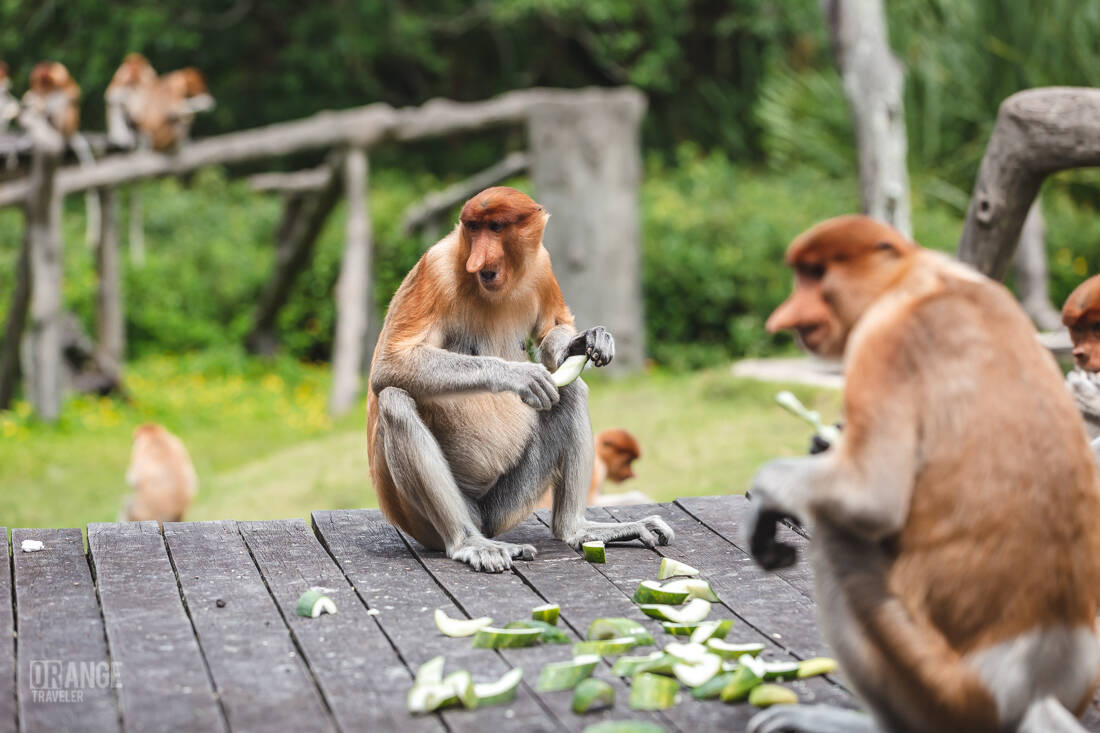
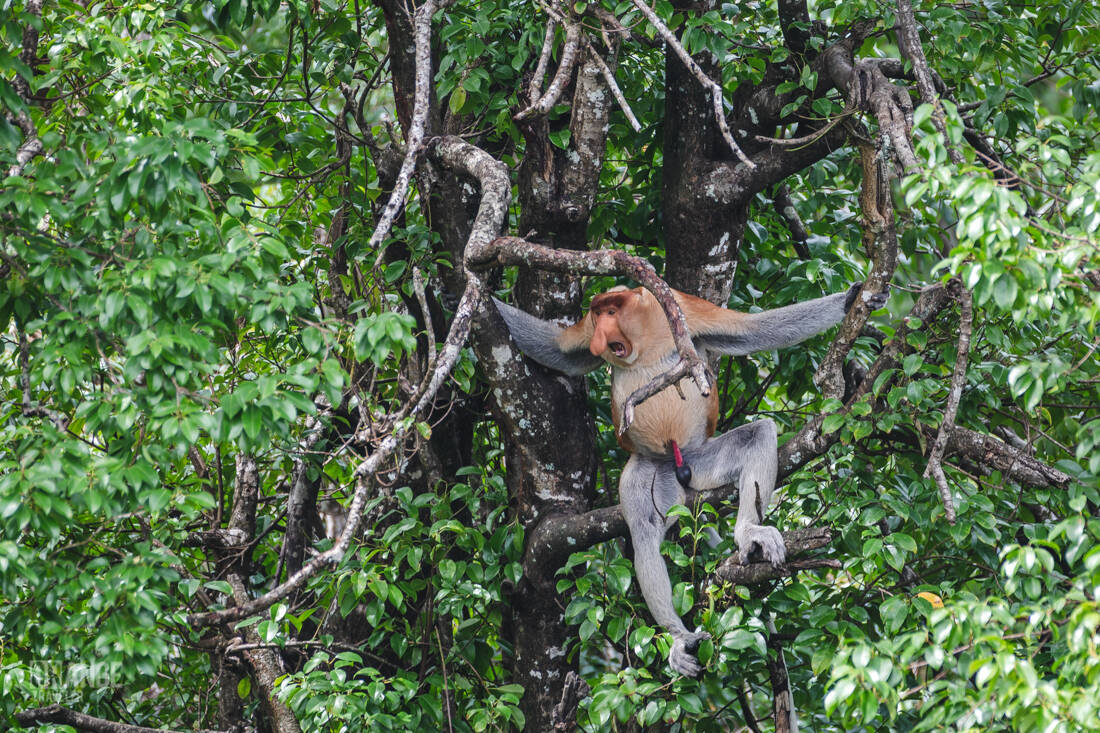
I feel sorry for the little snub-nosed girls: all the best treats on the feeding platform go to the alpha male of the proboscis monkey group, a large pot-bellied leader. The females step aside for the big primate while he chooses his delicacies: fruit, beans and cucumbers, kindly brought by the staff of the conservation centre for this species.
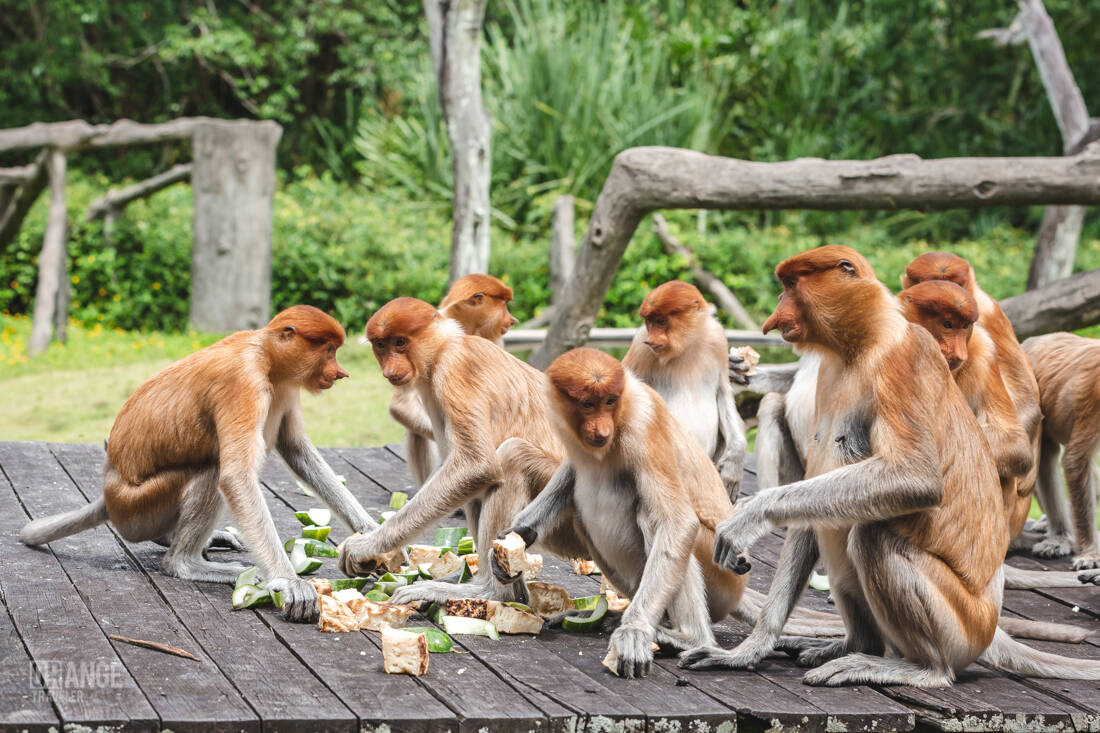
Their range in Borneo is threatened by pointless deforestation and the expansion of oil palm plantations, which have severely reduced their habitat. The number of these monkeys has dropped considerably over the past 40 years.
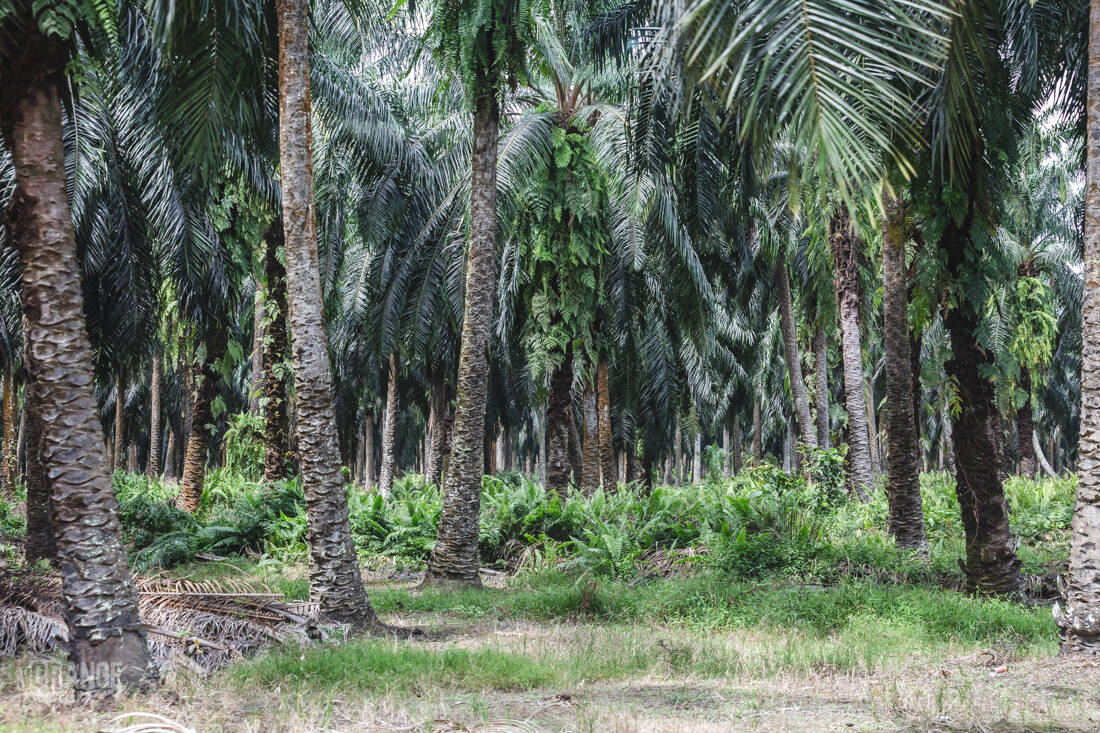
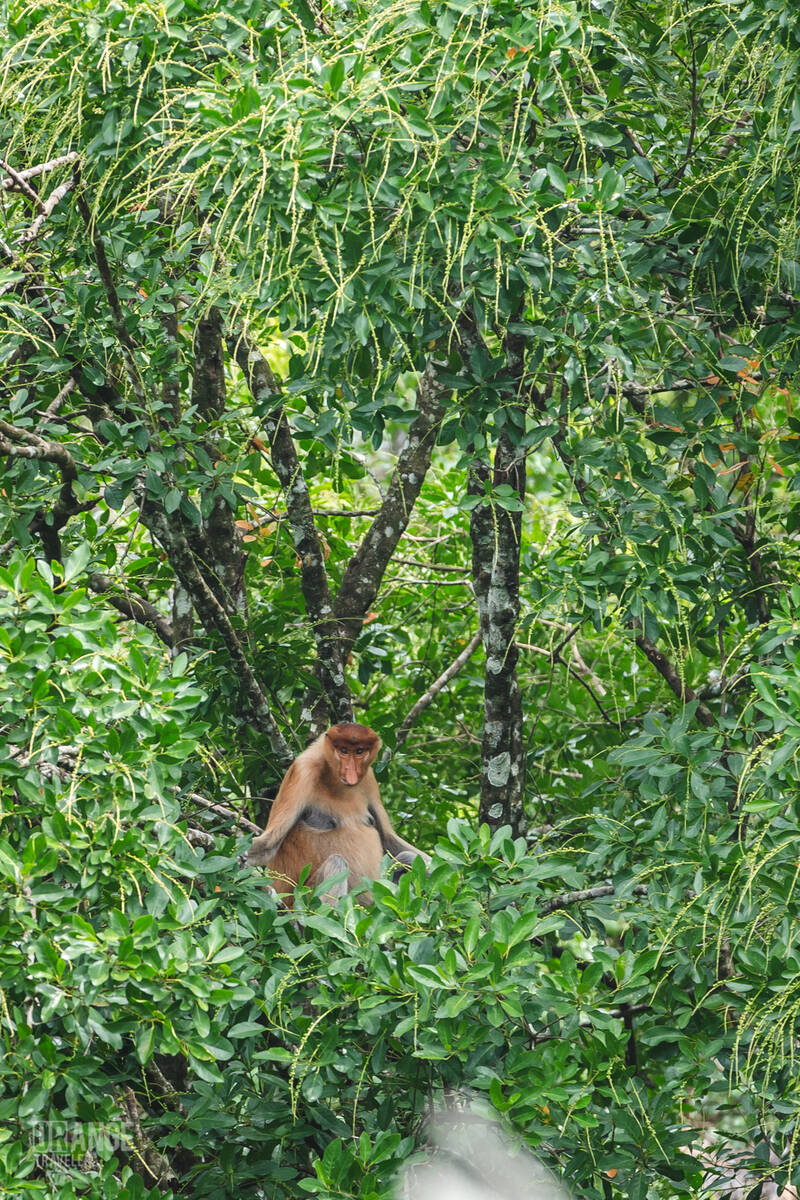
Labuk Bay is a sanctuary surrounded by mangrove and coastal forests, where some three hundred proboscis monkeys live quite happily on full board. They are fed four times a day with great care, though the free buffet comes at a price: publicity. Crowds of tourists come to watch the feeding.
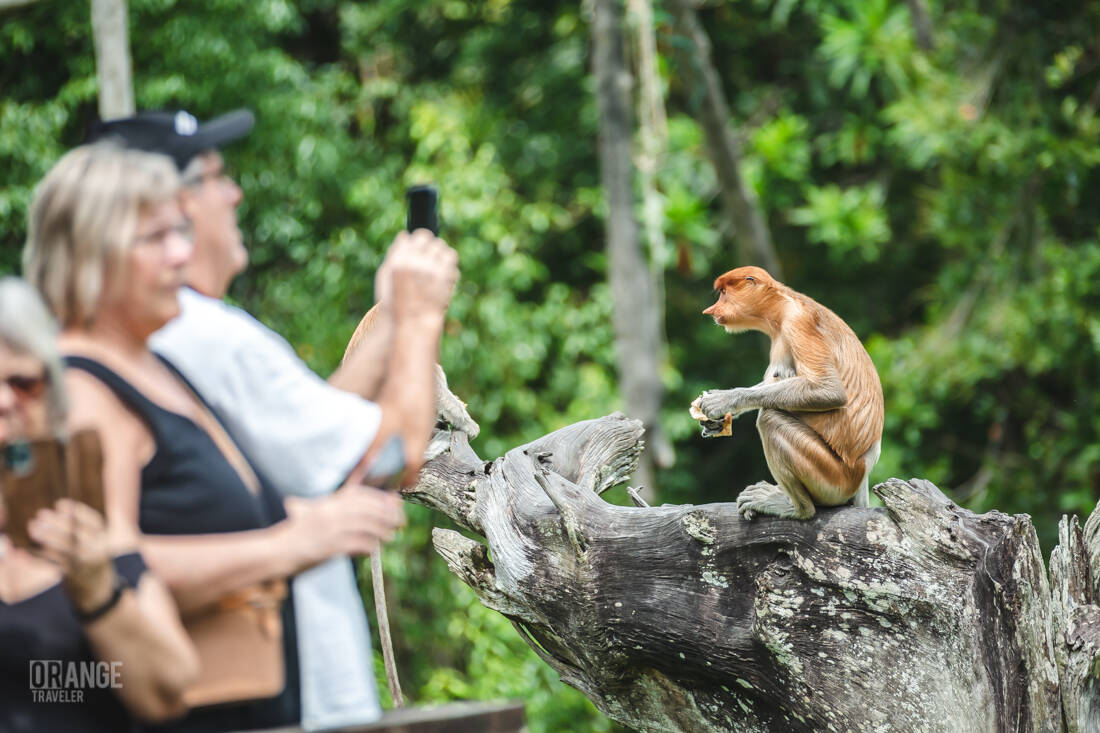
In the late 1990s, a group of hungry proboscis monkeys appeared on the private plantations of the Lee family. The monkeys were suffering from malnutrition; food was scarce because the year had been dry. Madam Choo Moi Siew and her husband fed the troop that had arrived, giving them bananas and sugarcane stalks. The proboscis monkeys appreciated the kindness and began coming more often, once even stealing pancakes.
Eventually, the owners set aside a large part of their land for them, while Mrs Choo began experimenting in her kitchen and perfected a recipe for soft, warm pancakes made mainly from flour — gentle enough for monkey stomachs. From then on, the proboscis monkeys were treated to something tasty every morning, with several dozen kilos of pancakes prepared for them. She would summon the monkeys by striking a gong; its sound carried across the fields and forests, calling them to their meal. In 2001, the private Labuk Bay sanctuary officially opened.
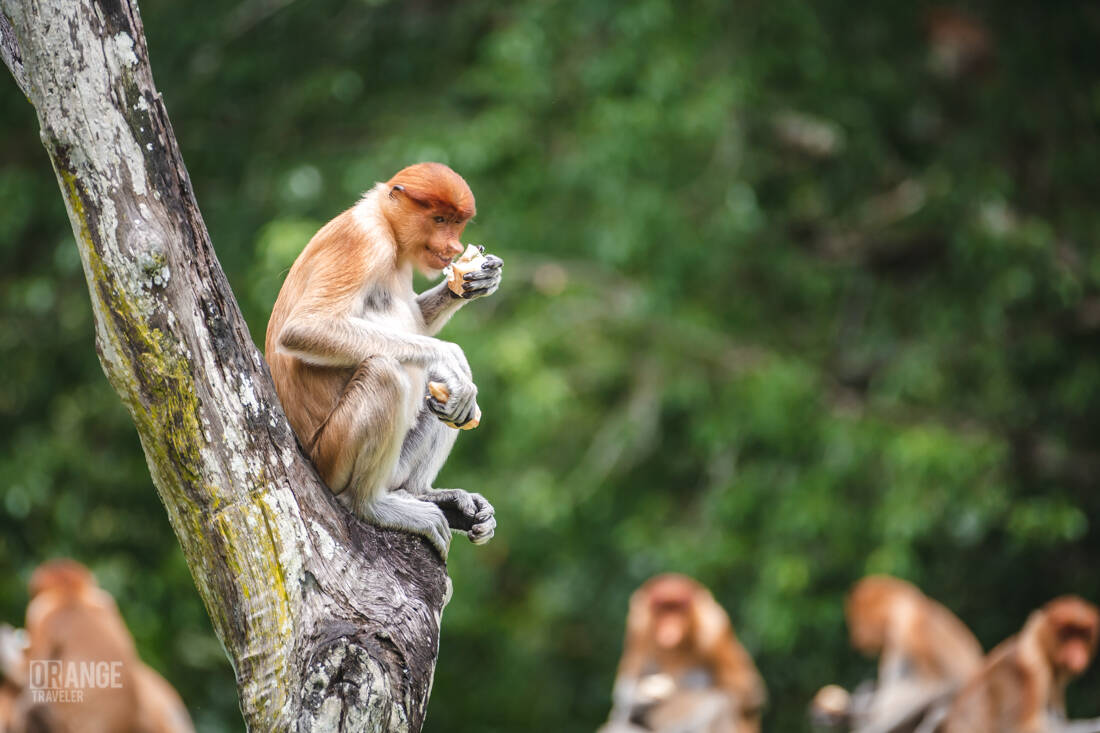
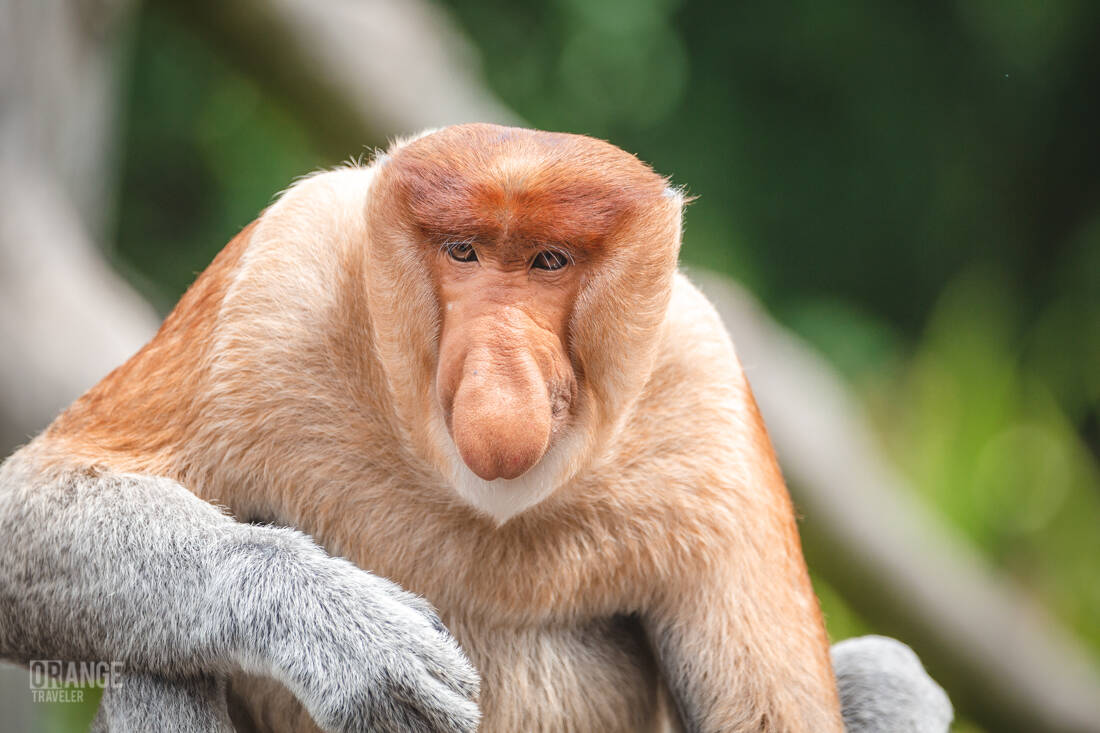
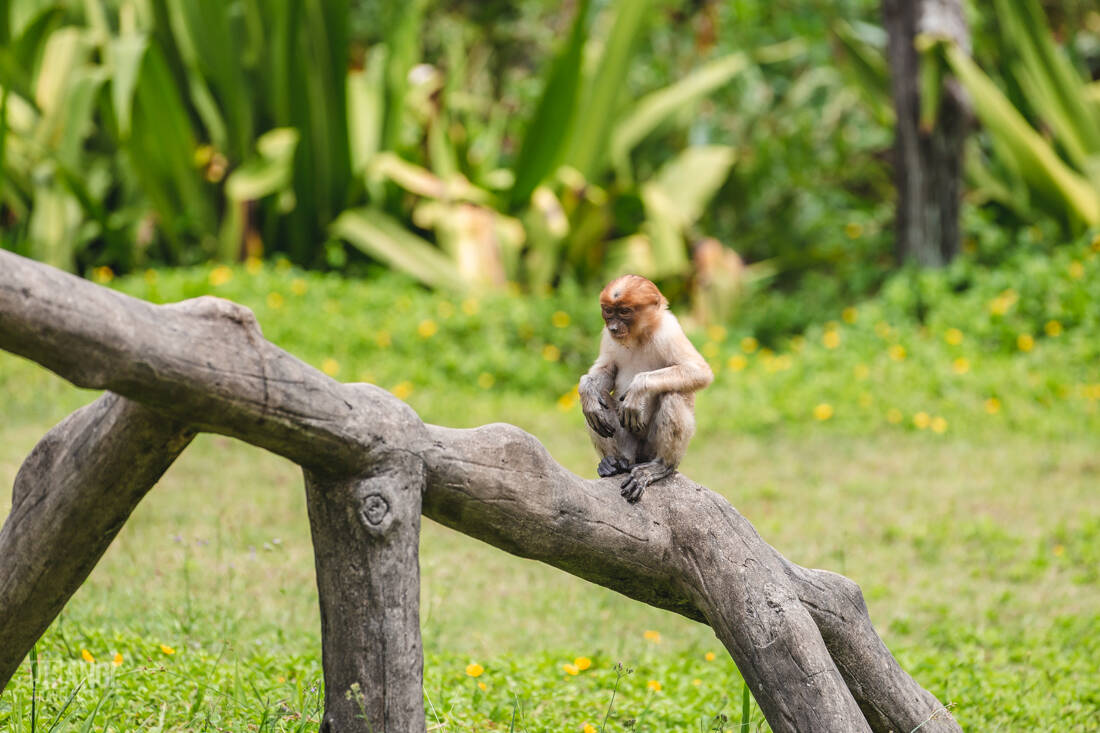
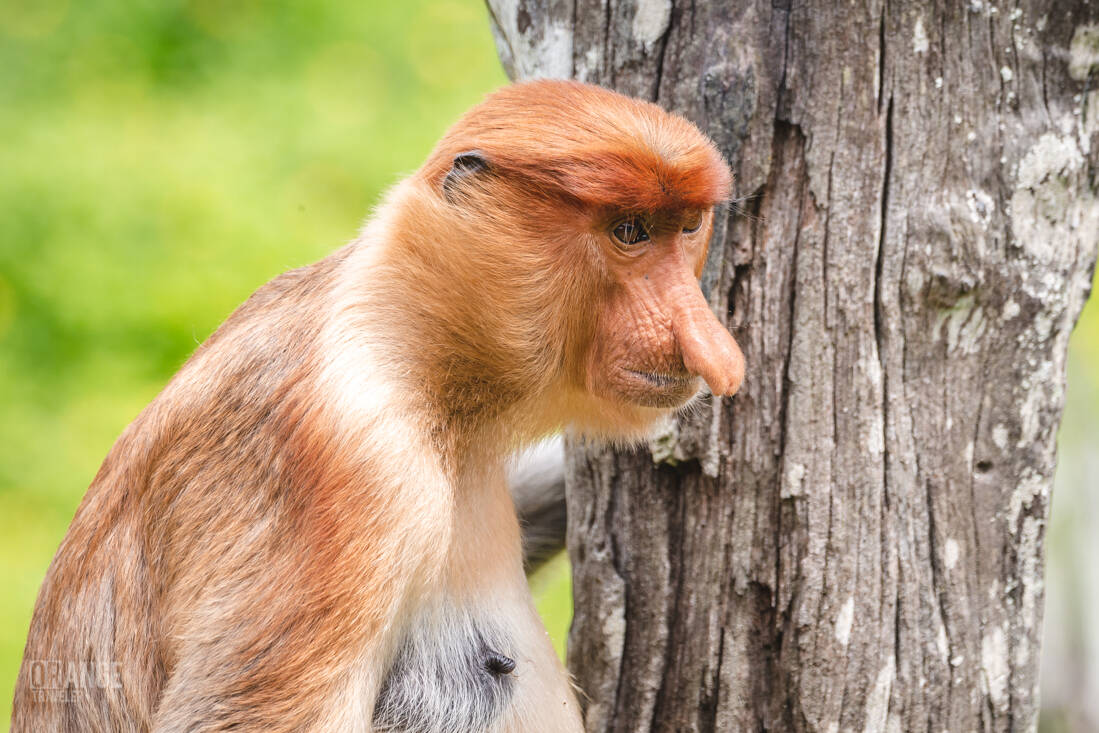
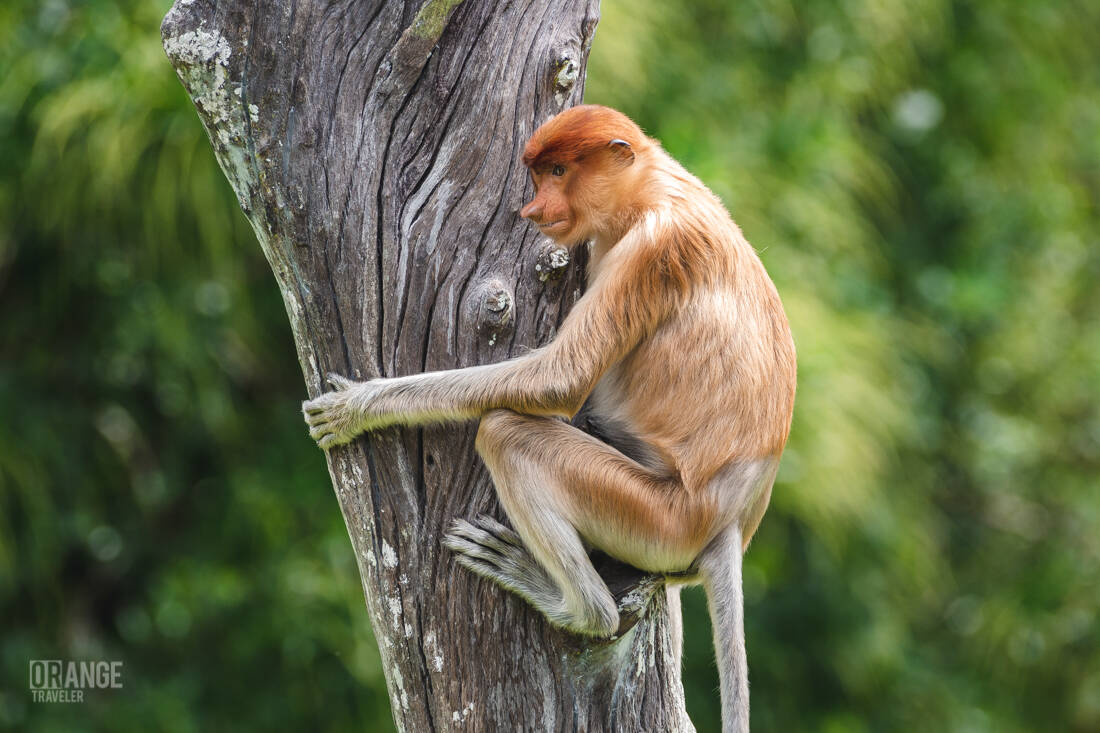
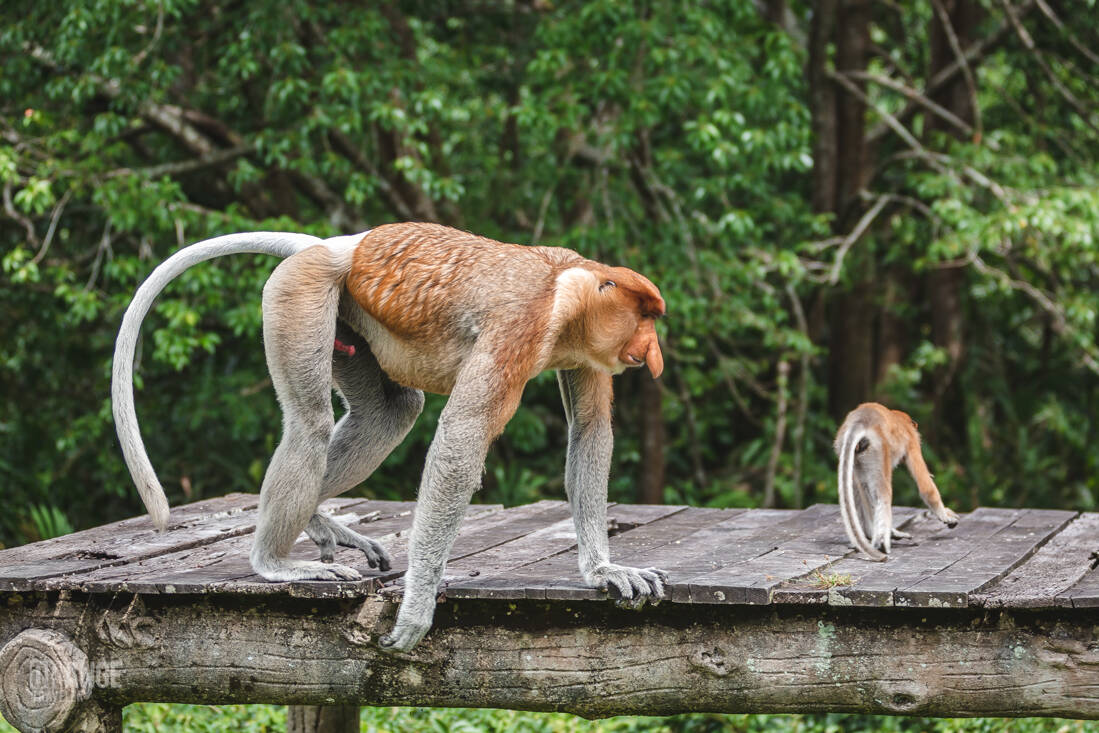
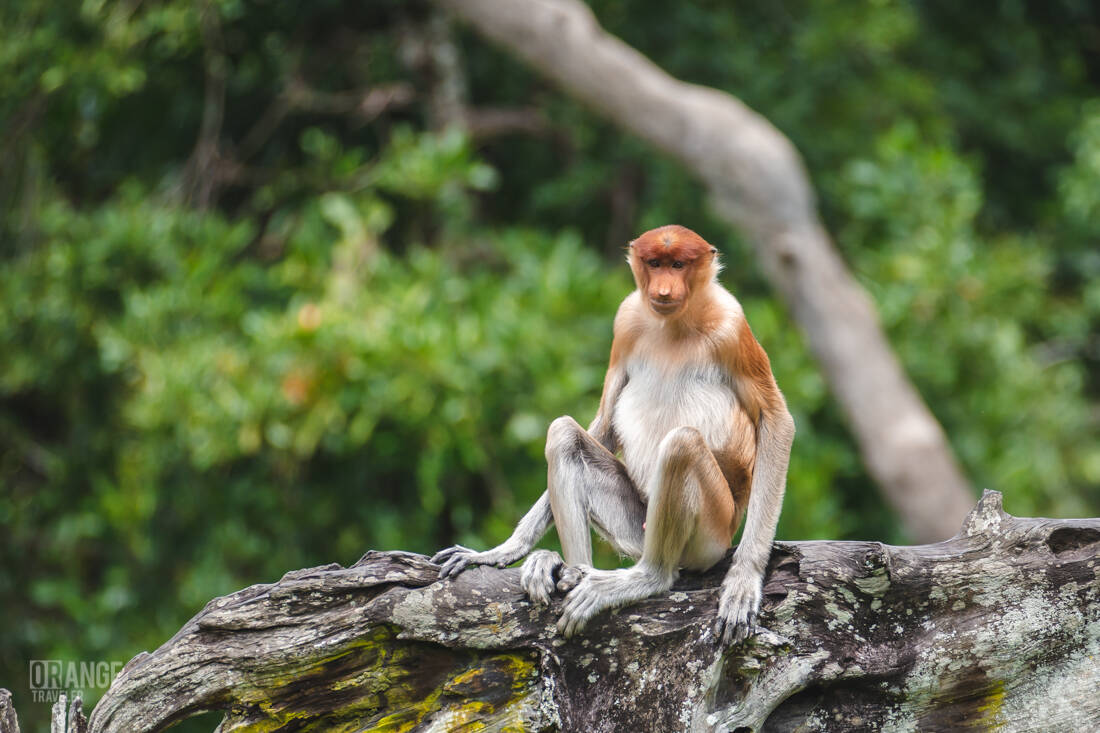
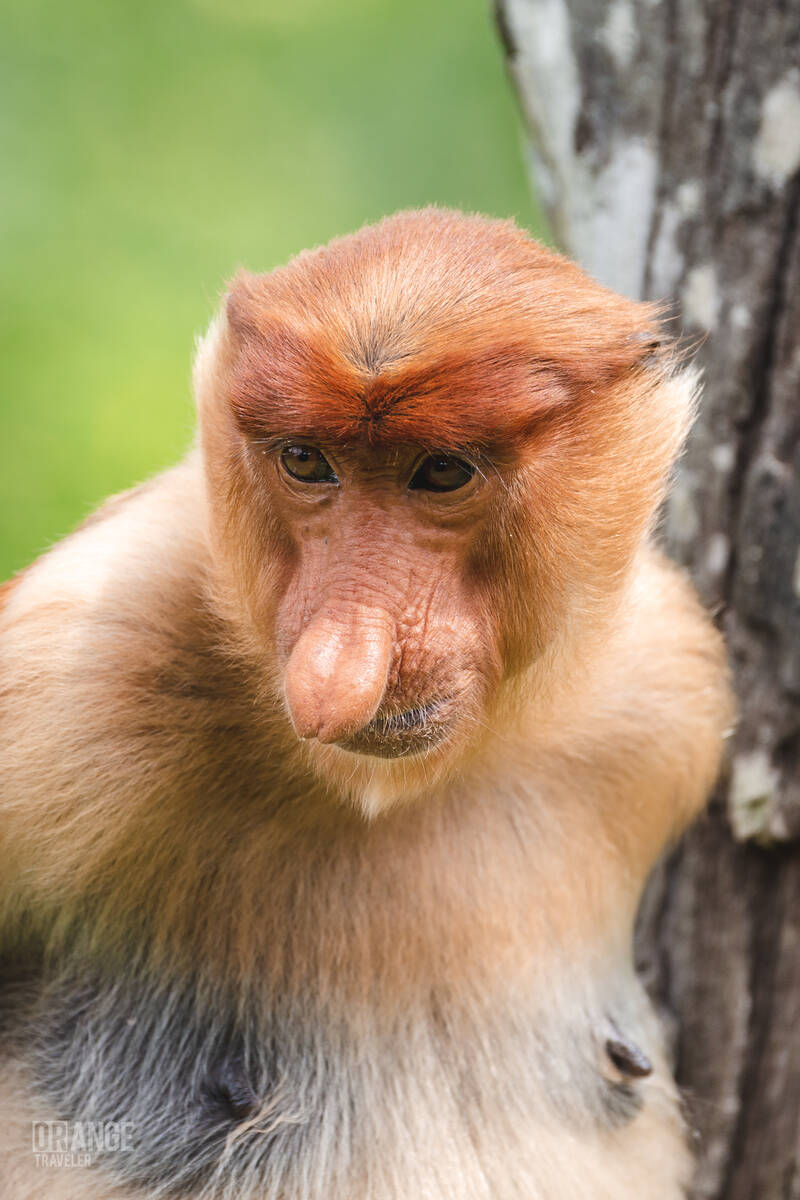
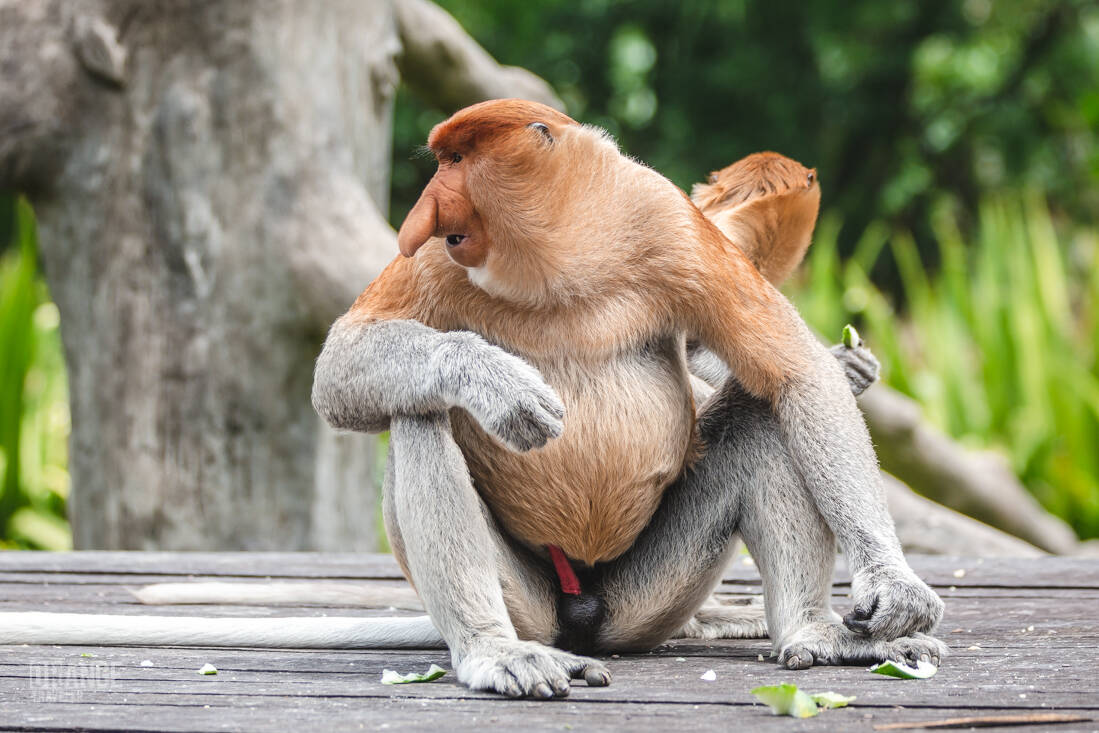
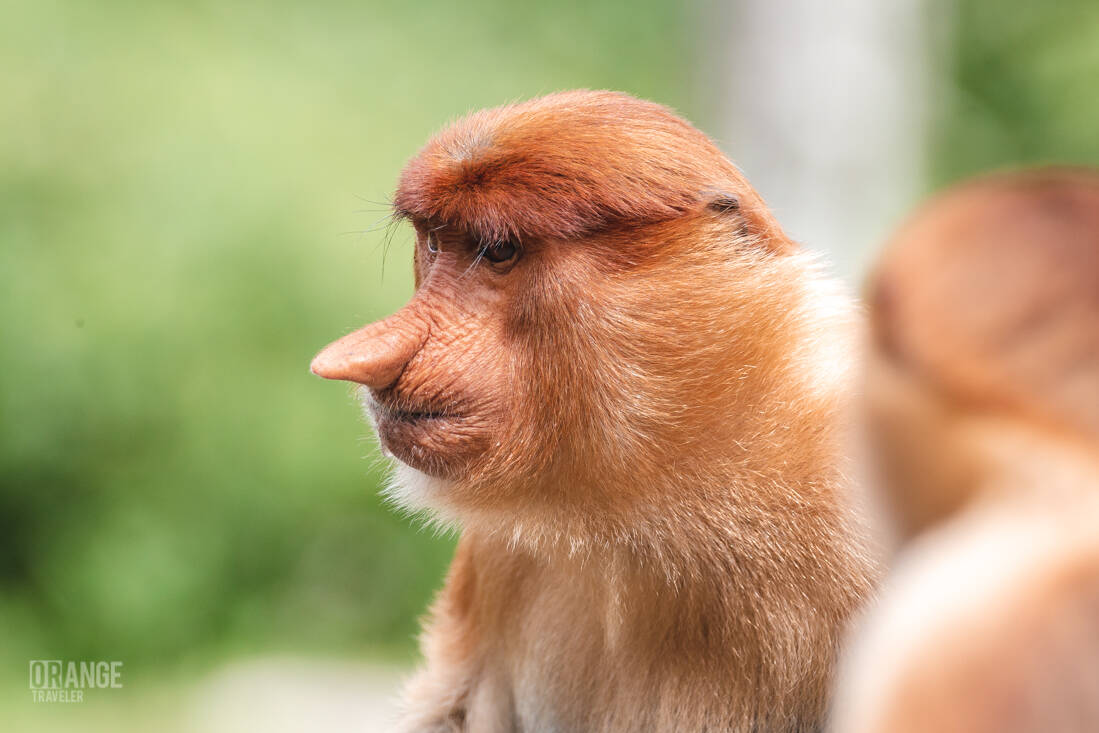
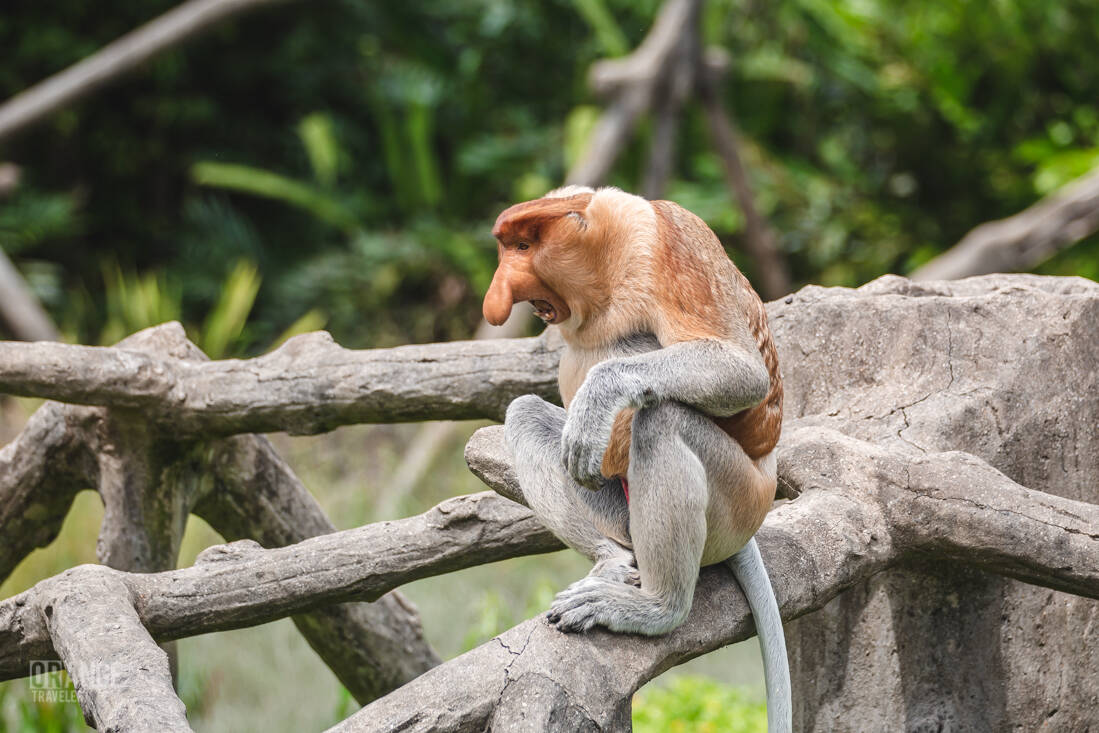
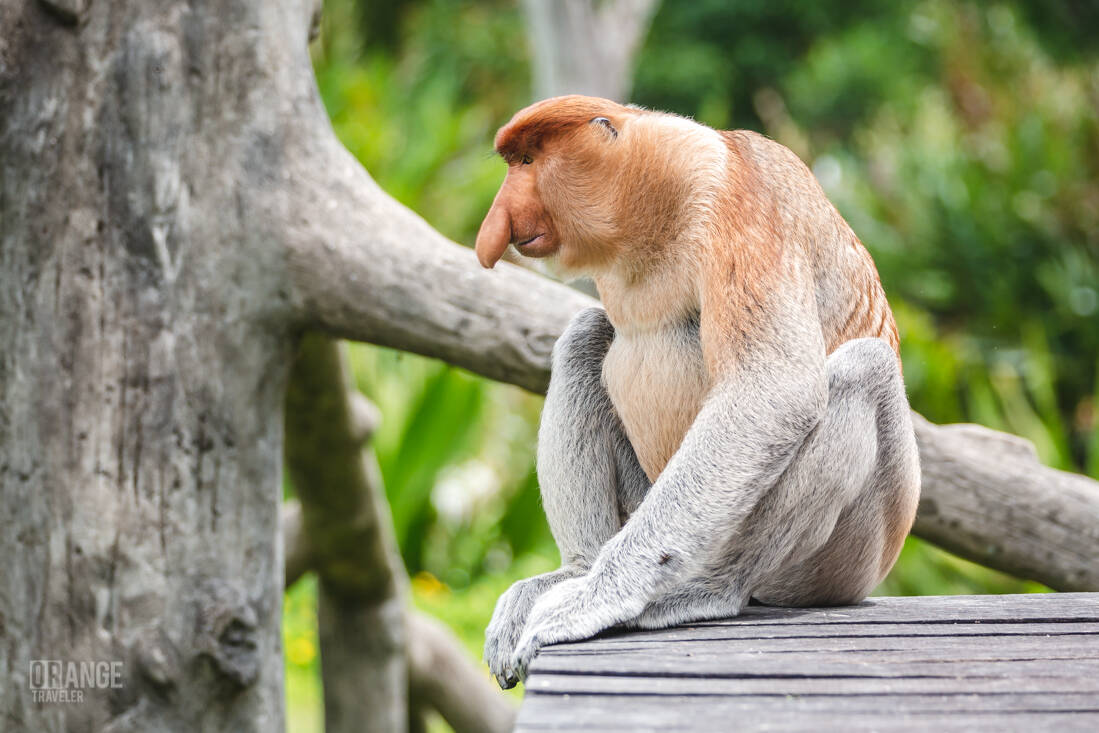
As with the Sepilok orangutan rehabilitation centre, the work here is also about preserving the species, though in Labuk Bay the monkeys are simply fed and given a territory to live in. Proboscis monkeys are among the largest monkeys in Asia. Males can weigh up to 24 kilograms, while females are about half that size. The enormous nose belongs only to males and, broadly speaking, serves the same function as conspicuous genitals: it attracts females. It appeared as a result of sexual competition: the bigger the nose, the more females in the harem.
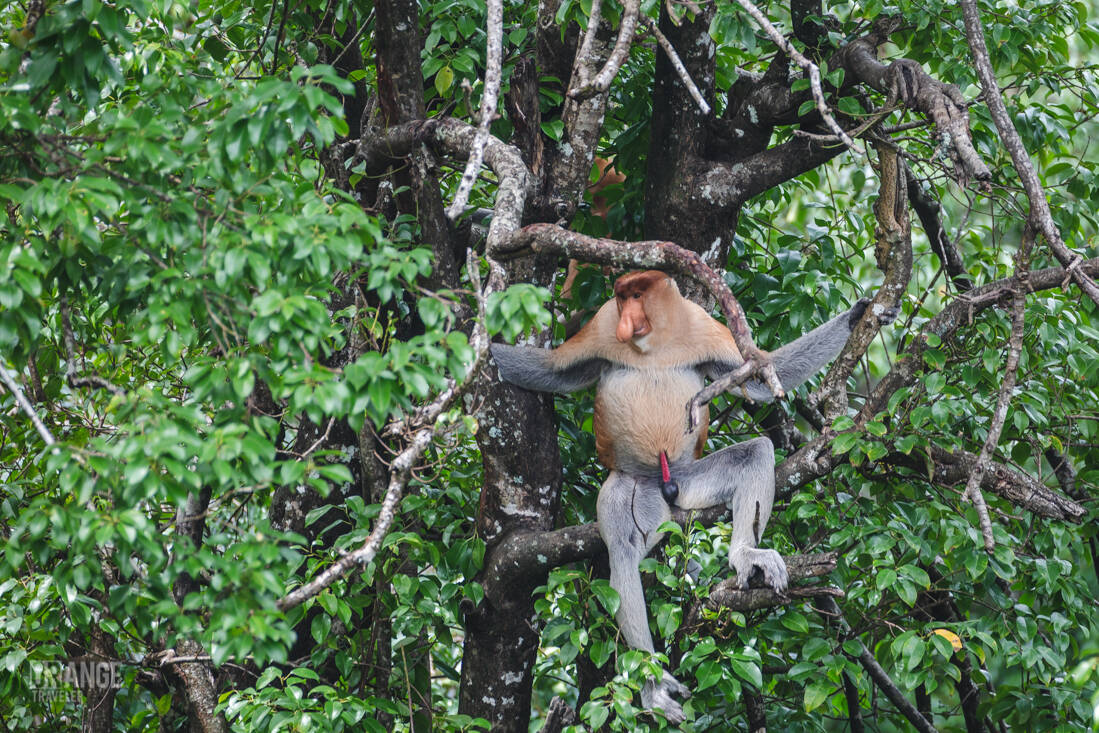
Even the constant erection is linked to social excitement, the assertion of dominance and competition between males, rather than simply sexual desire. As for the little upturned noses of the females, I would like to believe that male proboscis monkeys find them attractive too, although they are hardly models of monogamy.
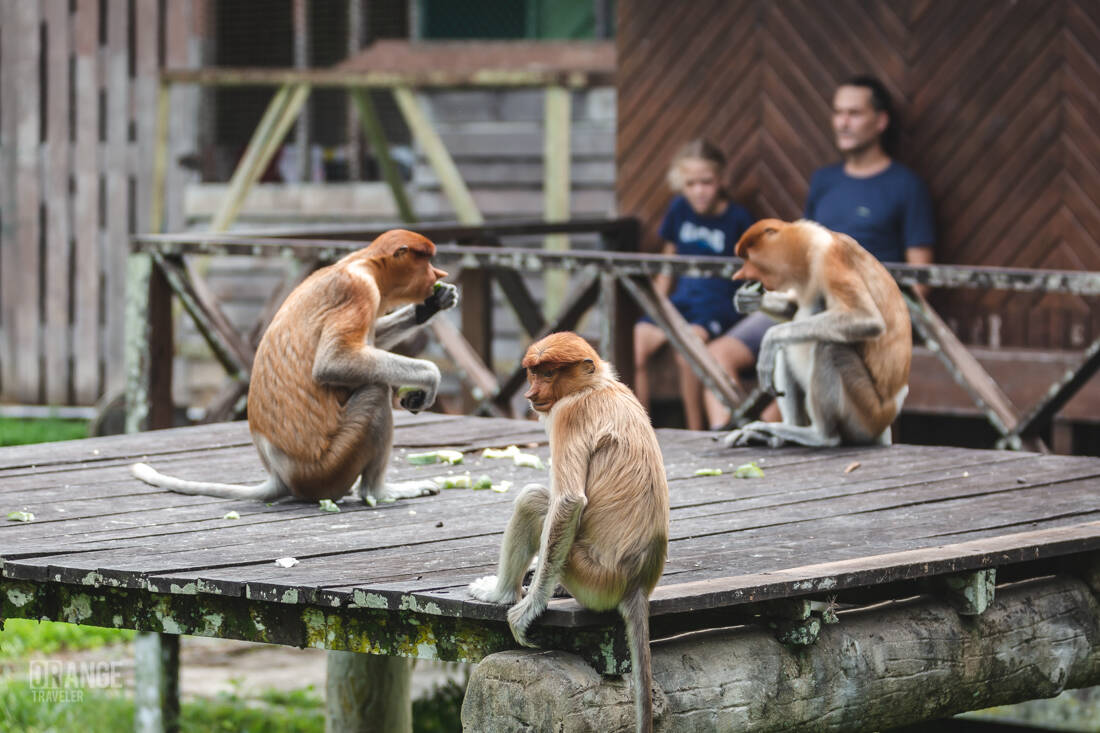
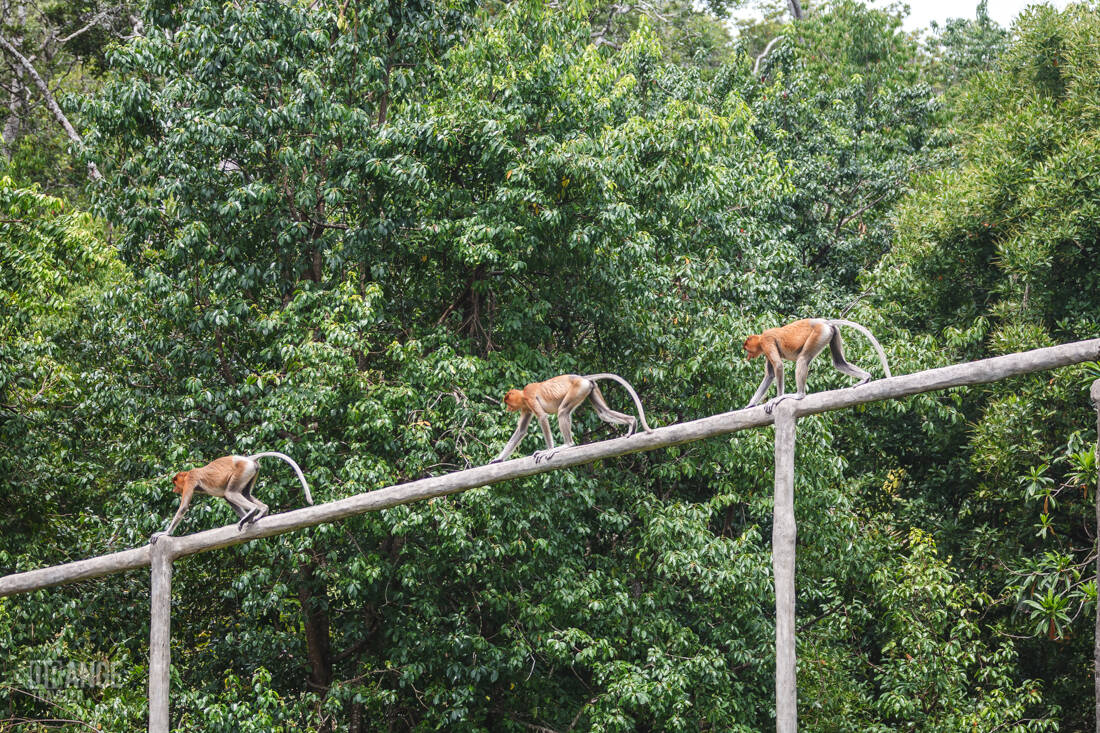
Labuk Bay has two feeding platforms, which are easy to watch from observation towers and wooden walkways. Shortly before the usual feeding time, groups of monkeys begin appearing near the platforms. Different groups come to eat: bachelors and whole harems. This often leads to clashes and scandals, with the alpha male never pleased to see competitors turn up.
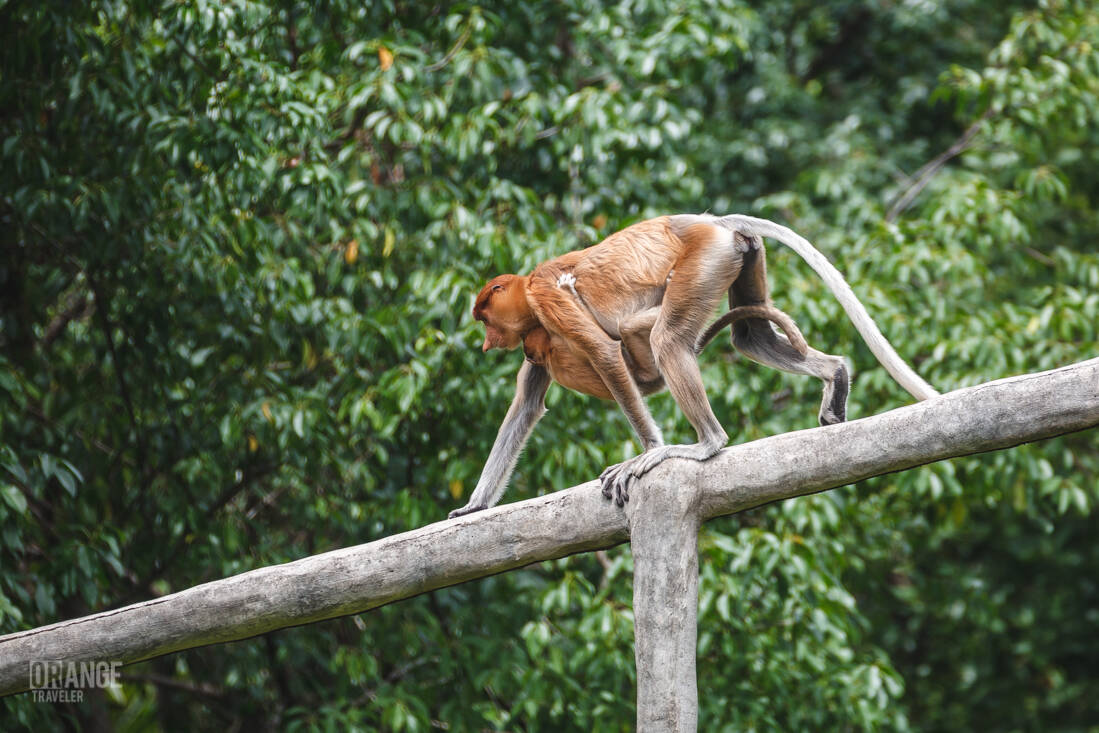
The visit is generally a short one: the monkeys eat quickly and run back into the forest. In half an hour, you can easily take a close look at these Borneo endemics and get plenty of good photographs. Of course, it is better to observe them in the wild, in Bako National Park and in the jungle along the Kinabatangan River. There, truly wild monkeys live and behave very differently from the Labuk Bay residents, who have grown used to people.
The forest is about 40 kilometres from Sandakan, roughly a 30–40 minute drive. The best way to get there is as part of a guided tour, by car or by Grab taxi. Expect the round trip with waiting time to cost from 150 ringgit. Labuk Bay is often combined with Sepilok Orangutan Rehabilitation Centre and the Bornean Sun Bear Conservation Centre on the same day, since all three places are in the Sandakan area.
The best time is the dry season, from March to October. I visited in early November and it was perfectly comfortable. The sanctuary is open from 8:30 a.m. to 5:30 p.m.
Feeding times:
Platform A — 9:30 a.m. and 2:30 p.m.
Platform B — 11:30 a.m. and 4:30 p.m.
For foreign visitors, the entrance fee is 60 ringgit for an adult and 30 ringgit for a child. Photo and video shooting costs an additional 10 ringgit. Tickets are still sold the old-fashioned way: for cash at the ticket office.
Plan about one hour for one feeding session, or longer if you want to visit both platforms. The monkeys usually appear shortly before feeding time, eat quickly and then drift back into the forest.
What else to read about Borneo:
Selingan — Turtle Island
Kinabatangan River
Sepilok Orangutan Rehabilitation Centre
Bantang Ai National Park





 Travel reportage
Leave a comment