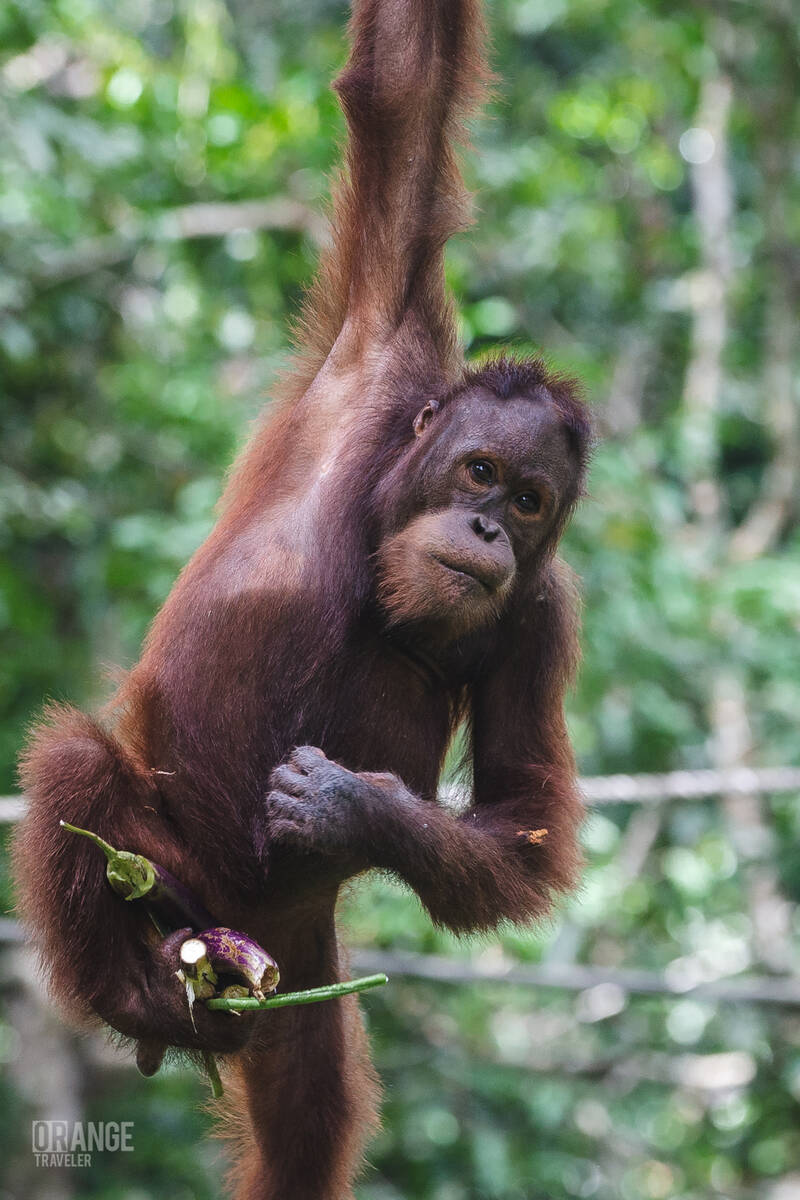
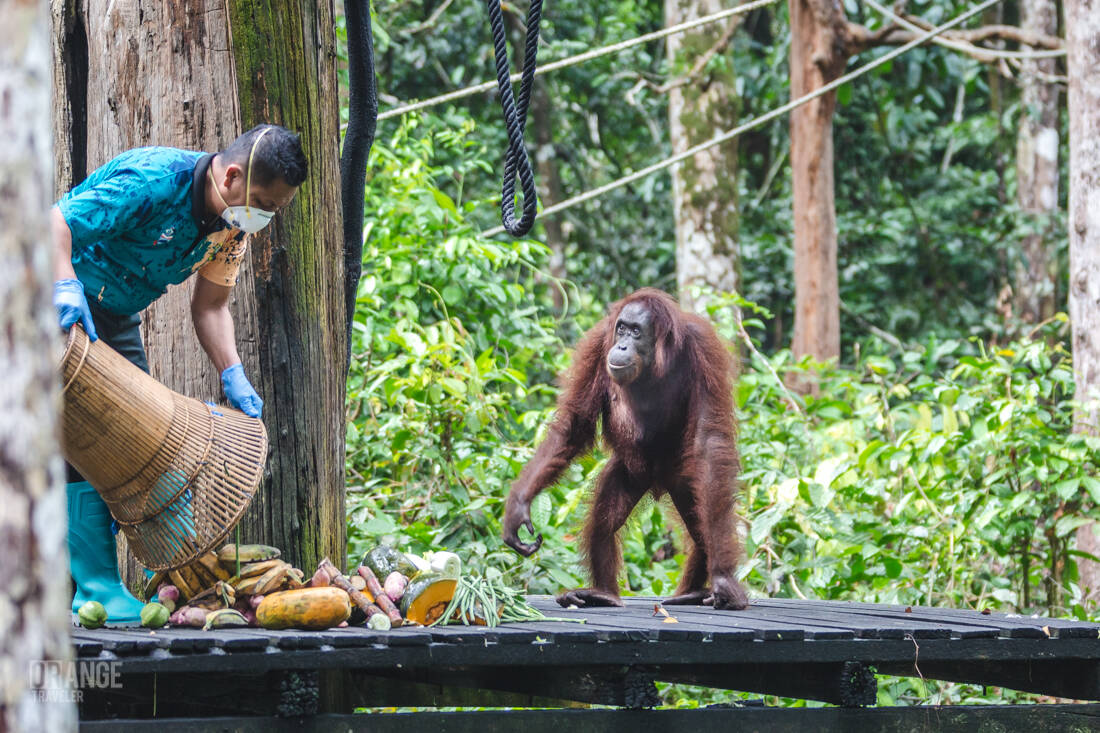
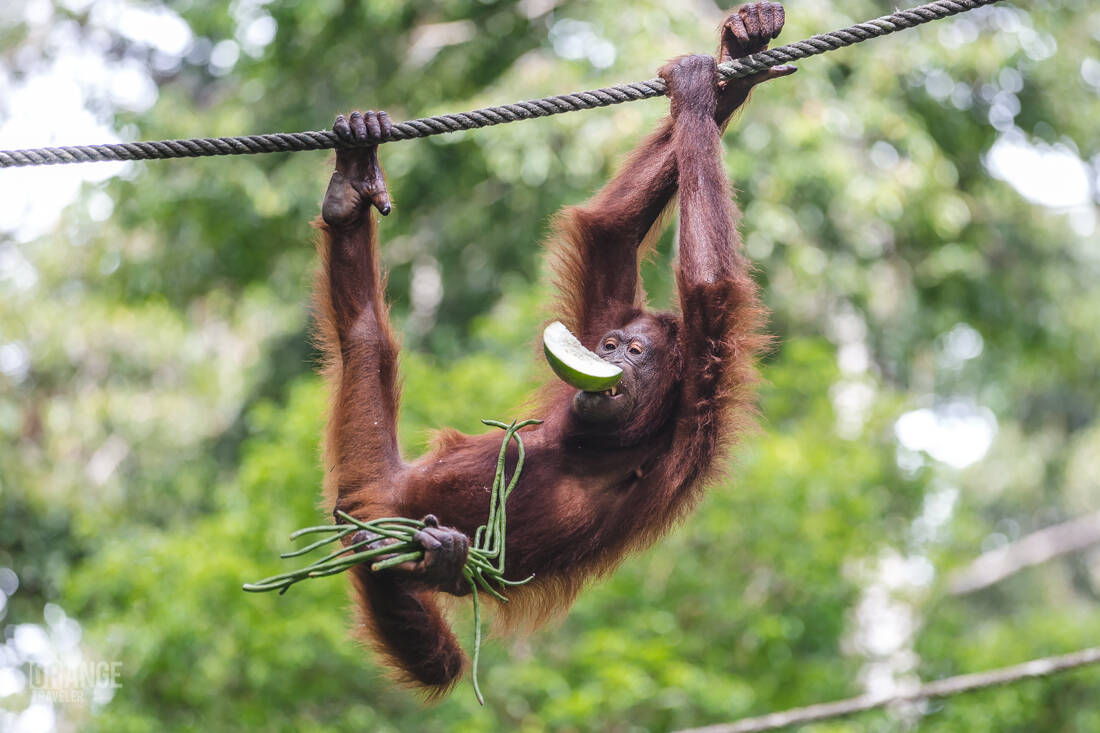
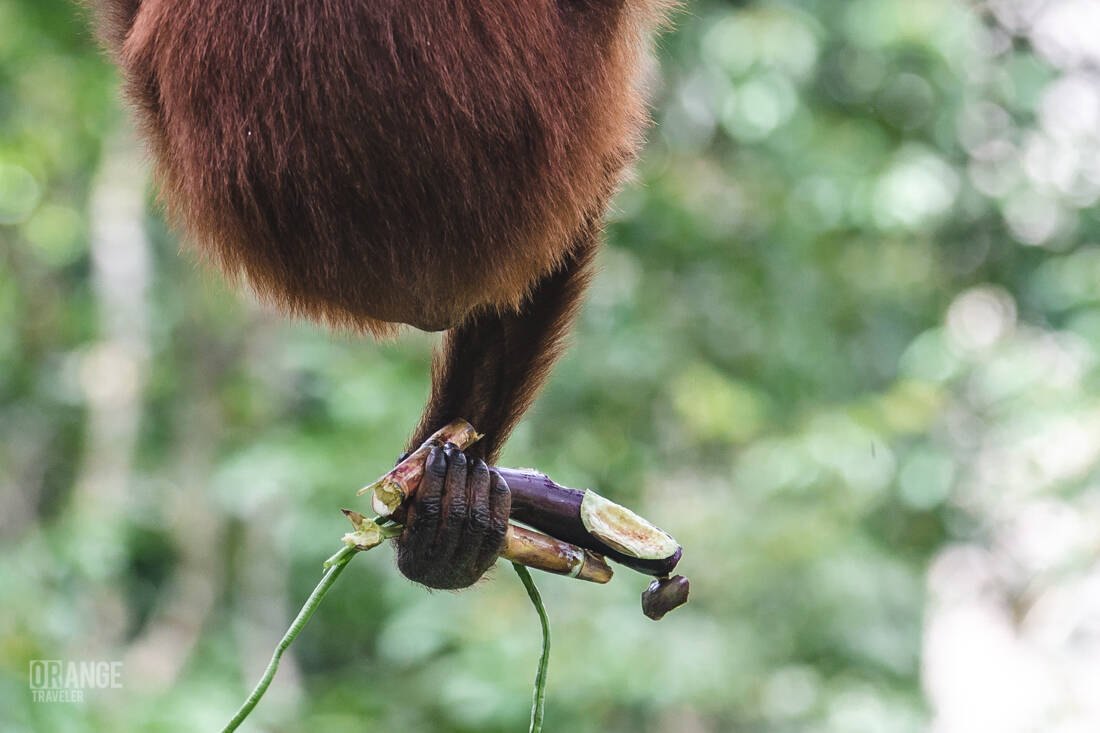
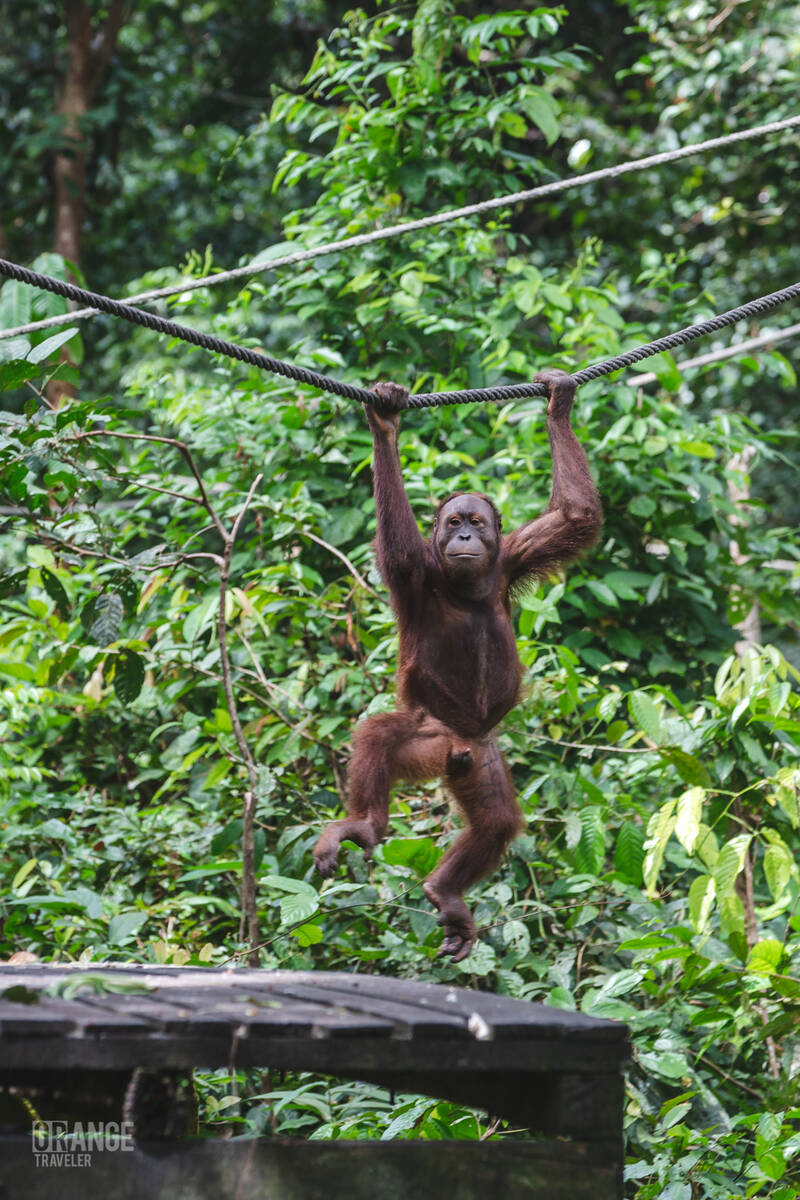
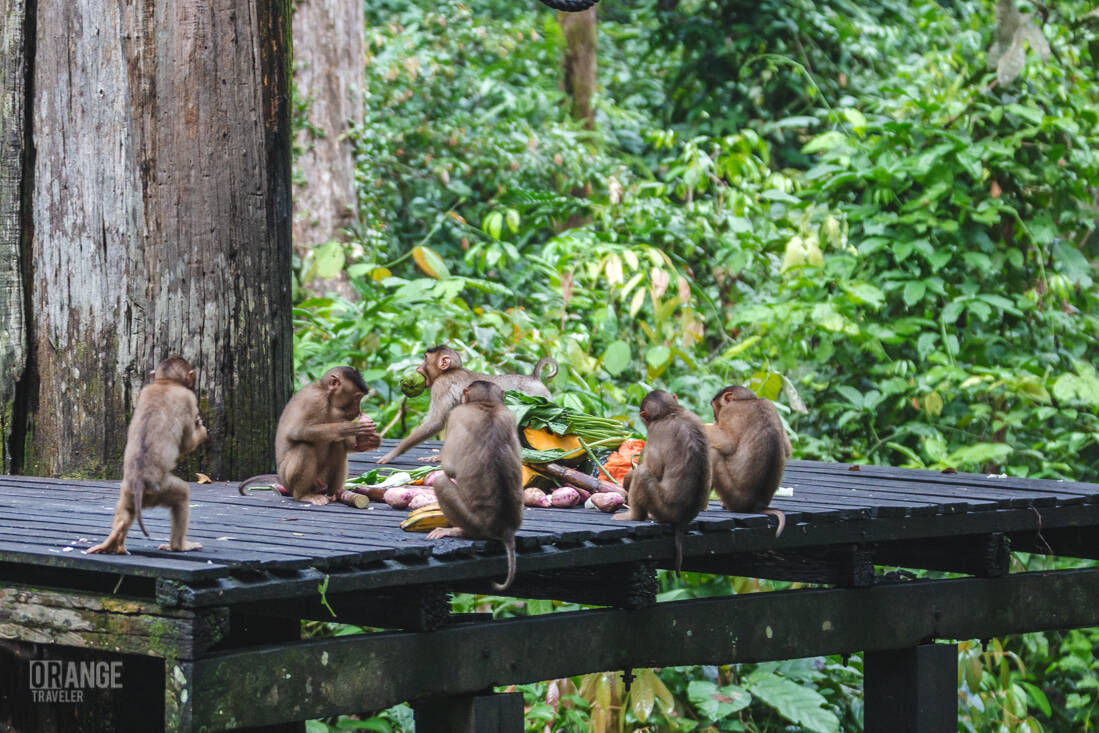
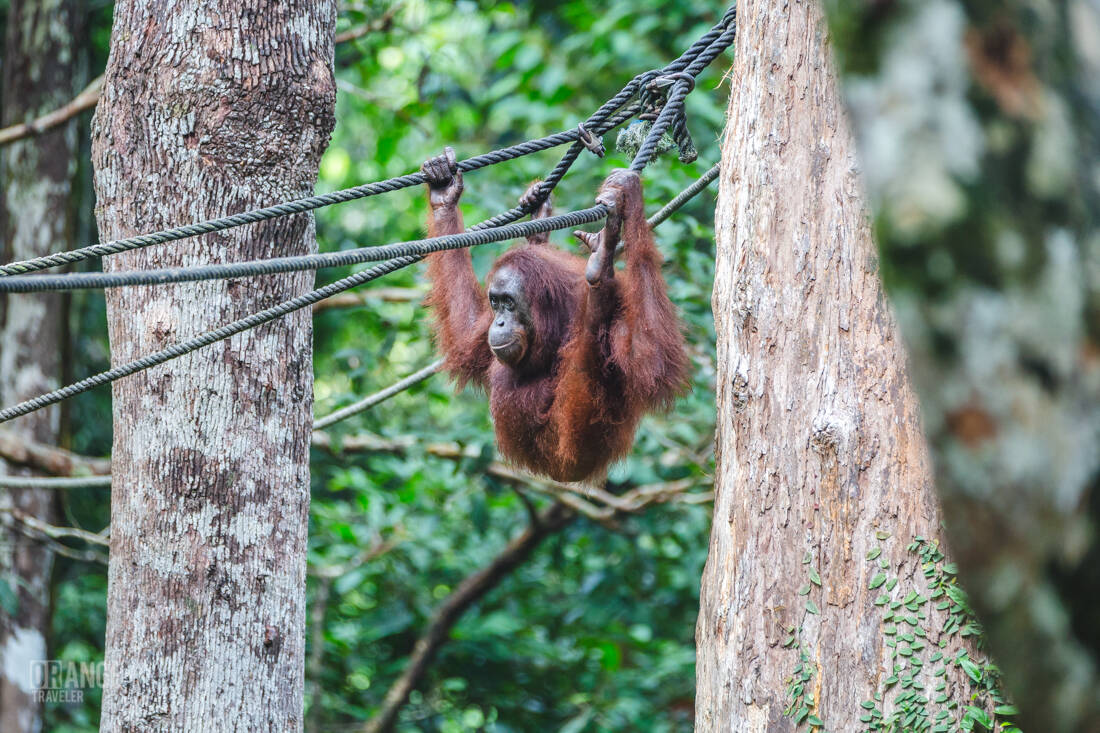
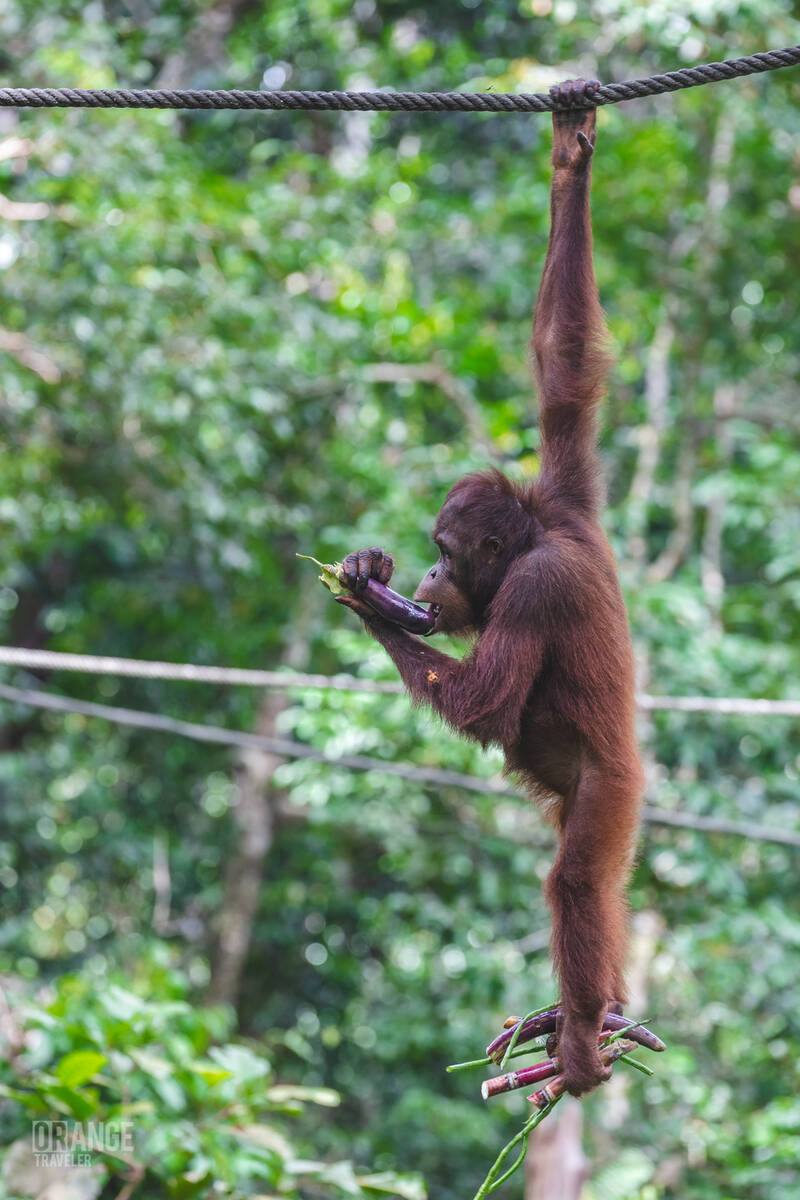
The “courier,” carrying a large basket of food on his back, and several orangutans appeared at the same time. Moving deftly on all four paws, they quickly reached the platform along the taut ropes. Now that is stretching and plasticity, I thought, admiring their acrobatic studies. With their feet — although these primates essentially have four fully functional hands — they can easily peel fruit, put it in their mouth, hold a baby or push away an annoying macaque.
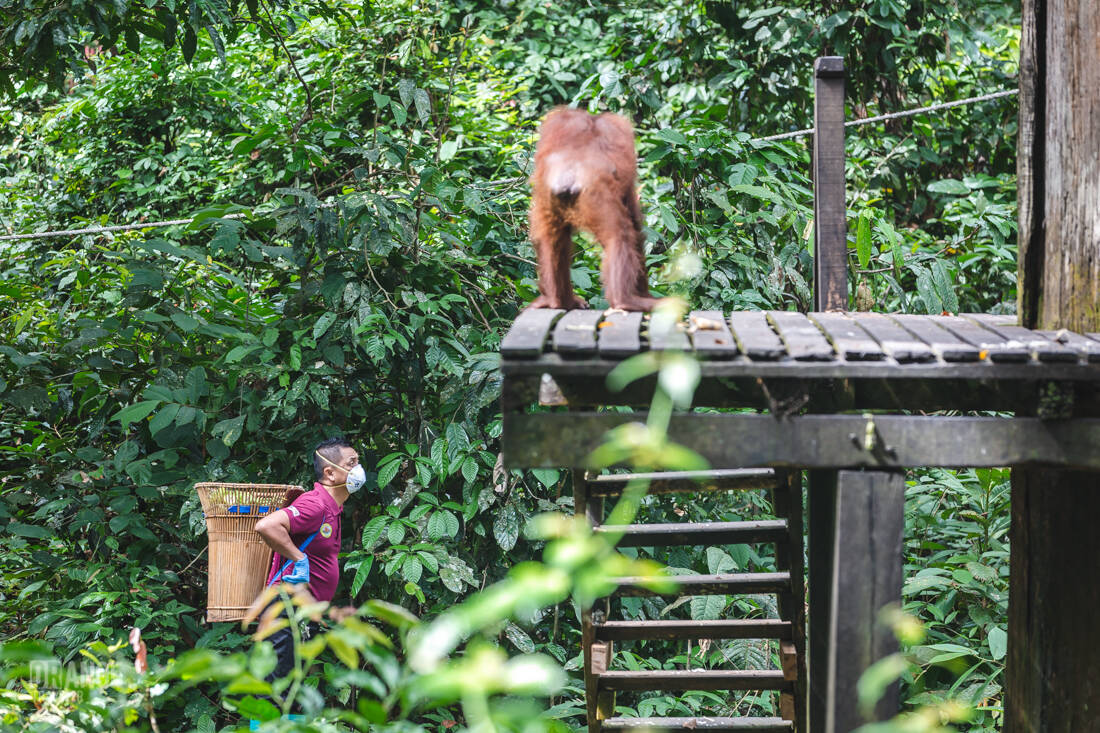
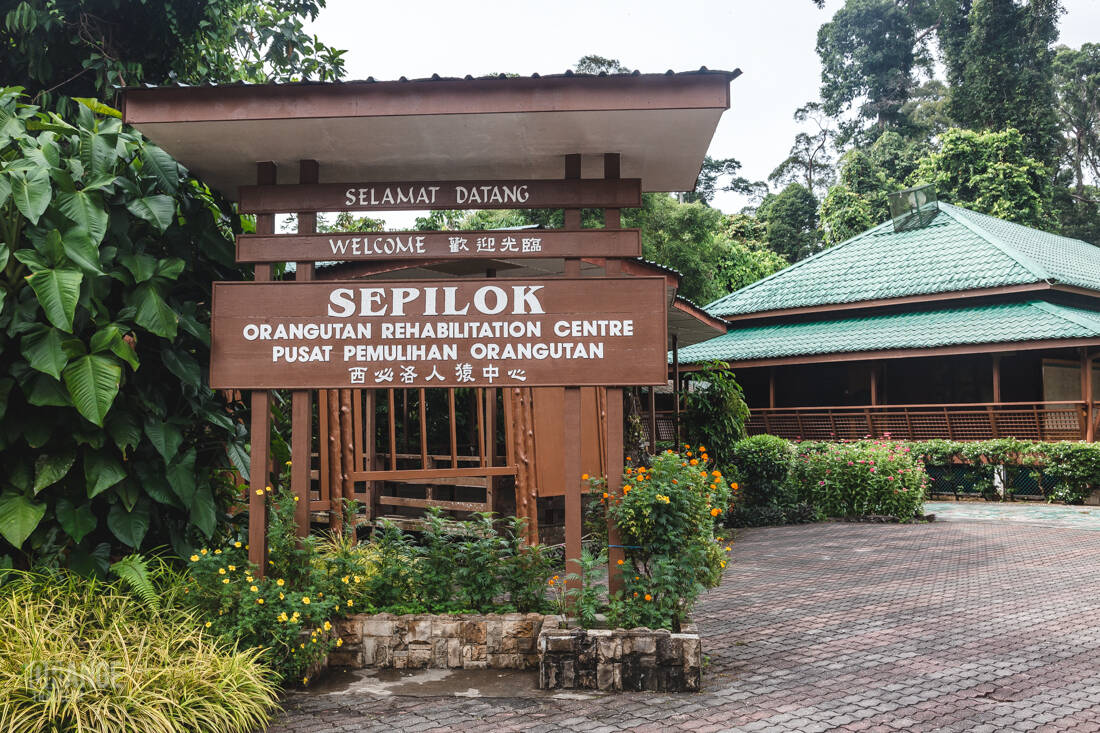
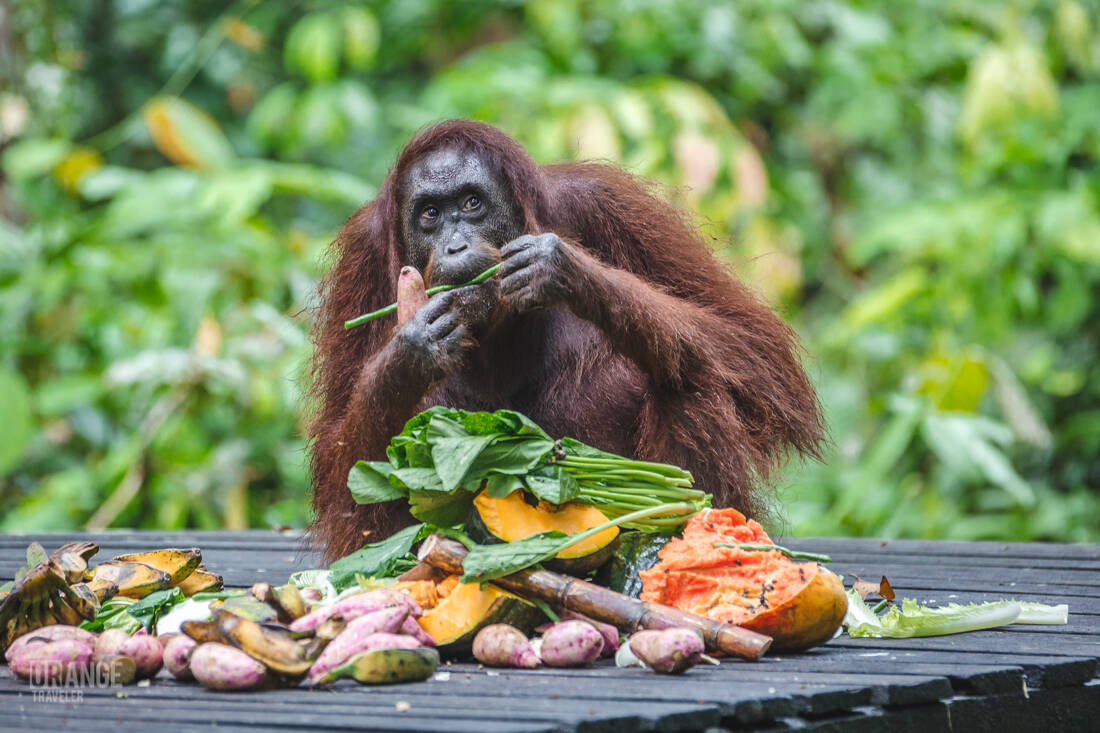
Sepilok Orangutan Rehabilitation Centre is located near Sandakan in Sabah, on the Malaysian part of Borneo. Feeding time at the Sepilok Orangutan Rehabilitation Centre is the quintessence of everything you can see here. Sepilok is not a zoo in the usual sense: the orangutans live in the forest reserve, and the feeding platforms are mainly a chance to see those animals that still return to the centre. The reserve opens twice a day specifically to give visitors a chance to see the animals up close. The clear feeding routine has taught the primates the schedule: anyone who feels hungry comes to the points of this simian buffet. The centre’s staff bring sweet fruit and vegetables there — take whatever you like, before the macaques steal it from under your nose. Although there is no guarantee that the orangutans will come.
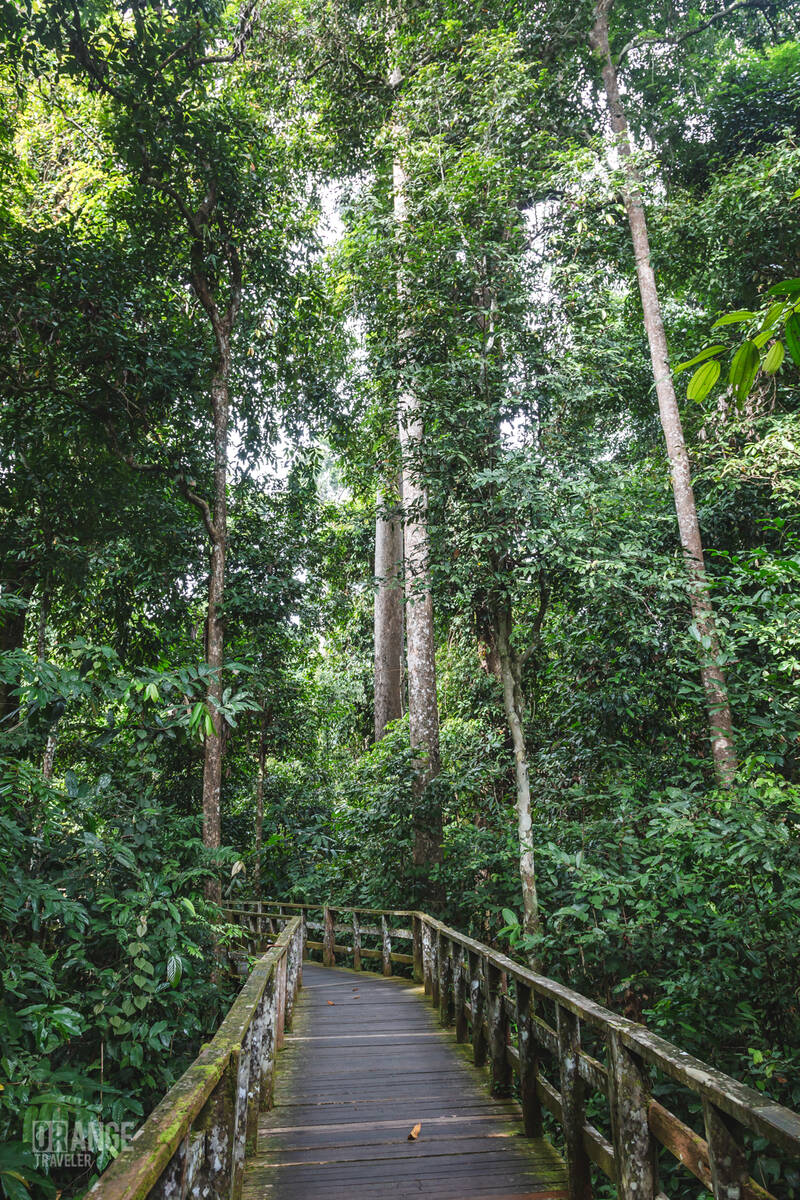
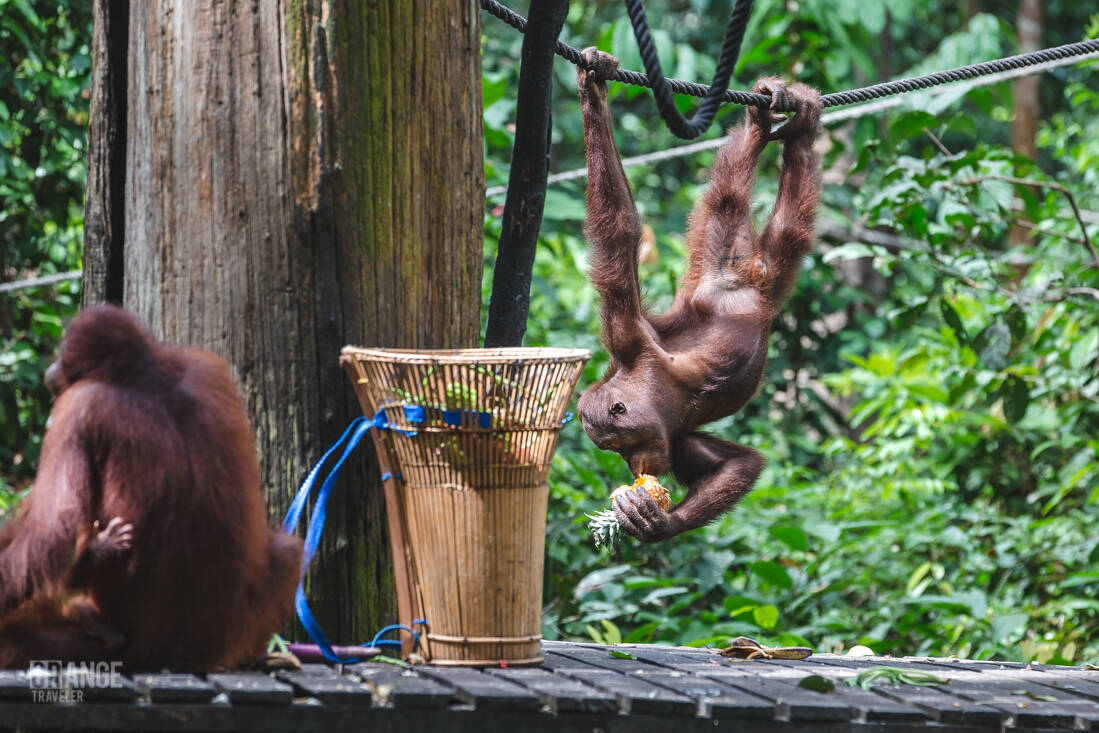
Wooden walkways run through the park. They lead first to an observation room behind glass, where the youngsters often play, and then to the viewing platform. In the first case — in the “nursery” — you need to hurry a little and take a place in the front row by the glass in the air-conditioned hall, but the photos and videos will still be so-so. There is also an alternative hall, hot and stuffy, but with fewer people. Still, the best viewing point is in the jungle on the Kinabatangan River — groups of visitors will be taken there a little later.
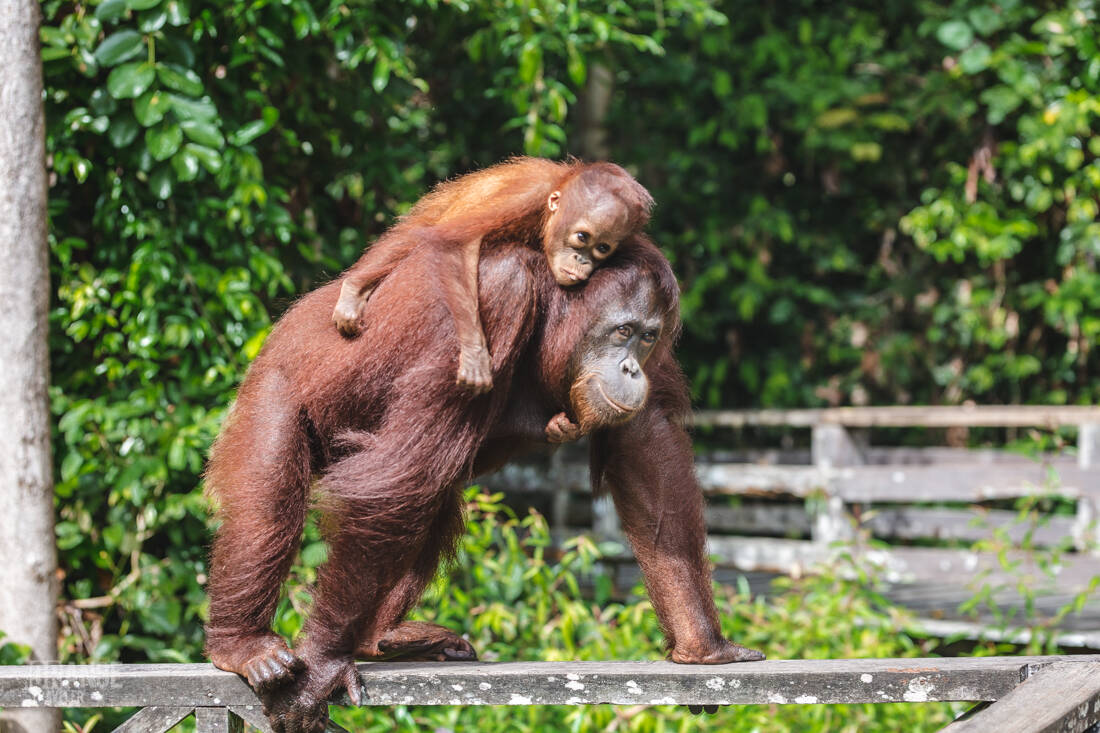
While we were all walking together toward the scene of action, an incident happened on the road. A huge alpha male leapt briskly onto the walkway, shaking his long hairy arms and his powerful cheek pads, and the ranger stopped the procession until the orangutan went about his business into the thicket. Looking ahead, I will say that he never appeared at the feeding platform. Instead, a female with a sweet baby came, along with a couple of cheeky teenagers.
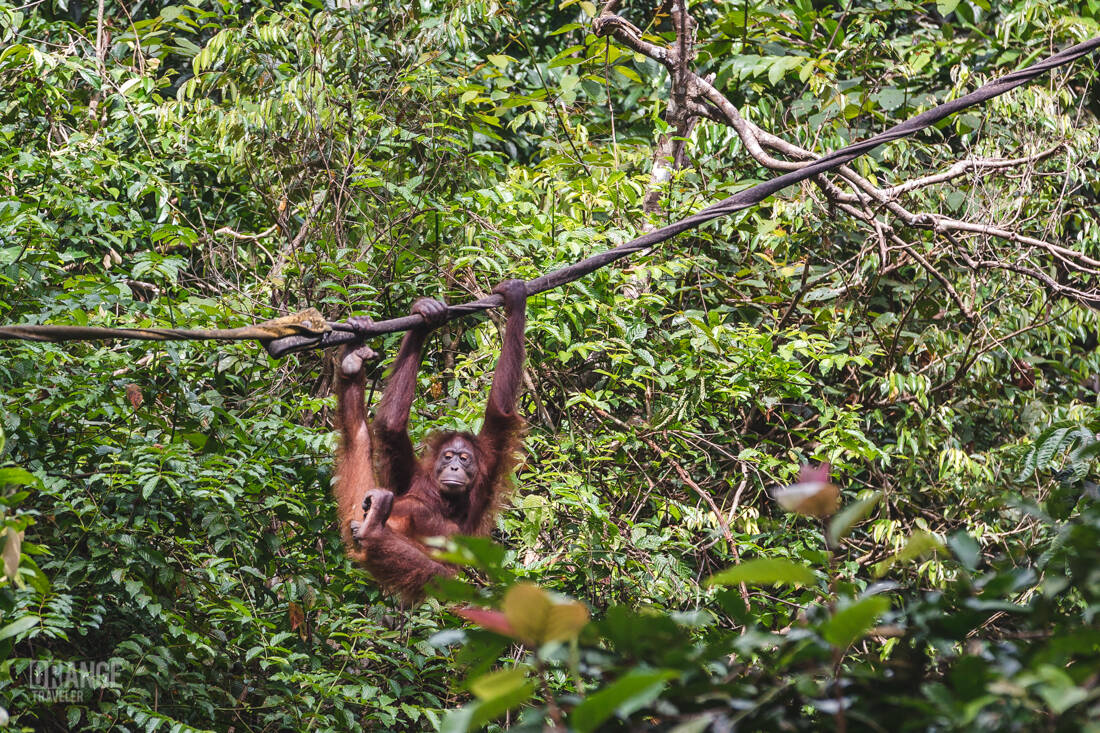
Seeing an orangutan in the wild is difficult. They live high in the tree crowns, move quickly and are not especially eager to meet their less hairy relatives with cameras at the ready. Sepilok is one of the best places to see the great apes from a short distance. About 80 individuals live here in their natural habitat, under the care of the centre’s good-natured staff. They also look after orphaned or injured young orangutans, taken from poachers and pet traders, who arrive at the rehabilitation centre from all over the island at the age of four to seven. The centre has been operating since 1964 and has saved hundreds of orangutans, releasing them into the wild after recovery and growing up. Although there are also those who like living near the centre, whose bond with the staff turned out to be stronger.
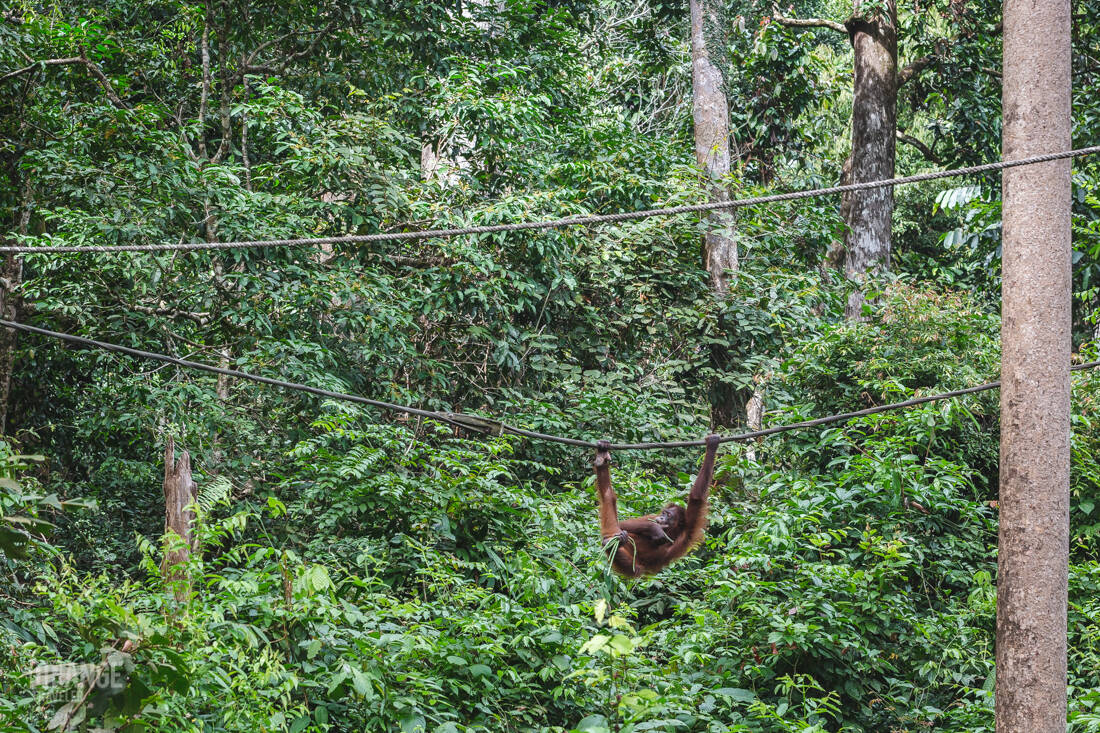
I had long wanted to see orangutans in their natural range, ever since the films on Animal Planet and Nat Geo Wild. But whichever way you look at it, Sepilok is a place that has only a conditional relation to the wild. I will get much stronger impressions later, when I go looking for orangutans in the real wilds of Borneo. But for a first encounter and excellent photos, it is still the best option. Just try tracking a large, shaggy animal in impenetrable jungle, one that moves quickly through the tree crowns, and then try photographing it. Besides, orangutans very rarely come down to the ground, preferring life on the “upper floors” of the jungle.
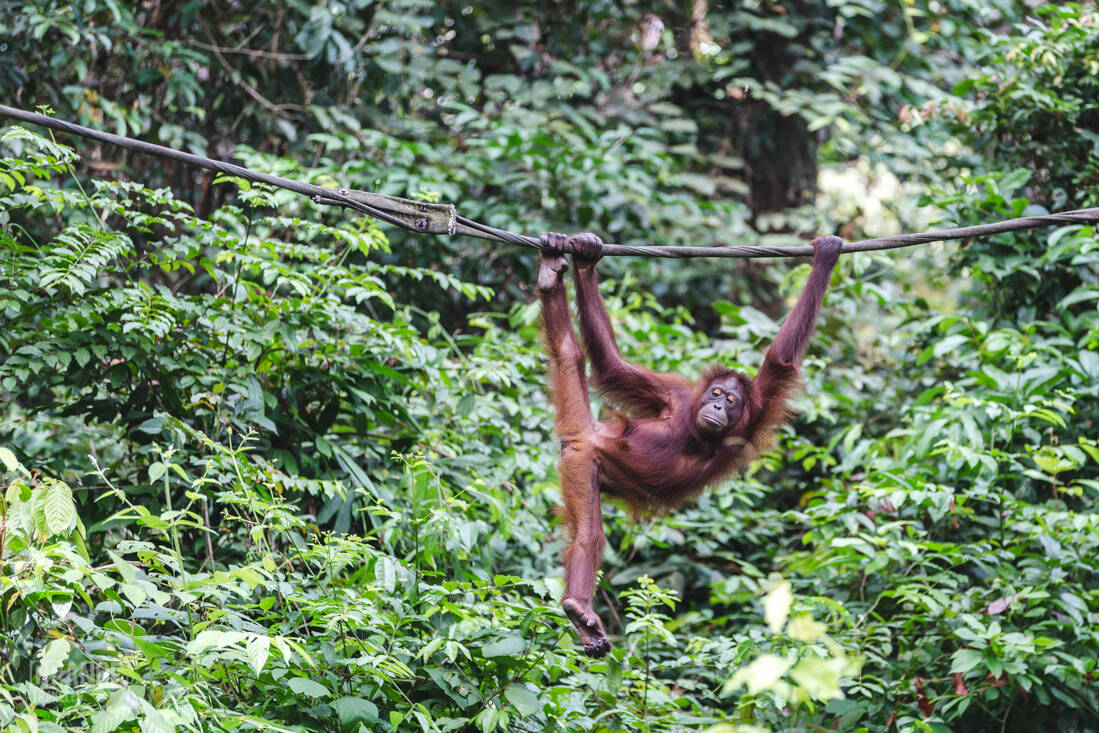
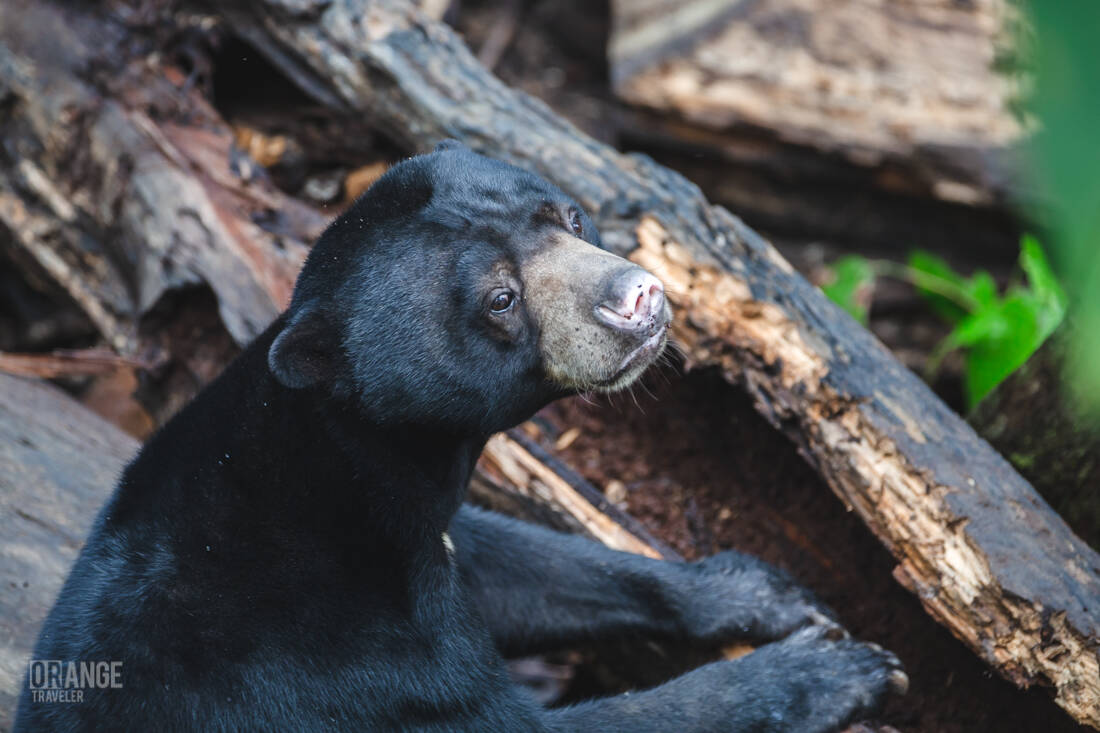
Orangutans are the only great apes in Asia. They live only on Borneo and Sumatra, and on both islands their habitat is shrinking because of tree felling and the expansion of oil palm plantations. But recently, forest protection has become part of Sabah’s state policy, which should improve the situation for these red-haired creatures. After all, from Malay, the animal’s name clearly places it in its home: “orang” means person, “utan” means forest. At least, that is what one wants to hope, without looking back at the numbers. Their population has halved over the last 60 years. It is difficult to say exactly how many orangutans remain in the wild, but experts such as the Orangutan Conservancy estimate their number at around 60,000. A 2022 study suggested that by 2032 more than a quarter of today’s population may be lost.
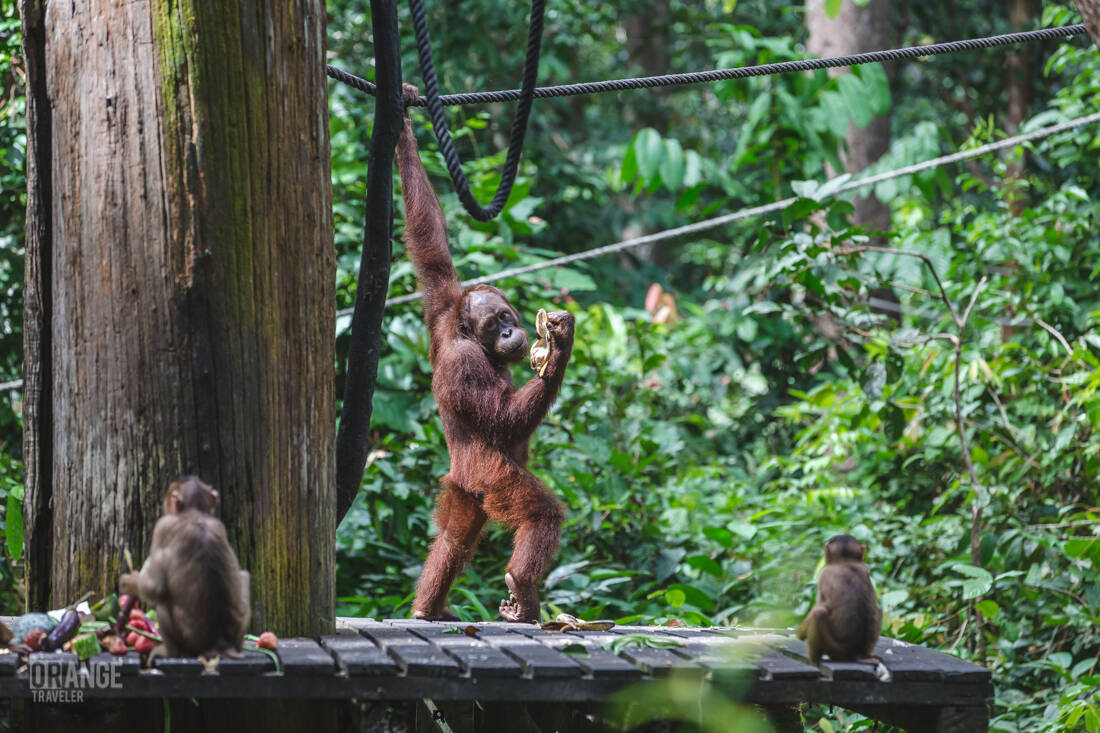
Their housing and habitat problems are easy enough to understand, since we are essentially close relatives: our DNA matches by 96.4%. Females carry their babies for about nine months, look after them for a long time — almost until the age of seven — and then do not break family ties with the adolescents for a long time either. The young spend a lot of time with their mother, visiting her every few days. This bond is one of the longest among mammals, apart from humans.
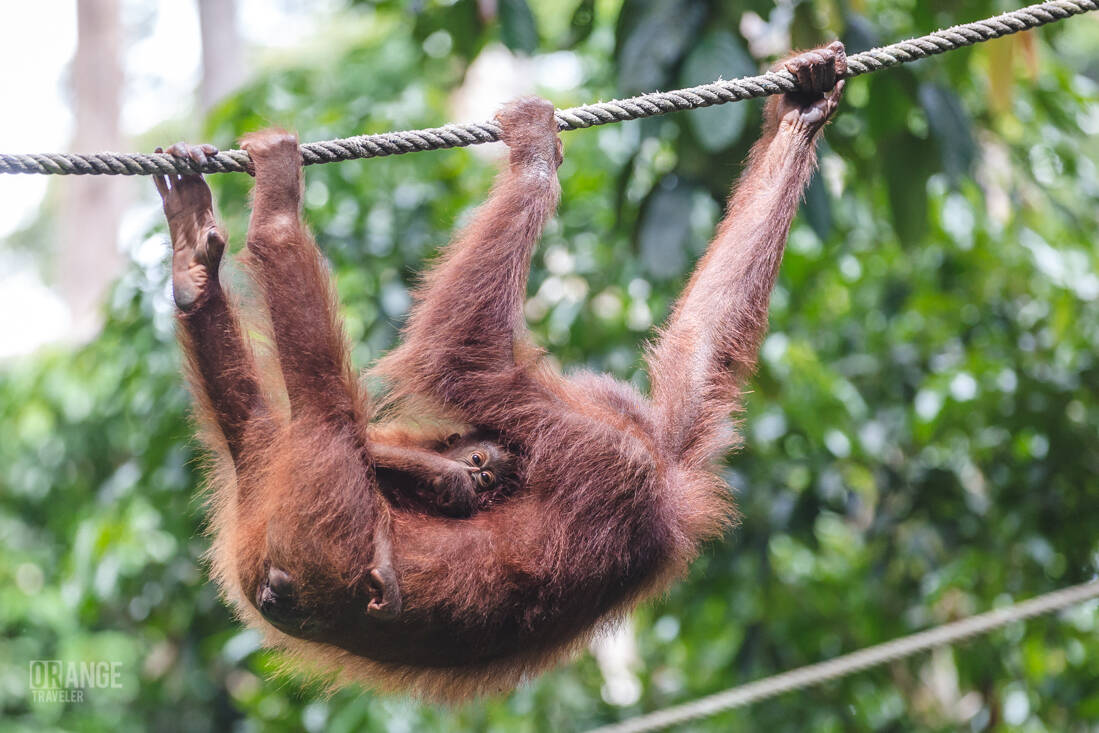
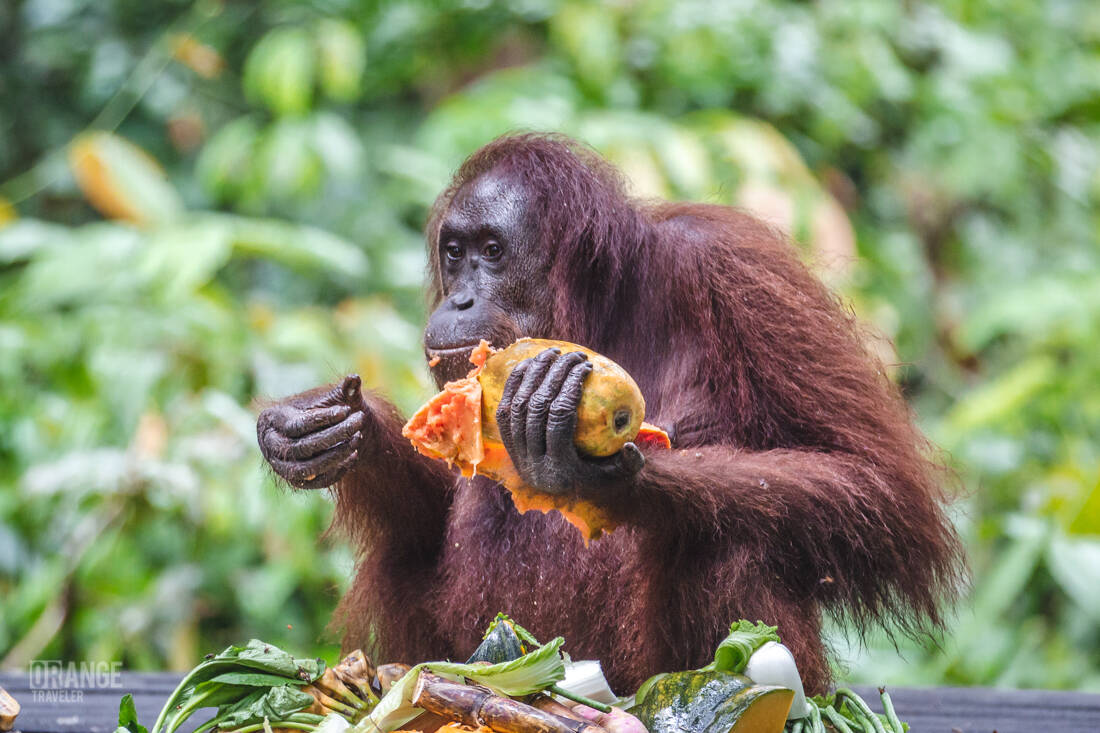
That was exactly the kind of mother I watched. Her baby, clinging to her fur, studied the tourists while the female enjoyed the fruit. An orangutan baby will be able to move several metres away from its mother only after turning three. At that age, little ones eat and sleep hugging their mother — after all, the jungle is frightening at night.
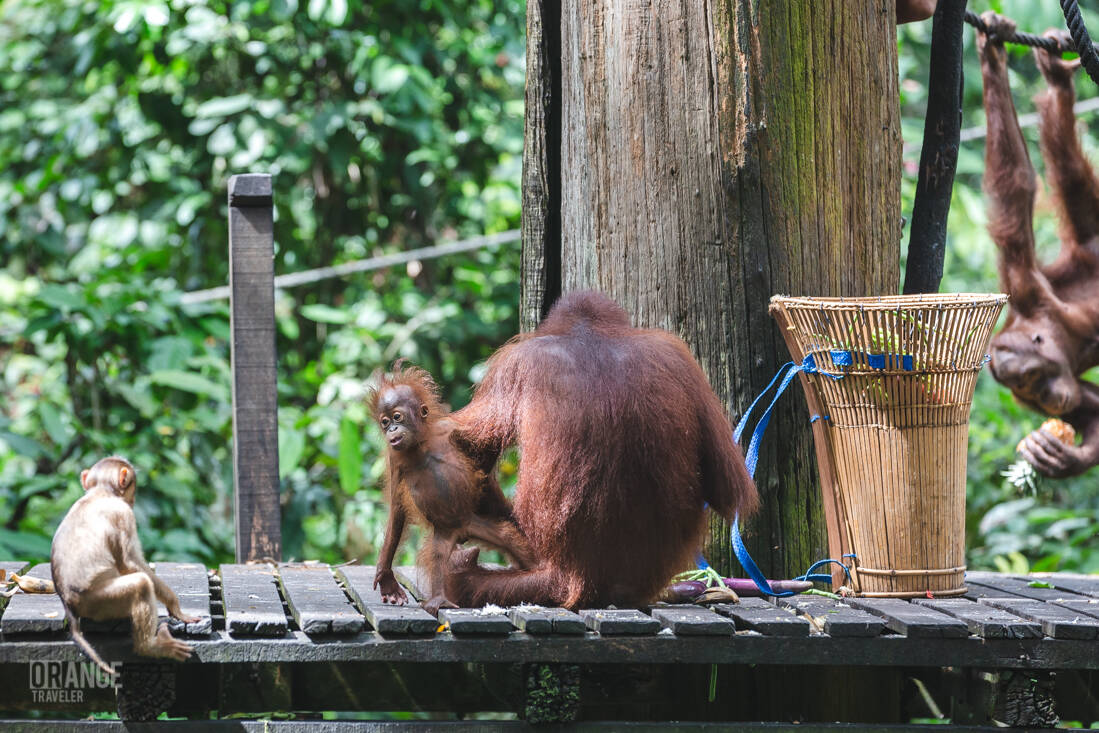
The apes quickly enjoyed the fruit — oranges, bananas, papaya — grabbed something “take away” and swiftly left for the forest. The whole observation took about 15–20 minutes. The “auditorium” emptied, the audience began to disperse, discussing this immersive natural performance. It was interesting, but I wanted a real show, so I left for the Kinabatangan River.
The apes are fed twice a day, at 10:00 and 15:00, and shortly before that the park gates open. It is better to plan the visit with some extra time and arrive a little earlier. After lunch, there is a higher chance of seeing females with babies. To watch the orangutan meal, you will have to leave all backpacks, water and other things in the storage room, keeping only a smartphone and a camera with you.
For foreign citizens, the entrance fee is 30 RM. Another 10 RM must be paid for a photo camera and the right to shoot. Smartphone photography is allowed free of charge.
For deeper immersion in the orangutan environment, you can stay at MY Nature Resort, where animals can often be observed very close to the rooms. I stayed at Sabah Hotel.
There are several flights a day to Sandakan from Kuala Lumpur International Airport and Kota Kinabalu. Sepilok is easy to reach by taxi, from 30 RM, or by car. Bus No. 14 runs from the central market to the centre; this is the most budget-friendly option.
Is Sepilok Orangutan Rehabilitation Centre worth visiting?
Yes, especially if this is your first chance to see orangutans in Borneo. It is one of the easiest places in Sabah to observe them from a short distance, although it is still not the same as tracking orangutans deep in the jungle.
What time is feeding at Sepilok?
Feeding usually takes place twice a day, at 10:00 and 15:00. It is better to arrive before the gates open and keep extra time for the walkways and the nursery area.
Are orangutans guaranteed to appear at Sepilok?
No. Orangutans live in the forest reserve and come to the feeding platforms only if they want to. The visit can be excellent, but it is still wildlife observation, not a scheduled performance.
Can you take photos at Sepilok?
Yes. Smartphone photography is allowed without an extra fee, while a camera requires a separate photo permit.
What else can you visit near Sepilok?
The Bornean Sun Bear Conservation Centre is located opposite Sepilok and can be combined with the orangutan centre in one visit.
What else to read about Borneo:
Selingan — Turtle Island
Kinabatangan River
Labuk Bay: The Proboscis Monkey Forest
Bantang Ai National Park




 Travel reportage
Leave a comment